
Power metal is heavy metal that lifted the weight of the song off the riff and hung it on the chorus. Every other difference follows from that one transfer, the drums, the key, the voice, the keyboards and the dragons, and the quarrel over heavy metal vs power metal is settled by a single question put to any record: where does the song keep its weight? Speed will not answer it. Speed has fooled people for forty years.
Released by Columbia on 13 January 1984 as the lead single from Defenders of the Faith, recorded the previous summer at Ibiza Sound Studios and driven from the first bar by a barrage of double kick drums that stamps the floorboards of the song flat, "Freewheel Burning" runs as fast as most of what Germany would sell as power metal a few years later. The Birmingham five who recorded it were Judas Priest. Nobody has ever filed that song anywhere but heavy metal.
The reason is audible inside ten seconds. The riff is in charge, the harmony sits in the minor, Rob Halford's verses are packed so tight they behave like another rhythm guitar, and the chorus is a shout thrown back at the riff rather than a melody climbing away from it. Take the riff out and the song collapses. That is the test.
Heavy metal vs power metal in the throwing circle
A stadium keeps two ways of sending metal through the air. The shot putter stands inside a seven foot circle with sixteen pounds of iron pressed against the neck, coils down onto the back leg and drives the whole body into one blow, the ball leaving the hand barely faster than a thrown brick and still smashing a crater into the turf, while the javelin thrower sprints the length of the run-up and lets the shaft go at the top of all that gathered speed.
Heavy metal is the shot. Its songs strike with weight dropped on the downbeat of every bar, the riff landing like iron on turf and the gallop coiling the body for the next heave, which is why a heavy metal band can play at a walking pace and still sound as if it could dent the stadium floor. Power metal is the javelin. It flies because of the run-up, the double kick drum pounding under every verse like strides that never shorten, and take the speed away and the throw drops dead at the thrower's feet.
Heavy metal throws weight. Power metal throws velocity. Both are throwing the same metal.
The key, the voice and the chorus
The second difference is harmonic. Heavy metal lives in the minor modes, Aeolian and Phrygian, with the harmonic minor brought in for the solos, and its choruses tend to sit inside the same dark key as the riff. Power metal, above all in its European form, is far more willing to move into the major for the chorus and to let keyboards double the melody, which on any honest reading is the fanfare of a parade rather than the march of an army.
The voice follows the harmony. A heavy metal singer in the line of Halford and Dickinson carries grit in the tone and a scream held in reserve, while the power metal tenor that Michael Kiske set as the model on Keeper of the Seven Keys scrubs the rasp away and sings clean from the bottom of the range to the top. One sounds like a man on a wall. The other sounds like a choir soloist.
The words follow the voice. Heavy metal sings about war, the road, the machine and the devil in roughly equal measure, while power metal leans hard towards fantasy, freedom and the quest, and in its bands the keyboard player is usually a full member rather than a hired hand for one song.
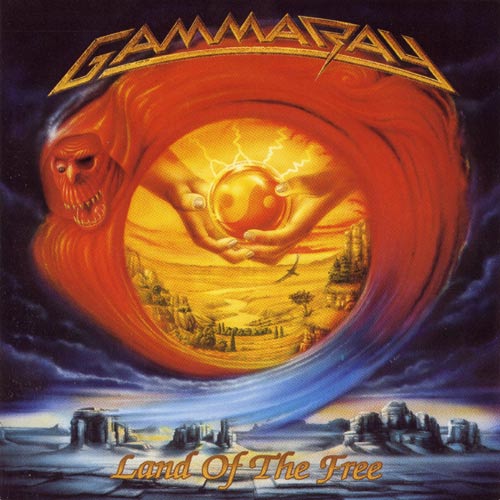
Issued by Noise on 29 May 1995 and sung throughout by Kai Hansen for the first time in eight years, with Michael Kiske and Hansi Kürsch of Blind Guardian as guests, Land of the Free is the power metal pole in its purest form, and the band that made it, the Hamburg quartet Hansen had formed after walking out of Helloween, was Gamma Ray. Its opener, "Rebellion in Dreamland", runs close to nine minutes.
The riffs on that song are sturdy and they are scaffolding. The chorus goes up the way a hot-air balloon goes up at dawn, the pilot hauling on the burner until a sheet of flame roars into the envelope and the whole wicker basket lifts off the frosted grass at once, passengers and all, and everything that came before it in the song exists to be left on the ground. No riff on British Steel would stand for that treatment.
The trap in the name
The word itself sets a snare. In the United States of the mid eighties, "power metal" was the tag magazines and labels put on bands harder and faster than Priest and cleaner than thrash, and the records it covered are heavy metal by every rule above: the riff in charge, the minor key, a high, hard voice at full stretch.
The Colorado band whose Ample Destruction came out in 1984 was Jag Panzer, and the New York band whose Thundersteel arrived in March 1988 with Tony Moore singing over riffs that never let the tempo drop was Riot. Both carry the US power metal label. Both keep their weight in the riff, and a listener raised on Hamburg who puts either on expecting a major key chorus is in for a lesson. The label is regional, not musical.
| Record | Year | Usually filed as | Where the weight sits |
|---|---|---|---|
| Judas Priest, Defenders of the Faith | 1984 | Heavy metal | The riff |
| Jag Panzer, Ample Destruction | 1984 | US power metal | The riff |
| Helloween, Walls of Jericho | 1985 | Speed and power metal | The riff, with the chorus rising |
| Riot, Thundersteel | 1988 | US power metal | The riff |
| Judas Priest, Painkiller | 1990 | Heavy metal, claimed by both | The riff and the drums |
| Gamma Ray, Land of the Free | 1995 | Power metal | The chorus |
Border cases, and the record both sides claim

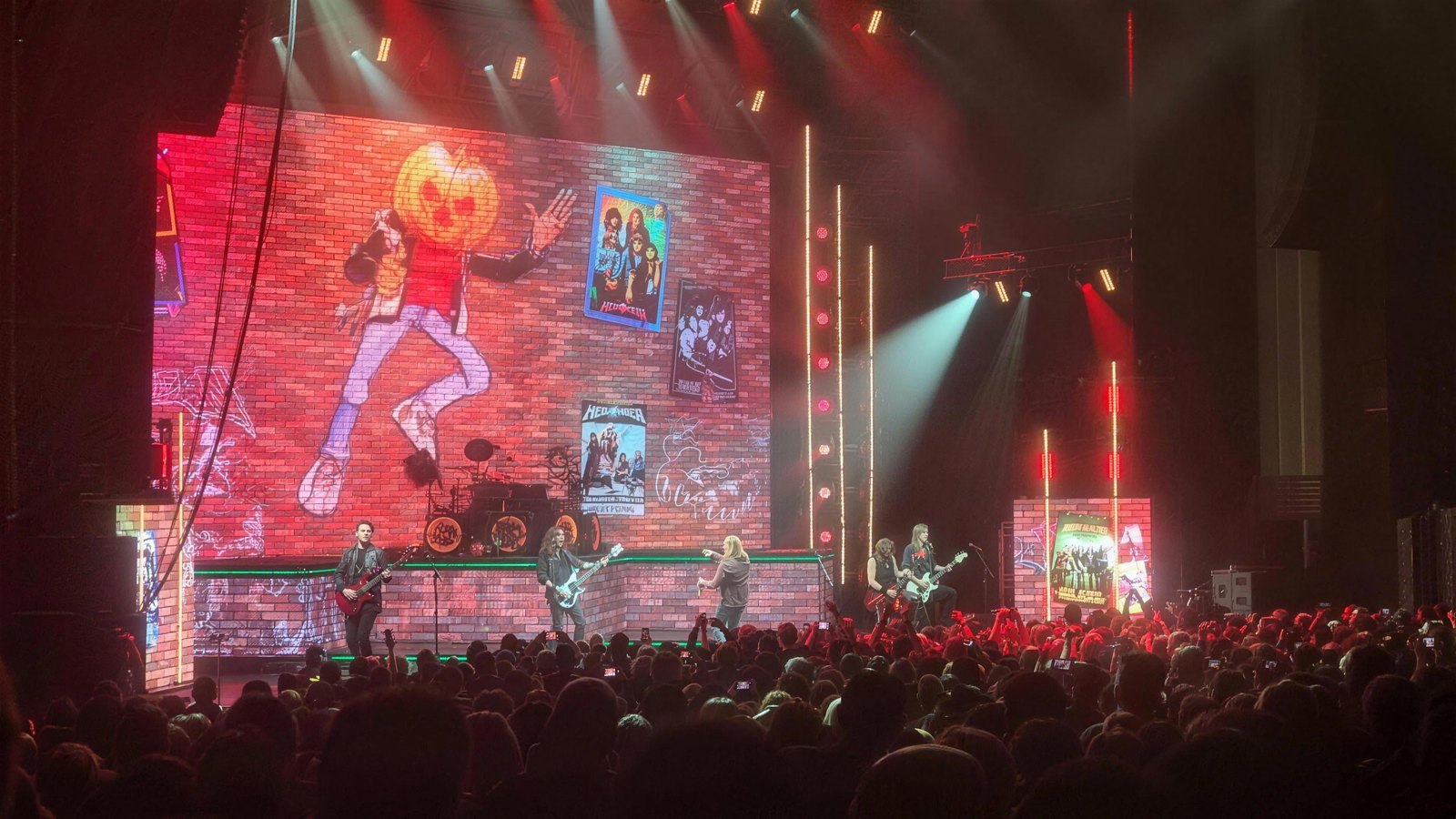
The vanguard of the whole European style started on the heavy side of the line. The Hamburg band that put out Walls of Jericho on Noise in 1985, with Kai Hansen singing in a raw, hoarse register over riffs built for speed, was Helloween, and by most readings, Metal Archives and Sputnikmusic reviewers both among them, that debut is closer to speed metal than to anything the band made after Kiske arrived. The chorus was rising. It had not yet taken over the song.
Released on 17 September 1990, with Scott Travis newly behind the kit and running a double kick pattern under the title track at a speed the band had never attempted, Painkiller is the record the power metal camp most often claims for itself, and the band that made it is the same one that made "Freewheel Burning". Its choruses stay in the minor. The riff never hands over the song. It is heavy metal played at power metal's speed, which is exactly the case that proves speed decides nothing.
The heresy runs the other way too. Swedish revivalists who modelled their 1997 debut Glory to the Brave on Priest and Accept were sold, from the first press release, as power metal, and the band so filed was HammerFall. Much of what they play is the traditional style with a brighter chorus. Labels sell to a shelf. Songs answer to their weight.
Where the line falls
Put the three tests to any record. Does the riff carry the song, or the chorus? Is the chorus in the riff's dark key, or does it break into the major? Is the singer a warrior with grit in the throat, or a tenor who never lets it in? Two answers on the first side and the record is heavy metal, however fast it runs, and the same ruler measures every other border in the chapter it belongs to.
The lineage is not in dispute. Power metal is heavy metal's child and it still wears the family's clothes, the leather, the twin guitars, the high clean voice. The older border, the one that decides whether a band is rock or heavy metal in the first place, is harder to call than this one. Here the question is only where the weight sits, and the answer is always audible.
