
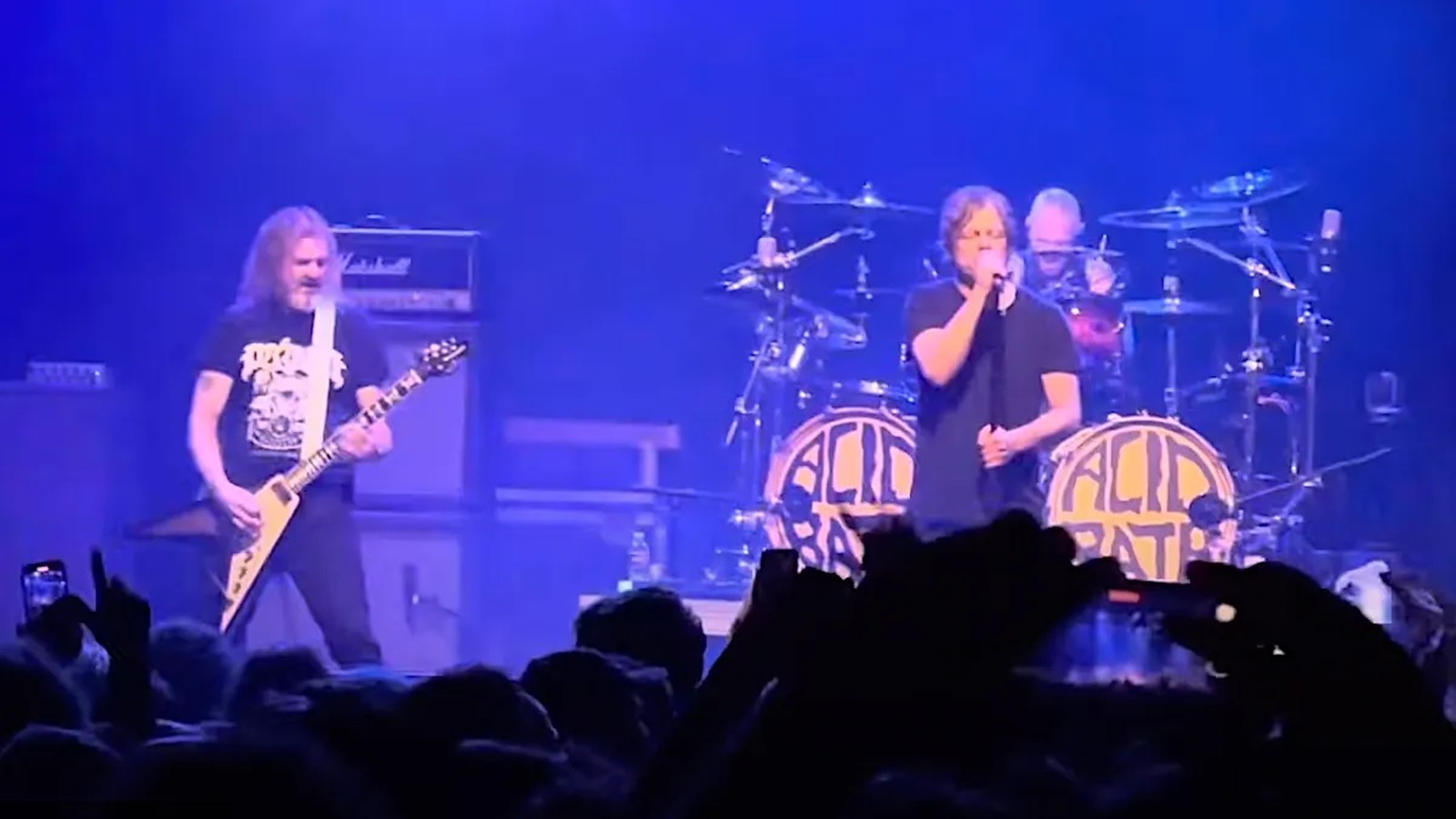
On 30 April 2025, five days after the band had walked onto a New Orleans stage for the first time in twenty-eight years, Metal Hammer published a long feature by Rich Hobson on Louder that named Acid Bath "the great lost Louisiana sludge metal band", and the phrase has followed the quintet from Houma into the reunion coverage since, as though the two records the band left behind before January 1997 could be filed under one word and the drawer closed on them. We want to test the phrase rather than repeat it. The records are sludge for part of their running time, and the part that is not sludge is the part people still sing.
Is Acid Bath sludge metal, then? Yes, by tempo, by descent and by the map, and nobody who files When the Kite String Pops beside the Eyehategod records of the same years has misfiled it. But a sludge band in the strict sense, a band that lives entirely in the ugly half of doom on feedback, hardcore anger and the scream, does not bring the blues into the room or write a song that AllMusic's reviewer thought could have been a radio hit. Acid Bath did both. The answer therefore has two halves, and we hold both.
The case for sludge
Formed in 1991 in Houma, the seat of Terrebonne Parish in the sugar cane country south-west of New Orleans, by the singer Dax Riggs, the guitarists Sammy Duet and Mike Sanchez, the bassist Audie Pitre and the drummer Jimmy Kyle, the band built its heaviest songs on what AllMusic calls "Black Sabbath-like sludge", riffs poured as slow as road tar in an August heat, flattening every chorus that tries to cross them. The slowness is not in question.
The geography counts for as much as the tempo. The New Orleans scene that gave sludge its name was already standing when Acid Bath formed: Eyehategod, founded in the city in 1988, had released In the Name of Suffering in 1990 and would issue Take as Needed for Pain through Century Media in 1993, a year before the Houma band's debut, and Crowbar, which had started out in the city as The Slugs in 1990, issued its debut Obedience thru Suffering in 1991. The two scenes shared people as well as a sound, and Sammy Duet went on to play lead guitar in Crowbar from 1998 to 2002.
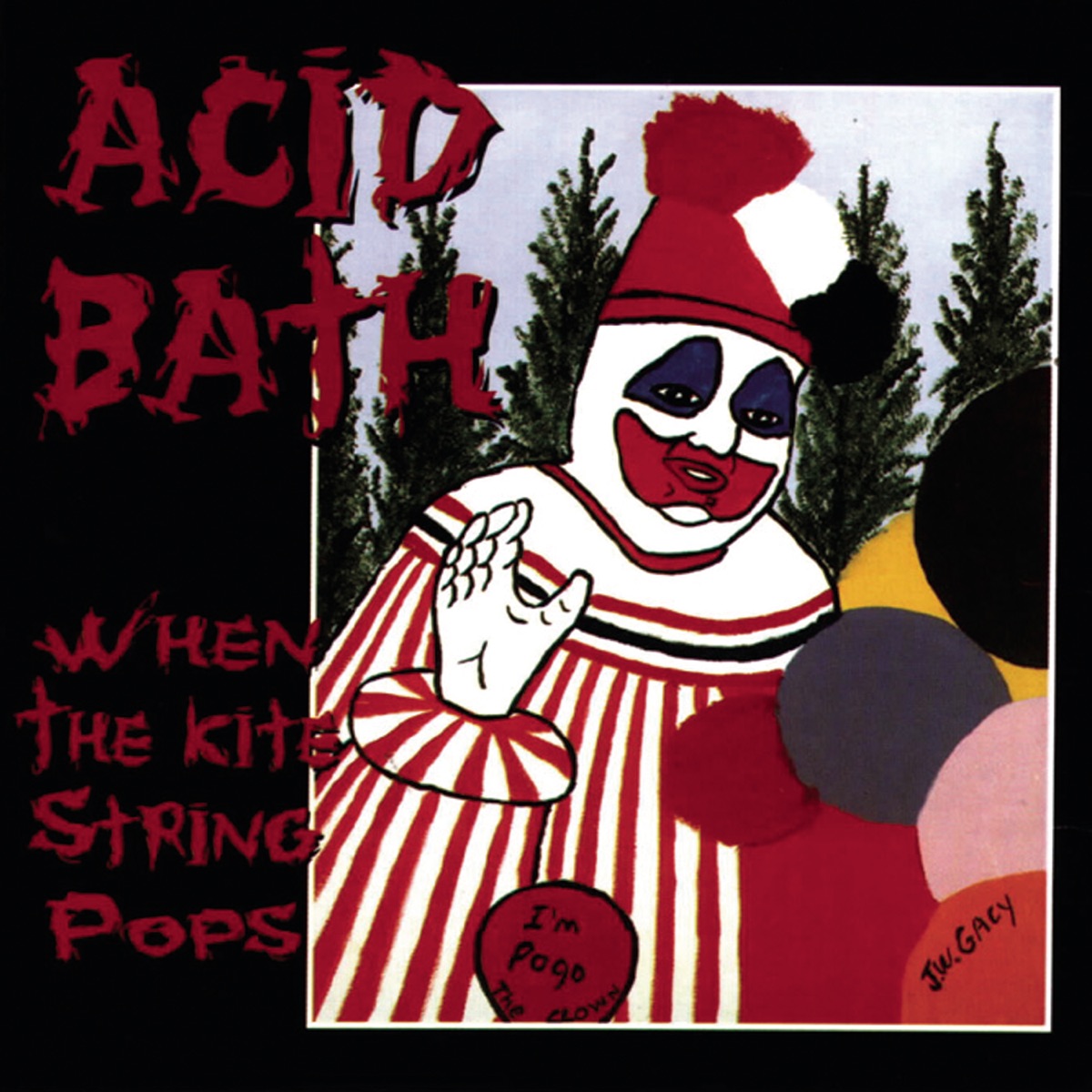
Recorded at Side One in Metairie, produced by Spike Cassidy, the guitarist of the Houston crossover band D.R.I., with the band credited as co-producers, and released by Rotten Records on 8 August 1994, When the Kite String Pops stretches fourteen songs over sixty-nine minutes, and by 1999 it had reportedly sold just over 37,000 copies in the United States on an independent label. Metal Hammer's Rich Hobson found the band's extremes "tied together by dense riffs and existential dread", and on the long songs of the debut, "Dr. Seuss Is Dead" and "Finger Paintings of the Insane" among them, each running just past six minutes, the label fits without adjustment. On others it does not.
What pulls away from it
The singer with two voices is where the label starts to slip. Dax Riggs could move inside one song from a death metal growl to a melancholy, melodic croon. AllMusic's biography calls the band "difficult to pigeonhole" and hears "hints of goth" beside the sludge, and in 2026 Metal Hammer still counted "Scream of the Butterfly", the sixth song on the debut, among the band's biggest 'hits', a word the sludge textbook rarely needs. Hobson heard "sludge with doom, death metal and the blues", AllMusic adds "bluesy Southern rock" to its list, and the two descriptions meet on the same record.
The band's own influences point elsewhere as well. In Metal Hammer's account of April 2025 the members drew on Morbid Angel, Depeche Mode, The Doors and Simon and Garfunkel, and Riggs told the magazine that his dream of a third Acid Bath record was "a very doomy trip". "The Bones of Baby Dolls", near the end of the debut, is one of the bad-trip songs Hobson found "filled with images of death, depravity and mental distress". The death metal in the vocals is real, and so is the goth in the lyrics about death, madness and murderers. Neither belongs to the sludge textbook.
Think of the Louisiana cane fields in the harvest weeks of autumn, when the growers set the rows alight and the dead leaves go up in a wall of black smoke, while the stalks, with the sugar locked inside them, stand scorched but upright through the fire and go on to the mill. The sludge on these records does the work of that fire. The low riff, the growl and the dragged tempo burn each song down to its stalk, and what stands in the smoke afterwards is Riggs's melody, the thing the whole blaze was lit to leave behind.
The sludge burns each song down to its stalk, and what stands in the smoke afterwards is the melody.
The accessibility is the last difference. The band arrived in the years when grunge had put slow, heavy and melodic guitar music on American radio, years after the Melvins had shown that one slow, detuned sound could feed both the Seattle bands and the swamp, a story told in the Melvins and the Record Everyone Copied, and Riggs's clean voice sits far closer to that radio than the shouting on any Eyehategod album. Sludge is not usually written for the charts. Acid Bath came within a lyric sheet of it.
Two records and two painted sleeves
The sleeve of When the Kite String Pops reproduces a painting by John Wayne Gacy titled "Pogo the Clown", in which Gacy painted himself as Pogo, the clown character he had adopted, with balloons carrying his nickname and his initials. Gacy was convicted in 1980 of 33 murders and was executed in Illinois on 10 May 1994, three months before the album came out. The band used art by other convicted killers too: a Richard Ramirez drawing on the 1994 Edits EP and a Kenneth Bianchi piece on the 1996 Radio Edits compilation.
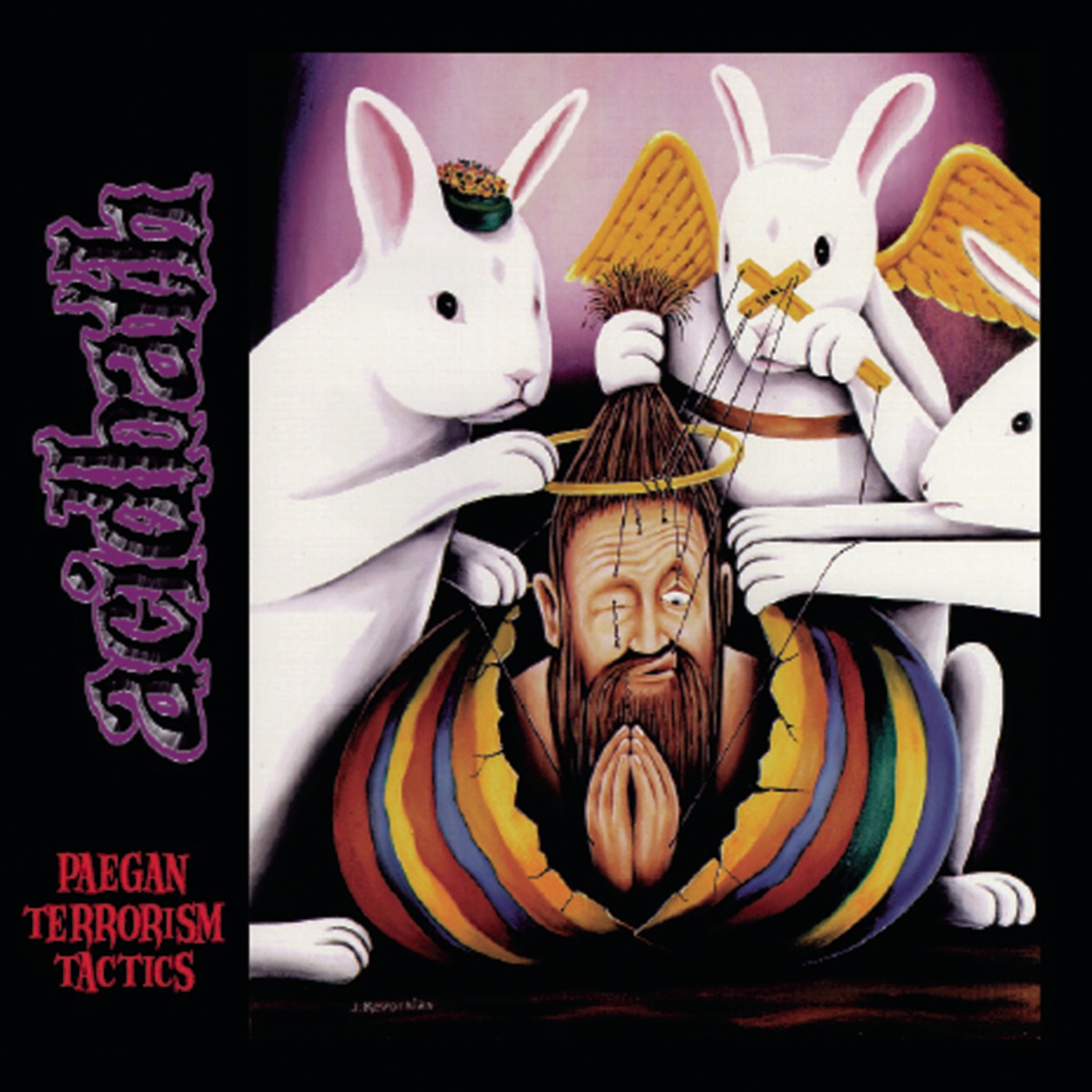
Recorded at Festival Recording Studios in Kenner with Keith Falgout producing, and released by Rotten Records on 12 November 1996, Paegan Terrorism Tactics drags the heavy half of the band down to a leaden crawl on "Bleed Me an Ocean", whose "slow, brutal drag" Metal Hammer still heard three decades later in Manchester, while pulling the other half toward the light on "Venus Blue", a song AllMusic's William York judged could have been a radio hit "if not for the graphic lyrics".
January 1997 and the years apart
On 23 January 1997, two months after the second album came out, the bassist Audie Pitre was killed in a car crash when a drunk driver hit the car he was travelling in with his parents and his younger brother. Pitre and his parents died, and his brother survived. Acid Bath ended after his death.
What the members did next is itself evidence for our question, because the two halves of the sound left in opposite directions. Riggs and Sanchez formed Agents of Oblivion, whose only album, self-titled, came out in 2000 and drew on swamp rock and blues rock as much as on metal, and Riggs then led Deadboy & the Elephantmen for Fat Possum before recording under his own name from 2007. Duet turned his side band Killgore into Goatwhore in 1997, completing the line-up with Ben Falgoust, the singer of Soilent Green, and Goatwhore plays blackened death metal. Neither of the bands the two men founded played sludge, whatever Duet did in his four years with Crowbar. When rumours of a reunion with a new singer circulated in June 2014, Sammy Duet answered, as Loudwire reported on 6 June 2014, that without Pitre there would "never be 'new' ACID BATH material". Tomas Viator, who had drummed with Duet and Pitre in Dark Karnival before Acid Bath and played keyboards in its last months, died in May 2024, and when Duet was asked soon afterwards about a reunion, he told Metal Hammer that "it just put everything in perspective".
The return, and the verdict
Announced on 15 October 2024 for Sick New World in Las Vegas on 12 April 2025, the reunion brought back Riggs, Duet and Sanchez with Goatwhore's Zack Simmons on drums and a new bassist, but the festival cancelled its 2025 edition on 29 November 2024 and the Las Vegas appearance never took place. The first show came instead at the Fillmore in New Orleans on 25 April 2025, followed by a second night there on 30 April and festival appearances announced for Sonic Temple in Columbus on 9 May and Louder Than Life in Louisville on 18 September 2025.
Without Contraries is no progression. Attraction and Repulsion, Reason and Energy, Love and Hate, are necessary to Human existence.
William Blake, The Marriage of Heaven and Hell
The following year was larger. Acid Bath joined two dates of Obituary's American tour in March 2026, at the Caverns in Pelham, Tennessee on 21 March and at White Oak Music Hall in Houston on 28 March, played Milwaukee Metal Fest in June, gave its first UK show on 25 June at a sold-out, 2,600-capacity Manchester Academy that Metal Hammer reviewed four days later, and then went out with System of a Down and Queens of the Stone Age on a European stadium tour that opened in Solna, outside Stockholm, on 29 June and took in both nights at Tottenham Hotspur Stadium in London, on 13 and 15 July. In Manchester the set opened with "Tranquilized", ran through "Bleed Me an Ocean", "Venus Blue", "The Bones of Baby Dolls" and "Dead Girl", and closed on "The Blue". The band had released no new recording by September 2026.
So, is Acid Bath sludge metal? In its riffs and its birthplace, yes: a band from the cane parishes whose slowest songs sit easily beside Eyehategod and whose guitarist went on to four years in Crowbar, a question we answer on its own terms under is Crowbar Sludge Metal. It is not only sludge metal, and it never was. The clean voice, the blues, the growls taken from death metal and the goth in the words make Acid Bath a band that used sludge the way the growers use fire in the autumn, to clear the field for the crop. File the records under sludge. Listen to them for what the fire left standing.
