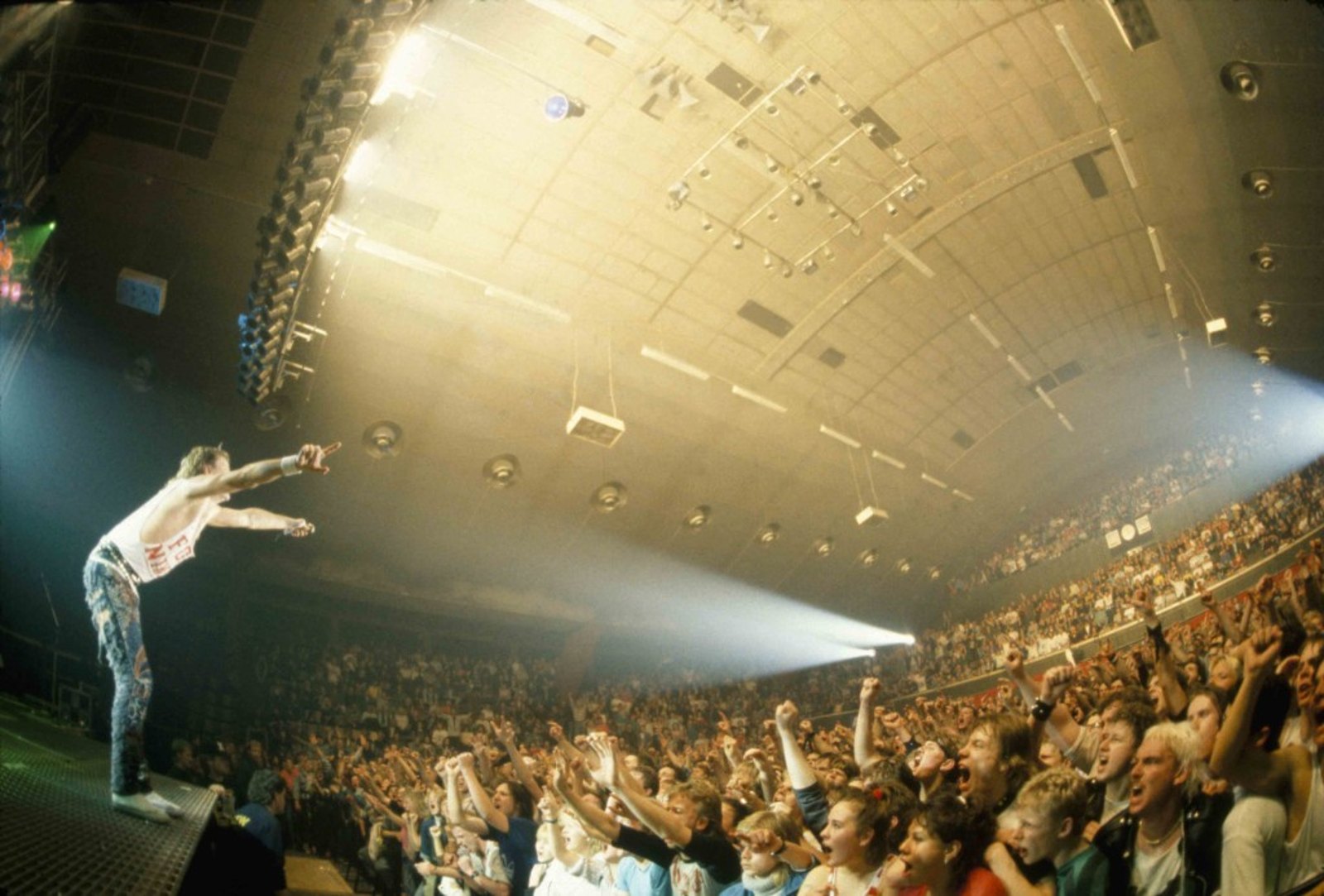
A jingle studio in Dublin, the winter of 1986, near the end of three years and three countries, with the clock running on a record that had been started twice already and abandoned twice. The five men from Sheffield who were by then deep into a third attempt at the same album, carrying a bill later put at four to five million dollars and a break even point near five million copies, were Def Leppard. At the desk stood a producer who had spent those years putting a razor blade through two inch tape, cutting finished chords back into single strings and splicing them into shapes no pair of hands could play in one pass. Nobody on the Sunset Strip worked that way. Nobody on the Sunset Strip could have paid for it.
A census enumerator walks a street on one night in spring and writes down whoever happens to be asleep in each house. The lodger who arrived on the Tuesday and left on the Friday is in the ledger for good, at that address, in that parish, with his trade entered in another man's handwriting and no right of appeal, while a whole family that was travelling that week vanishes out of the record of its own town. The ink dries by morning. Nobody goes back.
Is Def Leppard hair metal? The band was in the house on the night America took its count, and the entry has stood ever since. What the entry cannot say is where the household came from, what trade it worked at, or that the parish boundary was drawn around it years after it was built. The decade in which that count was taken, with its clubs, its cameras and its ballads bought on credit, is laid out in the chapter that covers it. The answer runs by kind of evidence, and the kinds do not agree.
The yes: a rotation slot, a haircut and seven singles
The strongest case for the yes is not the hair, and it is not the spandex, though both were there in quantity by 1983. It is the shape of the campaign. "Photograph" went into heavy rotation on MTV that spring and carried Pyromania to number two on the Billboard 200, the main American album chart, held off the top by Michael Jackson's Thriller, and from that moment every label on the Sunset Strip wanted a record that behaved the same way. The spectacle was identical. So was the shelf.
Four years later the campaign turned into something no Strip band ever managed. Hysteria threw off seven singles between July 1987 and January 1989, kept the album on the American chart for two years, and put "Love Bites" at number one on the Hot 100 on 8 October 1988, the band's only American chart topper. That is not how a heavy band sells a record. That is how a pop act works a catalogue, single by single, for two years.
"Love Bites" is the exhibit the yes deserves to keep. It is a slow song with a chorus placed where the radio wanted it, sung in stacked harmony by men who had been drilled through take after take until the joins vanished, and by common consent it belongs to the same trade as every power ballad the decade sold. The band has never disowned it. It has simply never sounded like anyone else's.
Is Def Leppard hair metal by the hands on the guitars? No
Turn the picture off and the guitars answer in a different accent altogether. The guitarist who wrote the twin lines running under half the choruses on Pyromania was Steve Clark, and those lines are harmonised thirds out of the British wave of 1979, played clean of the tricks the American clubs were selling. There is no dive bomb used as a signature. There is no locking tremolo doing the work a melody should do.
The players the Strip actually trained went the other way, and the distance shows in the solos. The guitarist who came in during 1982 and doubled nearly every line on the records that followed was Phil Collen, and his solos are written into the songs at eight or sixteen bars, arranged like brass parts rather than turned loose. A Strip guitarist proved himself against Eddie Van Halen's right hand. The Sheffield pair were proving something about arrangement.
There is no dive bomb used as a signature. There is no locking tremolo doing the work a melody should do.
The method no Strip band could afford
The producer who had made AC/DC's Highway to Hell and Back in Black, and who arrived at this band out of a catalogue full of pop records rather than metal ones, was Robert John "Mutt" Lange. He did not record Hysteria so much as set it, each chord cut into single strings and laid in like tesserae, each harmony sung one voice at a time and pressed into the wall by hand, until the finished surface held a picture that no room full of musicians could have made in one take and none could take apart afterwards.
The drummer Rick Allen lost his left arm in a car crash on 31 December 1984. He returned to the band on a custom kit built so that his feet could play what his left hand had played before, and the record was finished with him behind it.
Set that against the way the style was actually manufactured. The Strip's records were cut fast and cheap by producers such as Tom Werman and Beau Hill, in weeks rather than years, on budgets that would not have covered the tape bill in Dublin. The company that had to sell five million copies before it saw anything back was Mercury. Hair metal was a production line. This was a commission.
It is not down in any map; true places never are.
Herman Melville, Moby-Dick
Sheffield, and the years after the market closed
The pedigree is the part the American filing never had room for. The band formed in Sheffield in 1977, pressed its own first record on borrowed money, and was on British radio before the phrase hair metal existed in any form. It never paid a Los Angeles club for the right to play. It never wore a scrap of the make up the word was originally coined about.
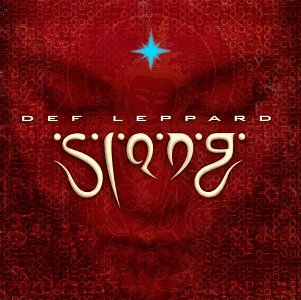
Then the market for the whole style shut, and the band carried on selling regardless. The guitarist Steve Clark died on 8 January 1991, and Adrenalize, made without him and released on 31 March 1992, went to number one on both the UK Albums Chart and the Billboard 200, where it held the top spot for five weeks, months after Nevermind had supposedly closed the door on every band of that kind. In 1996 Slang, recorded in a rented villa above Marbella and finished in Dublin, tore out the stacked voices, the sampled drums and Mutt Lange himself, and reached only number 5 in Britain and 14 in America. The experiment failed commercially. It proved the point completely.
| Test | What the style did | What this band did | Answer |
|---|---|---|---|
| The guitar | Locking tremolo, dive bomb, the solo as a duel | Harmonised thirds, arranged solos, no bar tricks | No |
| The studio | Cut in weeks, cheaply, for radio | Three years, one producer, assembled string by string | No |
| The song | Chorus early, one ballad per album | Chorus early, seven singles off one album | Yes, and further |
| The look | Backcombed hair, spandex, the camera | Backcombed hair, spandex, the camera | Yes |
| The pedigree | Sunset Strip clubs, pay to play | Sheffield, a self pressed record, British radio | No |
| After 1991 | Dropped by the labels inside two years | Number one in America in 1992 | No |
The entry that was never corrected
The man who has spent thirty years refusing both of the labels stuck on his band, the British one and the American one alike, is the singer Joe Elliott. A band's opinion of its own genre counts as one voice among many, and it does not settle anything on its own. The tonnage this band moved between 1983 and 1989 put it at the centre of a market it had no part in building, and a market is where words like this one get written down.
So the question is def leppard hair metal divides cleanly by kind of evidence. By the guitars, the method and the pedigree, no, and not by a narrow margin. By the photograph, the rotation slot and the singles campaign of 1987 to 1989, yes, and more thoroughly than most of the bands the word was invented for. The same method applied to a band that came off the Strip itself, in denim and with a snarl at the neighbours, decides is Guns N' Roses hair metal, and it gives a different answer for different reasons.
Def Leppard sold to the same audience, in the same years, off the same television channel, and that is the whole of what the word has ever meant when it is pointed at this band. Everything underneath the photograph was made somewhere else, by other hands, at a price nobody on the Sunset Strip was ever offered. Both of those things are true. Only one of them is about the music.