
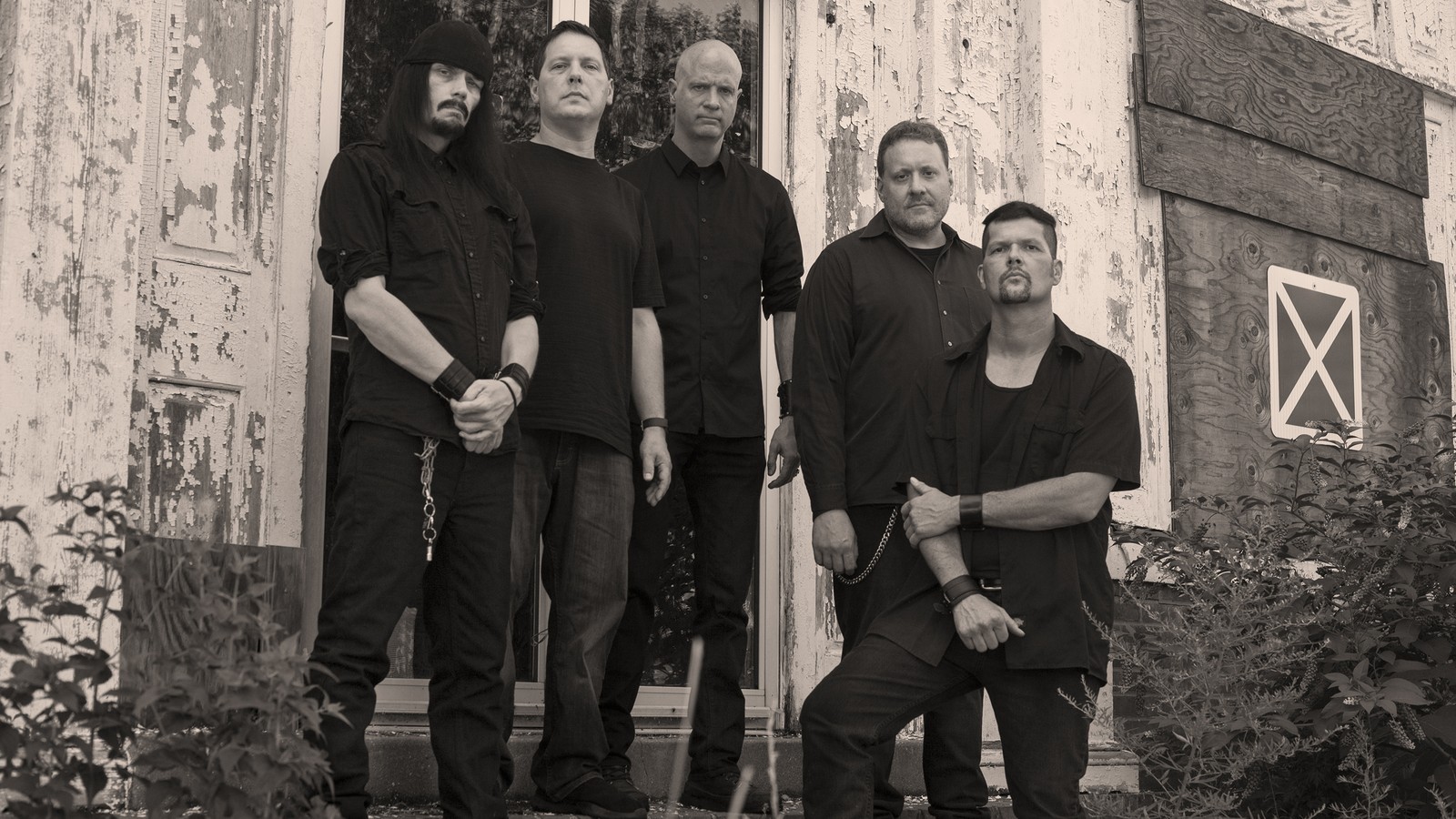
In February 2006 the American monthly launched in September 2004 to cover extreme music, Decibel, inducted the twelfth album into its Hall of Fame, and the album was Forest of Equilibrium, the 1991 debut of the English band Cathedral. J. Bennett's induction piece set the band's beginnings in 1989, a year in which, in his account, the extreme metal underground was feeding on the high speed of death metal and grindcore, and described a band committed to the slowest and most gruelling tempos they could manage. The magazine did not ask whether the record belonged in its pages. It printed it.
Whether doom metal is extreme metal at all is a question that critics, academics and musicians have answered in opposite directions for more than thirty years, and the disagreement is never really about doom. It is about the unit in which extremity is measured. Measure it in beats per minute and doom is the slowest and therefore the mildest music in the building. Measure it in load and the picture we keep in front of us is the floor of an ocean trench, nearly eleven kilometres down, where nothing moves quickly and nothing has to, where the water bears on every square centimetre with more than a thousand times the force of the air at the surface, enough to crush a steel hull like a paper cup while not one thing in that whole black column travels at speed. Our verdict, argued below against the map of the genre, is that doom is extreme metal by pressure, and that the line runs through the middle of doom itself.
A stopwatch and a pressure gauge are both honest instruments. The whole argument over doom is an argument over which one extreme metal agreed to carry.
Extremity by the stopwatch
The case against doom begins with the definitions. The one the reference works repeat, a cluster of metal subgenres characterized by sonic, verbal and visual transgression, is the wording of the sociologists Julian Schaap and Pauwke Berkers, who drew it from Keith Kahn-Harris for the IASPM Journal in 2014, and when they spell out the sonic half they put speed on the list by name: distortion reaching into the vocals, grunts and screams, technical control and fast tempos, at times past 200 beats per minute. Not one doom band stands among the twelve examples they give. The histories drew the same frame. When Albert Mudrian, the journalist who conceived Decibel while he was finishing it, published Choosing Death through Feral House in 2004, its subtitle promised the improbable history of death metal and grindcore, and doom was left outside the title.

Released by Earache in July 1987, its two sides cut nine months apart by two different line-ups around the drummer Mick Harris, the debut of the grindcore band from the West Midlands, Napalm Death, Scum, took the song apart and swept the pieces off the table, its tracks struck like matches, flaring for a second or two and dropped still burning on the floor, with "You Suffer" lasting about one second. Nicholas Bullen sang and played bass and Justin Broadrick played guitar on the first side, taped in August 1986; Lee Dorrian, Bill Steer and Jim Whiteley joined Harris for the second, taped in May 1987. Black metal later kept the speed and added the tremolo and the shriek. By the stopwatch, doom fails every test those two musics set.
It is not a close call. Under a definition built on tempo a ten minute funeral doom song cannot be placed on the scale at all, and several definitions in circulation leave doom out or admit only some of its subgenres.
Extremity by the pressure gauge
The other school reads a different dial. Published by Berg in 2007, Keith Kahn-Harris's Extreme Metal: Music and Culture on the Edge is the book cited for counting doom under the name alongside thrash, death and black metal, and for treating it as the exception, the one extreme style that pushes heaviness and slowness to the limit where the others push speed. The ethnographer who put transgression at the centre of extreme metal found room inside it for the slowest music in the building, and the magazine for extreme music had already made the same call a year before his book came out.
| Source | Year | What it measures | Where doom lands |
|---|---|---|---|
| Albert Mudrian, Choosing Death | 2004 | The history of death metal and grindcore | Outside the title |
| Decibel Hall of Fame | 2006 | The canon of a magazine for extreme music | Inside: Cathedral at number twelve |
| Keith Kahn-Harris, Extreme Metal | 2007 | Transgression | Inside, by heaviness and slowness |
| Julian Schaap and Pauwke Berkers, IASPM Journal | 2014 | Transgression, with fast tempos named | Not among its examples |
| Decibel, top 100 doom albums | 2014 | A canon of its own | Inside, with a list of its own |
The musicians who built the slow side said the same thing before the academics did. Having left Napalm Death in July 1989 after singing on the second side of Scum, Lee Dorrian took the records of Saint Vitus, Pentagram and The Obsessed and, as he told the interviewer Fitted Kitchens of the webzine FKOTLD in May 1999, set out to make that music "more extreme, more heavy and downtuned" than any of those bands had made it, loading the old dirge with lead until it sank below the depth its founders had reached. A singer who had come out of grindcore was not retreating. It was a descent.
Voice, tuning and length
Speed is not the only credential extreme metal checks at the door, and on the other three doom does better. The voice settles most cases: once death doom set the growl under the slow riff, few gatekeepers argued, while traditional doom, with a clean singer carrying the melody, is still filed as a branch of heavy metal. Tuning counts too, because a slackened string adds mass without adding a beat per minute, which is what Dorrian was after. Length is the gauge the stopwatch school reads backwards. A sixty minute album of songs that each run past eight minutes lays its weight on the listener in courses, the way ballast is laid into the keel of a ship, one tonne and then the next, until the whole vessel sits low in the water and does not roll.
The magazine that inducted Cathedral in 2006 gave doom a canon of its own eight years later, when Decibel announced, in November 2014, a special issue sold outside its subscriptions that ranked the top 100 doom metal albums of all time, with Thergothon's Stream from the Heavens at number nine. A magazine founded for extreme music does not spend a hundred places on a music outside its remit.
Grindcore proves how much a single second can hold. Funeral doom proves how much a single minute can bear. A gauge that reads only one of them is broken.
Evoken, at the bottom of the trench
Founded in New Jersey in April 1992 under the name Funereus, with the guitarist Nick Orlando among its founders and Vince Verkay on the drums from the start, renamed in 1994 after a song on a Thergothon demo, the year the guitarist and singer John Paradiso joined, the funeral doom band that played the first Decibel magazine tour in 2012, Evoken, has spent more than three decades at the far end of extreme metal without once reaching for speed. Its fifth album, Atra Mors, released on 31 July 2012, was the hundredth release of Profound Lore. Paradiso, speaking to Comrade Aleks of No Clean Singing in October 2025, called Thergothon's recording the slowest he had ever heard and "absolutely devastating".
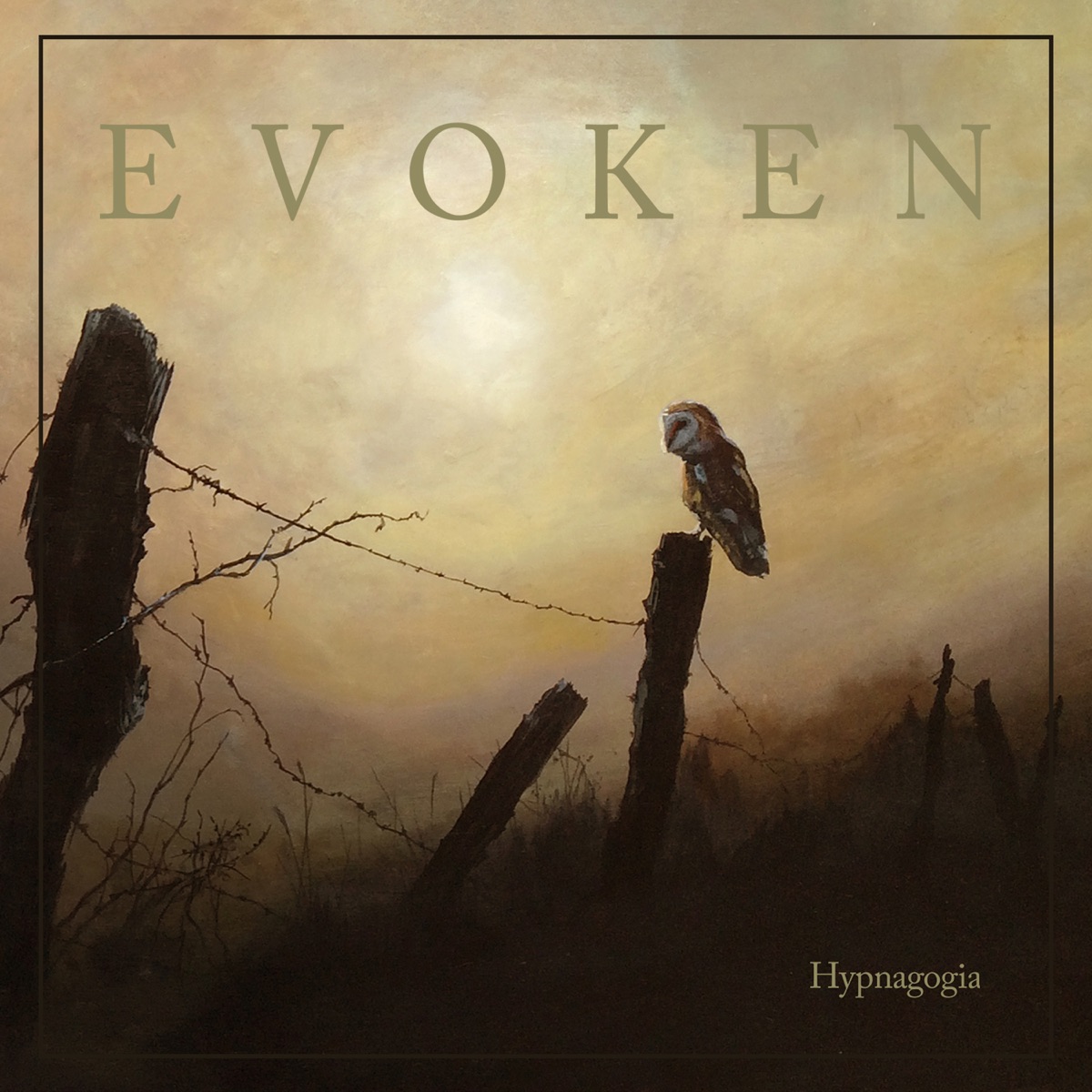
Released by Profound Lore on 9 November 2018, engineered, mixed and mastered by Steven DeAcutis at Sound Spa Studios with Paradiso, Chris Molinari on guitar, Dave Wagner on bass, Don Zaros on keyboards and Verkay on drums, Evoken's sixth album, Hypnagogia, is a concept album about a wounded soldier writing his last journal entries in a trench of the First World War, a trench of another kind, and its eight tracks sink with him for about an hour, from "The Fear Inside" at nine minutes and eighteen seconds to "The Weald of Perished Men" at ten minutes and nine. Verkay told J. Andrew of Decibel on 26 October 2018 that the soldiers' journals he read shared one common bond, the anguish of being cut off from the people they cared about most.
Evoken to me is total audio devastation with hints of hope and beauty thrown in simply to intensify the desolation.
John Paradiso of Evoken, interviewed by Comrade Aleks, No Clean Singing, 16 October 2025
Nothing in that sentence mentions tempo. The man who writes the riffs measures his own band in devastation and desolation, which are units of pressure, and nobody who has sat through the interminable last ten minutes of Evoken's Hypnagogia would think to time it with a stopwatch.
The verdict: extreme by weight, and not all of it
Doom metal is extreme metal, and the proof is the evidence the stopwatch school brings against it. Extreme metal was always defined by distance from the centre of rock, and a record can travel that distance in either direction: grindcore by cutting a song down to a second, funeral doom by stretching a single minute until the listener carries its whole leaden weight. The trench is not a faster sea. It is the same water, pressed harder. But the verdict does not cover everything with the word doom on its sleeve. Traditional doom, sung clean at walking pace, stands on the continental shelf, heavy and slow and still within reach of the surface; extremity begins where the slowness stops being a mood and becomes a load, in the growl of death doom, the scream of sludge, the geological standstill of funeral doom and drone. Where the one word stretches from the shelf to the floor is set out in what the Doom Metal Genre Covers.
