
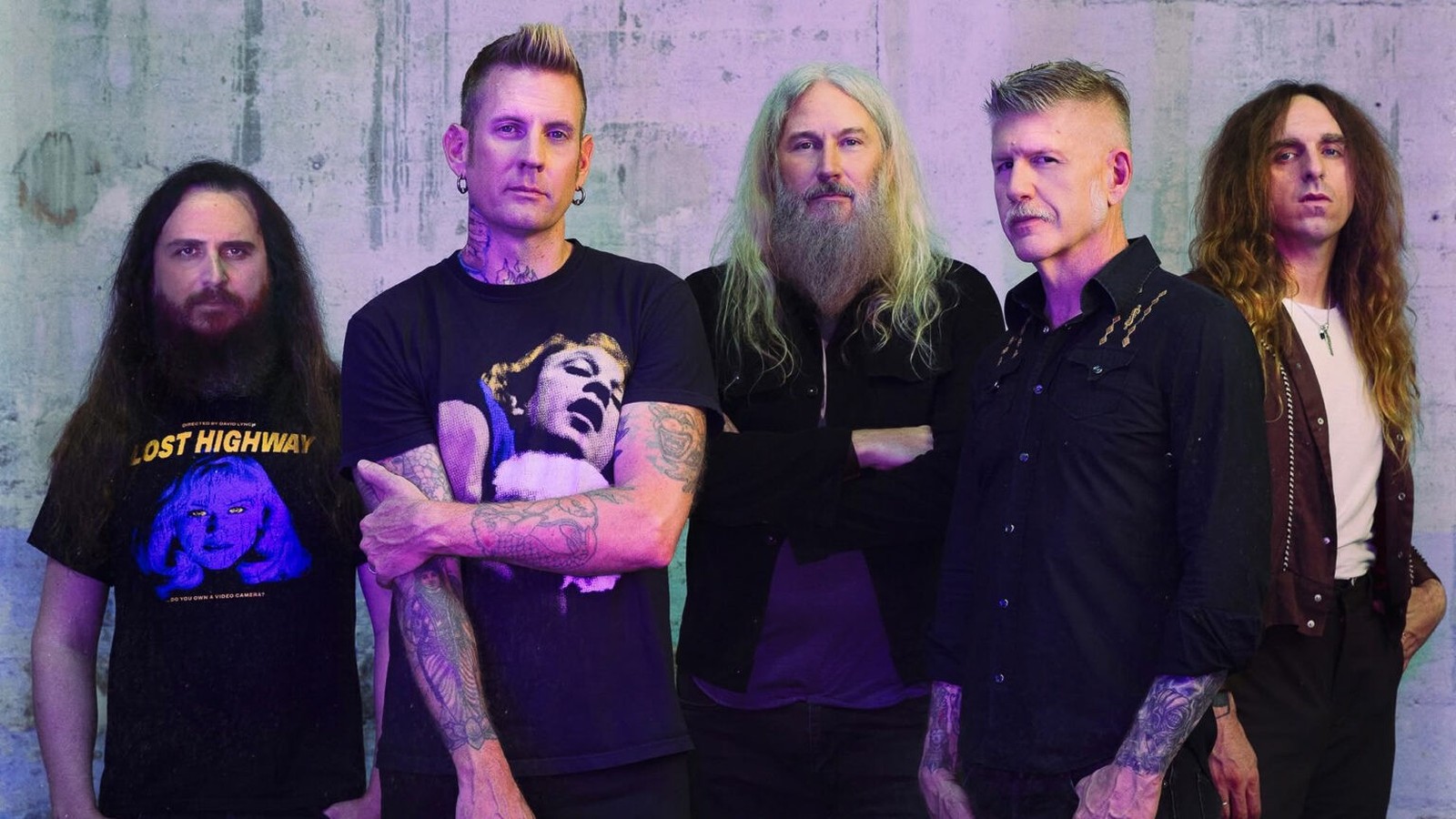
On 28 May 2002 Relapse Records released Remission, the first full-length album by Mastodon. The Atlanta quartet, formed on 13 January 2000, made it with the producer Matt Bayles in October 2001, and the band that recorded it and the band that finished its ninth album in the spring of 2026 without Brent Hinds are filed under genres that do not easily share a shelf.
We give the verdict first. Mastodon was a sludge band by descent and by its first two albums, it has been a progressive metal band for most of what it recorded from 2009 onwards, and the sludge did not leave with the change of direction but sank into the riff and stayed there. The test is a definition, and the parent chapter on where sludge came from supplies one: the slowness of Black Sabbath handed to musicians raised in hardcore punk clubs, tuned down, leaden and played with more anger than grief, first by the Melvins and then in the bars of New Orleans.
Atlanta, Relapse and the Today Is the Day years
Brought together at a High on Fire concert, the four founders arrived with a lineage that explains much of what followed. Brann Dailor on drums and Bill Kelliher on guitar had come from New York, where they played in Lethargy, Troy Sanders on bass and Brent Hinds on guitar came out of Four Hour Fogger, and the four found that they shared a love of the Melvins and Neurosis as well as Iron Maiden and Thin Lizzy. The first two names are the sludge inheritance. The second two are the twin guitar melody that would pull the band away from it.
The detour through Today Is the Day matters too. In the Eyes of God, released on Relapse on 20 July 1999 and produced by the group's leader Steve Austin, is its only album with Dailor on drums and Kelliher on bass, and it is filed under noise rock and grindcore rather than sludge: the two men who built the engine of Mastodon learned their trade inside a band that prized abrasion over slowness. Out of that school came the drummer who would set the pace of Mastodon, and a sludge riff that no longer had to crawl, because the kit underneath refused to let it.
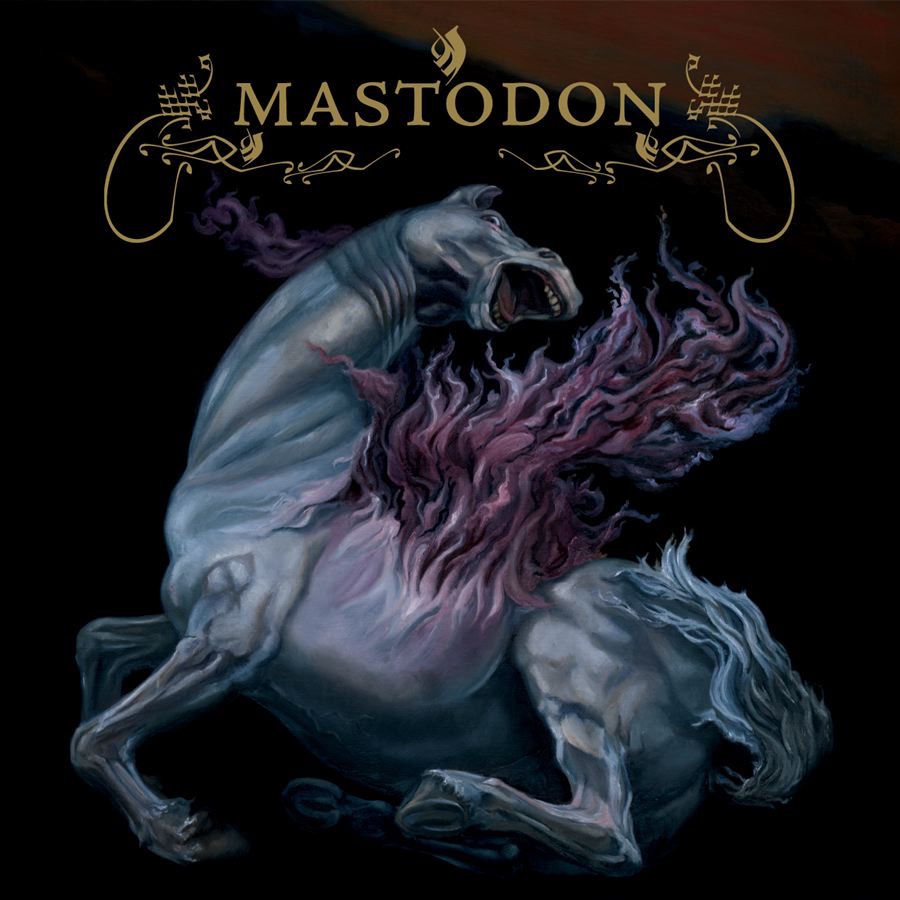
Remission is the strongest evidence for the sludge case. Kerrang!, the British weekly, placed it among the thirteen most essential sludge records; Pitchfork's reviewer heard the attitude of Black Sabbath with just enough mathematics in the arrangements; AllMusic called it technical enough to near prog rock proportions. Three readings describe one object: "March of the Fire Ants" and "Where Strides the Behemoth" are sludge riffs poured out like hot tar and tuned low, driven by a drummer who treats the space between the chords as a place to work rather than a place to wait.
Released on 31 August 2004, again on Relapse and again with Bayles, Leviathan took Herman Melville's Moby-Dick as its story and was named album of the year by Kerrang!, by the British monthly Terrorizer and by Revolver. It is still a sludge record in its bones, though "Hearts Alive" stretches past thirteen minutes and shows the outline of a second animal. Joe Daly, in Metal Hammer on 3 October 2024, called it a sludge-prog masterpiece and noted the band's kinship with sludgy Relapse labelmates such as Neurosis.
Mastodon was a sludge band by descent and by its first two albums, and a progressive metal band for most of what it recorded from 2009 onwards.
Blood Mountain to The Hunter: where the prog takes over
Blood Mountain, released by Reprise on 12 September 2006, was the band's first album for a major label and its last with Bayles, and the guests read like a statement of intent: Josh Homme of Queens of the Stone Age on "Colony of Birchmen", nominated for Best Metal Performance at the 2007 Grammy Awards, Cedric Bixler-Zavala of The Mars Volta on "Siberian Divide", Scott Kelly of Neurosis on "Crystal Skull". It is catalogued as both progressive metal and sludge, and the double entry is fair: a tale of a climber and a crystal skull is a prog concept, while the riffs carrying it were still cut to the Neurosis pattern.
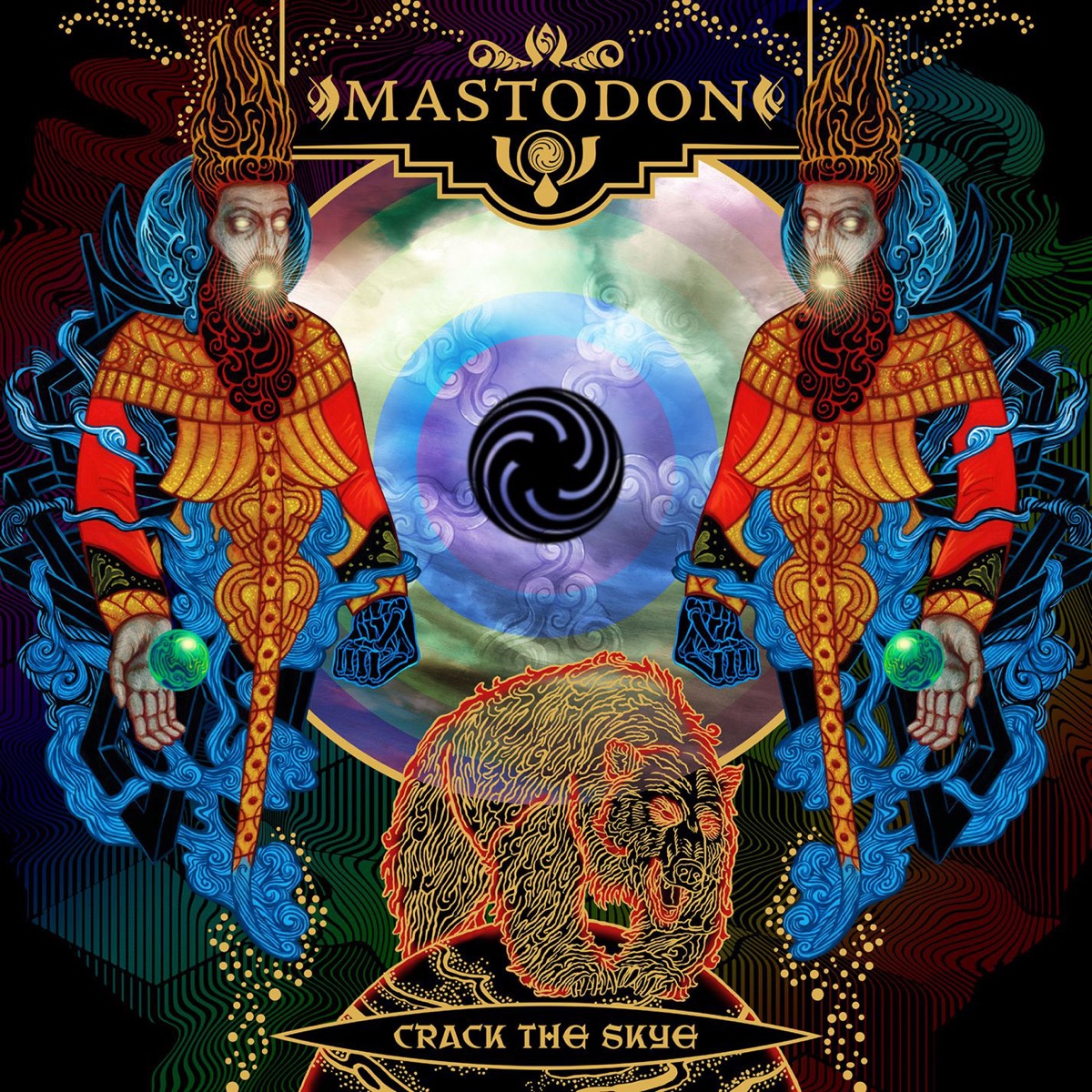
Produced by Brendan O'Brien at Southern Tracks in Atlanta, Crack the Skye was released on 24 March 2009. Its story runs through astral travel, Rasputin and Dailor's sister Skye, who died by suicide at the age of fourteen. This is the record on which the sources stop disagreeing. "The Czar" runs to almost eleven minutes in four movements and "The Last Baron" to thirteen, a reviewer at Scene Point Blank wrote on 9 April 2009 that the band had gone even deeper into prog territory and put atmosphere and melody ahead of crushing riffs, and the album is usually filed simply as progressive metal. The sludge survives in the tuning and the tonnage of the riffs. It is no longer the ground the songs stand on.
Then came the swerve. The Hunter, released on 27 September 2011 and produced by Mike Elizondo, dropped the concept album and took its title from Hinds's brother, who died of a heart attack while out hunting on 4 December 2010. Asked by Darryl Smyers of the Dallas Observer in April 2012 whether the new record still fit the sludge description, Dailor said he did not feel it was that sludgy, allowed that it might have a little of that in there, and added that he tried not to label the music at all. "Curl of the Burl" was nominated for a Grammy in 2012, and Once More 'Round the Sun took the same direction to number six in 2014, the band's highest chart position.
Emperor of Sand, the Grammy and Hushed and Grim
Built around a wanderer sentenced to die in a desert, and written while people close to the band were going through cancer, Emperor of Sand was released by Reprise on 31 March 2017 with O'Brien producing. On 28 January 2018, at the 60th Grammy Awards, "Sultan's Curse" won Best Metal Performance, the band's first Grammy. Anita Bhagwandas of NME heard a record that was doomy, heavy and magnificently multilayered. That is the balance of the later Mastodon: a progressive record arranged with the radio in mind, with the old weight still bolted to the floor of the songs, so that no arrangement, however bright, can lift them clear of it.
The last album with Hinds was the longest. Hushed and Grim, a double album of eighty-six minutes produced by David Bottrill, was released on 29 October 2021 as a tribute to the band's manager Nick John, who died of pancreatic cancer in 2018. A funereal double album made for a man the band had lost is the closest the later Mastodon comes to doom in spirit, but it is filed as progressive, stoner and alternative metal, its weight arranged rather than dragged.
| Year | Album | Label | Billboard 200 peak |
|---|---|---|---|
| 2002 | Remission | Relapse | did not chart |
| 2004 | Leviathan | Relapse | 139 |
| 2006 | Blood Mountain | Reprise | 32 |
| 2009 | Crack the Skye | Reprise | 11 |
| 2011 | The Hunter | Reprise | 10 |
| 2014 | Once More 'Round the Sun | Reprise | 6 |
| 2017 | Emperor of Sand | Reprise | 7 |
| 2021 | Hushed and Grim | Reprise | 20 |
After Brent Hinds: the band in 2025 and 2026
On 7 March 2025 Mastodon announced that the band and Brent Hinds had mutually decided to part ways. In August 2025 Hinds disputed that account in an Instagram comment, reported by Billboard on 13 August, in which he wrote that the band had kicked him out. Nick Johnston had joined as touring guitarist by May 2025. On 20 August 2025 Hinds died in a motorcycle crash in Atlanta, as Atlanta News First reported the next day. He was 51. The band called him a creative force with whom it had shared many triumphs and milestones.
The next record is already in the can. Speaking to Blabbermouth in May 2026, Dailor said the band's ninth album was finished and that it had been a hard record to make, coming after the death of his mother, the turmoil with Hinds and then his death. Hinds, he said, had recorded nothing for it, and Johnston was reported to play on it. Whatever it turns out to be, the three founders still in the band, Dailor, Kelliher and Sanders, are the same three who built the first two records with Hinds, so the verdict below rests on the eight albums he played on.
The verdict: one skeleton, bones from several digs
Anyone who has stood in a natural history museum under a mounted mastodon knows that the animal on the armature is seldom one animal: the skull comes from one dig, a run of vertebrae from another, a tusk from a third, and the preparators wire the bones onto a steel frame until the thing stands upright and looks as though it had walked out of a single grave. That is the honest picture of the band that took the animal's name. The skull and tusks, the parts that bite, were dug out of Remission and Leviathan and the Neurosis and Melvins records the founders loved; the long spine was added from Crack the Skye onwards, jointed in the progressive manner; the ribs of The Hunter came from a hard rock site further along; and the steel holding it upright from 2002 to 2026 is the drumming of Brann Dailor.
So the answer has to name its parts. What stays sludge is the weight of the riff, the low tuning and the lineage through Neurosis and Relapse. What became progressive metal is the rest: the song lengths, the concept albums, three singing voices and a drum kit played as a lead instrument. Mastodon was a sludge band for two albums, a progressive metal band for most of what followed, and never a band that stopped carrying sludge. For the slower, wider branch that Neurosis opened and Mastodon only borrowed from, the chapter on atmospheric Sludge Metal takes up the thread. The frame holds. The tusks are still sharp.
