
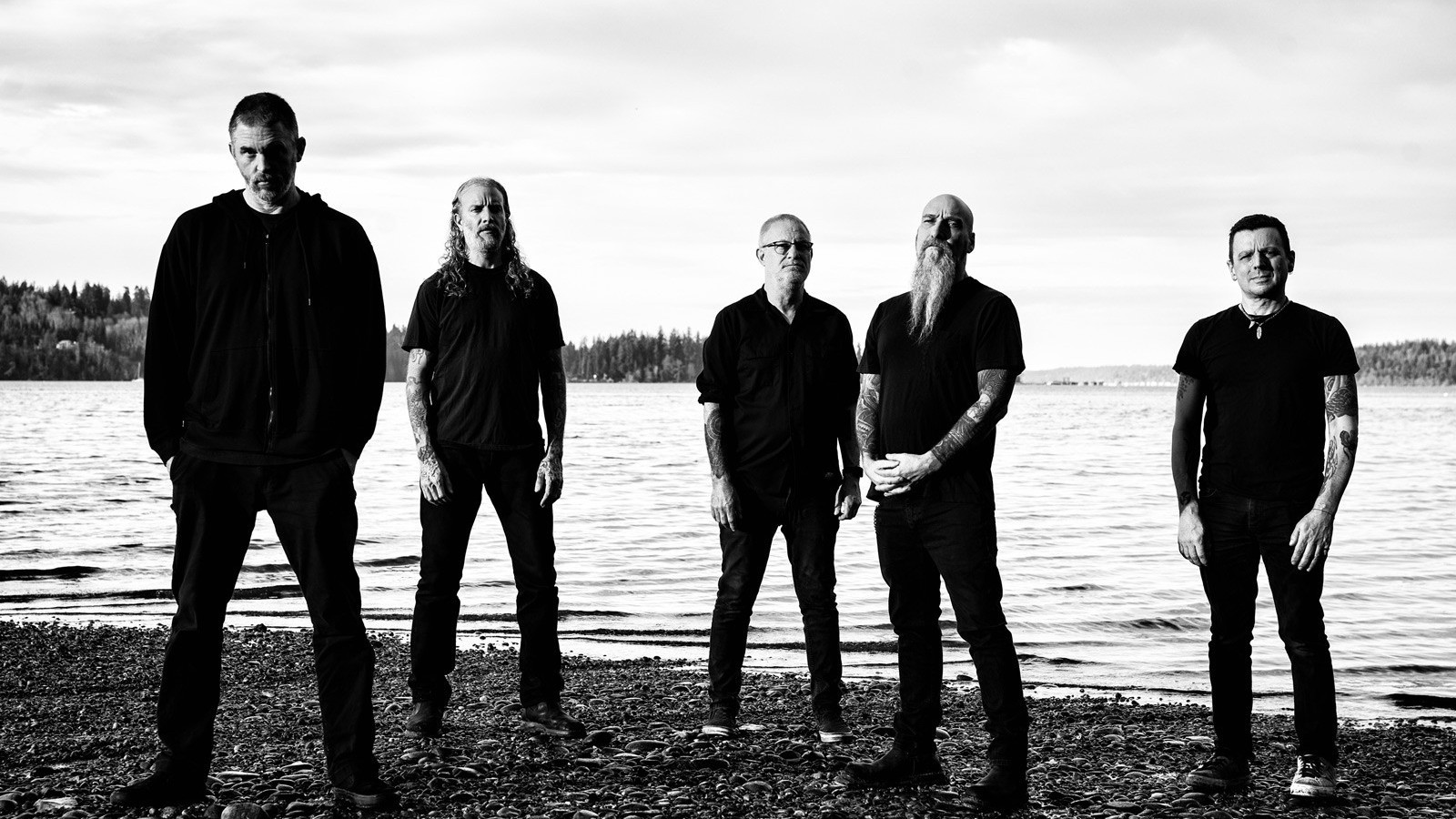
Fog everywhere. Fog up the river, where it flows among green aits and meadows; fog down the river, where it rolls defiled among the tiers of shipping.Charles Dickens, Bleak House
Atmospheric sludge metal is sludge that learned to wait. Built out of the raw material that the Melvins and the Louisiana bands had poured in the late eighties, the downtuned riff dragged like tar across the floor of the song and the hardcore bark left in rather than scrubbed off, it spreads that same load across ten or fifteen minutes, sets clean guitar, keyboards, samples and near silence between the collapses, and makes the distance between the quiet and the weight the subject of the music. The songs do not go verse, chorus, verse. They gather.
The branch has one point of origin. Formed in Oakland in December 1985 by Scott Kelly, Dave Edwardson and Jason Roeder as a hardcore band, and slowed down deliberately between their third album in 1992 and their sixth in 1999, the band that tore the verse and chorus scaffolding out of heavy music and left the riff standing alone in the open, Neurosis, drew the map that nearly every band on this page later walked. How that break out of sludge happened is told in chapter four of our sludge history; this page follows what grew out of it.
Atmospheric sludge metal is sludge that learned to wait. The songs do not go verse, chorus, verse. They gather.
What atmospheric sludge metal is
Four things separate the branch from the sludge it came out of. The first is length: a long form built on repetition and slow change rather than on a hook, so that a riff returns three or four times and means something different each time. The second is dynamics used as architecture, a quiet section that exists so the next weighted passage can fall from a height. The third is the ambient passage, the keyboards and samples Neurosis brought in when Simon McIlroy joined for Souls at Zero. The fourth is texture: tone, reverb and layering treated as parts of the composition rather than the finish on it.
The tempo stays slow, the tuning low, and the roots in hardcore: Cult of Luna came out of a hardcore band called Eclipse, Amenra out of another called Spineless. The question of who Invented Sludge Metal points back to the Melvins and New Orleans, and this branch never broke that line of descent. It kept the leaden riff and changed only what the riff was for. In the older bands it is a sentence carried out in full. Here it is something subsiding into the music around it and rising out of it again.
Neurosis, the band that drew the map
The first steps were taken on Alternative Tentacles, the label run by Jello Biafra. Souls at Zero, released on 19 May 1992, ran so far past the band's hardcore records that Neurosis could not get the mix right and asked Biafra himself to finish it. Enemy of the Sun followed on 17 August 1993, a record The Quietus later described as a black hole of precise riffs, backmasking and sampling. Then came Through Silver in Blood on Relapse in 1996, which Terrorizer credited with effectively inventing post-metal.
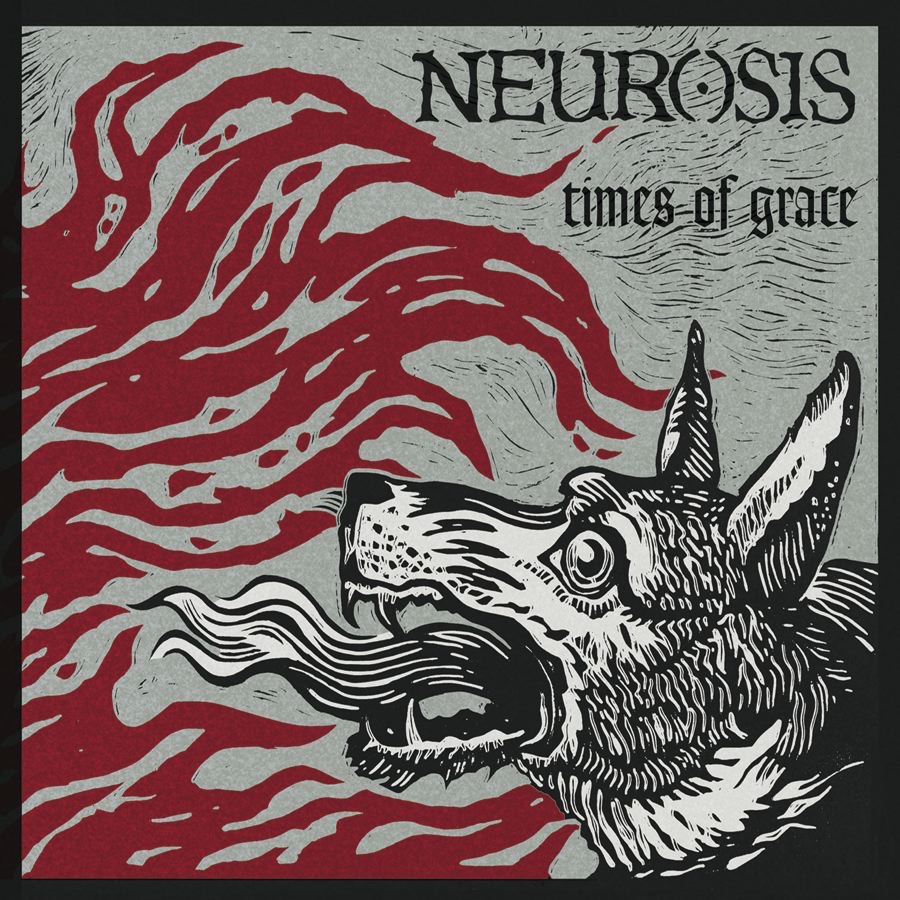
Recorded with Steve Albini in the autumn of 1998 at Electrical Audio in Chicago and Mr. Toad's in San Francisco and released by Relapse on 4 May 1999, Times of Grace is where the method settled into a form other bands could copy, sixty-six minutes of long tracks such as "The Doorway" and "End of the Harvest" in which the heaviest passages come down like a roof collapsing in slow motion, beam by beam, onto whatever quiet the band had built underneath. The BBC's reviewer heard an effortless ebb and flow in it; Stereogum later ranked it the best album Neurosis made. The same year the band founded Neurot Recordings, which on 13 July 1999 issued Grace by Tribes of Neurot, the band's ambient alias, a companion disc designed to be played at the same time.
Albini recorded every Neurosis album from then on, down to Fires Within Fires, begun at Electrical Audio in December 2015 and released on Neurot on 23 September 2016. Neurot meanwhile became a home for the next generation, from Amenra to Ufomammut.
Scott Kelly, one of the three founders and one of the band's two guitarists and singers, is no longer a member. On 27 August 2022 he wrote on Facebook that he had abused his family over many years and that he was permanently retired as a professional musician. The other members answered with a statement saying they had parted ways with him at the end of 2019 after learning of the abuse, and had kept it private at his wife's request. Pitchfork reported both statements on 29 August 2022. Fires Within Fires is the last Neurosis record with him.
On 20 March 2026 Neurot released An Undying Love for a Burning World, the band's first album in a decade and its first with Aaron Turner on guitar and vocals alongside Steve Von Till, Dave Edwardson, Jason Roeder and Noah Landis. Scott Evans recorded it at Studio Litho in Seattle over three weekends, and it opens with "We Are Torn Wide Open". The band insisted it was not a reunion, because they had never broken up.
The second generation: Boston, Umeå, Philadelphia, Finland
The man who now plays guitar in Neurosis built the branch's second home. Turner founded the label Hydra Head in 1993 and in autumn 1997 formed the Boston band Isis, whose second album, Oceanic, released by Ipecac in September 2002, brought in long stretches of clean guitar, ambient noise and the voice of Maria Christopher on "Weight". Ben Richardson wrote in the San Francisco Bay Guardian that it set off an explosion of Neurosis-inspired post-metal. Three more albums followed before the band played its last show on 23 June 2010 in Montreal, the city where it had played its first in 1997.
Formed in Umeå in 1998 out of the ashes of Eclipse, the northern Swedish collective Cult of Luna broke through on Earache with Salvation on 4 October 2004 and then laid down the basic tracks of Somewhere Along the Highway, released on 24 April 2006, over seven days, largely live, inside an octagonal wooden barn in the woods near home, a record the band itself called rough and unpolished.
Rosetta, four high school acquaintances from Philadelphia who formed in 2003, called their music metal for astronauts and followed that debut with Wake/Lift in 2007. In Finland, Callisto formed in 2001, recorded True Nature Unfolds in 2004 with the late Mieszko Talarczyk of Nasum, and on Noir in 2006 added saxophone, flute and mellotron to the sludge.
Kortrijk, Peoria and the psychedelic neighbour

Founded in Kortrijk in 1999 by the singer Colin H. van Eeckhout, the guitarist Mathieu Vandekerckhove and the bassist Kristof Mondy after Spineless fell apart, the Flemish collective Amenra has numbered its albums as masses since 2003, and van Eeckhout said in 2017 that each one is made out of necessity, to work through a particular period in the members' lives. Mass V, produced by Billy Anderson, took them to Neurot in 2012; Mass VI in 2017 was their first entry on the Belgian chart; De Doorn, their first for Relapse, reached number three there in 2021. Each mass is a dirge made out of one stretch of those lives.
The American wing turned psychedelic. Formed in 2002 in Peoria, Illinois, and calling its own sound psychedelic metal, Minsk released The Ritual Fires of Abandonment on Relapse in February 2007 and The Crash and the Draw there in April 2015. The Italian trio formed in 1999 by Poia, Urlo and Vita, Ufomammut, is the psychedelic neighbour at the border: Eve in 2010 was one forty-five-minute track in five movements, and the two chapters of ORO came out on Neurot in April and September 2012, driving the riff so deep into repetition that it stops reading as a riff and becomes a place.
Atmosphere in this music is not an addition to the riff. It is the length of time the riff is made to wait before it is allowed back, and the bands that endured are the ones that knew exactly how long that was.
Andrzej Sawicki, KaosMetal
Where sludge ends and post-metal begins
Post-metal, in the account most writers give, came out of the same 1992 records, Souls at Zero and Godflesh's Pure, and went on through Isis, Pelican and Jesu towards instrumental music, shoegaze and black metal, until heaviness became one colour among many. Atmospheric sludge is the part of that family that never let go of the ground. Our test is simple: take away the ambient passages and the long build, and see whether a sludge record is still standing underneath. With Times of Grace, Salvation or Mass V it is.
| Year | Band | Record | Label |
|---|---|---|---|
| 1992 | Neurosis | Souls at Zero | Alternative Tentacles |
| 1999 | Neurosis | Times of Grace | Relapse |
| 2002 | Isis | Oceanic | Ipecac |
| 2004 | Cult of Luna | Salvation | Earache |
| 2005 | Rosetta | The Galilean Satellites | Translation Loss |
| 2007 | Minsk | The Ritual Fires of Abandonment | Relapse |
| 2012 | Amenra | Mass V | Neurot |
| 2026 | Neurosis | An Undying Love for a Burning World | Neurot |
The best records on this side of the line behave like fog rolling in over a tidal flat. The mud and the channels are still under your feet and the weight has not gone anywhere, but first the horizon goes, then the distance, until the listener stands in a grey room without walls and the riff comes out of it the way a sandbank comes out of a falling tide, suddenly, enormous, exactly where it always was. Post-metal is the moment the flat itself is gone and only the weather remains. They are not the same music.
The other border runs against bands that kept the riffs and dropped the waiting. The question we hear most often from that direction, is Mastodon Sludge Metal, has an article of its own; the short answer here is that the Atlanta quartet Mastodon took the tar and the concept album and left the fog behind.
