
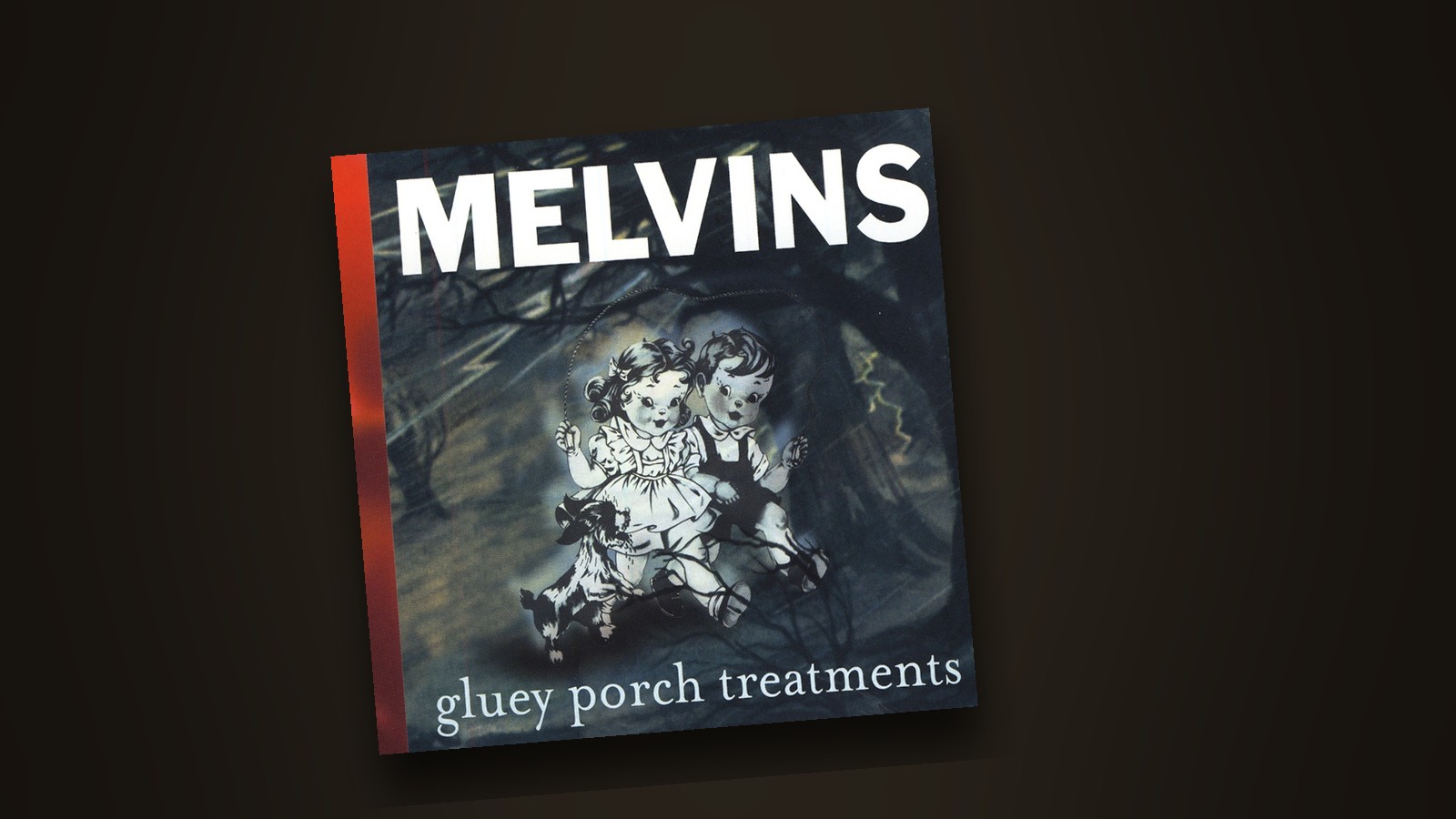
October 1986, Studio D in Sausalito. Driven down from the logging coast of Washington with a set of songs that either ran far too long or finished before the tape had warmed up, the trio from the timber towns, the Melvins, with Buzz Osborne on guitar and voice, Matt Lukin on bass and Dale Crover on drums, set up to cut a first album with Mark Deutrom producing and Carl Herlofsson engineering. The bill went to Alchemy Records, the small Bay Area label Deutrom and Victor Hayden had founded the year before, with Hayden credited as executive producer.
Nobody in that room was trying to invent a genre. They were trying to irritate one. Speaking to Mark Prindle in 2002, Osborne placed the session at "the height of" skinhead hardcore and said plainly that the band did not like it at all. What they left on the tape, Gluey Porch Treatments, runs seventeen tracks in thirty-eight minutes, opens on "Eye Flys", a six-minute dirge dragged across the floor like a wardrobe shifted by one man with a bad back, and scatters between the long ones songs such as "Exact Paperbacks", over in forty-three seconds. Alchemy pressed it on vinyl only, in 1987.
So who invented sludge metal? Picture a chemistry set left running overnight on a bedroom desk, the spirit burner still lit at dawn, reagents from three different shelves tipped into one beaker by people who were never in the room at the same time, and climbing out over the lip of the glass something grey, fibrous and faintly warm that nobody ordered, nobody can name and nobody, forty years on, has managed to kill. That is the genre. Growths are not made. The question is who poured, who left the burner on, who carried the beaker to another town and fed it, and who wrote a label on the jar.
The sound, the tempo, the tuning and the scream, is taken apart in chapter four of our doom history. This page is about hands. The label came from the press, and late: in October 2017 Noah Berlatsky of Bandcamp Daily was calling Gluey Porch Treatments "the filthy blueprint for sludge", thirty years after the burner was lit.
Growths are not made. The real question is who poured, who left the burner on, and who carried the beaker to another town and fed it.
The reagents on the shelf: Flipper, Greg Ginn and the Swans
The first bottle came from San Francisco. Formed in 1979 by singer Ricky Williams, bassist Will Shatter, drummer Steve DePace and guitarist Ted Falconi, Flipper played punk slowly on purpose, to the fury of a local scene that wanted hardcore fast, and their 1982 debut Generic Flipper carries the eight-minute trudge of "(I Saw You) Shine", which Harry Sword, in his 2021 book Monolithic Undertow, called the genesis of sludge metal. Flipper did not invent sludge. Flipper knocked the first reagent onto the carpet and refused to mop it up.
The second came from further south. Greg Ginn took Black Flag into Total Access in Redondo Beach in December 1983 with Henry Rollins singing, Bill Stevenson drumming and Ginn himself on bass after Chuck Dukowski's exit. By Michael Azerrad's account in Our Band Could Be Your Life, Ginn had rehearsed Stevenson up to eight hours a day, teaching a hardcore drummer to let the rhythm "ooze out". Side two, released by SST in March 1984, is three songs, "Nothing Left Inside", "Three Nights" and "Scream", each past six minutes, each a jar of something American hardcore had locked in the cabinet and marked not for use, and Ginn unscrewed all three lids at once.
We were actually much more into Black Flag than Black Sabbath.
Buzz Osborne on the Gluey Porch Treatments years, interviewed by Mark Prindle, markprindle.com, 2002
In the same interview Osborne named what the band was playing back then: Venom, Flipper and the Swans. The Swans belong here as a documented influence and nothing more, a dark bottle at the back of the shelf, but the trail is real: Eyehategod's drummer Joey LaCaze told Terrorizer's sludge special in August 2009 that the band's feedback and noise came from old Swans and SPK. Which band first had all of it in one beaker is a separate fight, and what Was the First Sludge Metal Band gets a page of its own. This one stays with the people.
Osborne and Crover: the back room in Aberdeen
Now the two who left the burner on. Born on 25 March 1964 in Morton, Washington, and handed Black Flag, Flipper and MDC by a friend, Roger "Buzz" Osborne started the band in early 1983 with Lukin and drummer Mike Dillard as a fast hardcore trio. In 1984 Dillard left, and a local teenager named Dale Crover, born on 23 October 1967, took the stool. The rehearsals moved into a back room of Crover's parents' house in Aberdeen, and in that room the Melvins began playing slower and heavier than almost anyone around them.
That back room is the laboratory. A drummer still in his teens, a guitarist barely out of them, a bassist, and a burner nobody thought to switch off. The Six Songs EP, cut live to two tracks in Seattle on 8 February 1986 and released by C/Z Records that year, was the first sample out of the lab, and eight months after that session came Sausalito.
Three listeners, years apart, describe the same growth. AllMusic's Ned Raggett heard drawn-out syllables "descending into murk". Berlatsky heard a blueprint. And Phil Anselmo, in an interview with Decibel collected in the 2009 book Precious Metal, said that in an underground where everything was fast, the first Melvins record "really broke the mold, especially in New Orleans". That is the moment the beaker left the desk. Somebody in Louisiana took a scraping home.
The pair never left the bench. Osborne and Crover moved to San Francisco in 1988 while Lukin stayed in Washington, and Crover is the only member besides Osborne to play on every Melvins studio album. I have owned records by these two for longer than I have owned a kettle, and the kettle has been replaced twice.
New Orleans: Williams, Bower and Windstein feed the culture
Born in High Point, North Carolina, and moved to New Orleans at about ten, Mike IX Williams told William Archambeault of Antigravity in March 2021 that the idea for a new band came up in 1986, on a tour with the hardcore band Shell Shock, talking with their drummer Jimmy Bower. Trouble, Saint Vitus and the early Melvins were on the list of what they had been hearing, and the plan was a band mixing hardcore punk with "slow, doomy stuff". Bower told Jonathan Horsley of Decibel in July 2011 that he and Kirk Windstein got into the Melvins together, and that it moved him from the drums to the guitar.

Founded on 20 April 1988 by Bower and drummer Joey LaCaze, with Williams settling in as the singer that same year, the band that fed the Washington growth everything New Orleans could pour into the dish, Eyehategod, produced its own debut In the Name of Suffering at Festival Studios in Kenner for about a thousand dollars and released it on 11 May 1990 through the French label Intellectual Convulsion. A thousand dollars, and the stuff came out of the speakers as black and slow as tar.
The third pair of hands belongs to the man who likes the label least. Born on 14 April 1965, Kirk Windstein joined Shell Shock in 1988 with Bower behind the kit, and through a string of names ended up at the head of Crowbar, where he is the only member who has never left. He has named the Melvins, Black Sabbath and Saint Vitus among the bands that shaped his, as MetalSucks reported in January 2020, and in a video for Metal Injection that April he admitted he does not much care for the word sludge. Crowbar grew the most leaden specimen in the whole experiment. Its keeper would rather you did not read the label.
Neurosis: the same label, a bigger tank
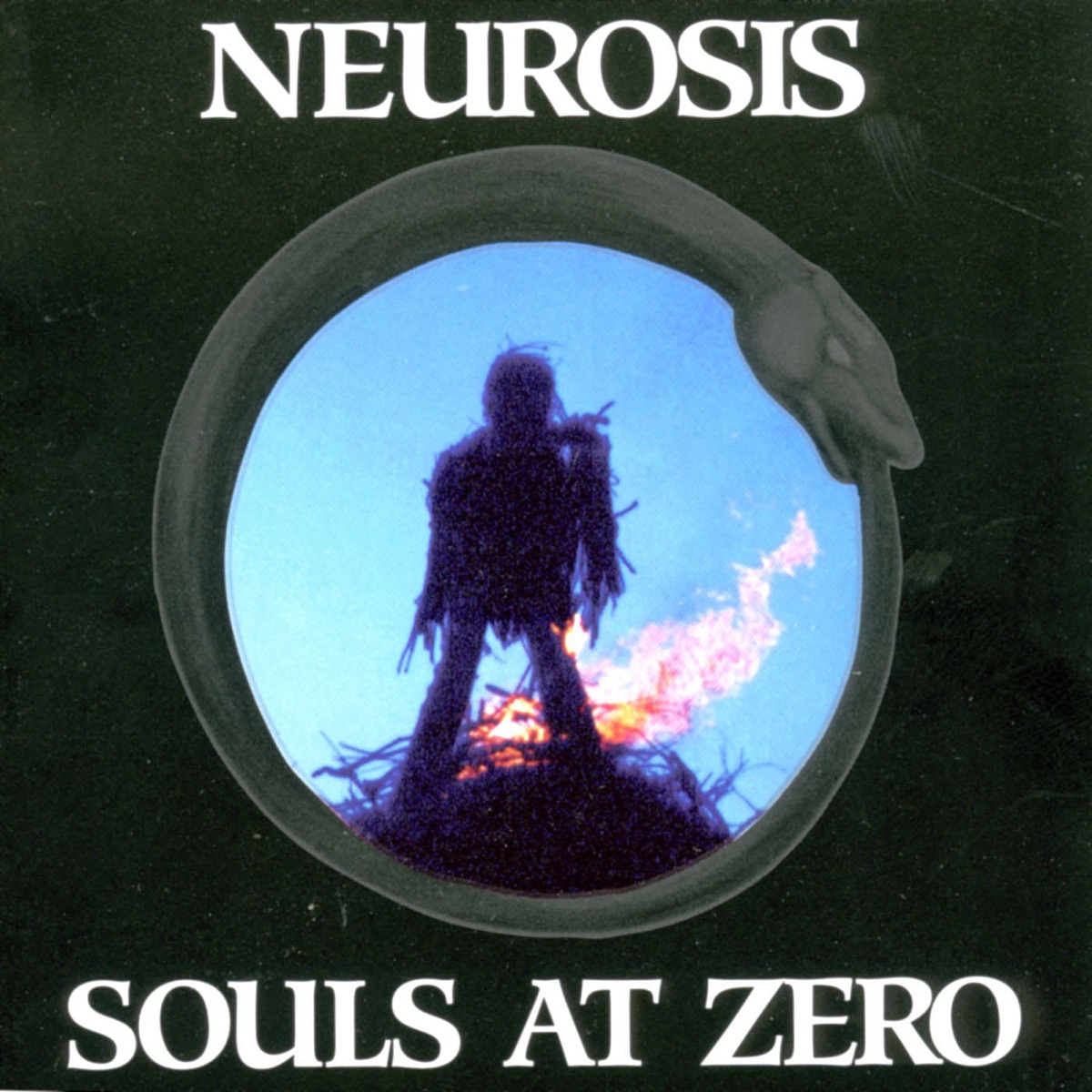
Now the twist. Formed in Oakland in 1985 by guitarist and singer Scott Kelly, bassist Dave Edwardson and drummer Jason Roeder as a crust punk band, Neurosis signed in June 1987 to Alchemy Records, the very label that had paid for Sausalito, and released their debut Pain of Mind on it that December. Same shelf. Different night shift. Steve Von Till, born on 30 September 1969, joined on guitar and vocals in 1989, and on Souls at Zero, recorded at Starlight Sound in Richmond early in 1992 and released by Alternative Tentacles on 19 May, the band traded its fast hardcore for slower tempos, samples and guest horns and strings, lifting the growth out of its little beaker into a tank the size of a municipal aquarium, where it stopped behaving like a mould and began building itself into a reef.
That line-up did not last. Neurosis parted ways with Kelly in 2019 and kept the reason private. On 27 August 2022 Kelly admitted in a public post to years of abusing his wife and children and retired from music, and the band then said in a statement that it had parted ways with him after learning of the abuse, as Greg Kennelty of Metal Injection reported that week. On 20 March 2026 the remaining members released their twelfth album, An Undying Love for a Burning World, with Aaron Turner beside Von Till on guitar and vocals.
The verdict: who invented sludge metal
So, the verdict. Flipper stocked the shelf first, Greg Ginn wrote a formula across one side of a record and unscrewed the lids, and the Swans stood at the back in a dark bottle. Williams, Bower and Windstein carried the culture to Louisiana and bred it for weight; Kelly and Von Till took a scraping, on the same label's money, and grew something else. But the two people who lit the burner and never turned it off, in a back room in Aberdeen from 1984 and in Sausalito in October 1986, are Buzz Osborne and Dale Crover.
None of them wrote the word on the jar, and none of them needed to. Terrorizer was running a whole sludge special by August 2009, and by then the growth had long since crawled off the desk and out under the door. Where it sits among the rest of the slow music is the story so far. Leave the burner on. It seems to work.
