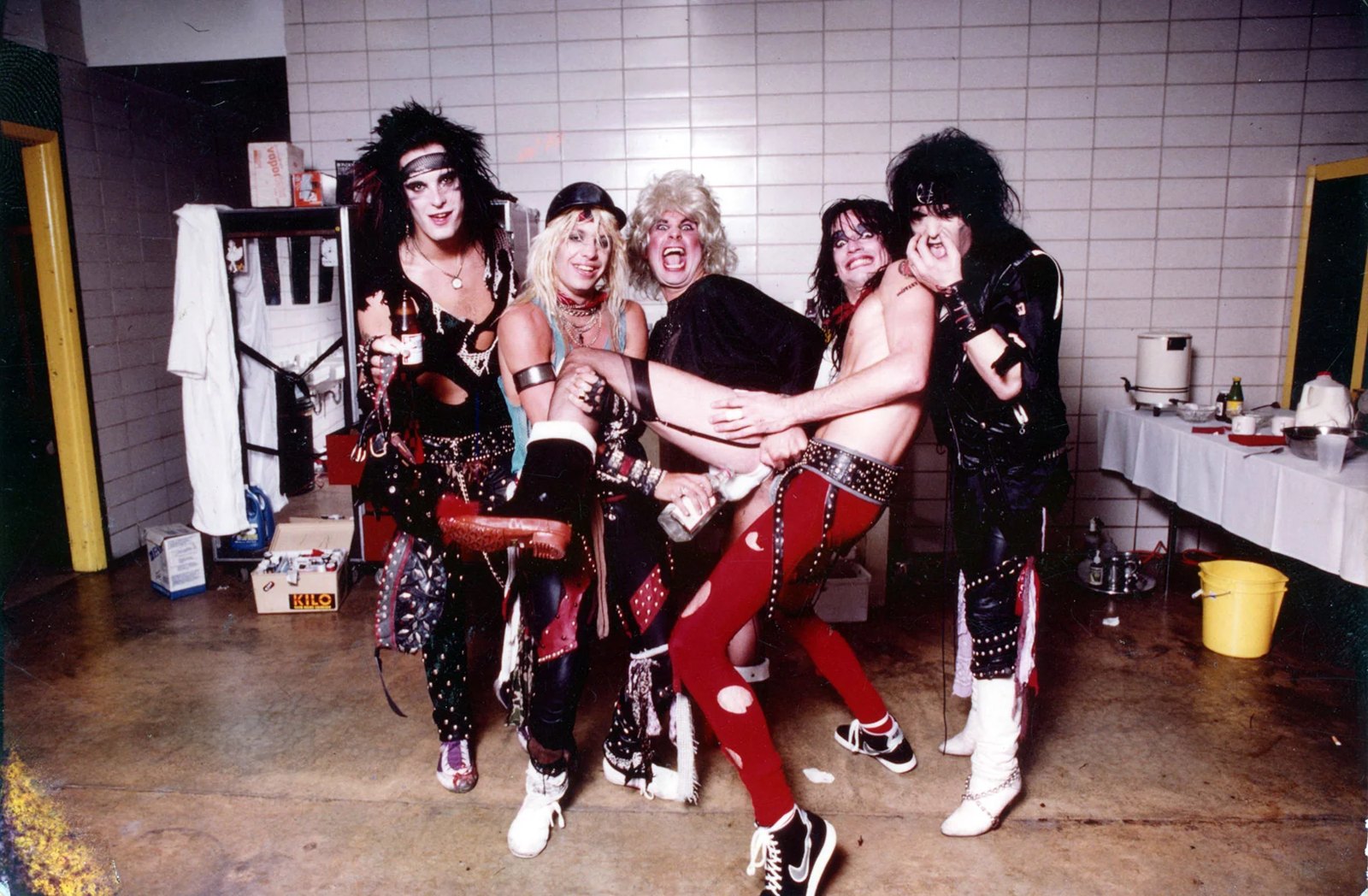
On 18 August 1984 the Monsters of Rock festival at Castle Donington, the one-day open-air heavy metal gathering in the English Midlands, put AC/DC at the top of the bill with Van Halen and Ozzy Osbourne beneath them. Walking out in daylight near the bottom of the running order, in eyeliner, studs and backcombed black hair, in front of a field of denim that had come for somebody else, the Hollywood quartet on its first British stage was Mötley Crüe. The field wore denim. The stage wore lipstick.
The Mötley Crüe glam metal question starts in that mismatch, and the short answer is yes, with a condition fastened to it. The band that wrote the dress code for the whole Sunset Strip changed its clothes four times between 1981 and 1987, and the music under the clothes moved far less than the clothes did.
The costumes turned over like the vestments of the church year, violet for the fast, white for the feast and green for the long weeks between, each set hauled off over the celebrant's head in the sacristy and flung onto its peg before the next was dragged down, while the mass read out in every one of them stayed word for word the same: a riff, a backbeat and a chorus shouted from the kerb. The cloth changed. The words did not.
How the street around them worked, the clubs, the flyers and the camera, is told in the Sunset Strip chapter. The narrower question is whether the label fits the band standing at the front of that street, and it turns on what the band wore, what it played underneath, and what happened on the day the clothes came off.
The look: what glam borrowed from the seventies
The clothes on the sleeve of Too Fast for Love, the album the band first pressed on its own Leathür label in November 1981, said glam without a stammer: lipstick, spandex and hair teased toward the ceiling, borrowed in plain view from the New York Dolls, from Kiss and from the British glam singles of the early seventies. The chief songwriter who pointed back to those singles was the bassist, Nikki Sixx, who has named them among his models. The lineage of the look runs straight back to 1973.
The purest glam in the catalogue did not last two years. The lace, the pink scarves and the rouge of Theatre of Pain in 1985 were the Strip's dress code at its most exact, the costume every band on Sunset photographed and copied. The four men who threw that whole wardrobe out of the window, lace, scarves, rouge and all, were Mötley Crüe themselves, the same four who had set the code.

Released by Elektra on 15 May 1987 and produced by Tom Werman, who had also made the two albums before it, Girls, Girls, Girls put the band on motorcycles and in biker leather, opened its title track on the roar of an engine being revved, and climbed to number two on the Billboard 200, the American album chart, with Whitney Houston's second album, Whitney, holding the top. Chrome replaced the rouge.
So much for the wardrobe. It changed on every record, and the Strip copied every change.
The sound: the riff under the lipstick
"Live Wire", the song that opens Too Fast for Love, is the plainest exhibit in the file. The guitarist fires the riff off at a tempo closer to the Sex Pistols than to anything Sweet or Slade ever cut. The drummer kicking the snare behind it like a man stamping the lid down on an overfull dustbin until the metal buckles is Tommy Lee, and the guitar goes up like a chip pan left on a gas ring, a sheet of flame lifting off the fat and blackening the extractor hood before anybody finds the lid. Nobody finds the lid.
Take the photograph off the front of the record and "Take Me to the Top" and "Piece of Your Action" are street hard rock at punk speed, heavier than the Dolls ever played and faster than Kiss ever needed to. The lineage of the sound runs somewhere else.
The blues-rock devotee behind the lipstick was Mick Mars. Born Robert Deal in Terre Haute, Indiana, on 4 May 1951, and older than the rest of the band by the best part of a decade, he grew up on Jeff Beck and the Paul Butterfield Blues Band, and his tone on every record from the first to the last is thick, low and slightly dirty, closer to that blues-rock line than to anything the Dolls ever plugged in. There is no glitter in it at all.
The riffs stayed where they had been since 1981. The title song of Girls, Girls, Girls, a mid-tempo stomp built on a single fat chord figure, carries the same chassis as "Live Wire" at half the speed, Mars grinding each chord down to the rim and Lee leaning on the backbeat like a bouncer leaning his full weight on a turnstile, and its video, shot in strip clubs, sold the new costume on MTV exactly as the lace had been sold two years earlier. The wardrobe had moved from the dressing table to the garage. The band had not.
The wardrobe had moved from the dressing table to the garage. The band had not.
The case against: leather, speed and a record with no make-up
The strongest argument against the label comes out of the band's own catalogue. Released by Elektra in September 1983, Shout at the Devil traded the spandex for black leather and spikes, carried a cover of the Beatles' "Helter Skelter" that drags the original out of Abbey Road by the collar and throws it down a flight of concrete steps, and sent the band across America in 1984 as the support on Ozzy Osbourne's Bark at the Moon tour. The people who sold the tickets booked it as heavy metal.
The songs earn the bill they were put on. Metal Archives reviewers have called "Red Hot", from the same album, “total speed metal,” and a hall that had come for Ozzy had no reason to leave when it started. Nobody in the lace years would write like that again.
The second exhibit against the label arrived after Vince Neil left in 1992. The singer brought in from the Scream was John Corabi, a rasping hard rock vocalist with no lipstick in his past, and the album the band called simply Mötley Crüe, produced by Bob Rock and released by Elektra on 15 March 1994, arrived with no make-up, no hairspray and no party songs at all, only a thick, slow, heavy sound built for the years that grunge had just taken over.
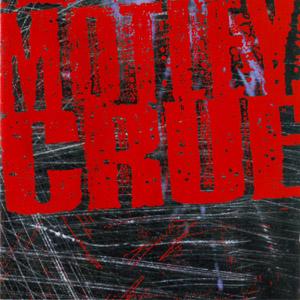
"Hooligan's Holiday", the first single, carries a slow grinding riff with Corabi's voice scraped across it like a knife across a burnt pan, and the album entered the Billboard 200 at number seven. It went no further than gold, a fraction of the multi-platinum sales of every record that came before it, before the audience walked away from it. The faithful had come for a band in a costume. Without one they did not know it.
Here the case against turns on itself. If the glam had been decoration, removing it would have cost nothing. It cost the band its audience. The singer who walked back in for Generation Swine in 1997 was Vince Neil, and the band was rebuilding the old image piece by piece.
The verdict on Mötley Crüe as glam metal
| Year | Album | Costume | Under the costume |
|---|---|---|---|
| 1981 | Too Fast for Love | Lipstick and spandex | Hard rock at punk tempo |
| 1983 | Shout at the Devil | Black leather and spikes | Heavy metal, booked as such |
| 1985 | Theatre of Pain | Lace, scarves and rouge | Glam metal at its most exact |
| 1987 | Girls, Girls, Girls | Biker leather | The same riffs, slower |
| 1994 | Mötley Crüe | None | Heavy rock, and a lost audience |
So the verdict holds on both counts. By its clothes, its forebears and its place in the market, Mötley Crüe is glam metal on any honest reading, the band the term would have to be measured against if it were measured against anyone. By its bones it is a hard rock band with a punk tempo and a heavy metal guitarist, and in four costumes out of five the bones were what the crowd actually heard.
The two names the decade left behind are not synonyms, whatever the record shops did with them, and the difference between them is argued out in glam metal vs hair metal. Mötley Crüe sits on the glam side of that line by right of birth. The hairspray came later and belonged to other people.
What the band proved, costume after costume, is that the look was never the music and was never separable from it either. Take the lipstick away and the riff is still there. Take the costume away entirely and, as 1994 showed, the riff plays to an empty room.