
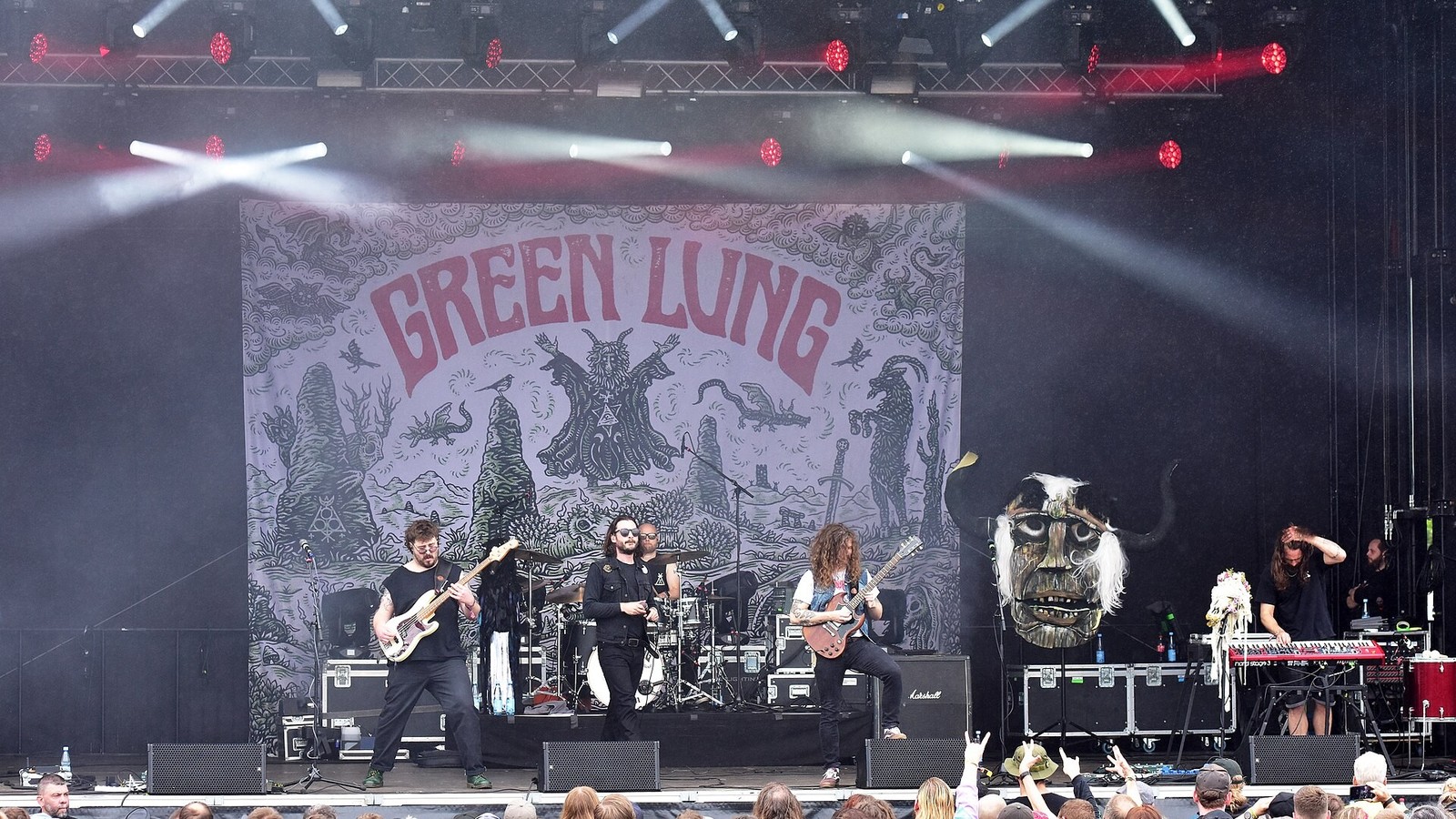
Sixty-three minutes. That is the running time of "Dopesmoker", the song that gives the third album by Sleep its title and fills nearly all of it, worked out by the San Jose trio, by Matt Pike's count, over some four years of soundchecks and motel rooms, recorded in sections at Record Two Studio in Comptche, California, because a reel of tape held only twenty-two minutes, and delivered to London Records, which refused to release it and in refusing finished the band. A stoner rock band still writes songs that end so the room can ask for another; a doom band still writes a dirge with a grave at the bottom of the verse. An hour of fuzz dragged across a desert towards a holy city is neither, and it is the record against which stoner doom metal is still measured.
Stated plainly, stoner doom metal takes one thing from each side of its name and surrenders neither. From stoner rock it keeps the fuzz, amplifiers driven until guitar and bass fuse, and the groove, a riff that swings rather than marches; from traditional doom it keeps the tempo, dragged towards a crawl, and the dread, the sense that the song is advancing on something it will not turn away from. Where doom sings of grief, stoner doom more often sings of smoke, witches and Lovecraft, and the fear survives the change of subject. The whole family is laid out in the chapter list; this page concerns only the ground where the two words overlap.
From the nearer margin of this incandescent lake there was a mighty but deliberate overflow, a "silent tide" of fire, passing to the lower level, glowing under and amidst its crust, with the brightness of metal passing from a furnace.
Isabella L. Bird, The Hawaiian Archipelago, 1875
Heat from one parent, weight from the other
Picture a lava flow on the flank of a volcano, a ridge of black crust advancing a few feet in an hour across open pasture, so slowly that a person can stand before it and watch the skin wrinkle, split and show the orange underneath, and so completely that nothing in its path, a fence, a road, a stone wall, a house, is still standing once it has passed. That is the proposition of stoner doom. The glow through the cracks is the fuzz. The crawl is doom's tempo. The dread is the certainty that the front will not stop, that the riff arriving in the tenth minute is the same mass that set out in the first, only nearer.
The distinctions follow from the image. The bands followed in Kyuss and the desert ran the same heat at the speed of a truck on an empty highway; stoner doom takes the same amplifier and lets the flow set its own pace, so that the groove arrives as weight shifting rather than as motion. The epic doom of the eighties, Candlemass first among them, kept tempos just as low but set a trained, operatic voice over them and aimed the whole weighted apparatus at mourning. Stoner doom sinks the voice into the tone and exchanges the mourning for intoxication. The two branches share an ancestor. They do not share a sound.
Sleep, and the hour that broke a band
Sent to Earache as a demo recorded with the engineer Billy Anderson and released exactly as it arrived, in November 1992 in Europe and March 1993 in America, Sleep's Holy Mountain is where Al Cisneros, Matt Pike and Chris Hakius first pressed the two words together, and the metal press set the trio beside Kyuss at the head of the new stoner scene. Its sleeve carried cannabis leaves. The follow-up went much further. Sleep signed to London Records on a promise of artistic freedom and went away to finish one song an hour long.
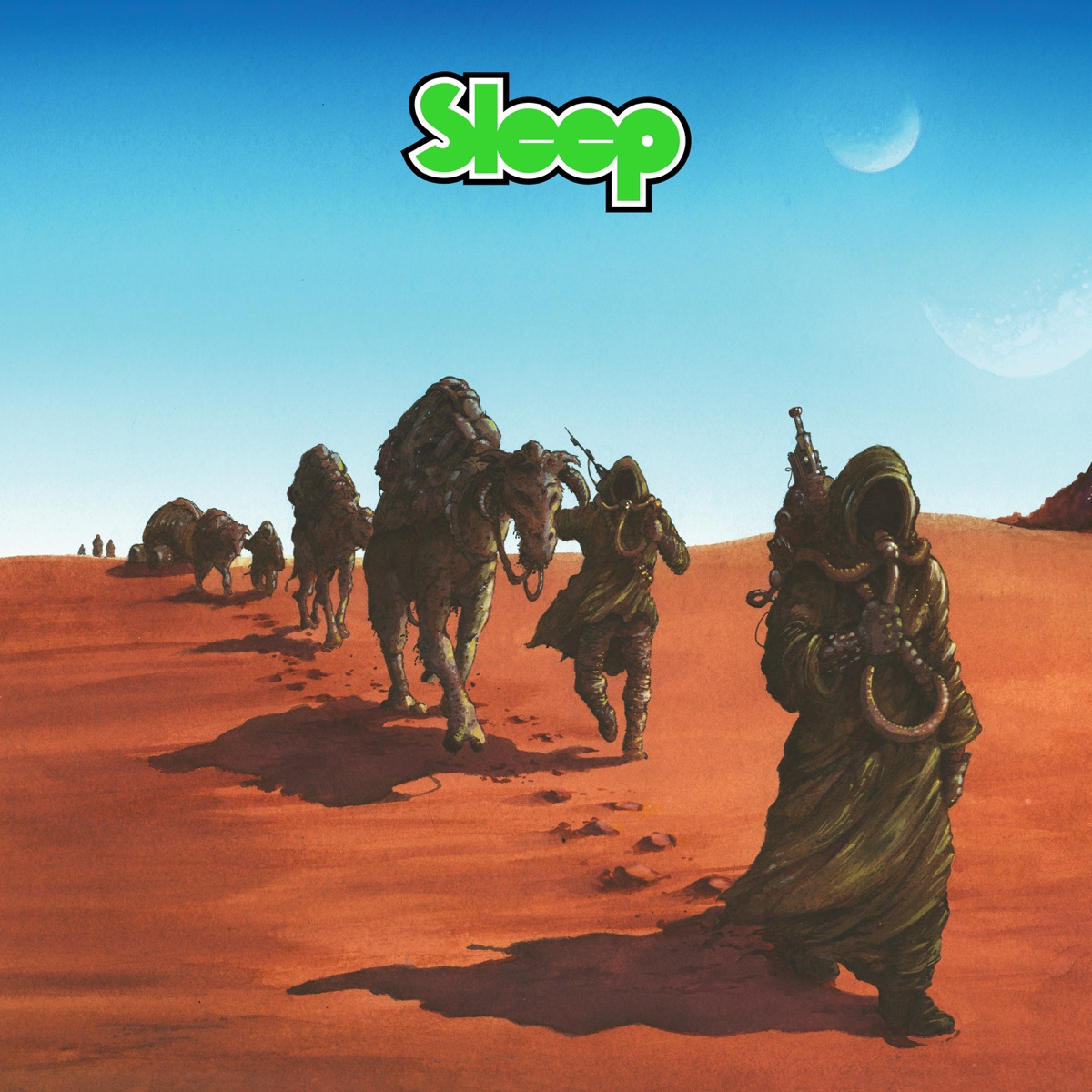
Pike later recalled that the song kept getting slower until it turned strange, played through custom Matamp amplifiers so loud that no member of the band could stay in the room with them. London had David Sardy remix the tapes, met a band that refused any edit, and the album sat in deadlock while Sleep came apart. An unauthorised fifty-two minute edit appeared as Jerusalem in 1999, the full version as Dopesmoker on Tee Pee in 2003, and Third Man's remaster of 2022 added "Hot Lava Man", never before issued digitally. The music never hurries and never turns back, the riff crusting over through the long vocal passages and splitting open wherever the leads break through, and no record released at the speed of the market has done as much to fix what stoner doom means.
The flow hardens at one edge, and the band that shows where is Om, formed in 2003 by Cisneros and Hakius, the old rhythm section of Sleep. The duo kept the overdriven bass and the chanted vocal and let the riff set into something closer to Tibetan, Byzantine and Ethiopian chant, first on Variations on a Theme in 2005. The weight remains. The groove has turned into liturgy, and a band that has stopped swinging has walked off the lava onto cold rock.
Dopethrone, and the decade that followed
Recorded at Chuckalumba Studios in May 2000, Dopethrone was released by Rise Above on 25 September 2000 as the third album by the Dorset trio of Jus Oborn, Tim Bagshaw and Mark Greening, Electric Wizard, and on "Funeralopolis" and the long "Weird Tales" it came down as what Mörat of Kerrang! called an aural landslide. Greg Kot of the Chicago Tribune heard early seventies Black Sabbath and Motörhead there rather than the punk feeding American stoner rock, and Jim DeRogatis of the Chicago Sun-Times noted that the style was called stoner rock in the United States and doom in Britain. One record, two passports. Terrorizer named it album of the decade in December 2009.
The years after filled the ground in from both sides. Formed in Wilmington, North Carolina, in 1998 around the bassist and singer Dave "Dixie" Collins, Weedeater came at the style from its sludge end and made Goliathan with Steve Albini in 2015. Chicago's instrumental Bongripper called its 2010 album Satan Worshipping Doom. Windhand, from Richmond, Virginia, built Soma around the voice of Dorthia Cottrell, and the Relapse release of 2013 reached number 24 on the Billboard Heatseekers chart. In Liverpool Conan earned the description caveman battle doom with Monnos in 2012, in Gothenburg Monolord released Empress Rising in 2014, in Bordeaux Mars Red Sky worked the psychedelic edge, and in Warsaw Dopelord reached Sign of the Devil in 2020.
Those bands do not live at the same depth. Mars Red Sky and Monolord keep enough melody and lift to sit beside the brighter groups gathered among the Best Stoner Metal Bands, while Conan and Bongripper hold so close to the floor that the groove is felt in the chest before it is heard as rhythm.
Stoner rock wants the room to nod. Doom wants the room to bow its head. Stoner doom asks for both, and it is prepared to wait an hour for them.
Green Lung and the folk horror strand
Formed in London in March 2017 by musicians, three of whom had first met at Desertfest the year before, and signed to the Berlin independent Kozmik Artifactz after the EP Free the Witch of 2018 for the album Woodland Rites on 20 March 2019, the five-piece fronted by the singer Tom Templar, with John Wright on organ, Green Lung, is the clearest proof of the 2020s that stoner doom is a sound and not a subject. The Finnish doom label Svart released Black Harvest in October 2021, with "Reaper's Scythe" and "Leaders of the Blind" among its singles, and Nuclear Blast announced the band's signing in November 2022.
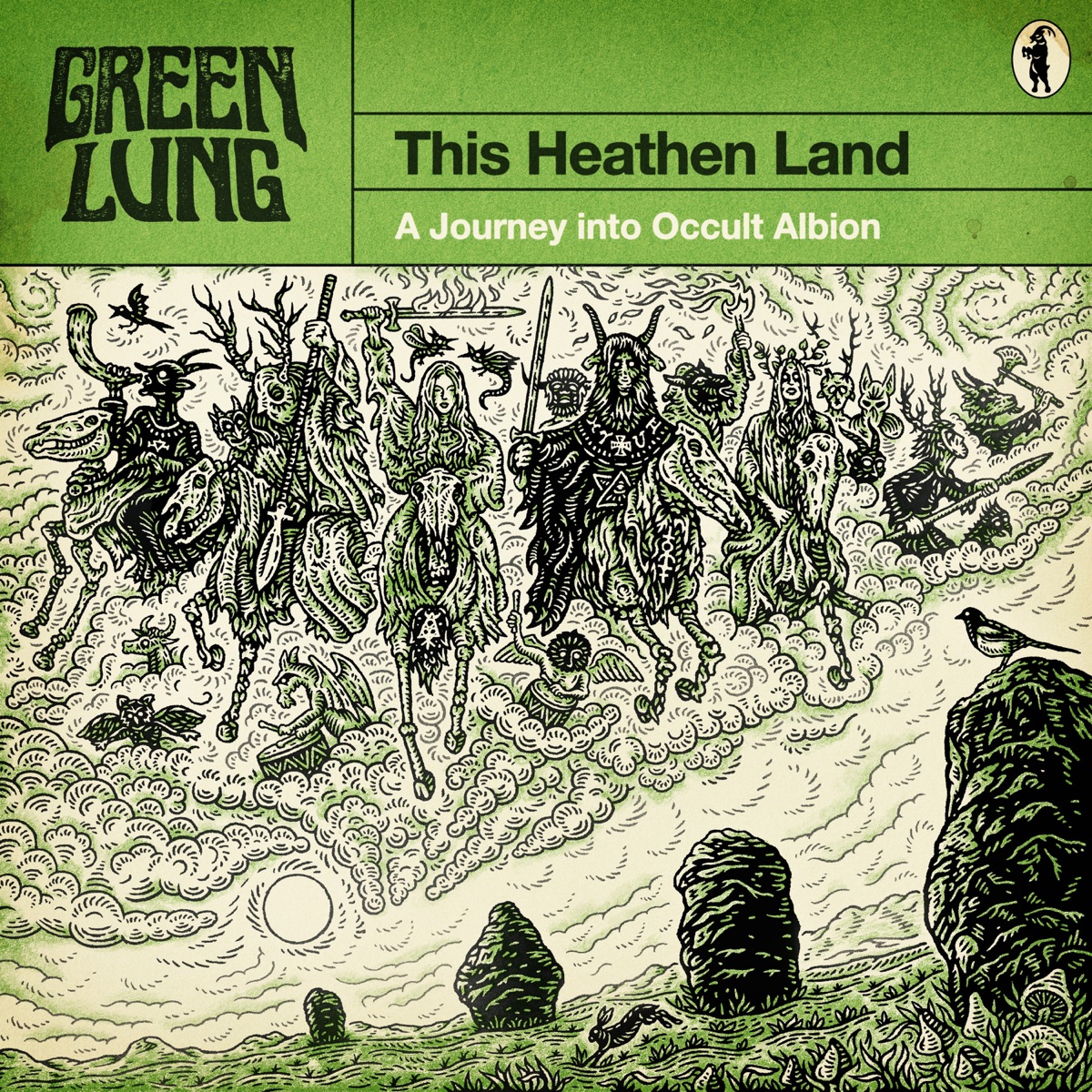
Released on 3 November 2023, This Heathen Land entered both the UK Rock and Metal Albums chart and the Independent Album Breakers chart at number one, and drew a full five Ks from Kerrang!. The imagery sets the band apart. Its lyrics and sleeves draw on the folk horror cinema of the late sixties and seventies, the tradition of The Wicker Man, and on the Green Man and the Pendle witches, and Richard Wells cuts each cover in a linocut style that makes the record look like a broadside printed in a village after a failed harvest. "One for Sorrow" and "Maxine (Witch Queen)" trade the smoke for the hedgerow and the coven. Reviewing a packed night at the Kentish Town Forum for Metal Hammer in February 2025, Rich Hobson heard the existential dread of Black Sabbath joined to the theatricality of Ghost.
This matters for the definition. Take away Sleep's cannabis leaves and Electric Wizard's Lovecraft, and what remains, fuzz and groove held under a doom tempo, is still enough to name the style; the dread can come from a harvest rite as readily as from a pipe. The London five are more melodic than most of their neighbours, yet on This Heathen Land the heat under the crust is the same as it was in Comptche. Uncle Acid & the Deadbeats, formed in Cambridge by Kevin Starrs in 2009, reached a related occult sound earlier by way of late sixties garage rock, and their place in the culture of this music is argued elsewhere.
The front is still moving
The present gives no sign of the flow stopping. Bongripper released Empty in 2024, and Conan's seventh full-length, Violence Dimension, arrived on 25 April 2025 as its first release on Heavy Psych Sounds. Green Lung confirmed in January 2026 that nine days at Rockfield Studios in Wales had put a fourth album on tape, and in May the band is due to headline Desertfest London, the festival where three of its members first met.
We would therefore define stoner doom metal by what it refuses to lose: the heat of stoner rock's amplifiers, doom's crawl, a groove that survives being slowed almost to a halt, and a front of sound that advances the way lava advances, a few feet in an hour and never backwards. The wider roll of bands working that seam is gathered in the Stoner Doom Metal Bands. Sixty-three minutes was only the first measurement.
