
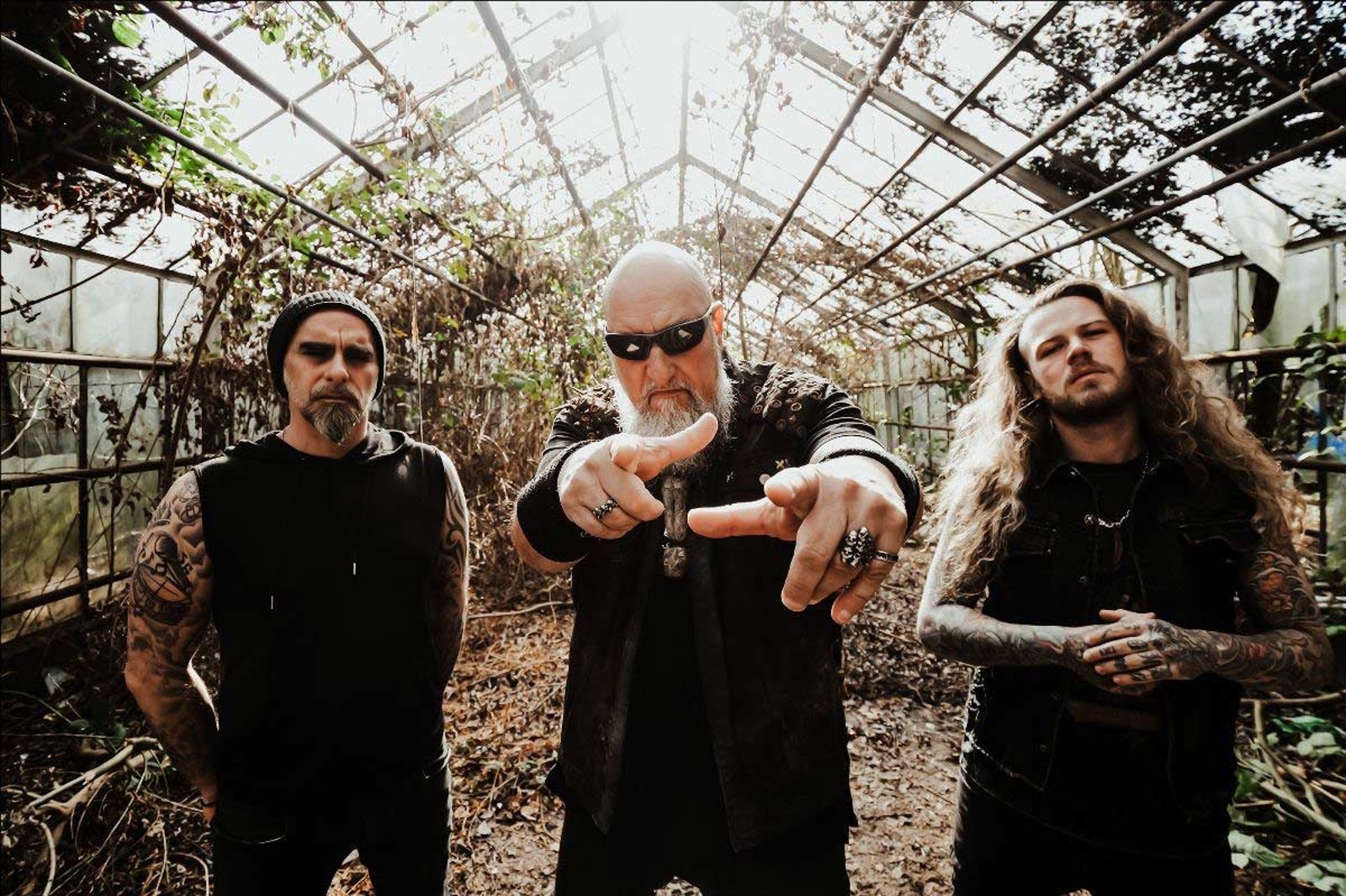
A British weekly printed the adjective over a German band in 1986, and the band it chose played no power metal at all. The hard rock five from the industrial west whose singer worked in a rasp and whose rhythm section refused to swing was Accept, filed that year under a headline calling them Teutonic titans, and by then the word had already spent fifteen years in the same press doing service on Krautrock, on synthesiser records and on anything else arriving from the far side of the Channel. Teutonic power metal is a phrase with a foreign passport.
It is an outsider's word. It has been one from the start.
For most of the history of written music a wind player crossing a border found the ground move under him, because every town kept its own pitch and a maker's A was a local number rather than a general one. A flute built for one loft sat flat in the next. The man who wanted the work sawed the middle joint shorter, filed the tenon back, scraped the reed thinner and dragged the instrument up to somebody else's figure, and the tubes that would not come up split along the seam and went out with the offcuts. The lettering stamped on the case said which workshop had built the thing. It said nothing whatever about the number the player had to reach.
That is the shape of it. A national adjective records where a thing was made, and the men who made these records, asked what they mean by the word, answer with a measurement.
A borrowed word and a reluctant trade
Attribution from outside is the first thing the research turns up. Jan-Peter Herbst, who interviewed German producers, musicians and journalists for a study of the West German scene published in Metal Music Studies in 2019, traces the label to the British press, carried straight over from Krautrock and applied to any German band regardless of what it played, so that Accept collected it as a compliment in 1986 and the young band in Hamburg collected a sneering version of it the year after.
The German trade would not touch it, and the reason was printed alongside it: British features on German bands that decade kept working the war into the margins, so the adjective arrived with freight on it and the home magazines preferred their own coinages. A German monthly opened a column called German Metal Attack in December 1985, renamed it New Wave of German Heavy Metal in June 1987, and only from 1992 began using Teutonic with any regularity, in pieces on Running Wild and Grave Digger. By 2004 a different German title, Rock Hard, was crediting Accept with inventing the style the word names.
What teutonic power metal means inside a control room
Ask the practitioners and the question stops being about geography. The producer whose desk most of this catalogue crossed is Charlie Bauerfeind, who has recorded Helloween, Gamma Ray, Running Wild, Blind Guardian and Rage, and in his account the line between an American performance and a German one falls on the snare drum. The American player is trained to lay it a fraction behind the beat. On these records it goes a fraction in front, because the attack is the thing the ear picks up and it must not be buried under the kick.
Snap a mason's chalk line down the length of a floor, dress every block until it sits on the line, then take a chisel to whatever still stands proud. That is what this school does to a bar of music. Mark Mynett, a British producer who toured with Helloween and now teaches music production, puts the same observation the other way round: power metal took the swing out of metal the way black metal took out the blues, and what is left is a performance squared to a grid.
An American drummer lays the snare behind the beat. These records put it in front, and everything else in the bar is squared to that.
Bauerfeind's other two requirements are as mechanical as the first. Every drum hit has to land at the same weight, so that the weaker foot in a double kick pattern cannot be heard as the weaker foot, and the rhythm guitar works in downstrokes rather than alternate picking, since alternate picking returns a stroke of a different weight every second note. None of that is a sound the way a guitar tone is a sound. It is a tolerance, it is measurable, and that is exactly why other countries could buy it later.
Two traditions wearing one adjective
The word covers two things that do not resemble each other, and the Germans in Herbst's sample were insistent about the difference. German power metal, in their usage, is the Helloween line: twin guitar harmony, long symphonic writing, a high clean voice carrying the melody, the whole descent traceable to British records. Teutonic power metal is the blunter one, rhythm before melody, hard rock rather than the new wave of British heavy metal behind it, and its two named exponents are Accept and Grave Digger.
The Gladbeck band that took the Accept downstroke and put back over the top of it the rasp the Hamburg line held to be anathema was Grave Digger, and "Rebellion (The Clans Are Marching)", from the 1996 Scottish concept record Tunes of War, is where the second tradition is easiest to hear: a marching riff and a bagpipe solo. More than one listener since has called its chorus among the great sing-alongs in the genre.

The Reaper, released on 2 November 1993 on GUN Records and produced by Chris Boltendahl and Uwe Lulis with the Hamburg engineer Piet Sielck at the board, is where that discipline comes back into the writing after a detour that took the band nowhere. Sielck had spent the eighties around the other tradition entirely, in the port that built it, which makes his presence on a Gladbeck record the clearest sign available that the two lines were never sealed off from each other. The session ran at Karo's second room, in Brackel near Hamburg, not the Münster address where Kalle Trapp built the studio's name.
Rage sit on the other side of that split, which is why the word does so little work when it is thrown across both, and the difference is better followed through the european power metal bands of the period than through a map. "Higher Than the Sky", from End of All Days in 1996, is built the way the Helloween line builds: reviewers since have called it one of the album's faster, heavier cuts and its chorus among the catchiest Rage ever wrote, while Peavy Wagner keeps a grain in the voice that the high clean ideal would have sanded off. Two traditions, one adjective, and beyond dispute no single sound between them.
The rooms that did half the work
What the interviews keep returning to is not a scale or a tempo but an address. A handful of producers worked in a handful of rooms, the rooms were violently unalike, and the bands went for what the building did rather than for the equipment standing in it.
| Studio | Where | Who ran it | Some of what came out of it |
|---|---|---|---|
| RA.SH | Gelsenkirchen | Ulli Pösselt | Rage, Sodom, Axel Rudi Pell |
| Karo Music | Münster and Brackel | Kalle Trapp | Blind Guardian, Grave Digger, Gamma Ray, Iron Savior, Freedom Call |
| Musiclab | West Berlin | Harris Johns | Helloween, Grave Digger, Kreator, Tankard |
| Dierks | near Cologne | Dieter Dierks | Scorpions, Accept, U.D.O. |
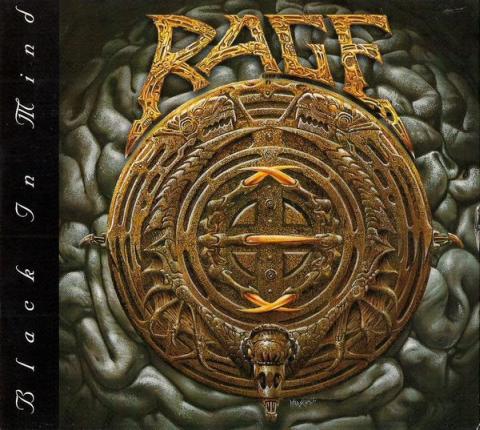
RA.SH was built inside a wartime bunker, with concrete stairwells pressed into service as echo chambers and a Neve desk colouring everything that crossed it, and Bauerfeind describes the place as contorted and unrepeatable. Black in Mind went down there between October 1994 and January 1995, produced by Ulli Pösselt with Peavy Wagner and issued by GUN on 22 May 1995. A building used that way is a player on the record, uncredited and unpaid, and when the building is struck off the list the part it played goes out of print with it. RA.SH and the Karo rooms have both closed, and the men who ran them stopped making records.
What other countries were buying
The clearest evidence that the label named something purchasable is that people went out and purchased it. The Gothenburg band that hired German producers on purpose, Michael Wagener first for what he had done with Accept and Bauerfeind afterwards, was HammerFall, whom Bauerfeind calls the most Teutonic band outside Germany.
"Blood Bound" opens Chapter V: Unbent, Unbowed, Unbroken, which Bauerfeind produced at Lundgård Studios in Denmark and Nuclear Blast released on 4 March 2005, and it is a Swedish band working to a German tolerance in a Danish room. Reviewers who never read Bauerfeind's account still reached for his vocabulary: tight, compact, the drums given a noticeable lift. Nothing in that is a nationality. All of it is a specification.
The specification travelled further than Sweden. The Brazilian band is Angra, on the 1993 debut Angels Cry, where Bauerfeind drafted in German session drummers rather than trust the record to a South American feel. The producer Lasse Lammert reports foreign bands adopting an artificial German accent on the vocals so as to be filed with the German ones. Both anecdotes say more than any list of scale degrees, and they are why the question of why power metal belongs to Europe keeps producing answers about working method rather than about melody.
Not everyone interviewed agrees any of it exists. Siggi Bemm, who recorded much of the early Century Media catalogue, told Herbst flatly that there is no such sound, only the people playing and the people recording. Dennis Ward went halfway in Rock Hard in 2018: an Italian band had asked him to make them sound like the great German bands, and he could not say what they were asking for, since Accept and Helloween sound nothing alike.
Which leaves the word where it started, good for one thing and useless for the rest. It cannot tell a listener what a record sounds like, because the two lines it covers were never one school. It can tell you what was demanded of the drummer, and that demand is specific enough to hire for, to teach, and to impose on players who have never been near the country the adjective points at. Ask what the German school sounds like and the answer is a shrug and four addresses. Ask what it required of a rhythm section and the answer comes back in fractions of a beat.
