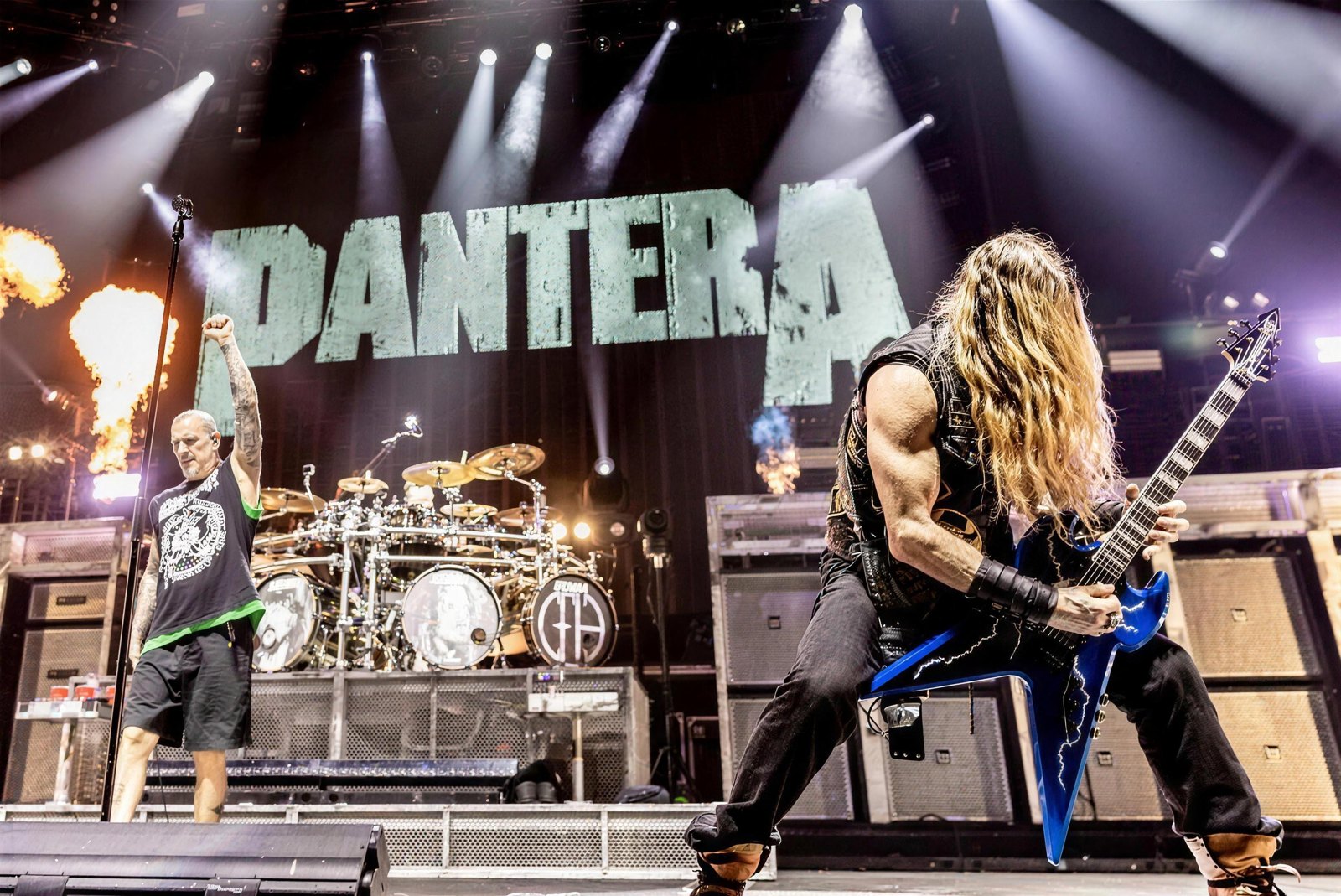
Four albums, one family label, five years, and not one of them listed on the band's official website. The four young men from Arlington who put them out between 1983 and 1988 on Metal Magic Records, the label run by the Abbott brothers' father Jerry out of his studio in Pantego, were Pantera, and the whole pantera glam metal question lives inside those four records, because the band that made Cowboys from Hell in 1990 spent the rest of its life acting as if they had never been pressed.
A canal company that wants a flight of locks forgotten can drain it. The paddles are wound open for the last time, the water runs out of the chambers one after another down the hillside, the balance beams are sawn off at the posts and the empty chambers are left to fill with nettles and dumped timber, so that anyone who meets the boat on the summit pound would swear it had been built up there. It was not. It came up the flight like every other boat.
The flight can still be walked. The evidence comes in four kinds, the photographs, the tape, the ledger and the band's own testimony, and each gives a different answer.
Pantera glam metal: the photographs

The pictures convict them. On the sleeves and promotional shots of Projects in the Jungle and I Am the Night the four wear the uniform of 1984 without a stitch missing, spandex, studded belts, bare chests and hair teased up and sprayed until it stood away from the head. The singer out front on the first three records, a guitarist turned vocalist with a high, clean tenor, was Terry Glaze. The sixteen-year-old whose solos were already the best thing on the debut, credited on the sleeves under the stage name Diamond Darrell, was Darrell Abbott, the man the nineties would know as Dimebag.
On this count there is no defence to mount. Anyone shown those photographs cold, without a name attached, would file the band on the Sunset Strip. Vinnie Paul, the drummer, put it plainly in a Texas Monthly interview quoted by Blabbermouth on 21 November 2010: "Let's get rid of these magic clothes, they don't play music for us. Let's strip this thing down." The costume was a costume. It was also, from 1983 to about 1986, the only one they owned.
The tape: four records, four steps away from the Strip
The sound is where the case starts to split. Glam in sound has markers that can be listed: gang choruses shouted by the whole band, a clean tenor sitting high over the guitars, bright and heavily chorused rhythm tones, and lyrics about the party, the car and the girl rather than about war or the devil. Metal Magic, released in June 1983, is the one record of the four that sounds like its photographs, a set of party choruses and bright, compressed guitars that critics have measured against Kiss, Van Halen and Def Leppard. Its forebear is plain on every track. It is a glam record in all but address.
Measured against that list, the record ticks every box but one. Darrell's playing already runs further than the songs need, fast, clean and full of the tricks he had taken off Van Halen and Randy Rhoads, and it drags the choruses along behind it like a sports car towing a horsebox up a hill. The song was glam. The guitarist was already somewhere else.
The two records that followed do the same work at the level of sound: on any honest reading both are heavy metal records with a glam haircut, the costume already left behind well before the band's last independent album.
Glaze left in 1986 over the direction and the way the band made its decisions. The eighteen-year-old who came up from New Orleans late that year to replace him was Phil Anselmo, and the record they made together in 1988 was the last one with any glam left near it. Within two years he would not sing that high again.
Pantera was wearing the uniform of an army it had never been allowed to join.
The ledger and the map
Glam metal was a market before it was a sound, and the market had an address. It ran through the clubs of the Sunset Strip, the major label contracts signed there, the video budgets and the rotation on MTV that sold the look to the rest of America. Pantera had none of that. The band pressed its own records, sold them at shows and through Texas shops, and played the club circuit of Dallas and Fort Worth, a thousand miles from Hollywood and a long way from anyone's A&R department.
Set that beside the band that wrote the rules for the look. The Hollywood quartet that had pressed its own debut on the Leathür label in 1981 and was signed to Elektra within months was Mötley Crüe, and by the time Projects in the Jungle reached Texas shops the Strip bands were already in rotation on MTV. Pantera was wearing the uniform of an army it had never been allowed to join.
The majors turned them down, by the band's own later count, twenty-eight times, by every major label on the face of the earth in Vinnie Paul's words, and the deal that finally came in 1989 landed after the spandex was gone and the songs that would make Cowboys from Hell were already being played. On the ledger, Pantera never sold a record as a glam band anywhere outside its own state. The category is attested only in the photographs.
The testimony, and the verdict
Released by Atco in July 1990 and produced by Terry Date at Pantego, Cowboys from Hell is the record the band chose as its beginning. On "Psycho Holiday" the riff twists the song the way the wind twisted the deck of the Tacoma Narrows Bridge on 7 November 1940, the roadway rolling in long waves until the suspender cables snapped and the main span tore loose and dropped into the water below. The glam choruses are gone. So is the high tenor.
The apostasy that followed was total. The four independent records were never reissued by the band, never sold at its shows and never listed on its official website, and dropped from its official discography, an erasure the surviving members kept up for the rest of the band's first life. That is testimony too. A band that had never worn the clothes would have had nothing to hide.
The guitarist changed his name with the rest. Diamond Darrell, the glittering stage name of the Metal Magic sleeves, was still the credit on 1992's Vulgar Display of Power. It gave way soon after to Dimebag Darrell, first printed on 1994's Far Beyond Driven, a nickname with dirt under its fingernails. Nobody renames himself to keep a past.
One thread survived the purge. On "Cemetery Gates", the long ballad from the same record, Anselmo closes on a held high scream straight out of the Power Metal sessions, and Dimebag's solo carries more of the eighties shredder in it than anything else the band cut in the nineties. The bridgehead the new Pantera held had been won with the old one's weapons.
So the verdict divides by kind of evidence. By the photographs, yes, from 1983 to about 1986. By the tape, one record out of four, with the other three walking steadily away from the Strip. By the ledger, never, because the band was never part of the market the word describes. The Pantera anyone means when they say the name is not a glam metal band and never was. The one that came before it was a Texas heavy metal band wearing Hollywood's clothes.
The scene that owned those clothes, and what it looked like at its height, is laid out in the chapter it belongs to. What happened to the bands that kept wearing them after Pantera and Seattle had changed the rules is the story of hair metal in the 90s.