Five weeks at number one. Released by Mercury at the end of March 1992, six months after Nevermind, Adrenalize climbed to the summit of the Billboard 200 and held it for five weeks, trampling the flannel shirts that had just taken over the racks, and the Sheffield five who made it were Def Leppard. 90s hair metal was not yet buried. Steve Clark, the band's guitarist, had died in January 1991. The album was finished by the four who remained.
Road salt is a slower executioner than a single blow. Spread by the lorry load on every winter road, it turns the slush to brine that creeps into the seams, the sills and the wheel arches, blistering the chrome, eating through the paint from underneath and rusting the panels until they flake away in the hand, and by the thaw there is no argument left about which cars were built on a sound chassis and which were filler and lacquer. The nineties were ten winters of road salt. Every band drove through them.
How the Sunset Strip built the scene in the first place, the clubs, the videos and the ballads, is the wider story. What counts is what was still running at the thaw, and when, because the decade did not end hair metal in one night. It took ten years and a great many records.
1990 to 1992: 90s hair metal at the top of the chart

The first years of the decade still belonged to the old sound, and the charts prove it. Adrenalize was the loudest proof, a record of big choruses and stacked vocals with Mutt Lange sharing the writing, and its lead single did not bother to pretend the calendar had moved on.
"Let's Get Rocked" came with a video of a cartoon teenager escaping his chores and went into the American top twenty that spring, peaking at number fifteen, a song that could have been released in 1987 without anyone noticing the date. That was its strength and its sentence. It sold to the people who had bought Hysteria, and it sold to nobody new.
Below the stadium bands the pattern held for a while. The Indiana quartet that had arrived in 1990 with a debut on Epic and a ballad that reached number five was FireHouse, and in 1992 the band did it again with "When I Look Into Your Eyes", which climbed to number eight, one of the last slow songs from that school to reach the upper chart. The slow song was the format that crossed into the decade with the least damage, which is why the hair metal ballads outlived most of the bands that recorded them.
The long winter, 1993 to 1996
Then the salt began to bite. The label contracts signed in the boom came up for renewal in a market that wanted flannel, and the bands still under contract were told, in so many words or in the size of the next budget, to change or go. Poison's horns, the new singer in Mötley Crüe and Def Leppard's own darker record in 1996 are the famous cases. The smaller bands went through the same winters with less money and fewer friends.
The makeover had a uniform of its own. Stripped of spandex and handed goatees, cargo shorts and guitars tuned a whole step down to sound like Seattle, the survivors of the Strip queued at the same few producers and came out sounding like the bands that had replaced them, which pleased neither the old audience, who wanted the choruses, nor the new one, who could smell the change of clothes from the back of the hall. Imitation is a poor disguise. It fooled nobody.

Produced by Bob Rock, the man who had turned Metallica's sound into a wall, and released by Atlantic in March 1995, Subhuman Race tore the last of the lipstick off a band that had never worn much, tuning the guitars down, burying the choruses in the mix and letting Sebastian Bach scream over riffs that owed more to Pantera than to the Strip. The New Jersey five who made it, four years after taking a record to number one, were Skid Row. It peaked far lower, at number thirty-five on the Billboard 200. Bach was gone within a year.
"My Enemy", the first single, is the record in miniature: a detuned riff, a chorus shouted rather than sung and a video that looks like every other clip on MTV that year. On any honest reading it is a better song than half of what the band sold millions with. It came too late to matter to anyone who was not already listening.
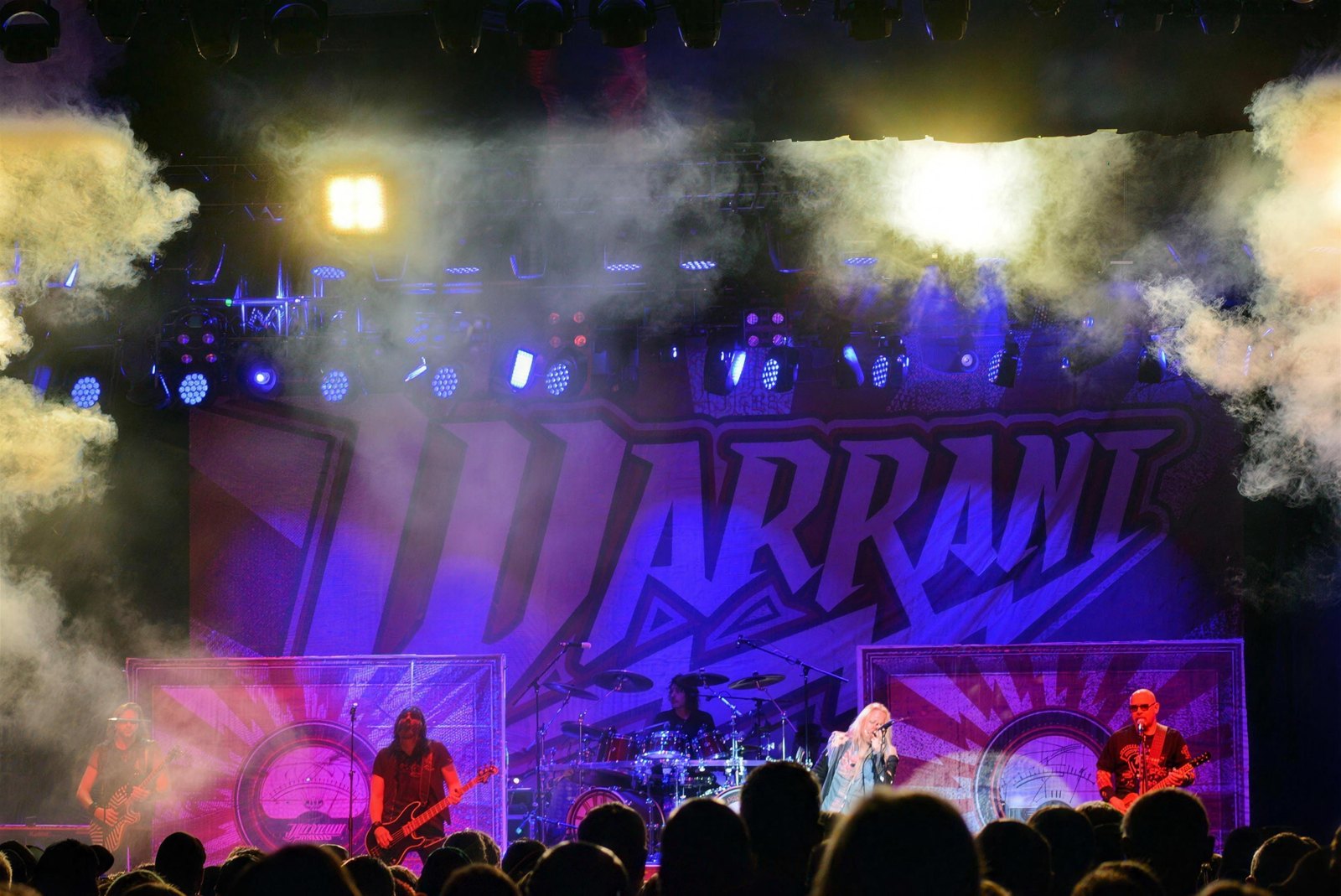
The Los Angeles five who had spent 1990 inside a video they came to hate went further down the same road. Dog Eat Dog, released by Columbia in 1992, was darker and heavier than anything the band had done and peaked at number twenty-five, and Ultraphobic, in 1995, came out on the independent label CMC International with the guitars tuned low and the singing roughened to match, and the Los Angeles five who had sold cherry pie by the truckload were Warrant. Nobody who had bought the cherry pie came back for the grunge.
The quartet that had split in 1989 over the old war between its singer and its guitarist regrouped behind its singer and made Dysfunctional for Columbia in 1995 as Dokken, a record of acoustic textures and slow tempos that George Lynch played on as though under protest. It was the right band in the wrong clothes. The reunion did not survive the decade.
The nineties were ten winters of road salt. Every band drove through them.
Where the dropped bands landed
The majors let most of the roster go between 1992 and 1996, and the records had to go somewhere. The American label founded in 1991 by Tom Lipsky and Bill Cain to take in the veterans the majors no longer wanted was CMC International, and through the middle of the decade it became the bastion of the old guard, signing names from the eighties charts and selling them a few hundred thousand records at a time rather than millions. Japan, where the halls kept filling, was the other refuge.
The majors kept the back catalogues and ran them through like a rendering plant, where the carcasses too poor for the butcher's counter are tipped into steam vats and cooked down for hours until nothing is left but tallow poured into drums. Greatest hits packages came out of every major as the decade wore on, Poison's own Greatest Hits: 1986-1996 on Capitol among them, each one a decade of albums reduced to a single disc of singles, sold cheap and sold steadily. The bands saw little of it.
1996 to 1999: the paint goes back on
The turn came from the band that had started the costume business in the first place. The four men who had wiped off their greasepaint in 1983 put it back on for a reunion tour that opened at Tiger Stadium in Detroit in June 1996 and became the highest grossing tour in America that year, and the band was Kiss. The lesson was not lost on anybody. An audience that would pay for the costume in 1996 would pay for the hair in 1999.
By the end of the decade the rout had turned into a revival circuit. Poison went back on the road in 1999 with C.C. DeVille restored to the line-up, Mötley Crüe had its original singer back, and the amphitheatres that had booked Lollapalooza a few summers earlier booked package bills of eighties names instead. The spectacle came back without the new songs. It still has not found them.
| Year | Band | Album | Label | What came out |
|---|---|---|---|---|
| 1992 | Def Leppard | Adrenalize | Mercury | The old sound at number one, one last time |
| 1992 | Warrant | Dog Eat Dog | Columbia | Darker songs for a smaller audience |
| 1995 | Skid Row | Subhuman Race | Atlantic | The heaviest record of the class |
| 1995 | Dokken | Dysfunctional | Columbia | A reunion in the wrong clothes |
| 1995 | Warrant | Ultraphobic | CMC International | Grunge textures nobody asked for |
What the decade proved is that the bands survived where the players could play. The bands with a real guitarist or a real writer, Def Leppard, Skid Row and Dokken among them, made good records in the worst years of their lives and have been rediscovered since. The bands built around a haircut simply stopped. Their reunions sell the old songs, and nobody in the audience asks for anything else.