
Heavy metal music originated in the West Midlands of England, and anyone asking where did heavy metal music originate deserves that answer before the qualifications. The qualifications are real. The records were cut and sold from London, and two American regions, the West Coast and Detroit, were making loud records of their own in the same years, some of them earlier.
When a meteorite breaks up in the upper air it scatters its pieces along a strewn field, a long ellipse on the ground where the small fragments fall first and far apart while the main mass carries furthest, punches through a hedge and buries itself in a ploughed field, and every collector who walks the ellipse knows that the heaviest stone marks the end of the path and not its start. The first heavy records landed that way. Light pieces scattered across California and Michigan. The main mass came down in the Midlands.
What the music was when it landed, electric blues with the shuffle torn out, is set out at where the sound began. The map is another matter, and it is drawn from three kinds of evidence: where the players came from, where the tapes were made, and where the records were first sold.
Where did heavy metal music originate? Count the players
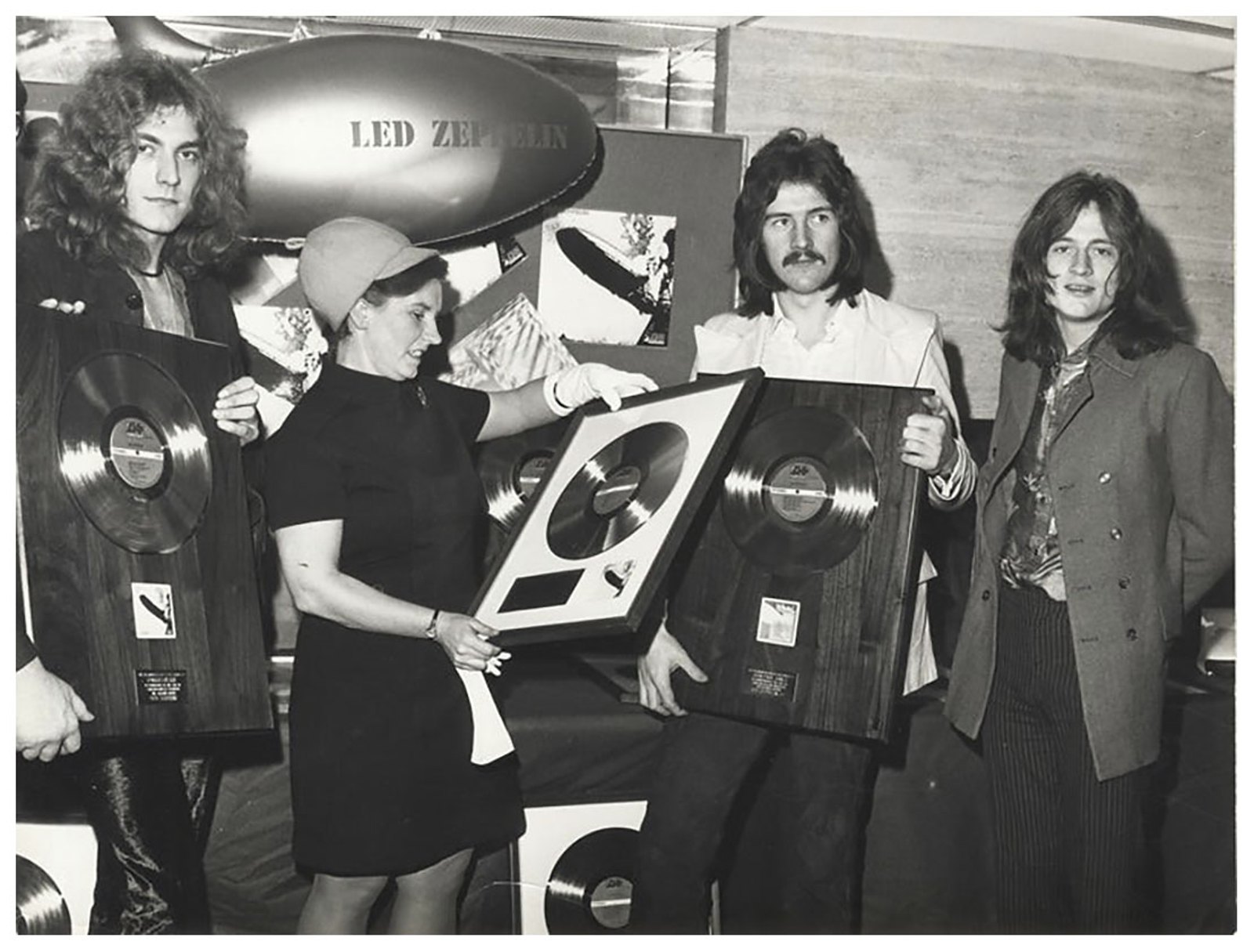
The headcount settles the first question quickly. The quartet whose four members had all grown up in Aston, a district of Birmingham, was Black Sabbath, and the two members of Led Zeppelin who gave that band its voice and its weight came from the same few miles of England.
The pair from the Band of Joy whom Jimmy Page took south in the summer of 1968 were Robert Plant, a singer born in West Bromwich, and John Bonham, a drummer born in Redditch, and with them the West Midlands supplied six of the eight men in the two bands that put the most weight on tape before 1971. Page and John Paul Jones were London session players. The riff came from both. The pedigree leans one way.
The same district kept supplying after the first wave. The quintet that took its name from a Bob Dylan song and its singer from Walsall, Judas Priest, grew up a few miles from Aston, and the Cannock bassist and singer who joined Deep Purple in 1973, Glenn Hughes, had come out of the local band Trapeze, formed in Cannock in March 1969. No other region on the map produced that many of the players. None came close.
The riff came from both. The pedigree leans one way.
London, where the tapes were cut and the sleeves printed
The players came from the Midlands. Almost everything else came from London. Olympic Studios in Barnes recorded the first Led Zeppelin album in October 1968, Regent Sound on Denmark Street recorded the first Black Sabbath album a year later, and the contracts, the pressing plants and the music papers that could make or sink a record were all within reach of the Underground.
The label with a black and white spiral printed across its centre, which spun the eye as the record turned, was launched by the Philips subsidiary Phonogram in the autumn of 1969 to sell the long-haired bands its parent company did not know what to do with, and it was called Vertigo. It released Black Sabbath, Paranoid and the first Uriah Heep album inside a single year. EMI answered with Harvest, which issued Deep Purple in Rock in June 1970.
London also raised bands of its own. Deep Purple had been put together in London in 1968, and Uriah Heep came from the city itself. Neither of them was a provincial band signed from afar. London was both the market and a bastion of the music, and a band from anywhere in Britain had to pass through it on the way to a shop counter.
| Place | Bands | First heavy record | Label | Year |
|---|---|---|---|---|
| West Midlands | Black Sabbath; Robert Plant and John Bonham of Led Zeppelin | Black Sabbath | Vertigo | 1970 |
| London and around it | Led Zeppelin, Deep Purple, Uriah Heep | Led Zeppelin | Atlantic | 1969 |
| San Francisco | Blue Cheer | Vincebus Eruptum | Philips | 1968 |
| Los Angeles and San Diego | Steppenwolf, Iron Butterfly | Steppenwolf | Dunhill | 1968 |
| Detroit and Michigan | MC5, The Stooges, Grand Funk Railroad | Kick Out the Jams | Elektra | 1969 |
The West Coast, where the volume came first
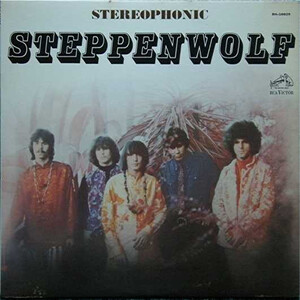
The dates favour California. Released by Dunhill on 29 January 1968, the debut of the Los Angeles band led by the German-born singer John Kay, who had come west by way of a Toronto group called the Sparrow, carried "Born to Be Wild", and the band on its sleeve was Steppenwolf. Up the coast, Blue Cheer had already released Vincebus Eruptum in San Francisco.
The San Diego quartet that moved to Los Angeles, signed to Atlantic's Atco imprint and gave the whole second side of its 1968 album to seventeen minutes of organ, fuzz guitar and drum solo was Iron Butterfly, and "In-A-Gadda-Da-Vida" sold in quantities no British heavy band would touch for years. It was loud. It was not built on the riff.
That was the West Coast's limit. The ballrooms of San Francisco and the Sunset Strip rewarded the long jam over the short figure, and every loud band in California was pulled towards the twenty minute improvisation the Midlands bands were busy cutting away. The volume landed first on the Pacific coast. The form did not.
Detroit, where heavy and punk were still one noise
Michigan was the other American redoubt, and it came at the music from the opposite side. Where California drifted into jams, Detroit and the towns around it compressed everything into aggression: the MC5 out of Lincoln Park, The Stooges out of Ann Arbor, and Grand Funk Railroad out of Flint, all three on record by the end of 1969.
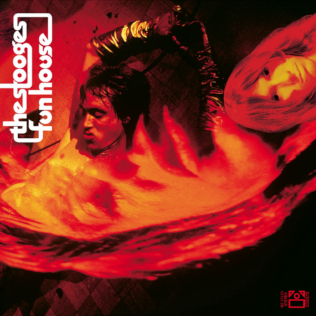
Recorded in Los Angeles in the spring of 1970 with Don Gallucci producing and released by Elektra that July, Fun House is the record on which the Ann Arbor quartet, built around the singer Iggy Pop and the brothers Ron and Scott Asheton, came nearest to heavy metal and then swerved away from it. Sales were thin, and Elektra let the band go the following year. The noise survived the contract.
Ron Asheton's riff on "Down on the Street", the opening track, lands like a cast-iron bathtub pitched out of an upstairs window onto a concrete yard, one crash and then a second as it bounces, the enamel flying off it in chips, and it is as heavy as anything recorded in Britain that year. The band never built on it. Its progeny turned up six years later in the punk clubs of New York and London, not in the heavy bands.
That split is Detroit's real place on the map. Grand Funk and the guitarist Ted Nugent carried the loud side of the city into arena rock, the Stooges and the MC5 handed the fast side to punk, and heavy metal took the attitude from both without taking the address. The music owes Michigan its aggression. It does not owe it its birth.
Two countries, one answer
So the answer has three parts, and all three point at England. The West Midlands supplied the players and the sound, London supplied the studios, the labels and the shops, and the American regions supplied the volume and the aggression on records that kept one foot in the old blues or in punk. The style that stood on its own feet came from a stretch of England about thirty miles wide.
Other places had loud bands by 1971, and every one of them arrived after the Midlands records rather than before. Budgie came out of Cardiff and made its 1971 debut with Rodger Bain, the producer of the first Sabbath albums, at the desk, Lucifer's Friend cut a heavy debut in Hamburg, and Flower Travellin' Band answered from Tokyo. They were replies, not origins. The postmarks prove it.
The words that ended up on its records are a different trail, and a transatlantic one, running from a novelist through a motorcycle song to the music papers. That journey is followed in where the name "heavy metal" comes from, and it starts on the other side of the ocean from the music.
