
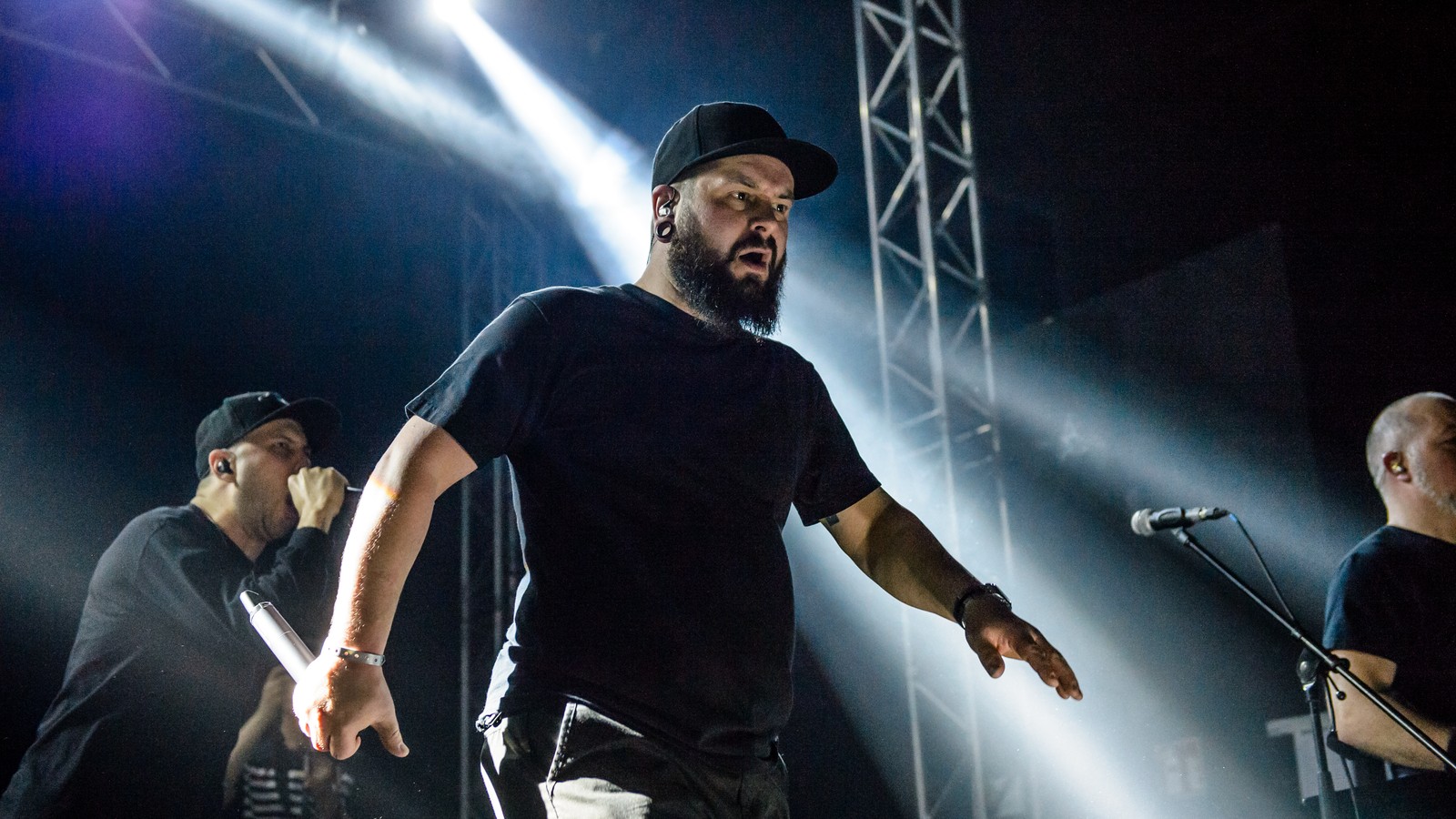
On 1 March 2017 a songwriting podcast called Riffcast put up its first episode under the title Meet the Father of Deathcore, and the guest it introduced had been telling people for years that he hated the word.
Formed at the end of the nineties by players out of a Bay Area band called Y.F.H., booked in the early 2000s onto bills beside Malevolent Creation and Obituary on one side and As I Lay Dying on the other, and credited in 2017, by that podcast, by a documentary and by a university magazine, with starting the whole thing, the band at the centre of all that praise was Antagony, and the songwriter they crowned was Nick Vasallo. On the other side of the continent, the Montreal singer whose band had spent five years ripping blast beats out of death metal and bolting them onto hardcore drops was Alexandre Erian of Despised Icon, and in June 2007 he told MTV News that his band wanted nothing to do with the trend. Those are the two loudest answers anyone has to who invented deathcore.
Neither man will own the word.
At two in the morning in a venue parking lot a stalled tour van stands hood up, with jumper cables run to it from four different cars at once, the clamps spitting sparks and welding themselves onto the battery terminals, and when the engine finally catches it does not cough, it roars, the whole van slamming down on its springs the way a room lands on the first breakdown of the night, and nobody standing in that lot will ever agree on which battery turned it over. The van runs. The argument does not end.
The sound came from two directions at once, and the roots of deathcore run back through Long Island death metal and Syracuse hardcore long before any of these bands plugged in. Paternity is a narrower question. It asks which band put the two halves together first, on purpose, and kept doing it, and every claimant passes one of those tests and fails another.
Antagony, and the father who hates the name
The Bay Area case starts with a song, not a record.
Written in 2000, when most of the bands now filed under deathcore were still sitting in high school classrooms, "End of the Circle" lurches, in the hearing of a guest writer at No Clean Singing in January 2013, from death metal into a breakdown, from the breakdown into a slam groove and from the groove into grind, high screams answering low growls the whole way, a song cut together like a channel switcher stomped so often and so hard that the footswitch has punched clean through the bottom of its own casing, every section change a boot heel coming down on cast metal. He heard in it the true beginning of the genre.
The rest of the evidence holds up. Antagony put out See Through These Eyes in 2001 and took it across the United States with End of All and Boof in support, and Ben Orum, who played guitar in the band, took the Bay Area hybrid with him into All Shall Perish, the Oakland band he started in 2002. If deathcore has a family tree, All Shall Perish is the West Coast scion of Vasallo's rehearsal room.
The weak point is the date on the crown, not the date on the music. The title arrived in a run between 2013 and 2017: the No Clean Singing piece hearing the true genesis of the genre in an Antagony song, the Riffcast episode, Dawn of Deathcore, a 32-minute film about the band directed by Brandon Hunt that same year with musicians from All Shall Perish and Fallujah on camera, and a UC Santa Cruz Magazine profile that October calling Vasallo the originator of the genre. Every one of them came after the genre had been built, sold and fought over by other people.
The band was also off the board in the years that counted. Three line-up changes between See Through These Eyes and Rebirth, in that same guest writer's reading, pushed songs written from 2001 onward out to 2005, and by the count on its own Facebook page Antagony went through eleven line-up changes in its first life. While deathcore was taking its final shape, its supposed father was rebuilding a band.
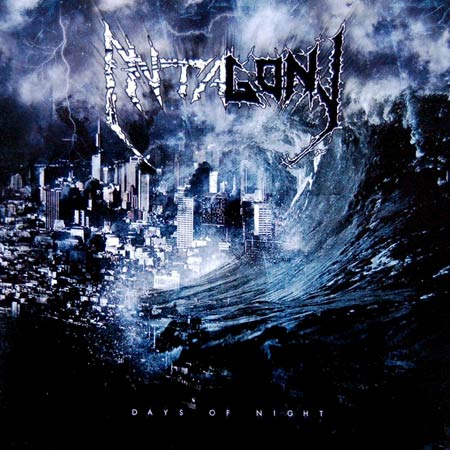
Then he walked away from the word. Released by Deepsend Records in 2009, Days of Night was, in Vasallo's account to No Clean Singing, a conscious attempt to pull the band clear of that whole scene, and in the same answer he said he hated the deathcore label. A father who disowns the child does not undo the birth. He does make the paternity case awkward to press on his behalf.
A father who disowns the child does not undo the birth. He does make the paternity case awkward to press on his behalf.
Who invented deathcore, if the test is the record
On the strictest test, a finished full-length that already does the thing, the answer moves to Texas and to a band that never asked for the honour. Started in the early 1990s as a death metal group called Supplication, renamed after a first demo, and signed to Solid State in 1997 after Jason Stinson of the hardcore band Overcome passed its tape to Brandon Ebel of Tooth and Nail, the Arlington band that put death metal riffing, a guttural singer and hardcore breakdowns on one disc in 1998 was Embodyment, and Embrace the Eternal is the full-length most often named as the first of its kind.
Its slow parts come down like the pot rack of a church kitchen torn off its ceiling bolts at the end of a potluck, every ladle and stockpot crashing to the tile in one roll, a clang that rattles every mug on the counter and every window in the hall, and the Christian hardcore circuit the band worked, bills with Living Sacrifice, Zao, P.O.D. and No Innocent Victim, was built out of rooms exactly like that one. That circuit had its own labels, its own magazines and its own vans.
The claim was made for the band two decades late. Breaking Scene Media, publishing as The New Fury on 8 February 2019, said Embodyment pioneered the genre and went on to influence Suicide Silence and Despised Icon, and an Alternative Press list of March 2020 counted the record among ten that inspired deathcore before it was a movement. The 2019 piece offers no musician's word for that chain of influence, and the same article hands a share of the pioneering to Antagony and Deadwater Drowning.
Then there is the band itself. Embodyment followed Embrace the Eternal with a new singer and The Narrow Scope of Things, an alternative metal record. The band grew lighter on every album after that and was gone by 2004. The case for Embodyment rests on one record and on nothing that record set in motion.
The same test catches Prayer for Cleansing, the Raleigh band whose Rain in Endless Fall came out on Tribunal Records in June 1999, a year before the band broke up and its best-known members carried their appetite for extremes into Between the Buried and Me. That line runs into progressive metal. It never reaches the breakdown records of 2007.
Despised Icon and the template nobody asked them to own
The former drummer of a Montreal death metal band who stepped up beside Steve Marois for the Syndicated Murderers EP in 2004 and has fronted Despised Icon ever since is Alexandre Erian. By his own account to Wall of Sound in July 2016, the band wrote its first record in 2001, when all of its members were playing in death metal bands, and the songs were meant only as something a little different.
Despised Icon's claim is the template, and the template is mechanical: blasts at grind speed, two voices splitting the low and the high register inside a single bar, and a drop into half time written for a hardcore floor, the shape that the MySpace bands of 2007 carried into every all-ages room in the country. Death metal's heavy artillery and hardcore's drop had been bolted onto one chassis.
The death metal crowd did not greet it as a founding act. Sent out on bills with Deicide and Morbid Angel, the sextet hammered blast beats that those rooms should have welcomed and breakdowns that rattled the stage risers under its feet, and Erian told Dead Rhetoric in November 2019 that the band was booed every night, in years when, by his account, there was no deathcore scene to go home to.
We don't want to be associated with this trend.
Alexandre Erian of Despised Icon, to Chris Harris and Jon Wiederhorn, MTV News, Metal File, 8 June 2007
The weak point is the calendar and the singer's own testimony. The band formed in 2002, three or four years after Antagony, and Erian has never claimed the invention for it. In June 2007 he told MTV that only a handful of bands could call themselves original, and the ones he named were The Dillinger Escape Plan, Meshuggah and Suffocation in the nineties, not his own. In 2019 he went further and handed the West Coast to All Shall Perish and Animosity and the East Coast to The Red Chord, with Despised Icon working alongside them.
The names Erian handed on
All Shall Perish holds a claim that is real and borrowed at once. Its debut, Hate . Malice . Revenge, came out through the Japanese label Amputated Vein in 2003, and Nuclear Blast, which reissued it in 2005, still hosts the official video for "Deconstruction" on its YouTube channel. But every argument for the band runs back through Ben Orum to the room Vasallo ran. All Shall Perish strengthens Antagony's case more than it makes its own.
Formed in San Francisco in 2000 and on record in 2003 with Shut It Down, a debut whose "Fake Blood" is over in a little more than two minutes, the teenage band Erian names in the same breath as All Shall Perish was Animosity. That record came out on Tribunal Records, the small label that had released Prayer for Cleansing four years earlier.
Animosity's records are filed as often under death metal and deathgrind as under deathcore, and the band called it quits in October 2009, by which time the genre it may have helped start had put records on the Billboard 200. Its claim rests on one witness, the singer of a rival claimant.
Count the label credits and a pattern shows. Black Market Activities, the label that put out Animosity's second record, Empires, in 2005, was run by Guy Kozowyk of The Red Chord, the East Coast band Erian credits, and two years earlier it had released the only EP by Deadwater Drowning, the New Hampshire band gone by 2004 whose claim rests almost entirely on the bands its members joined afterwards, The Acacia Strain among them. Tribunal links Raleigh to San Francisco. Black Market Activities links New England to San Francisco. Paternity in this music looks less like a family portrait than a mailing list.
Who started deathcore, then
The word cannot settle it. It was printed for other bands before any claimant here had made a full-length. The dates belong to a separate question, when did deathcore start, and dates are the easy part.
Paternity splits three ways. In the judgement of the writers, podcasters and filmmakers who handed out the crown between 2013 and 2017, Vasallo is the father, and a song dated 2000 gives them their case. On the evidence of the shelf, Embodyment made the first full-length in 1998 and left the room. On the evidence of what the bands of 2007 actually played, the template came from Montreal, from a band that had been booed off death metal stages and still refused the title. Whether the question is who started deathcore or who created deathcore, the answer depends on which of those three tests you trust, and no single test names everybody that matters.
What followed, the MySpace boom, the 2010s split into subgenres and the arenas of the 2020s, is the long version, and almost none of it needed the founders' blessing. The bands of 2007 took the blast and the breakdown from whichever records reached them first, and a genre begotten in half a dozen places at once never had a single parent to ask.
The refusals are the strongest evidence of all. A Bay Area songwriter who hated the label and a Montreal singer who called it a trend were both playing the music before the word ever reached them, and that is as close to a birth certificate as this music has.

