
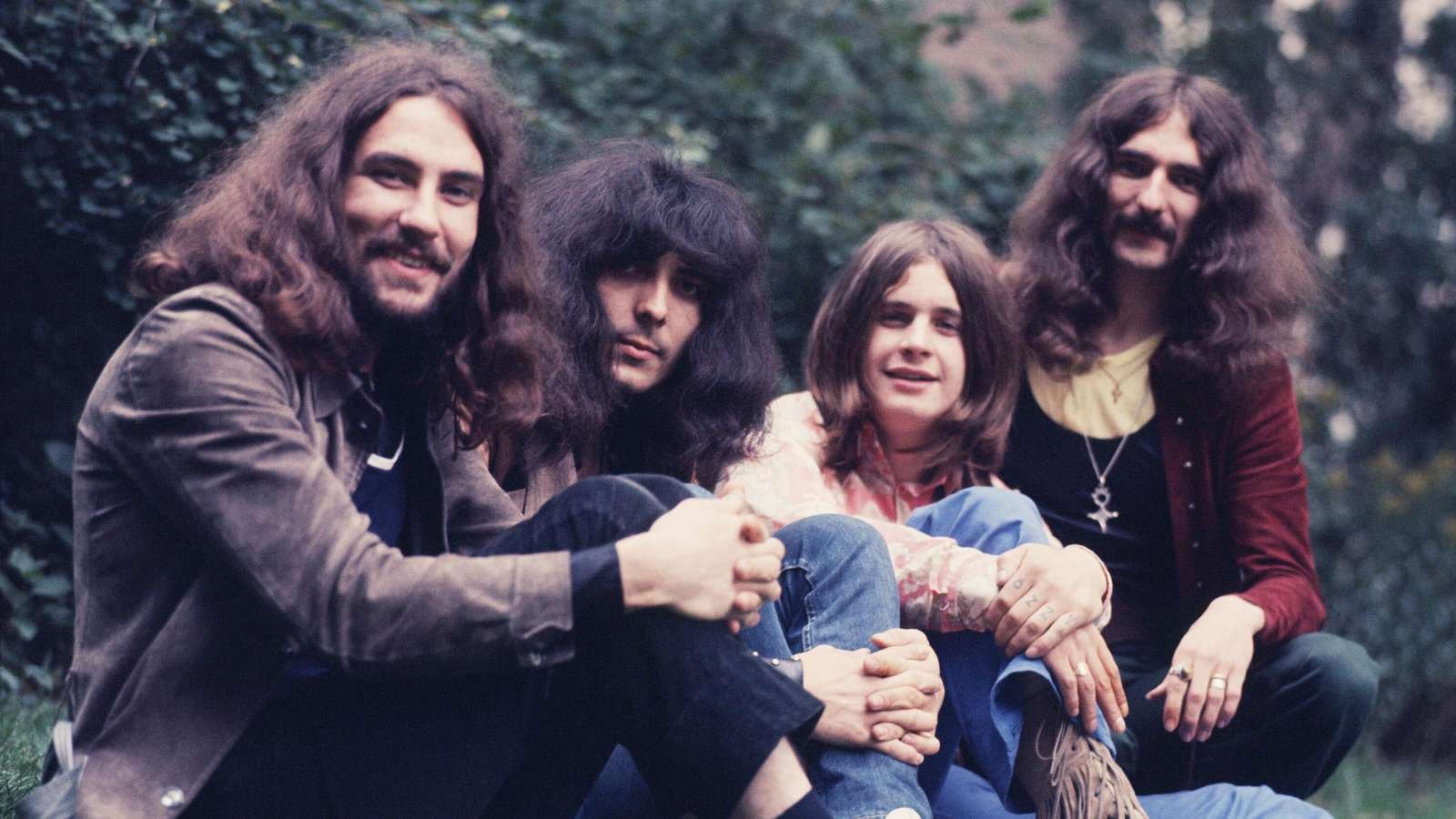
Who invented heavy metal? A guitarist did, on a date that can be written down. The left-handed sheet-metal apprentice from Aston who learned to play again on two fingertips melted out of a plastic bottle was Tony Iommi, and in November 1969, in barely a day of studio time at Regent Sound in London with Rodger Bain producing, the Birmingham quartet he played in, Black Sabbath, recorded a song of the same name, three slow notes that smashed through the twelve-bar blues like a sledgehammer through a pub piano.
Every earlier claimant brought a part. Iommi brought the machine.
The words themselves are a separate case, older than the music and passed from a novelist to a biker song to the rock press, a paper trail followed in the origins chapter. The sound is the harder question and the more interesting one, because a word can be coined by accident in a review, while a noise that twenty later genres still run on had to be built by somebody, with hands, on a particular day, and the record shows exactly whose hands they were.
What inventing a sound actually means
An invention is not a noise somebody stumbled on once. The Wright brothers were not the first men to leave the ground; they were the first to leave it, steer, come down in one piece and do it again the next morning, and the test for heavy metal runs the same way. The claimant has to put every working part on one record, the riff carrying the whole song, the volume holding it up, the swing gone and the subject turned dark. Then the design has to be copied by people who never met its maker.
Most candidates fail the second test. Several fail both.
A pencil, a razor and the devil's interval
The oldest claimant has no words at all. Recorded in 1958 and released on the Cadence label, "Rumble" by Link Wray got its snarling, blurred chords because Wray jabbed a pencil through the speaker cones of his amplifier, and the record was pulled by radio stations in several American cities on the grounds that it might incite gang fights, although it is an instrumental from the first second to the last. The menace was real. The follow-through never came, and Wray went back to rock and roll.
Six years later a razor did the same job for The Kinks on "You Really Got Me", and it made a hit single rather than a genre. The Seattle guitarist who had crossed the Atlantic to be discovered in London was Jimi Hendrix, and on Track Records in March 1967 The Jimi Hendrix Experience opened "Purple Haze" with guitar and bass sounding a tritone apart, the interval medieval theorists nicknamed diabolus in musica, the devil in music, more than two and a half years before anyone in Aston made that interval the foundation of a band. Then the song swings, and Hendrix never went back for the riff.
Laid side by side, Wray's pencil, the Kinks' razor and Hendrix's tritone are spare parts on a workbench, a carburettor here and a crankshaft there, and nobody before 1969 bolted them into an engine that would turn over, belch black smoke across the studio floor and drag the rest of rock music behind it.
Wray's pencil, the Kinks' razor and Hendrix's tritone are spare parts on a workbench. Nobody before 1969 bolted them into an engine.
Louder is not heavier
The San Francisco trio that took its name from a brand of LSD was Blue Cheer, and its version of Eddie Cochran's 1958 "Summertime Blues", issued on Philips from the January 1968 album Vincebus Eruptum, climbed to number fourteen on the Billboard Hot 100, the American singles chart, with a guitar that sawed the song's rockabilly frame into kindling and left the pieces smoking. Their partisans call them the first heavy metal band. On volume alone the case holds. On form it collapses, because under the noise the songs are still loose electric jams. Where they stood among the pioneers, beside the Detroit, London and Long Island bands of the same years, is laid out with the first heavy metal bands.
The London quartet that Atlantic signed in November 1968 for an advance reported at two hundred thousand dollars was Led Zeppelin, and its debut, released in America on 12 January 1969, carried a weight nobody had put on tape before, yet two of its nine songs, "You Shook Me" and "I Can't Quit You Baby", were Willie Dixon blues, played slower and far louder but still blues to the bone. Zeppelin amplified the blues. They never left it.
A factory press, a plastic bottle and a Friday in February
The facts of the accident are plain. On his last day at a sheet-metal works in Birmingham, at seventeen, Iommi lost the tips of the middle and ring fingers of his right hand in a machine press, and because he plays left-handed, that was his fretting hand. He made two thimbles from a melted washing-up liquid bottle, covered them in leather and changed to the lightest strings he could buy, putting banjo strings on the top.
What the workaround did to the sound is the invention itself. Fingertips that cannot feel the fret favour simple, low shapes held for a long time over quick blues runs, light strings bend easily and ring dark, and out of that necessity came a style built on a few notes sustained until they became a wall, the power chord moved from an accent at the end of a phrase to the floor the whole song stands on, a line Iommi has drawn himself, in his memoir Iron Man (2011) and in interviews since.
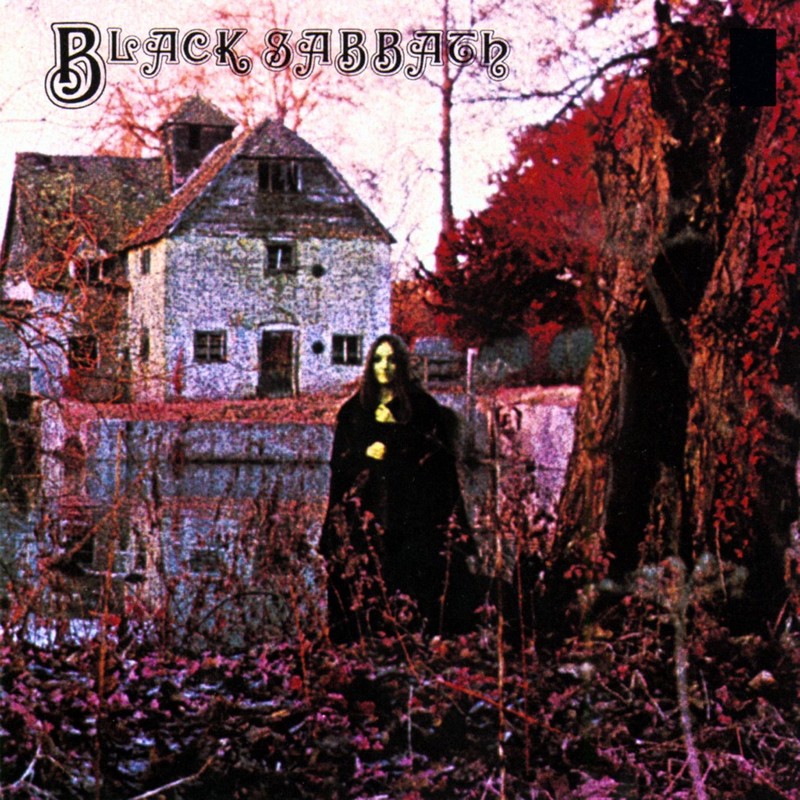
Released in Britain by Vertigo on Friday 13 February 1970 and in America by Warner Bros. that June, Black Sabbath climbed to number eight on the British album chart while the critics, Lester Bangs in Rolling Stone among them, gutted it in print as a clumsy imitation of Cream. The public ignored them. It has been ignoring them since.
The title track is the patent. It opens on rain, thunder and a tolling bell, then Iommi plays a G, the G an octave above it and a C sharp, the tritone again, with Geezer Butler's bass and Bill Ward's drums landing on every note together, and the riff comes down on the listener like a church roof giving way one beam at a time, the interval Hendrix had used as a flourish carrying the entire weight of the building. Butler has said the seed was his own bass line, lifted from "Mars" in Gustav Holst's The Planets during a rehearsal, with Iommi returning the riff itself the next day. Nothing in it swings. Late in the song the four of them double the tempo and charge out through the rubble, and the blues does not survive the exit.
The verdict, and the tuning that proved it

Proof that it was a design and not a lucky accident arrived eighteen months later. Released by Vertigo in July 1971, Master of Reality found Iommi tuning down three semitones on "Children of the Grave", "Into the Void" and "Lord of This World" to take the tension off his fingertips, and the lowered strings dropped the band into the earth like a quarry charge bringing down a hillside, a method doom, stoner, sludge and death metal bands still copy on every record they make. An invention is what gets copied. This one was copied by everybody.
The strongest objection comes from the same corner of the Midlands. The quintet that armed the music in 1976 with twin lead guitars and a voice pitched for the rafters was Judas Priest, and anyone who defines heavy metal by that finished model can argue that Priest invented it. They perfected it. Perfecting a design is not the same as inventing it, and Priest built on records that were already six years old. K.K. Downing said as much himself, in Guitar World in July 2025: Black Sabbath, he said, gave Judas Priest "a real confidence boost to carry on what we were doing."
So the verdict is Black Sabbath as the workshop and Tony Iommi as the hand, with an honest footnote for the other three. Butler wrote most of the words and steered the band toward the occult, Ward's jazz-trained drumming gave the slow riffs room to fall, and Ozzy Osbourne sang over the wreckage like a man reading out a warning, but the thing none of them could have built alone came off the fingers of one left-handed guitarist, beyond dispute the forebear of every down-tuned riff since. Everything that followed, the alloy with punk, the speed, the fifty names, belongs to the full story of the genre.
The design was filed in November 1969. Nobody has overturned it.
