
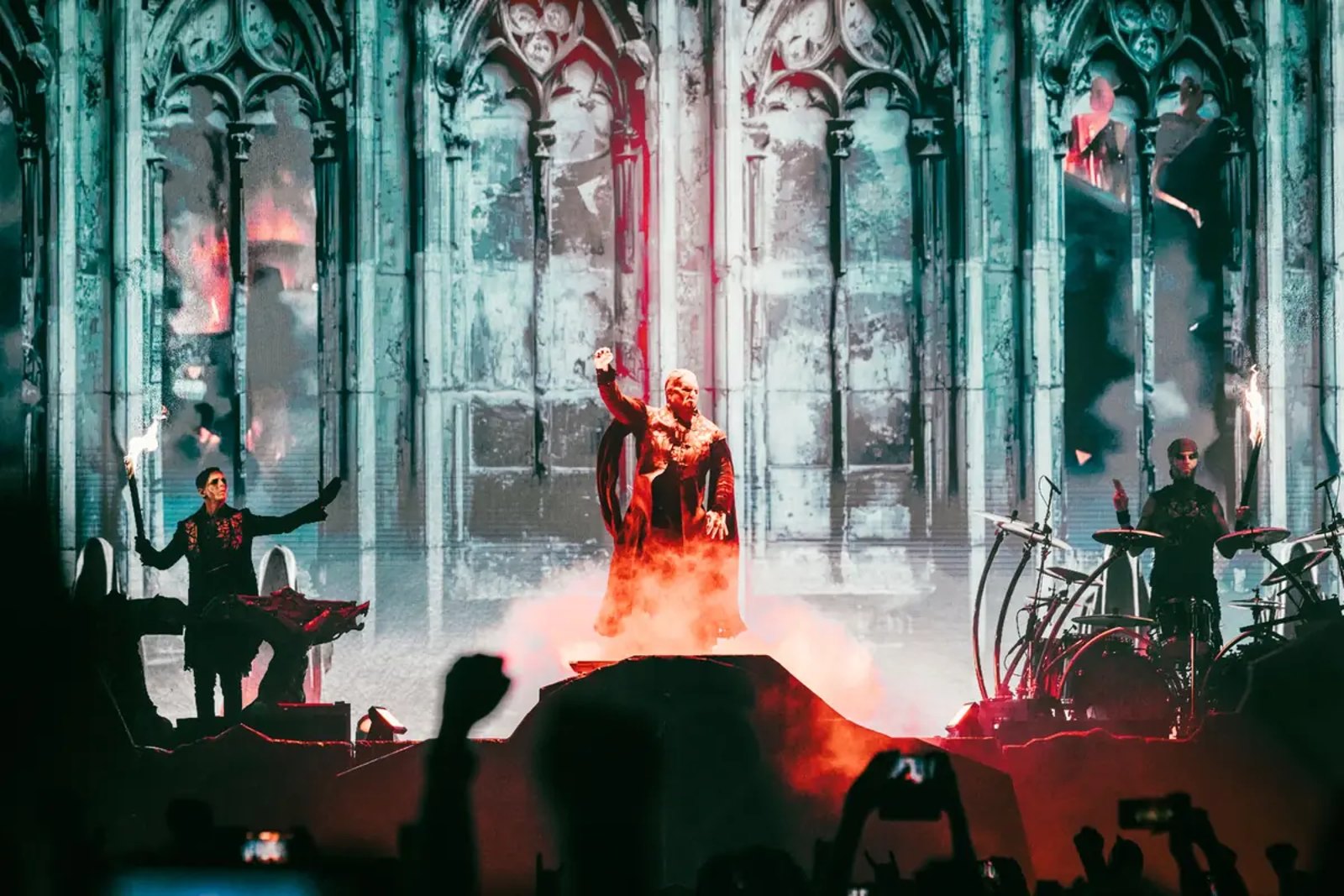
Entering the official German album chart at number one in the week of 2 August 2013, and shoving that summer's pop releases off the top slot with a record of hymns about werewolves, relics and the Mass, the band in face paint and liturgical robes was Powerwolf, with Preachers of the Night on Napalm Records, which makes the question of why is power metal hated sound, at first hearing, faintly absurd.
It is not absurd. The contempt is real, and it is old.
Ask a death metal listener, a critic raised on the American nineties or a black metal purist, and the charge sheet arrives already typed: the voice is too high, the lyrics are about dragons, the chords are happy, the costumes are ridiculous and the solos are fast for the sake of being fast. Several counts are partly true. Taken apart at the level of arrangement, voice and harmony, each of them turns out to have confused the paintwork of the music with its carpentry, and the verdict has been nailed to the genre's door for thirty years regardless.
The hostility is also part of the fan culture itself, the subject of its place in the story, since a following this loyal was built at least partly in answer to it.
A tenor in a music of growls
Pitched above the stave, sung clean and held on vowels as long as a church bell hums after the stroke, the house voice of the genre arrived in a heavy music that, from about 1990 onward, had begun to treat the unpitched roar as the badge of seriousness, so that a Kiske-school tenor next to a death metal record sounds to many ears like a chorister who has wandered into the wrong building.
That much is true. Some of the singers strain, some go sharp at the top, and on a bad night a high voice exposes every missed note in a way a growl never does.
The misreading lies in treating the voice as costume rather than as a part in the arrangement. Two guitars, a bass and a keyboard wall already crowd the low and middle frequencies, and a growl dropped into that space becomes one more layer of texture, while a clean tenor carries pitch, and the melody is the structural line the whole song hangs from. The voice works like the solo treble at the top of a cathedral anthem, a single wire of sound pulled through the full organ tight enough to slice the chord in half, and it sits exactly where the guitars leave the spectrum empty. Rob Halford sang in that register all over Judas Priest's Painkiller in 1990. Nobody called it soft.
Why is power metal so cheesy? Dragons, major keys and armour
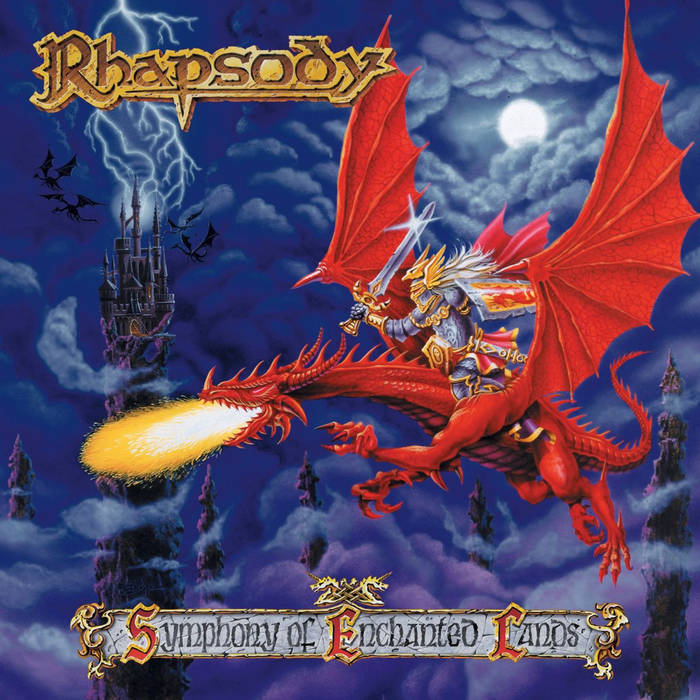
Built around an invented kingdom, a warrior of ice and a sword with an emerald set in its hilt, the second album by the Italians of Rhapsody of Fire, then still called Rhapsody, Symphony of Enchanted Lands in 1998, is the exhibit every prosecutor reaches for first when the question is why is power metal so cheesy. The lyrics are earnest, the names are borrowed from the role-playing shelf and the story runs across several records. The charge holds for the prose.
It does not hold for the form. Fantasy in this music is a libretto, and opera has never been judged by the plausibility of its plots: a magic flute tames wild animals, a knight arrives in a boat drawn by a swan, and Richard Wagner put a dragon on the stage of the Bayreuth Festspielhaus in 1876 without the Ring cycle losing its place in the repertoire. The story exists to give the music a reason to be large.

Then the harmony. Released by EMI in March 1991 under a cartoon title, after a long legal fight with the band's old label had drained the momentum of the Keeper years, Helloween's Pink Bubbles Go Ape carried the tag critics had already pinned on the band since the Keeper years, happy metal, half invited by the pumpkins and the jokes, and it stuck to the entire genre for a decade. The choruses do resolve brightly, and the last one is often lifted a step by a key change. That part is fair.
The trumpet stop has been wrenched out so hard it cracks the console, and underneath it the pedal has been sounding the minor tonic all along.
What the charge misses is the key underneath. A large share of the repertoire sits in minor, natural or harmonic, and its brightness comes from a single climb, the sixth and seventh degrees of the minor scale rising to the tonic, a progression that sounds triumphant because it moves upward and resolves, not because it is major. Picture an organist playing a hymn tune on the trumpet stop with the drawknob wrenched out so hard it cracks the console, while the pedal underneath has been sounding the minor tonic all along. The ear hears the brass. It misses the floor.
Costumes complete the cheese count. Manowar posed in furs and leather loincloths through the 1980s, Hammerfall came out in chainmail and plate at the end of the 1990s, and Powerwolf still preaches in vestments, which in an age of flannel shirts and plain black T-shirts looked like a refusal to grow up. Yet the same underground that laughs at the armour paints its own faces white and straps on bullet belts. Every metal stage is a costume. Power metal simply picked the one from the opera house, where the tenor in armour is a character in a staged story and nobody in the stalls mistakes him for a knight.
Is power metal cringe, or only fast?
Played at tempos around the 200 beat mark, with harmonised guitar runs that DragonForce turned into a public arms race in the middle of the 2000s, the speed is where the charge of empty virtuosity lands hardest, and it is where the question is power metal cringe gets asked most often, usually after a solo has climbed the neck for a full minute with no melody in sight.
Some of those solos are showroom displays. The criticism is earned whenever the lead part stops serving the song and starts serving the guitarist's reputation, and the genre has produced plenty of both.
The rhythm section is another matter. Under a song such as Rhapsody's Emerald Sword, the double kick is not showing off, it is doing the job of a baroque continuo, a harpsichord jack hammering the same string until the quill splits, which is exactly what a Vivaldi presto does when it keeps the floor of the harmony moving so the melody above can hold long notes. The speed is a pedal. It keeps the chords alive while the voice sings slowly on top of them, which is why a power metal chorus can feel broad and unhurried at a tempo that would turn thrash into a sprint.
Cringe, in the internet sense, means embarrassment at sincerity. That is the real charge underneath all the others. The genre sings about courage without winking, and irony has been the dominant tone of rock criticism since the grunge years.
Why is power metal hated in America and in the underground
Crushed out of the American market between 1991 and the end of the decade by grunge, alternative rock and the plain fact that almost nobody licensed the European records for release there, the genre was dismissed by much of the American metal press largely on reputation, since Blind Guardian, one of its biggest names, did not play a North American tour until 2002. Europe went the other way. Hammerfall's Glory to the Brave on Nuclear Blast in 1997 reopened the door the grunge years had slammed. It entered the German album chart at number 38, a rare showing for a metal debut that year.
The American contempt was, by common consent, a verdict reached largely without the evidence. The records were not in the shops, the bands were not on the road, and the image of the genre travelled faster than the music. The whole arc, told across the KaosMetal power metal series, shows how long that imbalance lasted.
The extreme underground's disdain is older and more principled. Through the tape trading years of death and black metal, a melody you could whistle was anathema, and the scene treated a catchy chorus the way a cathedral chapter treats a barrel organ wheeled into the nave, by smashing the crank before the tune can finish its first turn. Threat was the value. Clean melody meant surrender.
The heresy of it is that the same underground drank from the same well. Bathory built the choirs and the mid-paced epics of its Viking records around 1990 out of material any power metal fan would recognise, and Emperor put symphonic keyboards and heroic harmony under some of the most feared records of the decade. The disdain was real. The border was never as closed as the catechism claimed.
The reputation and the ticket queue
None of the charges ever emptied a hall. Powerwolf reached the top of the German chart in 2013 and has returned there four times since, with The Sacrament of Sin in 2018, the live The Monumental Mass in 2022, Wake Up the Wicked in 2024 and the live Wildlive in 2026. Sabaton headlines arenas across Europe, and the singalong the critics find embarrassing is what fills the festival fields.
The strangest evidence comes from the bands that play the charges as a joke. Gloryhammer, formed by Christopher Bowes of Alestorm, released Tales from the Kingdom of Fife on Napalm Records in March 2013, with Angus McFife as its opening single, a story of a Scottish crown prince, a magic hammer and an evil wizard, and Nanowar of Steel have made a career of the same trick. The parody works only because the music underneath is played perfectly straight: the tenor hits the notes, the double kick holds, the key change lands. A genre that can laugh at itself at full technical strength has already absorbed the worst the prosecution can say.
The defence proper belongs to why power metal is so good, cheese included. The charge sheet stays where it is, and so does the queue at the merch stand.
