
On Saturday 18 April 2009 the room was the Chapel, a former military church in the Stauferpark at Göppingen, and it held everything a doom weekend held in those years: a main hall high enough for a congregation, coloured lead glass throwing the afternoon light across the floor, a sacristy given over to the bands as their lounge, a crypt with room for 250 people given over to the crowd as a retreat between sets, and a sold-out house of 680 paying guests who had bought their tickets not from a promoter but from two musicians, Jochen Fopp of Mirror of Deception and Frank Hellweg of Well of Souls. The Chilean band Procession was on that Saturday bill, and so were the Mannheim band Black Shape of Nexus and the band Kimi Kärki started after his years as Peter Vicar, the guitarist of Reverend Bizarre, Lord Vicar, their riffs dragged across the stained glass at the pace of a cortege. The Saturday headliner was Wino.
Founded by those two musicians together with Roman Astalosch, and opened in February 2003 in Triensbach, a village near Crailsheim, in front of about 350 people, Doom Shall Rise moved into the Chapel for its second edition in April 2004, took a deliberate year off in 2008, and closed on 27 April 2013 with Goatess at the end of an eighth and farewell edition, its organisers saying that the flood of new bands, the rival festivals and a creeping commercialisation of the scene had crushed the way they wanted to work. Eight editions in eleven years. Then the doors shut.
A common on the edge of a market town, where a fair has pitched in the same week of every year for so long that when the lorries pull away the grass grows back in the outline of the tents, paler where the canvas stood and ranker where the guy ropes were pegged, lets a stranger walking it in January read the whole ground plan of a thing that is not there, and that is the mark these weekends have cut into the towns that kept them. A doom festival is measured less by the crowd on the night than by the shape it leaves in the ground once the crowd has gone. Doom Shall Rise is gone from the calendar, and its shape is still in the grass. The rooms fixed a slow and unfashionable sound to a date and an address, and the posters, the stalls and the whole trade in doom metal art grew up around them.
Tilburg: from a webzine to the 013
Grown out of a stoner rock webzine that Walter Hoeijmakers and Jurgen van den Brand ran under the same name, staged in its first years across Amsterdam, Tilburg, Sneek, Nijmegen, Den Bosch and Eindhoven, still playing the Effenaar in Eindhoven on 27 June 2003, and invited back to Tilburg by the 013 for a tenth edition on 9 April 2005, the festival called Roadburn took a scattered run of Dutch club nights and hammered it into a single annual council of the heavy underground, which it has held in that concert hall ever since, with the Midi Theatre as a side room until it closed at the start of 2012 and Het Patronaat until it closed after the 2019 edition. Van den Brand left in January 2016. Hoeijmakers stayed on as artistic director.
Roadburn is nowadays about heaviness in all shapes and forms, unrestricted by genre.
Walter Hoeijmakers, interviewed by Thorsten Fuchshuber, woxx, 16 March 2023
The curators tell the rest of the story. Sunn O))) curated in 2011 and Jacob Bannon of Converge in 2018, and in 2019 the festival made the Baton Rouge band Thou its artist in residence, a run of sets that included a secret set of Misfits songs at the Ladybird Skatepark on 13 April 2019. Then the pandemic struck two years out of the calendar. The 2020 edition, curated by Emma Ruth Rundle and Perturbator, was cancelled on 3 April 2020, the 2021 festival existed only as Roadburn Redux, a programme of streamed performances, and the festival came back to the 013 in person from 21 to 24 April 2022.
Freak Valley and the long drone of Om
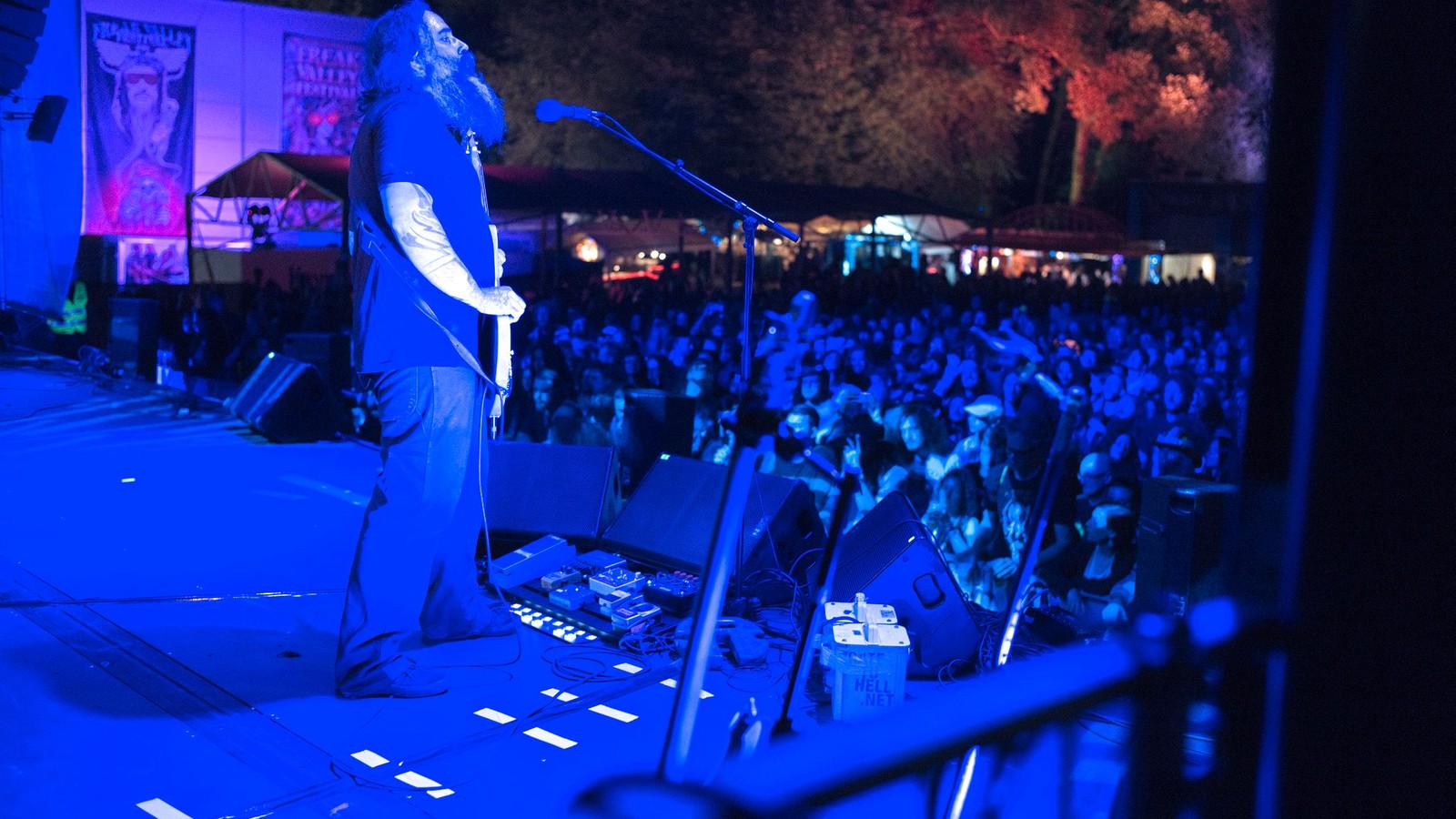
Pitched on the AWO grounds at Netphen, outside Siegen, first held on 18 and 19 May 2012 with Colour Haze and Mars Red Sky on its bill, and run by a registered association of enthusiasts called Rock Freaks e.V., Freak Valley is the open-air answer to the halls of Tilburg and Göppingen, a long weekend in a field that had sold out its 2018 edition months in advance, went dark in 2020 and 2021 when the pandemic pushed it back twice, and has pressed its stage into live albums by Blues Pills and Conan.
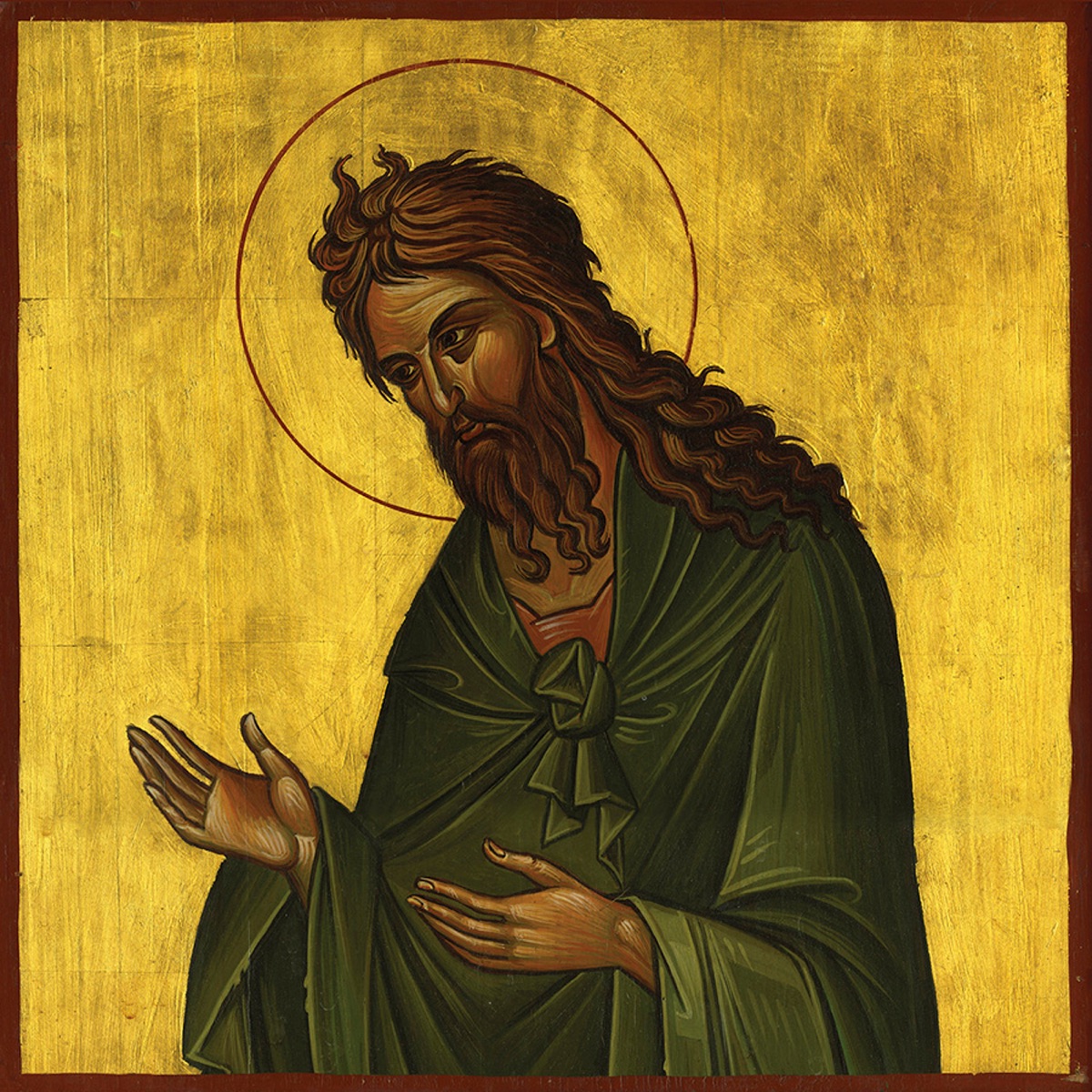
The Californian band founded in 2003 by the rhythm section of Sleep, Al Cisneros on bass and voice and Chris Hakius on drums, and carried on after Hakius left in 2008 with Emil Amos behind the kit, Om is the name Freak Valley put at the top of its 2018 poster, announced on 2 October 2017 with a statement from the festival that Om were, every year, one of the bands its audience most requested. Its most recent studio album was by then six years old. Advaitic Songs, released by Drag City on 24 July 2012, widened the old bass, drums and chant with cello, viola, flute, tabla and the tamboura of Robert Aiki Aubrey Lowe, and closed on the eleven minutes of "Haqq al-Yaqin".
On 31 May 2018 the band played the AWO grounds with "State of Non-Return" and "Sinai" in the set, at the head of a bill that also carried Candlemass, Russian Circles, Sumac and Karma to Burn. The order of that poster is the festival's argument. A band that spent its first six years as bass, drums and voice alone was billed above the Swedes who named epic doom, because what Om does to a song is what doom does to a tempo: the bass figure is not developed but repeated, turned like a prayer wheel under the same patient hand for ten minutes at a stretch, each revolution laying one more leaden coat over the last until the repetition itself becomes the weight.
A doom festival is measured less by the crowd on the night than by the shape it leaves in the ground once the crowd has gone.
Würzburg and Leipzig
Founded by Oliver Weinsheimer, who also runs the German heavy metal festival Keep It True, with Heiko Krumpholz and Anja Kohlhepp, and opened on 31 January 2009 in a Würzburg youth centre called the B-Hof with The Devil's Blood, Dark Quarterer and Isole on the bill, Hammer of Doom moved into the Posthalle for its second edition and ran there as a one-day festival roughly every six months until late 2011, when it settled into an annual weekend in the autumn. Its headliners were tolled out like a roll of the founders: Trouble and Saint Vitus in the first two years, Pentagram in 2011, Candlemass and My Dying Bride together at the tenth edition in November 2015. Which of those founders deserves the title of the Best Doom Metal Band is a verdict for another page. The sixteenth edition, on 18 November 2023 at the Posthalle, had My Dying Bride on its bill, and the organisers then announced that there would be no festival in 2024 and that whether to go on would be decided later.
Further east, Doom Over Leipzig, first staged over two club nights in November 2010, took its weekends into the UT Connewitz, a cinema that showed its first film on Christmas Day 1912 and is the city's oldest surviving cinema, and its bills ran wider than the name: the edition of 29 to 31 March 2012 put Earth, White Hills, Celeste and Wino in a duo with the German songwriter Conny Ochs on that old stage, and the edition of 20 and 21 April 2018, spread between the cinema and the Werk II, brought Bell Witch and gave the Denver band Khemmis its first European shows, alongside Roadburn.
Camden, Berlin and Frederick
Desertfest opened in two capitals within a fortnight in 2012, in Camden from 6 to 8 April and in Berlin from 19 to 21 April, where the Astra Kulturhaus and the Festsaal Kreuzberg carried Orange Goblin, Colour Haze and Motorpsycho, and by 2018 the Berlin edition had moved to the Arena Berlin. The name has since spread to Belgium in 2014, at the Trix in Antwerp, to New York in 2019 and to Oslo in 2024.
The American counterpart was built by one organiser in one small city, in a state whose own slow tradition runs back to The Obsessed and Iron Man. Founded by JB Matson and opened from 26 to 28 June 2015 at Cafe 611 in Frederick, with Iron Man, Apostle of Solitude and Foghound on the bill of that first edition, the Maryland Doom Fest grew into four-day weekends of fifty-odd bands spread between Cafe 611, Olde Mother Brewing and the bars around them, booked Cirith Ungol for its tenth anniversary in 2024, and ended with a final edition from 19 to 22 June 2025, around five hundred bands after it began.
| Festival | Town | Venue | Years |
|---|---|---|---|
| Roadburn | Tilburg | 013, since 2005 | 1999– |
| Doom Shall Rise | Triensbach, then Göppingen | The Chapel, from 2004 | 2003–2013 |
| Hammer of Doom | Würzburg | B-Hof, then Posthalle | 2009–2023 |
| Freak Valley | Netphen | AWO grounds | 2012– |
| Desertfest London | London | Camden venues | 2012– |
| Desertfest Berlin | Berlin | Astra Kulturhaus, later Arena Berlin and Columbiahalle | 2012– |
| Doom Over Leipzig | Leipzig | UT Connewitz, Werk II | from 2010 |
| Maryland Doom Fest | Frederick | Cafe 611 | 2015–2025 |
Set the dates side by side and a pattern shows. Doom Shall Rise, Hammer of Doom and the Maryland Doom Fest were run by musicians and enthusiasts for crowds of a few hundred to a thousand or so, and all three have stopped or paused; Roadburn, Desertfest and Freak Valley are still here, and even they lost whole years. Doom has never filled fields of tens of thousands. What it has instead is a handful of addresses to which the same people return every spring, the sediment of twenty years of weekends, and the bands on those bills are the ones gathered in the wider story. The rooms keep the calendar. The records only keep time.
