
Holland, that scarce deserves the name of land, / As but th'off-scouring of the British sandAndrew Marvell, The Character of Holland
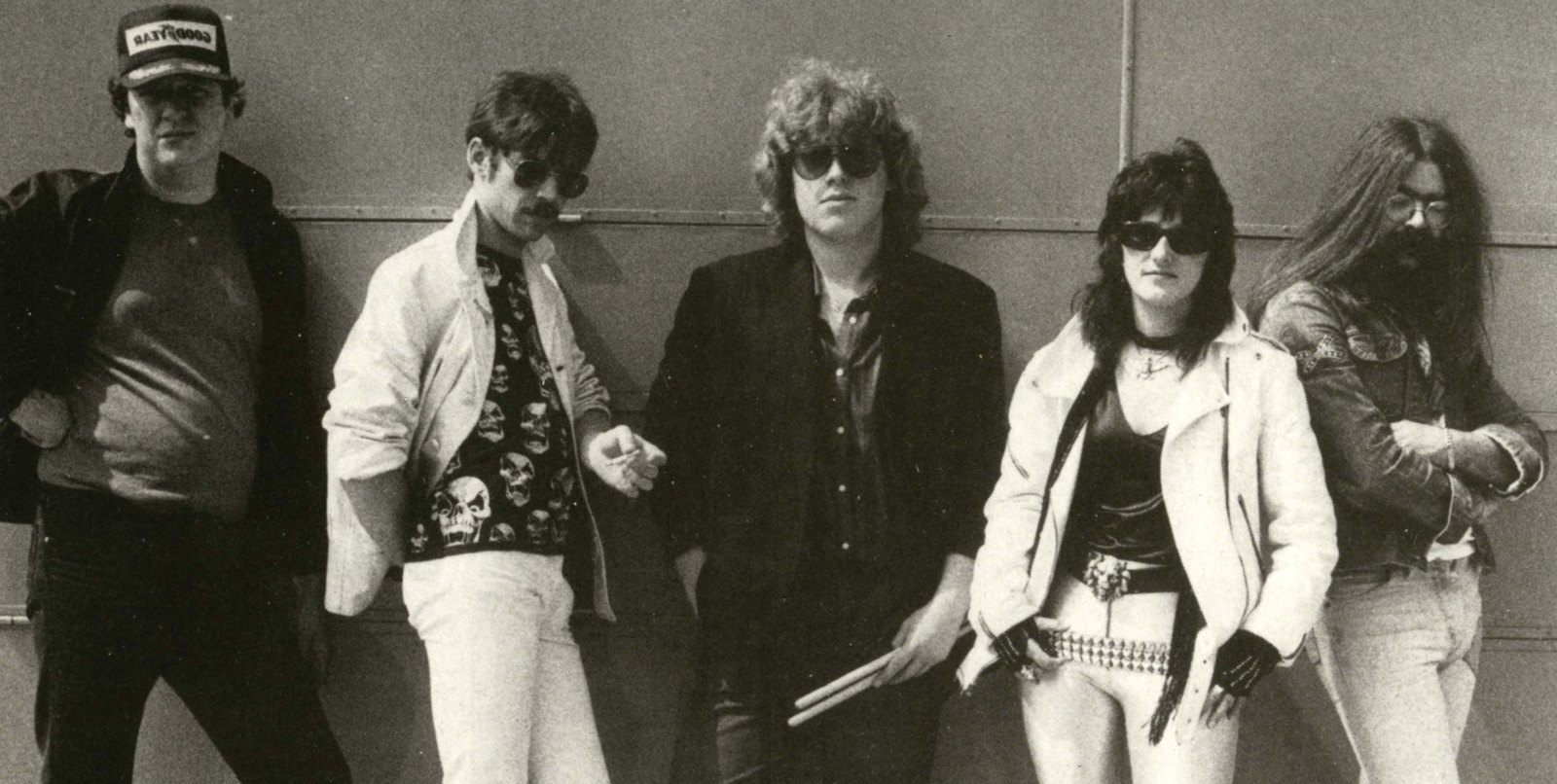
Formed in Hilversum in 1979 by four men who had learned the trade off British singles, and signed to a record company before any other heavy band in the country had a contract to show for its trouble, the quartet that tore the first records of the Dutch heavy metal scene out of a club circuit still ruled by cover bands was Picture. Its debut came out in 1980. Heavy Metal Ears followed in 1981, and by then the band had opened for AC/DC, Ted Nugent and Saxon on Dutch stages and crossed Europe behind Saxon for a full tour.
Home was never big enough. That was the whole problem.
In Friesland they still jump canals for sport. The fierljepper sprints down a wooden run, seizes a pole of eight to thirteen metres standing upright in the water, climbs it hand over hand while it tips toward the far bank, and has a second or two to judge the arc before he either drops into the sand pit on the other side or goes down with the pole into the brown water, which is where a great many attempts end. Nobody jumps a canal for the view. The far bank is the point.
Heavy metal in the Netherlands and Flanders between 1979 and 1986 was a run-up to a canal. A Dutch market of some fourteen million people and the Flemish half of Belgium could pay for a first album and very little after it, so every band that meant business planted one record in the water and climbed, and the far bank was Britain, West Germany or America. A few landed. Most went in with the pole.
The Dutch heavy metal scene went abroad for its audience
Picture's audience turned out to live in West Germany and Italy, where the band drew bigger crowds in the early eighties than it did at home, and it still holds one in Latin America and Japan, which makes the Hilversum band the vanguard of a scene that sold abroad before it ever sold at home. Its first two records went off like a carbide cannon on a farm in Drenthe at midnight on New Year's Eve, a lump of calcium carbide and a splash of water sealed in a steel milk canister, a flame put to the touch-hole and the lid blasted across a frozen field: two albums in two years, loud, home-made and gone before anyone had judged the aim.
The aim came with a new line-up. Eternal Dark, released in 1983, carried a title track that became the song the band is known by wherever it plays, and four decades on the clip for it still sits at the head of the band's own video channel. By then the mic had already changed hands twice: Ronald van Prooijen gave up the microphone in 1982, two short-lived replacements came and went, and Pete Lovell took over vocals as Chris van Jaarsveld joined on guitar. Few Dutch heavy records of the period can say as much. Most never had a video at all.
The Hague band whose rhythm guitarist billed himself as Iron Anthony, and whose first singer would later turn up as the Barbarian on a Dutch rock opera, answered to the name Bodine. Between 1981 and 1983 it put out three albums, Bodine, Bold as Brass and Three Times Running, and in 1984 it was gone. Its guitarist had already moved on to Vengeance, the Waalwijk band formed in 1983. That is the Low Countries pattern in miniature. The players travelled. The bands dissolved behind them.
The guitarist who took a Dutch heavy band into the American singles chart, cutting its debut at Jimmy Page's Sol Studios in England for the Atco label in 1982 and watching the power ballad "Burning Heart" climb to number 39 on the Billboard Hot 100 the following year, was Adrian Vandenberg, and the band carried his surname: Vandenberg. It was the cleanest result the scene ever produced. He did not stay with it. After a third album, Alibi, in 1985, he joined Whitesnake in 1987, and the band that bore his name went quiet for the better part of three decades.
The players travelled. The bands dissolved behind them.
Further down the ranks the losses were quieter. The Utrecht band that recorded For the Universe at Trinity Studios in its own city in November 1984, and saw it issued on Megaton in 1985, was Martyr, and that record and Darkness at Time's Edge a year later set fast riffs against long melodic lines with a technical ambition that reviewers still single out when the albums are reissued. Then, in 1987, the band folded. Two albums, five years, and a reputation that only grew after the split.
Flanders at full throttle
Belgium ran the same race with less caution. The Antwerp trio put together in 1980 by Paul Van Camp, known as Shorty, and Fat Leo on drums, out of the wreck of their previous band, went by the name Killer, and four months after it formed it had recorded Ready for Hell for WEA, rough voices, double bass drums and all, a record that rips the chrome off the Motörhead template and keeps the engine. The comparison followed the band everywhere. It was the right one.
Up the coast, the Bruges band that its three founders, Demon on guitar, Kate de Lombaert singing and T-Bone on bass, renamed in 1980 was Acid, and in January 1983 its first album arrived, followed the same year by Maniac, a salvo of British-school riffs pushed toward speed metal with a woman at the microphone at a time when almost no heavy band on the mainland had one. The records are collectors' pieces now. Nobody paid collectors' prices then.
The East Flanders band built in 1981 from the wreckage of two others, a rock outfit called Hustler and the punk act the Onion Dolls, whose guitarists brought their riffs across, and that cut See You in Hell at Ace Studios in Antwerp in 1983 for Mausoleum, the label Alfie Falckenbach had founded the year before, was Crossfire, often named Belgium's best-selling heavy band of the decade. Ostrogoth followed on the same label with Ecstasy and Danger on 2 February 1984, recorded at Kritz Studios in Kuurne, "Queen of Desire" leading a record whose lineage runs straight back to the British records of 1980.
The autumn Mausoleum went under
The run ended in a single season. Mausoleum declared bankruptcy in October 1986, which cut off the SKULL catalogue that had carried Crossfire, Ostrogoth and a string of foreign bands, and the Dutch side thinned out at the same rate: Bodine gone, Martyr about to go, Vandenberg's guitarist in Whitesnake. Nobody announced the end of anything. The shops simply stopped getting new stock.
What filled the space was louder and further from the old template. The Netherlands became known abroad for death metal, with Pestilence, Asphyx and Gorefest leading the next generation into another silo altogether, and later for the symphonic metal of Within Temptation and Epica, and the heavy bands of 1980 dropped out of the country's own telling of that part of the history. The garrison that had held the stages through the first half of the decade was simply stood down.
Reunions, reissues and a band from Limburg
It did not stay stood down. Martyr reunited in 2001, Ostrogoth came back for Belgian shows in 2002 and again in 2010, Picture kept working through a changing line-up, and the old vinyl began to surface on specialist reissue labels, Maniac on CD from Nameless Grave and For the Universe on LP from the German label High Roller Records, bought by listeners who had not been born when Mausoleum went under.
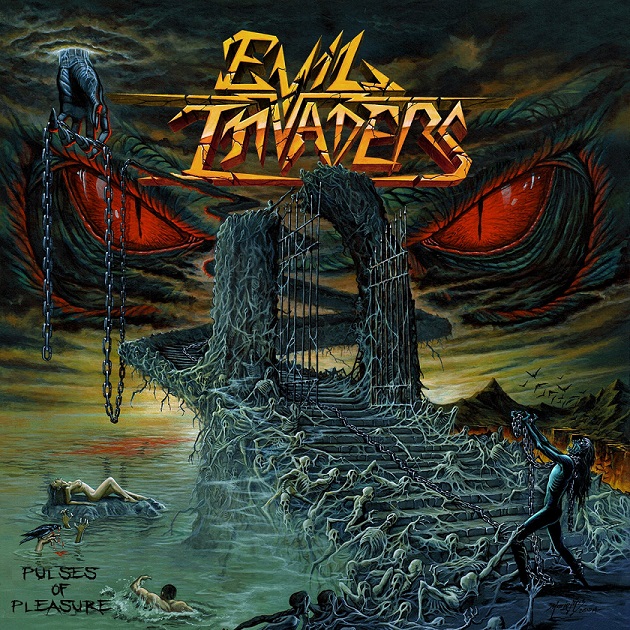
The heirs came out of Limburg. The Leopoldsburg band founded in 2007, signed to Napalm Records in Austria after a first EP in 2013, and taken into the Ultratop album chart in 2015 by its debut, Pulses of Pleasure, which peaked at number 33 in Flanders, the first speed metal record from the country to reach it, is Evil Invaders. Acid and Killer are the obvious ancestors. The recording budget is not.
"Raising Hell", the cut the band pulled from its 2016 EP In for the Kill and set loose with a Napalm-backed video, hammers a speed riff flat under a high voice and would have puzzled nobody at an Acid show in 1983, which is exactly the point of it. The same refusal to let an old style lapse is what carried Greek heavy metal through the years when the rest of Europe had moved on.
Forty years after Mausoleum, the Low Countries still produce more heavy metal than they can buy. The difference is that the records now leave on purpose.
