
Heavy metal subgenres by decade arrive on a timetable, and guitarists do not set it. Every ten years since 1970 the music has been cut along a fresh line, and each time the blade was whatever carried a record from the band to the listener in that decade: the rack in the record shop in the seventies, the cassette and the photocopied fanzine in the eighties, the compact disc and the small German label in the nineties, the forum in the 2000s and the searchable tag ever since.
A planarian, the small flatworm of ponds and school laboratories, can be sliced with a razor blade into ten pieces on a glass dish, and within a couple of weeks every piece has grown a new head, new eyespots and a new tail, ten whole worms where there had been one, each of them ready for the blade again. Heavy metal has gone under that blade once a decade. Every piece grew back whole.
The London editor who set the words new wave of British heavy metal over a concert review in Sounds on 19 May 1979, and so gave one faction of the music a name of its own for the first time, was Alan Lewis. It had taken the whole of the seventies to get that far.
Heavy metal subgenres by decade: the seventies kept one rack
For ten years the music had no subgenres at all. Record shops filed Black Sabbath, Deep Purple, Uriah Heep and Judas Priest side by side under rock, the weekly papers threw the words heavy metal around as often to sneer as to describe, and the differences later generations would split on, Sabbath's weight against Purple's pace, were heard as accents of one language rather than as separate tongues.
Nobody needed a map. There was one road.
Even the first name, when it came, described a generation and not a sound. Iron Maiden, Def Leppard, Saxon and Diamond Head marched under the same flag in 1979 and 1980 and had little in common beyond their age, their postcodes and the size of the rooms they played. The label was a birth certificate. It told a listener when a band was born, never what it would sound like.
The eighties, when the cassette split the family
The San Francisco fanzine writer who drew up a list of possible titles for his new magazine in 1981 and watched a Danish drummer lift one of them, Metallica, for a band that did not yet exist, was Ron Quintana, and his Metal Mania was one of hundreds of stapled, photocopied sheets carrying the decade's arguments from city to city.
Demo tapes travelled by post, dubbed from one deck to the next until the fourth or fifth copy hissed like fat in a pan, and a band in Essen or Belo Horizonte learned its trade from a copy of a copy of a rehearsal nobody had meant to release. The treble went first. The ideas survived. Each scene heard the tape through its own hiss, and each scene named what it heard.
Each scene heard the tape through its own hiss, and each scene named what it heard.
By 1987 nearly every name that still heads a modern chart was in circulation among the fanzines: speed metal, thrash, black metal, death metal, doom and power metal. Where each of those fractures runs through the music belongs to the full chapter, and the calendar adds a single observation to it. They all opened inside six years, while the major labels were still selling the parent style by the million on a television channel.
That is the paradox of the decade. The parent had never been richer, and its progeny had never been further from it, speaking dialects the crowds at the big shows could not follow, sold by labels run from bedrooms and back rooms: Metal Blade in California, Noise in Berlin, Roadrunner in the Netherlands, Earache in Nottingham.
The nineties: the majors leave and the map fills in
Released in September 1991, Nevermind by Nirvana spent the following winter wiping hair metal off the rotation lists of American radio and music television, and within two years the major labels had begun dropping the heavy metal acts they had signed in the boom, leaving the style without the one machine that had held its branches to a single trunk.
What came in behind was small, European and cheap. The Swabian record collector who began selling hardcore and metal by mail order from Donzdorf in 1987 and built the list into a label was Markus Staiger, and his Nuclear Blast, with Century Media and a handful of German and Dutch rivals, signed the bands the majors had never heard of and sold them to the three or four countries that wanted them.
The compact disc did the rest. Cheap to manufacture in runs of a few thousand and bought by a listener who already knew what he wanted, it rewarded exactly the narrow record, gothic, folk, viking, symphonic, groove, stoner, and each of those names was in print before the decade closed. Nu metal took the charts. The splinters took the shelves.
The strangest name of the nineties was the oldest sound. When HammerFall brought back the twin leads and the clean high chorus of 1982 on Glory to the Brave in 1997, the style it played needed a label for the first time, and it got one: traditional heavy metal, a trunk that was only named once the branches had outgrown it.
Forums, tags and the sound that became a revival
The two Montreal enthusiasts who put Encyclopaedia Metallum online in July 2002 and moved the count from the record shop to the screen went by the handles HellBlazer and Morrigan, and from then on every band's genre line was fought over in forums by strangers who had never met the band.

The 2000s turned the one revival of the nineties into a movement. By the end of the decade the youngest bands were playing the oldest rules, and the forums named the result the new wave of traditional heavy metal, a vanguard whose whole programme was to go backwards. Into the Night, released on Heavy Artillery in 2008, came out of Arvika from Enforcer with the speed and the falsetto of a record twenty-five years older.
The Californian programmer who opened Bandcamp in September 2008 was Ethan Diamond, and the free text tags his site let every band hang on every release did to the family tree what no fanzine had ever managed, since a genre no longer needed a scene, a label or even a second band before it had a page of its own.
On a railway embankment worked by rival crews, every writer sprays a tag over the last one, blotting out a thin name with a fatter one overnight, until the paint lies so thick that the wall has grown by the depth of a fingernail and nobody can see the bricks underneath. The tag pages of the 2010s filled the same way. Every new name went on top of an old one.
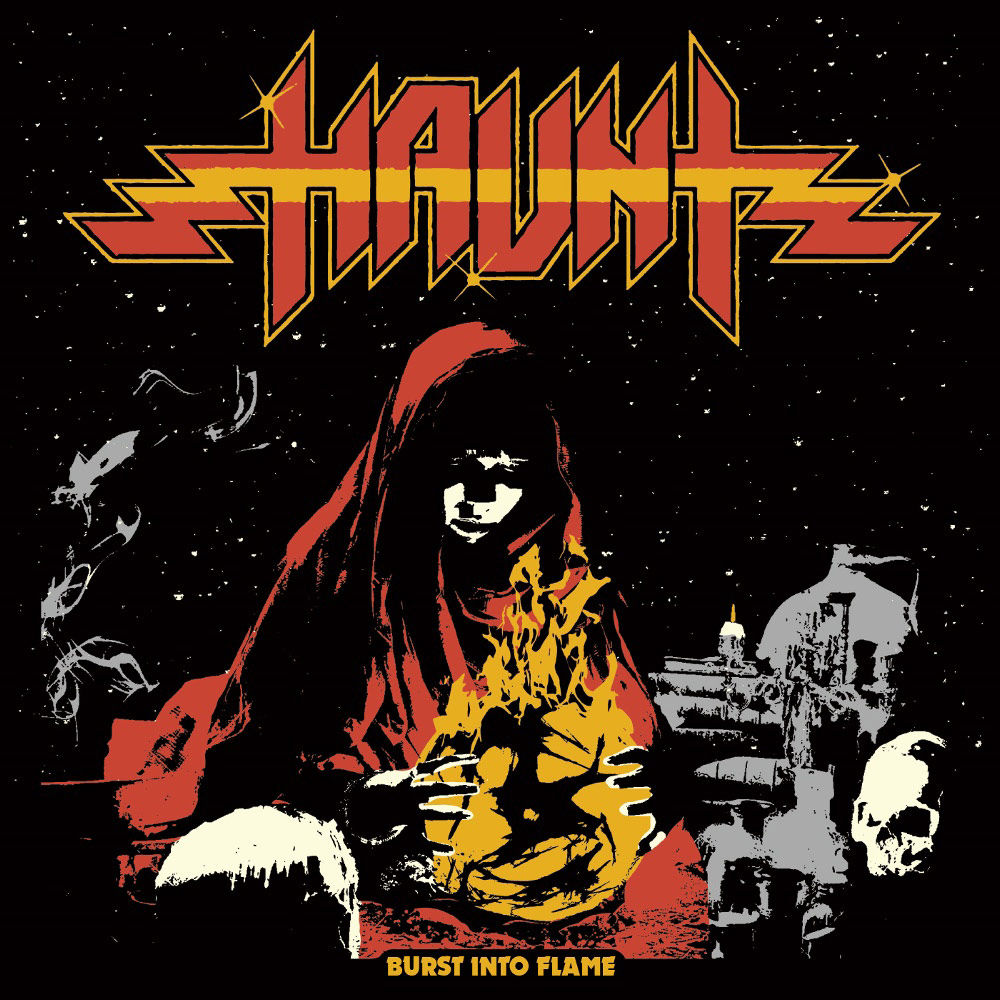
The Fresno guitarist and singer who wrote, played and put out record after record almost on his own from 2017 was Trevor William Church, and his band Haunt is the decade's working model: Burst into Flame in 2018, a steady barrage of albums behind it, each one filed under tags that did not exist when the sound was new.
The title track of Mind Freeze, released in 2020, shows why the tags could never keep up. It is built from the parts of 1983, twin guitars, a clean voice and a chorus made for the radio, and it still collects a new label with every listener who files it.
From Lancashire, Wytch Hazel plays twin guitars in the manner of the early seventies and sings about faith, and "Spirit and Fire", from III: Pentecost in 2020, is the kind of song the seventies would have filed in one rack and the 2010s spread across half a dozen tags. By common consent it is heavy metal. By its tags it is several things at once.
The 2020s have moved the sorting one step further, from the fanzine and the tag to the streaming service's own playlists, where software can name a style before any band has claimed it. Counted as heavy metal subgenres by decade, the list has never once grown shorter. Whether the newest names still describe the same music is the argument of what counts as heavy metal today.
The shop rack of 1975 held all of it. No shop could hold it now.
