
Thou art weighed in the balances, and art found wanting.The Book of Daniel 5:27, King James Bible
The Surrey engineer whose name sits under eleven Deep Purple albums, the first eight Whitesnake records, two Black Sabbath, two Blue Öyster Cult and ten Iron Maiden records, eight of them studio albums, a run of twenty-two years from 1970 to 1992 with barely a season away from the desk, was Martin Birch. Weighed record by record rather than credit by credit, he comes out as the least interfering great producer the music ever had. He never hacked a master tape into strips with a razor to splice a better band out of the pieces. He recorded the one that turned up.
That sounds like modesty. It was a method, with Birch its only real exponent, and a demanding one, because a producer who refuses to rebuild a band has to catch it at full strength on the day, and Birch made a career of being in the room on the right day. His records share no trademark drum sound and no house reverb. What they share is proportion, the parts of a band heard in the sizes they actually were, and no other producer in the genre carried one approach intact across so many different bands.
Martin Birch and the band in the room
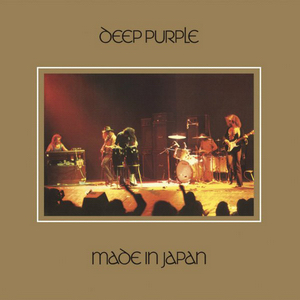
The clearest evidence is a live album. Recorded across three concerts, at the Koseinenkin Hall in Osaka on 15 and 16 August 1972 and at the Budokan in Tokyo on the 17th, with Birch, the band's own engineer, running the desk on an eight track recorder that had no balance control built in, Made in Japan reached British shops on 22 December 1972 and became the double live record every heavy band of the decade measured itself against. The band itself had not wanted a commercial live album and agreed mainly because their Japanese label pressed for one. It has almost nothing added afterwards beyond one moment of crowd noise dropped into a silence inside "Child in Time". The mistakes stayed in. So did the speed.
"Highway Star" from the Osaka night of 16 August is the proof in six minutes. The guitarist who takes it faster than the studio version and then trades phrases with Jon Lord's overdriven Hammond was Ritchie Blackmore, and in Birch's original 1972 mix the two instruments stand side by side at exactly the same height, Ian Paice's drums full of the hall around them, Ian Gillan's voice riding on top rather than bolted to the front of the speakers. Nothing is flattered. Nothing is hidden either.
Birch worked the desk the way a surveyor works a theodolite on a hillside. He never blasted a shoulder off the mountain to make it fit the view; he moved the tripod a few feet to the left and a few inches higher until the whole range stood in the eyepiece at its true height, read the angle off the brass scale, wrote the figure down and packed up before the light changed. Made in Japan is that figure, written down. The band on it is the band that walked onto the stage.
He never blasted a shoulder off the mountain to make it fit the view.
Whitesnake and the second mix
Speed was part of the method, and the Whitesnake years show it plainest. Between 1978 and 1982 Birch produced a record a year for David Coverdale's band, among them Ready an' Willing in 1980 and Come an' Get It in 1981, each of them a blues-based band caught playing live in the studio with the organ, the twin guitars and the rhythm section all audible at once. They sound like a working band. That was precisely the complaint in America.
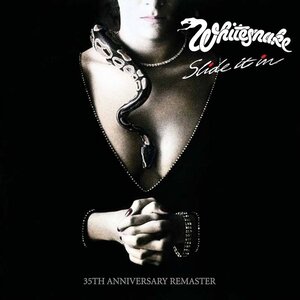
Slide It In exists twice, and the pair makes the case better than any interview. Birch's mix went out in Britain on Liberty and EMI on 6 February 1984, a week behind the European release. The American producer Geffen then hired to rework it for the United States was Keith Olsen, and he went over the Birch mix with a set of callipers, found every part a fraction too thick for American radio, had new guitar parts recorded by John Sykes and new bass by Neil Murray, and shaved the whole record down to a bright, hard gloss. The American version sold. The British one breathes.
Neither mix is wrong. They are two measurements of the same songs taken with different instruments, and anyone who plays them back to back hears exactly what Birch refused to do: he would not replace a player to improve a part. The precision was in where he put the microphones. It was never in who he sent home.
Heaven and Hell and the brass balance
Rainbow had already shown what the method did for a singer. Recorded at the Château d'Hérouville outside Paris across two sessions, in the summer and again in December 1977, Long Live Rock 'n' Roll reached British shops on 14 April 1978. It let Cozy Powell's drums boom around a big old room as if they were shaking the plaster off its walls, and on "Gates of Babylon", cut in the later session, set the strings and the riff in the same space rather than pasting one over the other. Blackmore was never an easy man to record. Birch recorded him for the best part of a decade.
The voice Birch had already recorded on Rainbow's three studio albums of the seventies, the first two of them cut in the basement studio Musicland held inside a Munich high rise, belonged to Ronnie James Dio, and in 1979 it arrived, on Dio's own suggestion to his new bandmates, in the one band whose guitar had always swallowed its singer. Recorded at Criteria Studios in Miami and Studio Ferber in Paris and released on 18 April 1980, Heaven and Hell gave Black Sabbath a sound it had never had.
On "Children of the Sea" Birch set Tony Iommi's guitar and Dio's voice on the two pans of a brass beam balance and added grains to each side until neither pan touched the bench. The riff kept its full tonnage, Geezer Butler's bass sat plainly underneath it instead of inside it, and the voice rose clear above both, where on the records of the seventies the singer had so often been a colour inside the guitar. Nobody lost weight. Everybody gained air.
The Long Island band that hired him for two albums in 1980 and 1981 answered to Blue Öyster Cult, and on Fire of Unknown Origin in 1981 he gave "Burnin' for You" the clean, even polish that took it onto American radio, without sanding the guitars off the rest of the record. The song reached number 40 on the Billboard Hot 100 that October. By common consent his name on a sleeve had become a promise by 1981. The rooms, the machines and the rest of the men at the desk are set out in the sound on tape.
Iron Maiden at full speed
With Iron Maiden the method met a band that played faster and more precisely than any he had recorded. The singer arriving from Samson for his first sessions with the band in early 1982 turned out to be Bruce Dickinson, and he has told the story many times of Birch keeping him on the opening two lines of "The Number of the Beast" for a full day, telling him to sum up his whole life in them, until Dickinson, furious, began throwing furniture around the studio. Birch then asked him for the scream that opens the song, and Dickinson, still angry, gave it to him at once. The scream that opens the song is not a performance of anger. It is the real thing, caught.
Across the decade the band changed its equipment more than Birch changed his approach. Somewhere in Time in 1986 brought guitar synthesisers and Seventh Son of a Seventh Son in 1988 brought keyboards, yet on both the bass of Steve Harris still drives from the middle of the mix and the twin guitars sit either side of it at equal strength, the proportions of a live band kept intact under the new colours. Even the thirteen minutes of "Rime of the Ancient Mariner" on Powerslave in 1984 hold together as five men playing in one room, the long quiet middle left to sag and swell the way it does on stage. For No Prayer for the Dying in June 1990 he recorded them in a barn at Harris's own Essex studio with the same Rolling Stones Mobile he had engineered from a corridor of Montreux's Grand Hotel for Deep Purple's Machine Head, nineteen years earlier in December 1971. The truck had come back to him.
After 1992 he stopped producing, and the studio that followed moved the other way, towards the grid, the triggered drum and the screen, all of it traced in modern metal production. Those tools can make a band tighter than it is. Birch only ever made a band audible as it was.
Where his twenty-two years sit in the longer line of the music, from the Birmingham rehearsal rooms to the arena, is in the rest of the history. Play Made in Japan and then any record assembled on a computer, and the difference is a band breathing between the notes.

