
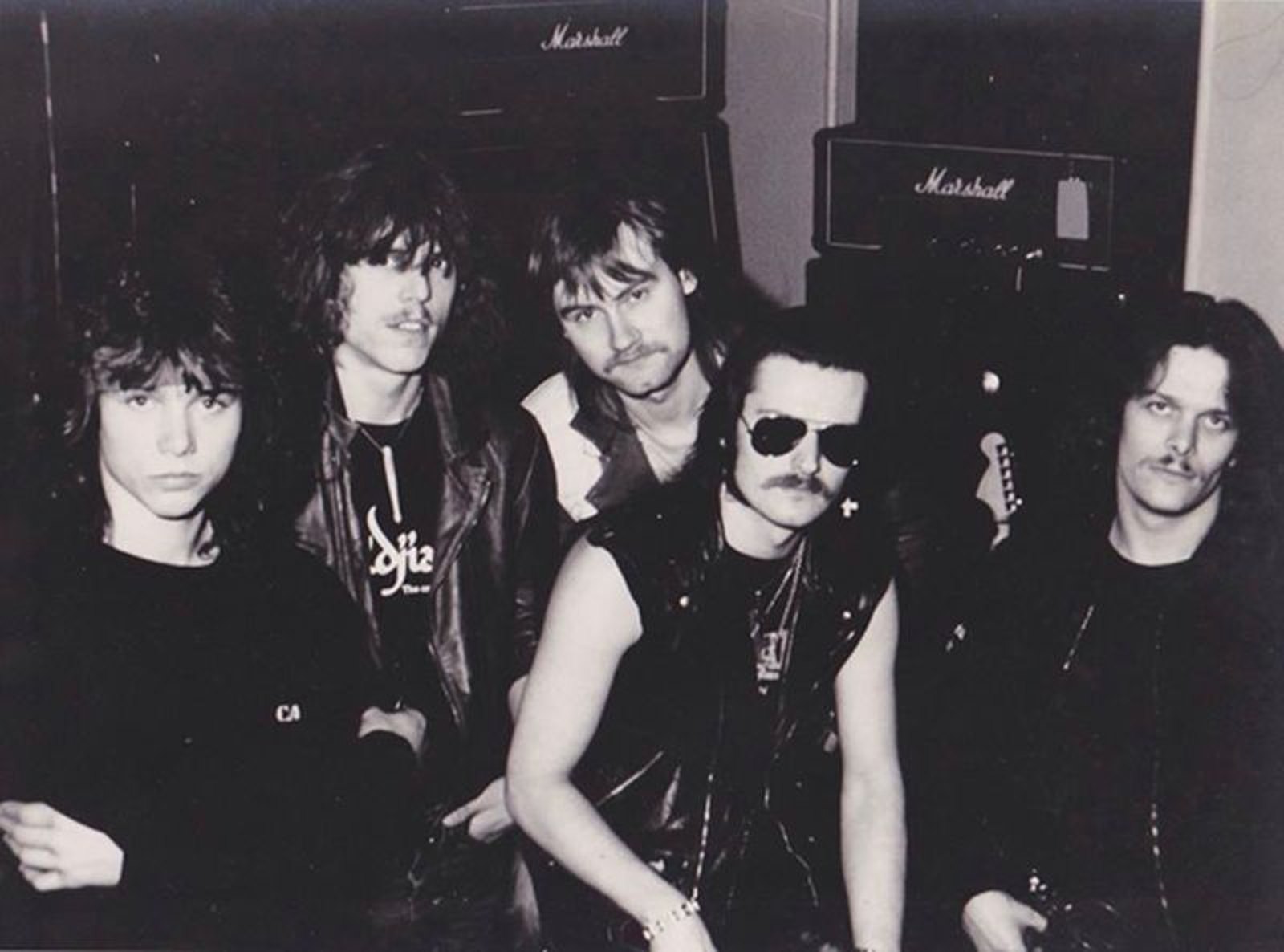
On 5 July 1969, in front of a Hyde Park crowd counted in the hundreds of thousands, a band three months short of its first album walked on ahead of the Rolling Stones and opened with a song whose singer came through a distortion unit over a riff pitched like a threat. The young band that did it was King Crimson, and the song was "21st Century Schizoid Man".
Measured by progressive rock influence, heavy metal owes that afternoon more than it has ever admitted, because the style that most bands of the next decade defined themselves against handed them, piece by piece, the long song, the keyboard as a weapon, the odd meter and the right to show off. What heavy metal did with those pieces made it a different music.
A caddis fly larva has no armour of its own, so it builds one: it tears grit, twigs and the empty shells of dead snails off the stream bed, binds them with silk spun from its own mouth and lives inside the result, a case made entirely of borrowed parts that nobody would mistake for the gravel it came from. Heavy metal took from progressive rock the same way. It kept the pieces and built a different animal.
Progressive rock influence: heavy metal took the riff first
Released by Island in October 1969 on In the Court of the Crimson King, "21st Century Schizoid Man" sets Greg Lake's voice behind a wall of fuzz and then, in its middle section, drives guitar, saxophone, bass and drums through a run of unison figures so tightly locked that the whole band lands on each accent like a single fist on a table. The riff is the part heavy metal remembered.
The Dorset guitarist who played all of it sitting on a stool, reading the room over his glasses and refusing every pose a rock guitarist was supposed to strike, was Robert Fripp. His band never called itself heavy. The bands who heard that middle section did, and the tight unison break, every instrument hammering the same jagged line at once, became a standard move in heavy metal within a decade.
Nobody in King Crimson wore leather. Nobody needed to.
The last piece was the licence to show off. Prog had made the long instrumental passage respectable, the solo as a composed section rather than a gap between two choruses, and the guitarists of the next decade took that permission and ran it through a wall of amplifiers, until the solo was the moment an entire hall stopped shouting to watch one pair of hands.
The Hammond and the sixteen-minute side
The London quintet that gave the whole second side of its second album, Salisbury, released by Vertigo in 1971, to a title track of about sixteen minutes with an orchestra put at twenty-four pieces in some counts and twenty-six in others, was Uriah Heep, and it is the plainest early proof that a band with a heavy guitar could borrow the architecture of a symphonic suite.
A tunnel boring machine eats its way through chalk at a few metres a shift, the cutter head grinding the face to powder at the front while a crew behind it bolts each concrete lining ring into place before the ground can close in. A long heavy song is built the same way. Every section is shored up with a riff before the next one is cut, or the whole length caves in.
A dozen years later the method reached the occult. Closing Melissa in 1983 with "Satan's Fall", a song of about eleven minutes stacked out of sixteen separate riffs, Mercyful Fate stripped the long form of its orchestra and its organ altogether. Guitars carried the whole suite. Nothing caved in.
The Hammond player who wrote many of the band's songs and pushed his organ through a Leslie cabinet and an overdriven amplifier the same way a guitarist pushed a stack was Ken Hensley, and with Deep Purple's Jon Lord he turned the keyboard from ornament into a second rhythm guitar. Prog used the organ for colour. Heep and Purple used it to flatten whatever stood in front of the riff.
Odd meters and the Toronto three
The Toronto trio that spent 1974 and 1975 opening American shows for Kiss, and that crammed a heavy guitar, a high voice and the time signatures of English progressive rock into three players, was Rush, and it became the band through which a generation of heavy metal musicians first heard prog, without ever having to own a record with a flute on it.
"La Villa Strangiato", the instrumental that closes Hemispheres in October 1978 and carries the subtitle "An Exercise in Self-Indulgence", runs through twelve named sections in a little over nine minutes, swinging from a Spanish guitar prelude to riffs that shear off at the bar line and restart on a beat the listener did not see coming. It is a salvo of changes. Every one of them is played at full weight. The band called it self-indulgence. The heavy metal bands of the next decade treated it as a manual.
That was the lesson the heavy metal bands took. An odd meter did not have to sound clever. Played on a distorted guitar with the drummer leaning into the accent, a bar of seven lands like a lift stopping a floor early, the stomach still travelling after the floor has halted, and the jolt is physical before it is intellectual. The whole of progressive metal, which kept every meter and every change and has a history of its own, grew from that jolt.
An odd meter did not have to sound clever. The jolt is physical before it is intellectual.
What heavy metal refused, and who kept the rest
What heavy metal left behind matters as much as what it carried away. The flute solo, the pastoral interlude, the mellotron choir, the side-long song with no riff to hold it up, the lyric about a knight and a shepherdess sung in a gentle tenor: all of it stayed where it was when punk rock put a boot through the whole style in 1977, and none of it made the journey across.
By 1978 the largest of the prog bands were sawing their own songs down to single length, and Genesis, sawing hardest, took "Follow You Follow Me" to number seven on the British singles chart that April. The heavy bands went the other way. They kept the long song at the very moment its inventors were abandoning it, and they carried it through the lean years on riffs alone.
Captive Greece took captive her savage conqueror, and brought the arts into rustic Latium.
Horace, Epistles, II.1
The East London bassist who founded his band on Christmas Day 1975 and brought his record collection with him, Genesis and Jethro Tull among it, was Steve Harris, and Iron Maiden became the band through which prog's inheritance reached the young British wave, paying the debt openly with covers of Jethro Tull's "Cross-Eyed Mary" in 1983 and Nektar's "King of Twilight" the year after.
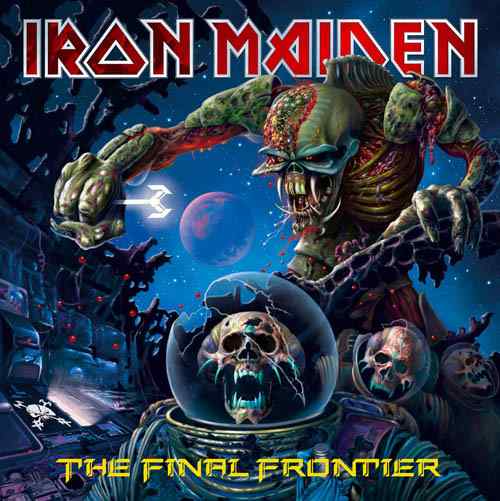
Thirty years on the forebear was still audible. The Final Frontier, released by EMI in August 2010, closes on "When the Wild Wind Blows", a song of about eleven minutes written by Harris alone, and the album's long songs build and break and rebuild the way Salisbury did, with the difference that every section is carried by twin guitars instead of an orchestra.
Heavy metal never became progressive rock, and it never tried. The riff stayed. The organ stayed, turned up past politeness. The long song stayed, and the right to count in seven. The flute solo did not. Where those borrowings led once the branches of the family began to split is traced through the related chapter.
The debt is on the records. Order it by year and the calendar shows prog leaving a mark on almost every split that followed, set out in heavy metal subgenres by decade, from the suites of the seventies to the long songs of bands that were not born when Hemispheres came out.
The flute stayed in 1977. The creed of the long song did not.
