
On 10 January 1901 the Lucas well on Spindletop Hill, south of Beaumont, came in. Mud first, then gas, and then the pressure blew the drill pipe out of the hole and over the top of the derrick and threw a column of crude over a hundred feet into the air, soaking the rig, the crew and the prairie for nine days before anyone could close it off.
Texas heavy metal bands came in the same way, as pressure held a long time under hard ground. For twenty years the state drilled: a blues trio in Houston laying down the bedrock, a family studio in Pantego pressing records nobody outside the state bought, a club circuit feeding bands through Dallas and Houston every weekend. Then, in 1990, the hole blew, and the rest of the country had to stand in the spray.
The radio towers of San Antonio, which made the state a market for British metal before it was a scene, belong to the scenes chapter. The rock under them is older, and the blues laid it down.
The blues ground under the state
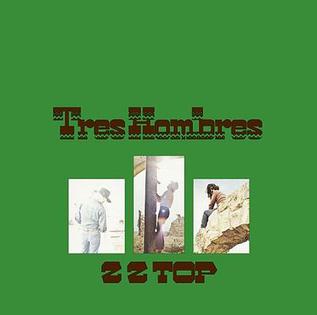
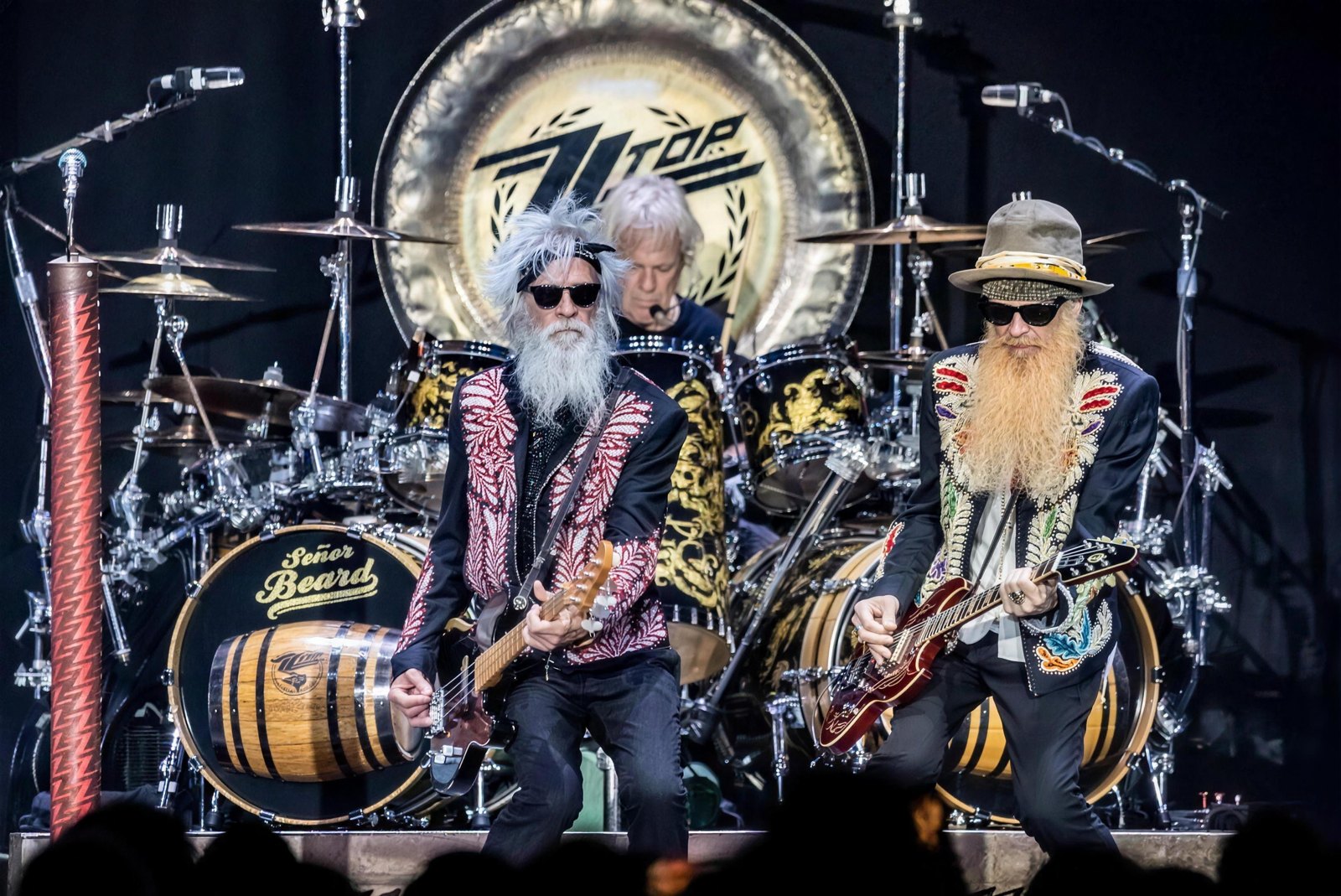
The Houston trio of two bearded men and a clean-shaven drummer called Beard went out as ZZ Top, and Tres Hombres, released by London Records in 1973, gave Texas the one thing every later band there built on: Billy Gibbons's guitar tone, thick, dirty and slow to decay, set over a boogie so steady it might have been poured in concrete. The record reached number 8 on the Billboard 200, the American album chart. It was not metal. Everything after it was measured against it.
"La Grange", the single from it, walks the way a trail herd walked up the Chisholm Trail, two thousand longhorns held to one pace by a handful of riders, nobody hurrying them, the ground shaking for a mile around and every fence in the way trampled into the dirt, and it taught every Texas guitarist who came after that weight is a matter of steadiness before it is a matter of volume. Gibbons took the shuffle from John Lee Hooker's "Boogie Chillen'". The progeny played louder.
Beside the boogie ran a harder, stranger strain. Bloodrock, from Fort Worth, took "D.O.A.", a slow, organ-heavy song sung from the stretcher of a dying crash victim with a siren wailing behind it, to number 36 on the Billboard Hot 100 in 1971. It never travelled far beyond that. It proved the state could make the heavy sound without importing it.
It was not metal. Everything after it was measured against it.
Metal Magic, a family label in Pantego

The studio was the reason any of it happened. Jerry Abbott, a country songwriter and producer, owned Pantego Sound, a room between Dallas and Fort Worth, and gave his sons Vinnie Paul and Darrell the tape machines, the hours and finally a label, Metal Magic Records. The Arlington quartet that grew up inside that room released Metal Magic in 1983 as Pantera, and the record is Kiss and Van Halen heard from a garage in Tarrant County, spandex on the sleeve and choruses built for a roller rink.
The next three records scraped the glitter off one coat at a time. Projects in the Jungle in 1984 and I Am the Night in 1985 leaned toward Judas Priest, and by Power Metal in 1988 the riffs had gone over to speed metal and the spandex was on its way out. Darrell was meanwhile winning guitar contests across the Dallas clubs, one of them at the Agora Ballroom, judged by Dean Guitars' own founder, in rooms where the audience was every other guitarist in town. Nobody outside Texas was listening. Everybody inside was.
The circuit itself was the school. Dallas had the Bronco Bowl in Oak Cliff, a bowling alley with a concert hall attached, where the touring headliners played, and a ring of bars across Dallas and Fort Worth where local bands played whole evenings of other people's songs and slipped their own in between. A band that has played Judas Priest covers until closing time, night after night, for three years does not drop a beat when the songs finally become its own. The Texas habit of playing tight was learned in those rooms, and it outlasted the covers by decades.
Houston speed, Austin arithmetic, Dallas thrash
Houston answered with speed and a horror film's sense of occasion. The band built around the high, operatic voice of James Rivera was Helstar, and Burning Star, released by Combat Records in 1984, set twin guitars running at a pace closer to Iron Maiden's than to anything in the Dallas clubs, and by Nosferatu in 1989 it had given half an album to Dracula. The Houston clubs, Cardi's on Westheimer chief among them, kept a garrison of such bands in work every weekend.
Austin went the other way entirely. The quartet that fed the time signatures of jazz fusion into speed metal and came out with Energetic Disassembly on the small Zombo label in 1985 was Watchtower, and "Asylum" changes metre so often that anyone counting along loses the bar inside the first minute, while Jason McMaster's voice climbs over the arithmetic as though the song were in plain four. Control and Resistance, released by the German label Noise in 1989, pushed the arithmetic further still, with Ron Jarzombek's guitar playing the odd groupings in unison with the bass. Technical metal has its forebear here, years before anyone had a name for it.
Dallas had the fastest band in the state. The quartet that came out of the city in 1983 playing thrash with a horror film's appetite for gore signed to Capitol Records, of all labels, under the name Rigor Mortis, and the debut followed in 1988. Mike Scaccia's riffs come off that record like the black roller that crossed the Panhandle on 14 April 1935, a wall of topsoil a mile high burying fence rows, stripping the paint off parked cars and turning mid-afternoon to night across the plains. The lyrics came off the horror shelf of the local video shop, the tempos left the glam bands of the same city standing still, and the major label that had paid for all of it never knew what to do with the result. The fans in Dallas did.
Cowboys from Hell and the Texas heavy metal bands after it
The Pantera that signed to Atco and released Cowboys from Hell on 24 July 1990 had thrown the spandex on the fire and followed it with the back catalogue, a scorched earth policy toward its own past that kept the four Metal Magic records out of the official discography for good. What remained was everything Texas had handed down, at full weight: the ZZ Top steadiness slowed into a groove, the contest winner's lead guitar, and Anselmo's bark where the high notes had been. Houston's patience. Dallas's speed. Pantego's tape.
The record became the spearhead of a decade of American metal, and the state kept producing bands that sounded like nowhere else. Solitude Aeturnus, from Arlington, took doom toward epic singing on Beyond the Crimson Horizon in 1992, King's X, based in Houston, set three-part harmonies over riffs heavier than harmonies had any right to carry on Gretchen Goes to Nebraska in 1989, and Austin's Eternal Champion carries the sword and the pulp paperback into the present.
| Band | Base | Record | Year | What it did to the sound |
|---|---|---|---|---|
| ZZ Top | Houston | Tres Hombres | 1973 | The blues tone the state built on |
| Pantera | Arlington | Metal Magic | 1983 | A family studio and label |
| Helstar | Houston | Burning Star | 1984 | Twin-guitar speed with a high tenor |
| Watchtower | Austin | Energetic Disassembly | 1985 | Fusion time signatures in speed metal |
| Rigor Mortis | Dallas | Rigor Mortis | 1988 | Thrash on a major label |
| King's X | Houston | Gretchen Goes to Nebraska | 1989 | Harmony over weight |
| Pantera | Arlington | Cowboys from Hell | 1990 | The groove the decade copied |
Texas was never the only place that had to pay for its own records. A thousand miles north the same decade raised a suburban bar circuit with a harder bite and fewer labels, and that story runs on as Chicago heavy metal.
No coast ever licensed any of it. The state sent its bands out finished, and the rest of the country took delivery.
