
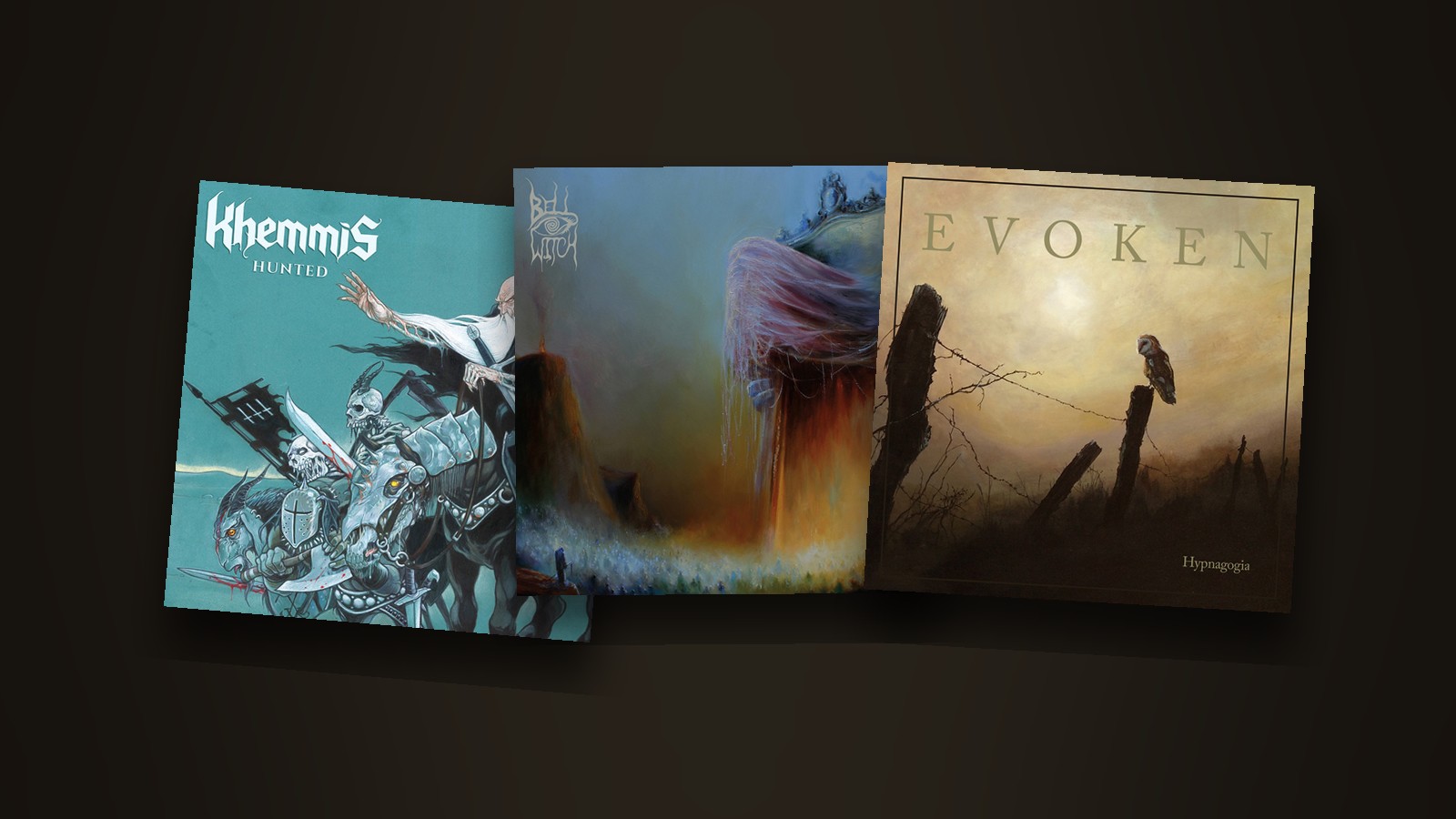
"Quickly became something of a sensation in the extreme metal scene." That was how Emily Bellino, writing in Decibel on 2 December 2019, described what had happened to the Polish painter Mariusz Lewandowski after Bell Witch put one of his canvases on the front of Mirror Reaper two years earlier, and the sentence is true as far as it goes, but it tells the story from the wrong end. A sensation is sudden. The painter the metal world found in 2017 was fifty-seven and had been painting for close to forty years before any doom band knew his name, and the sleeve that made him known was the least sudden thing about him.
This page is about the people who make those pictures. Doom records are filed under band names, but the cover a listener studies for the length of a side was made by one person at one table, often an ocean away from the band, and the few painters who have dressed the genre's records over the last twenty years have each left a hand as recognisable as any riff. The wider story of doom metal art follows sleeves, logos and stages together; here we follow the painters, each with named sleeves, dates and the habits that make the work theirs.
Think of a pigment mill worked by hand, two stones turning all day over lumps of lapis, ochre or burnt bone until they surrender a powder fine enough to bind in oil, a whole day of grinding for a single jar, and that jar spent on one corner of one canvas. The doom sleeve is milled the same way and for the same reason: colour drawn slowly out of stone to dress a music that is itself ground out one weighted riff at a time, by painters who never hurry the stone because the music never hurries either. Each of the people below turns a mill of their own, and each stone leaves a different grain.
A day of grinding for one jar of colour. Doom has always paid that price for its pictures.
Mariusz Lewandowski, the painter who never explained a canvas
Born on 31 July 1960 in Działdowo, in the north of Poland, the painter behind the Bell Witch sleeve lived and worked in Warmia, latterly in the small town of Górowo Iławeckie, filling canvas after canvas with symbols, light and figures at the edge of what the mind can explain, and he never offered a word of interpretation for any of them beyond the title. In the short note he wrote for his own website in 2016 he named the painter who inspired him most, Zdzisław Beksiński, and put his first painting almost forty years behind him. Music, he wrote in the same note, was one of the things that fed the work.
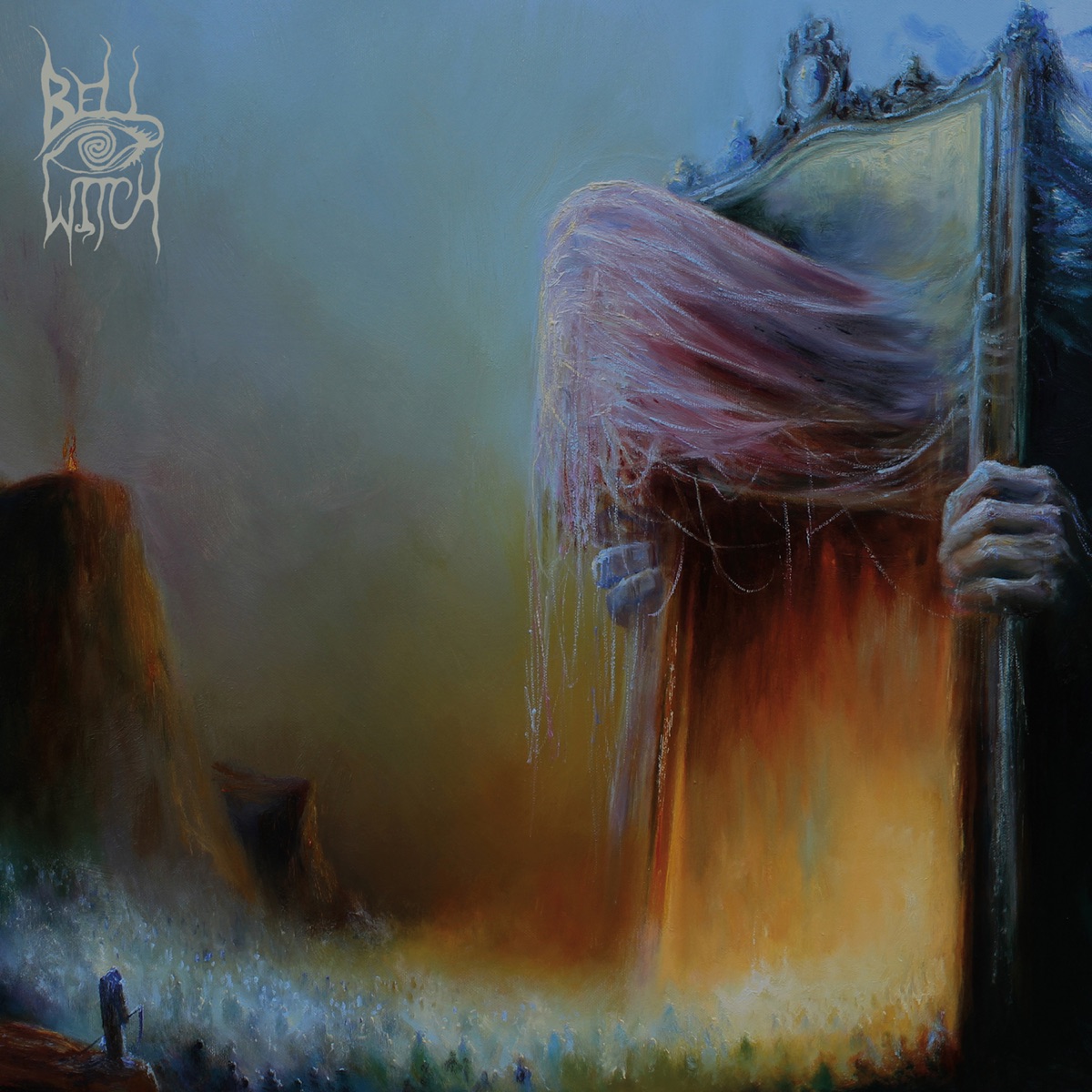
Commissioned by the Seattle duo for a single continuous piece of more than eighty minutes, produced with Billy Anderson, released by Profound Lore on 20 October 2017 and made as a tribute to their former drummer Adrian Guerra, the painting "Essence of Freedom" sets a hooded giant holding up an ornate mirror above a sea of tiny figures, a fire smoking on the crag behind them, a cortege seen from so high that the mourners settle into the valley floor like sediment. The picture and the record were made for the same grief. Neither needs the other explained.
The commissions that followed arrived faster than any mill could have ground them. Decibel's guide of December 2019 counted his sleeves across that single year, among them Cairn, released on 6 September 2019 by Mizmor, and The Course of Empire, an hour of epic doom by the German band Atlantean Kodex, one leaden sky hauled from sleeve to sleeve like a catafalque carried through towns that kept changing their names, until the album covers carrying his paintings numbered more than thirty, for labels as far apart as Sony Music Entertainment, 20 Buck Spin and Transcending Obscurity. In 2021 five of his paintings also went onto a limited run of skateboards made with Jamie Thomas of Zero Skateboards. Lewandowski died on 15 July 2022 in Górowo Iławeckie. He was 61.
Adam Burke, and the colour thought in blobs
Based in Portland, Oregon, where he also plays in the band Fellwoods, the illustrator Adam Burke told The Obelisk in September 2013 that he was raised in a very strict Baptist household, that drawing was his main entertainment as a boy, and that the first work of art he truly absorbed was Albrecht Dürer's engraving "Knight, Death and the Devil". He did not think he could paint, he said, until he tried a fantasy cover for the first Fellwoods record. Commissions followed, from Ice Dragon album covers to work for Portland bands such as Diesto and Danava.
With acrylic paint, I have to think in blobs of color. The world is blobs of color, not outlines.
Adam Burke, interviewed in The Obelisk, 26 September 2013
What he asked of the pictures in that interview was a mood rather than gore, "a vibe and a mood and what is left to the imagination", and the doom bands that came to him took exactly that. Released by Season of Mist on 26 January 2018, Ossuarium Silhouettes Unhallowed by the Finnish death doom band Hooded Menace wears his work, and so does Hypnagogia, which the New Jersey funeral doom band Evoken released through Profound Lore on 9 November 2018. His colour sits on those sleeves the way weather sits on a hillside, laid down in masses with the dread left to gather in the gaps between them.
Arik Roper and Sam Turner, fantasy drawn to the edge of the jacket
Born in 1973 and a graduate of the School of Visual Arts, Arik Roper is best known in doom for the artwork of the 2012 Southern Lord reissue of Sleep's Dopesmoker, an hour-plus record put back into the shops more than four decades after the years that heard how doom metal began. The steadiest line of his work runs through High on Fire: the visuals for Blessed Black Wings in 2005, the cover of Death Is This Communion in 2007 and Snakes for the Divine, released by E1 Music on 23 February 2010, one furnace kept stoked from sleeve to sleeve. By February 2011, when a gallery show called All the Colors of the Dark gathered the painters behind heavy music's sleeves, Decibel could introduce him as the man best known for the colourful sword and sorcery covers he had made for High on Fire, Ancestors and Weedeater.
A bicycle messenger who also draws the shirts, the beer labels and the growlers for Denver's TRVE Brewing, Sam Turner was already a fixture of the city's metal scene when Invisible Oranges profiled him in July 2015, with sleeves for Speedwolf, In the Company of Serpents and Khemmis behind him and a line the writer traced back to Frank Frazetta and Bernie Wrightson. For the Denver doom band Khemmis he drew Absolution, released by 20 Buck Spin on 7 July 2015, and Hunted, released by the same label on 21 October 2016. The partnership held. In a post on the band's website on 2 April 2021, singer and guitarist Phil Pendergast wrote that he and Turner had struggled to capture the central figure of the cover for the fourth album, whose title he was still keeping back, and that it mattered for that figure to feel "flawed, human, and vulnerable" in ways that figures in fantasy art often are not. The record was Deceiver, released by Nuclear Blast on 19 November 2021.
Adrian Dexter, one hand across four Elder records
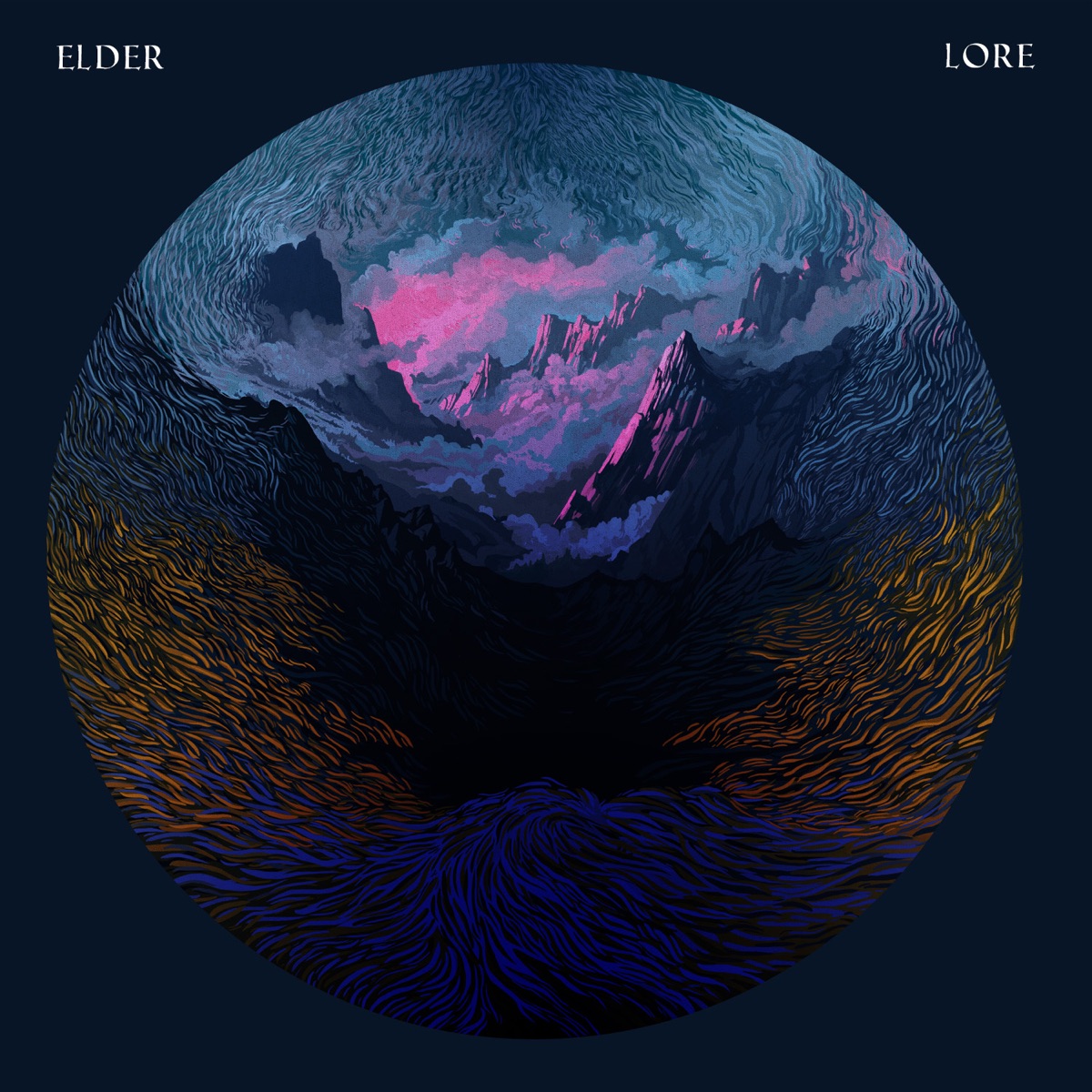
Credited with the artwork on Elder albums from Dead Roots Stirring, released on 25 October 2011, through Lore on 27 February 2015 and Reflections of a Floating World on 2 June 2017 to Omens on 24 April 2020, the painter Adrian Dexter has given the Massachusetts band a single visual signature across nearly a decade of records. On the Lore sleeve a range of pink-lit peaks sits inside a disc of combed strokes that run blue at the top and burn orange towards the bottom, the whole disc floating on a dark ground with the band name and the title set small in the upper corners. Four records, one hand.
Some sleeve painters sit inside a band of their own: John Dyer Baizley of Baroness painted Static Tensions for Kylesa in 2009, but his work belongs to a different story.
| Painter | Record | Released | Label |
|---|---|---|---|
| Arik Roper | High on Fire, Snakes for the Divine | 23 February 2010 | E1 Music |
| Adrian Dexter | Elder, Lore | 27 February 2015 | Armageddon Shop |
| Sam Turner | Khemmis, Absolution | 7 July 2015 | 20 Buck Spin |
| Sam Turner | Khemmis, Hunted | 21 October 2016 | 20 Buck Spin |
| Mariusz Lewandowski | Bell Witch, Mirror Reaper | 20 October 2017 | Profound Lore |
| Adam Burke | Hooded Menace, Ossuarium Silhouettes Unhallowed | 26 January 2018 | Season of Mist |
| Adam Burke | Evoken, Hypnagogia | 9 November 2018 | Profound Lore |
| Adam Burke | Bell Witch and Aerial Ruin, Stygian Bough Volume I | 26 June 2020 | Profound Lore |
Read down the first column and the mills are there, each grinding its own stone: canvases from a painter who never explained one, acrylic thought in blobs, fantasy drawn to the edge of the jacket, one hand held steady across four Elder records. The letters that sit on top of those pictures are a separate craft with separate hands, and they belong to the Doom Metal Logo. The painting comes first. The name is set on it afterwards.
