
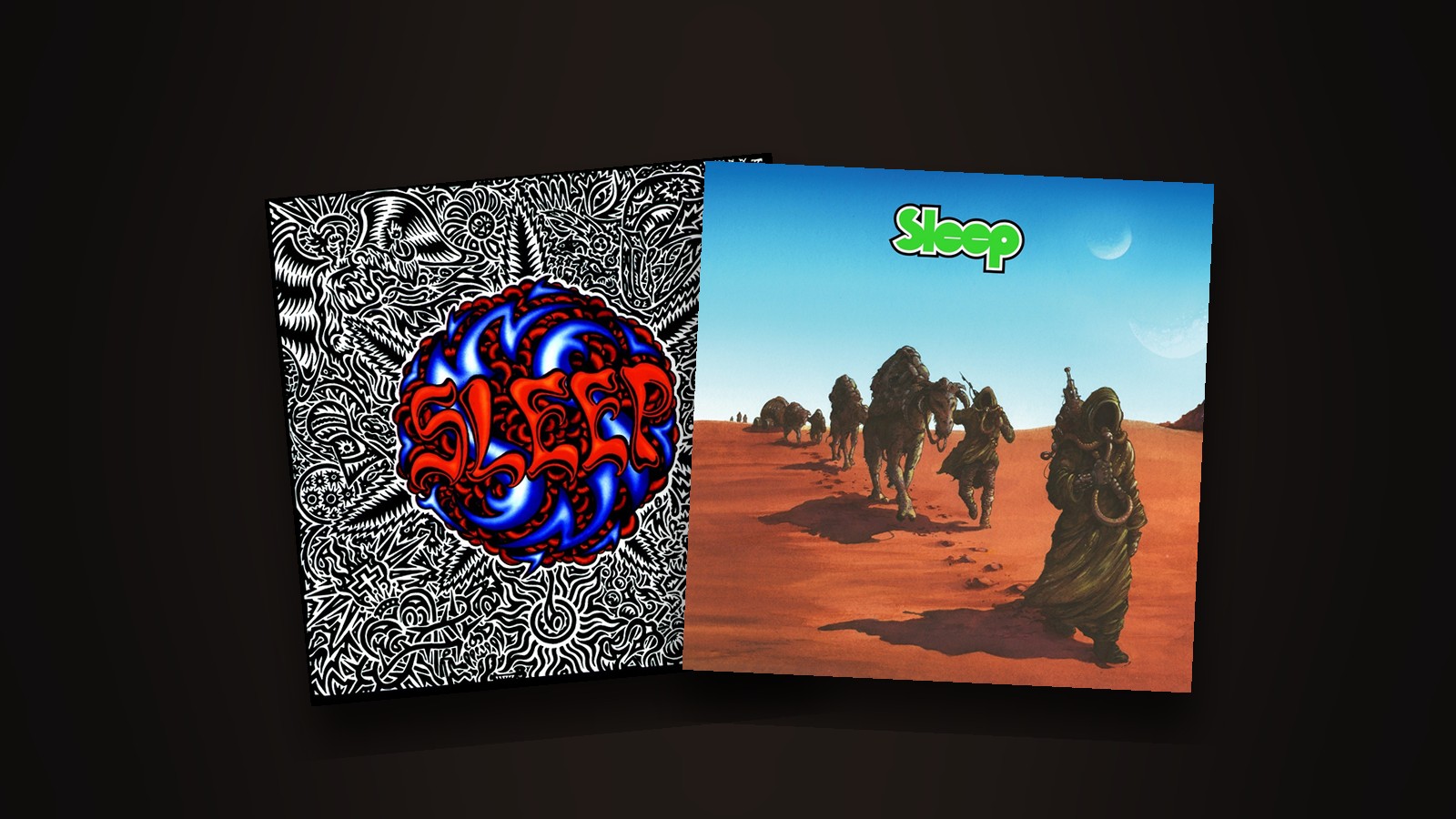
Sixty-three minutes and thirty-one seconds. That is the running time of "Dopesmoker", the single song on the album of the same name as Tee Pee Records finally issued it in April 2003, and Third Man Records, which holds the recording today, still sells it as a sixty-three minute work. Written over some four years by a trio from San Jose, refused by London Records and released as its authors wanted only after they had broken up, that one piece of music ground a major label contract to nothing and then ground down the band that made it, Sleep, which did not exist again for eleven years.
No figure in stoner metal carries more weight. We come at the band through that hour because everything before it leads there and everything after is measured against it, and because the two Sleep stoner metal records that every later band in the stoner half of the story set itself beside were made by three men with one engineer they trusted and a single idea about the riff that no record company could buy from them.
Asbestosdeath and the San Jose line-up
Born in the late 1980s as Asbestosdeath, a trio of Al Cisneros on bass and voice, Chris Hakius on drums and Tom Choi on guitar, with Matt Pike later added as a second guitarist, the band that became Sleep first put its sound on two seven inch singles: "Unclean", released by the band itself in 1989, and "Dejection", issued in 1990 by Profane Existence, the crust punk label and fanzine collective. Choi left after the second single.
Justin Marler took Choi's place, the name changed to Sleep, and the quartet went into Razor's Edge, a small San Francisco studio, with the engineer Billy Anderson, who would stay at the desk for most of what followed. Marler did not stay. He left in the autumn of 1991 to become a monk of the Eastern Orthodox Church, and the other three carried on as a power trio, the last change of personnel the band would make for almost two decades.
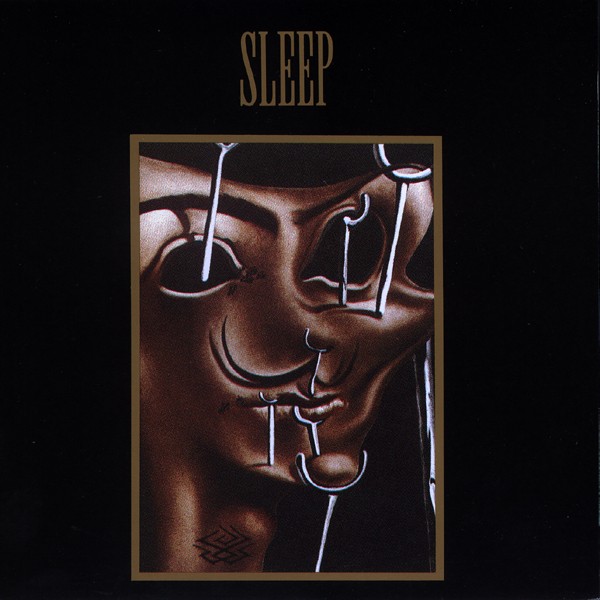
Released in 1991 by the Tupelo Recording Company, Volume One runs forty-five minutes across nine songs, three of them, "The Suffering", "Anguish" and "Scourge", re-recorded from the Asbestosdeath years, alongside "The Wall of Yawn". Its song titles, "Stillborn" and "Catatonic" among them, belong to a quartet still writing about suffering, and nothing on the record yet mentions the leaf that the next sleeve would carry. Grayson Haver Currin, writing for Pitchfork in 2012, heard "The Wall of Yawn" as one of the band's early would-be singles.
Holy Mountain on Earache
Recorded again at Razor's Edge with Anderson and mailed as a demo to Earache, the British label that had built its name on grindcore and death metal, the second album was signed on the strength of that tape and released exactly as it arrived, in November 1992 in Britain and March 1993 in America, as Sleep's Holy Mountain. The trio also gave the label a version of "Snowblind" by Black Sabbath for its tribute compilation Masters of Misery, and Harmony Korine later put "Dragonaut" and "Some Grass" into his 1997 film Gummo.
Opening on "Dragonaut", carrying the nine minutes of the title track in the middle and running to the ten and a half minutes of "From Beyond" before the short coda of "Nain's Baptism", the fifty-two minute record takes the riff of early Black Sabbath and pours it like hot tar across an empty highway, one slab of fuzz laid in a single pass and left to set in the sun, with Pike's solos rising off it like heat. The press of the time put Sleep beside Kyuss at the head of a new stoner scene, and Eduardo Rivadavia of AllMusic later called them "perhaps the ultimate stoner rock band".
Sleep did not invent the Sabbath riff. They moved into it, slowed it down and never came out.
London Records and the caravan to Nazareth
Courted after Holy Mountain by both Elektra and London Records, the trio chose London because, as its members have since explained, it would pay for the album and leave the music alone, and then spent roughly four years building a single song in soundchecks, motel rooms and friends' houses. Pike told the writer J. Bennett, for a chapter in the anthology Precious Metal, that a lot of the advance went on cannabis and around $75,000 on customised amplifiers.
The song they took to Record Two Studio in Comptche, in sessions AllMusic dates to 1994 and Third Man's own listing to 1996, had to be cut to tape in three sections, because, as Pike told Bennett, a reel held only twenty-two minutes. He remembered a month in the studio, a spell at home rehearsing and a second month back at the desk. What Cisneros sings about is a pilgrimage, the Weedians travelling to Nazareth, as Pitchfork summarised the lyric. Heard whole, the hour moves exactly like that: a pilgrim caravan crossing a desert at night, each riff a laden animal set down one hoof after the other on sand that swallows the sound, the bass the lead beast setting the pace for the column, the drums the tread of a procession toward a city nobody in the line can see, and every guitar solo a fire lit at a halt and left burning when the caravan moves on.
London Records declared the hour unmarketable. The label had David Sardy remix it and cut it into sections, the band rejected the result, neither side gave way, and in 1998 Sleep dissolved with its third album on the shelf. A fifty-two minute edit surfaced in 1999 as Jerusalem, through Rise Above in Europe and The Music Cartel in America, a version the band has never recognised as its own.
| Year | Title | Label | Running time | What changed |
|---|---|---|---|---|
| 1999 | Jerusalem | Rise Above / The Music Cartel | 52:08 | Shortened edit in six tracks, disowned by the band |
| 2003 | Dopesmoker | Tee Pee | 63:31 | Full recording, live "Sonic Titan" added |
| 2012 | Dopesmoker | Southern Lord | 63:34 | Brad Boatright master, new Arik Roper cover |
| 2022 | Dopesmoker | Third Man | 63:34 | Remaster with "Hot Lava Man" added |
The Tee Pee edition settled the record's reputation. AllMusic's Rivadavia greeted it as an instant doom classic, Mojo made it the benchmark for anything calling itself stoner rock, and when Southern Lord reissued it in 2012 Currin wrote in Pitchfork that "the lumber and the repetition somehow always push ahead". We hold the same view, with one reservation the band raised first: Hakius has criticised his own drumming on those sessions. The record stands at or near the head of every serious list of the Best Stoner Metal Albums, and it deserves to.
One Moment in Annihilation's Waste,
Edward FitzGerald, Rubáiyát of Omar Khayyám (1859)
One moment, of the Well of Life to taste,
The Stars are setting, and the Caravan
Starts for the dawn of Nothing
High on Fire, Om and the return
Split by the collapse into what Pitchfork called two unequal halves, the San Jose trio became two bands, the bombast going one way and the tolling repetition the other. Pike formed High on Fire in 1998, made The Art of Self Defense for Man's Ruin in 2000 and won the Grammy for Best Metal Performance in 2019 with "Electric Messiah". The rhythm section of the hour, Cisneros and Hakius, founded Om as a duo in 2003 and released Pilgrimage on Southern Lord in 2007; Hakius left Om in January 2008.
In May 2009 Sleep came back for two reunion sets at All Tomorrow's Parties, the British festival curated each edition by a different artist, and played "Antarcticans Thawed", a song left over from the Dopesmoker years. Those two sets were the last Hakius played with Sleep. He left the reunited band soon after, a departure The Obelisk later attributed to a debilitating back problem, and Jason Roeder, drummer of Neurosis, took his place. The new trio played Holy Mountain in full at ATP New York in 2010 and in July 2014 released "The Clarity" through Adult Swim's singles series.
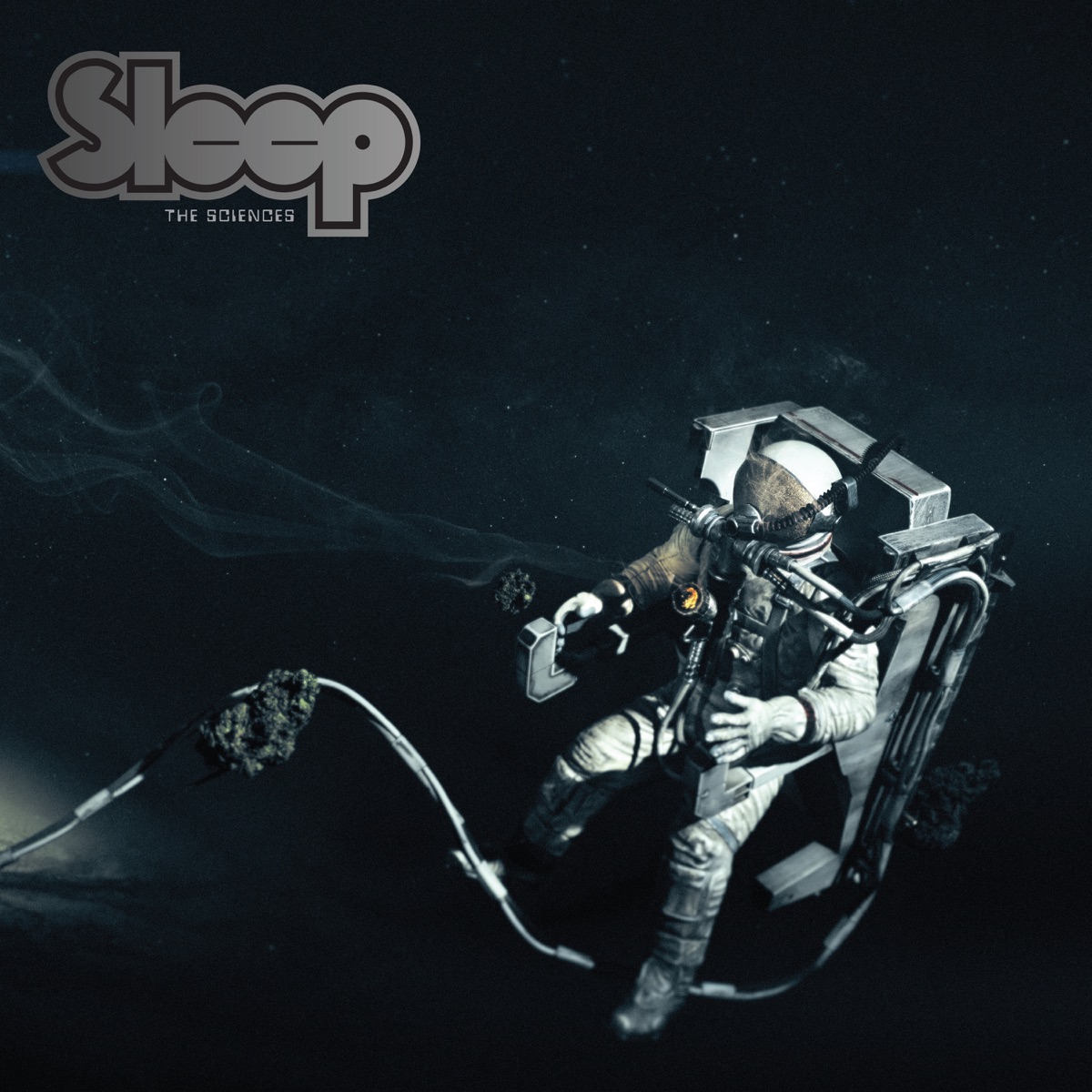
Released without warning on 20 April 2018 by Third Man Records on a date whose meaning in cannabis culture nobody missed, The Sciences was recorded at Sharkbite in Oakland with the engineer Noah Landis. Two of its six songs, "Sonic Titan" and "Antarcticans Thawed", come from the Dopesmoker years; "Marijuanaut's Theme" opens on the sound of the water pipe, and "Giza Butler" puns on the pyramids and Black Sabbath's bassist. It entered the Billboard 200, the main American album chart, at number 49, Sleep's first entry there, six years after the Southern Lord Dopesmoker had peaked at number 14 on Heatseekers, Billboard's chart for new and developing acts. It also made the old quarrel over stoner Rock or Stoner Metal look like a question for the shop assistant. Mark Deming at AllMusic found it less daring than Dopesmoker but the band at the top of its game. That is our reading as well. It is a very good record assembled from the spare parts of a greater one.
The line-up after Pike
The band announced an indefinite hiatus in November 2019 and returned to the stage in April 2022. In January 2025 Roeder wrote on Instagram, as Metal Injection reported, that the band's manager had dismissed him by telephone in November 2024. On 18 June 2026 Sleep announced that Pike was no longer a member, with a statement that wished him well and gave no reason, and introduced Dale Crover of the Melvins on drums and Bubba Dupree, formerly of the hardcore band Void, on guitar, with a first song, "Have Spacesuit Will Travel", issued by Third Man.
Released digitally on 3 September 2026, with CD and vinyl set for 30 October, Hempispheres puts five songs into thirty-eight minutes, the shortest Sleep album so far, built around "Have Spacesuit Will Travel", the single "The Morrisist" and the eleven minutes of "Arrival of the Industry Ships". Its first reviews have been cooler, a Metacritic average of 62 from six critics, and we keep our own verdict back until we have lived with the whole record. The line-up is already a fact: the bassist who has outlasted every other member, Al Cisneros, is the only man left from the San Jose trio, and from here the band's story runs back into the rest of the history of the slowest music metal has.
