
Thus, not by fire, but by the art divine,
Was boiling down below there a dense pitch
Which upon every side the bank belimed.Dante Alighieri, Inferno, Canto XXI, translated by Henry Wadsworth Longfellow, 1867
Picture a tar pit at the foot of a dry hill, skinned over with dust and a film of rainwater that looks, from a few steps away, like a safe place to drink. Every animal that walks onto it stays, the grazer sunk to the belly, then the wolves drawn in by its struggling and the big cats drawn in by the wolves, all of them held in the pitch without hurry, and long after the last cry has left the basin the bones come back up black and whole, stained through and not one of them broken. We know no truer picture of the best sludge metal albums. They do not strike at the listener. They wait for the listener to stop struggling.
The rules here are short. One record per band, which keeps the Melvins and Eyehategod from filling half the list; only records that are sludge on any honest reading; and an order weighed on how the record holds across its whole length, what it taught the bands after it, and where it stands in the named readings, chiefly the sludge special Terrorizer ran in 2009, the ten essential sludge albums Chris Chantler chose for Metal Hammer in 2016 and the hundred greatest metal albums Rolling Stone published in 2017. Where these records came from, New Orleans and the Melvins included, is told in the chapter above this one.
Ten records survive that test, spread across twenty-three years from a Boner Records pressing of 1991 to a Gilead Media release of 2014. The first two places were never in dispute. Everything below them is an argument, and we make it through the songs that carry each record.
A doom record mourns what it has lost. A sludge record keeps whatever walks into it.
First and second: the records nobody climbs out of

First place belongs to the New Orleans band that made its second album on the thirteenth floor of an abandoned department store. Self-produced at Studio 13 and released by Century Media in 1993, Take as Needed for Pain is the record on which Eyehategod dragged the crawl of the Melvins and the fury of Black Flag down into the blues of its own city and held them under, the seven-minute opener "Blank" and the six-minute title track pressing every chord into the floor until the feedback between them is the only thing still moving. Terrorizer named it the number one sludge album, Chantler counted it among his ten and Rolling Stone placed it at 92, three readings across eight years that reach our verdict. No other sludge record leaves so little air in the room.
Second is the record on which the Oakland band stopped wading through the tar and built a wall across it. Released by Relapse Records on 2 April 1996, co-produced by Billy Anderson and running to seventy minutes that open on the twelve-minute title track and close on the ten-minute "Enclosure in Flame", Through Silver in Blood by Neurosis tore the squalor off the weight of sludge and stretched what remained over samples and keyboards, which is how Rolling Stone came to place it at 49 and Fact first among all post-metal albums in 2015. It is second for a single reason. It opens the road out of sludge, and Take as Needed for Pain never leaves the pit.
Third to sixth: the long crawl and the late return
Third is Bullhead, released by Boner Records on 28 January 1991 and produced by Jonathan Burnside, the album on which the trio from a Washington timber town, then Buzz Osborne, Lori Black and Dale Crover, stretched its songs past anything it had taped before and let the opener "Boris" grind forward for eight and a half minutes with a leaden patience that flattens every fast impulse hardcore had left in the band. Rolling Stone ranked it 60th and wrote that it announced the Melvins as a metal band. We put it above Gluey Porch Treatments, the blueprint of 1987, because Bullhead is where the blueprint became a building.
Fourth is the record that brought tonnage where Eyehategod brought squalor. Recorded in 1992, produced by Phil Anselmo, the childhood friend of the guitarist and singer Kirk Windstein, and released by Pavement Music on 12 October 1993, the self-titled second album by Crowbar carried "All I Had (I Gave)" and "Existence Is Punishment" onto MTV and reportedly sold around 100,000 copies on an independent label. Anyone still asking is Crowbar Sludge Metal should begin here, where every riff is laid down like a slab of wet concrete and left to set before the next is poured on top. The hosts of Beavis and Butt-Head found the band slow and fat. That was the point.
Fifth is the youngest record on the list, the one that dragged the squalor back into Louisiana after a decade in which sludge had learned to play cleanly. Produced by James Whitten and released by Gilead Media on 25 March 2014, Heathen by the Baton Rouge band Thou runs past seventy-four minutes and sets the scream of Bryan Funck against long, slow passages on "Free Will", "Feral Faun" and "Ode to Physical Pain", a record Stereogum called dark, bombastic and hugely ambitious a week before it came out. Pitchfork made it the best metal album of 2014. Its place is the least settled on the list.
Sixth is the only album here with a painting from death row on its sleeve. Released by Rotten Records on 8 August 1994 and wrapped in "Pogo the Clown", a self-portrait by the convicted serial killer John Wayne Gacy, When the Kite String Pops by Acid Bath carries the voice of Dax Riggs across sixty-nine minutes, from "Scream of the Butterfly" to "Toubabo Koomi", and had sold more than 37,000 copies in the United States by 1999 with no major label behind it. It stands no higher because those minutes wander through gothic rock, blues and grunge, and the records above it never let anything wander.
Seventh and eighth: Weedeater and the Carolina mud
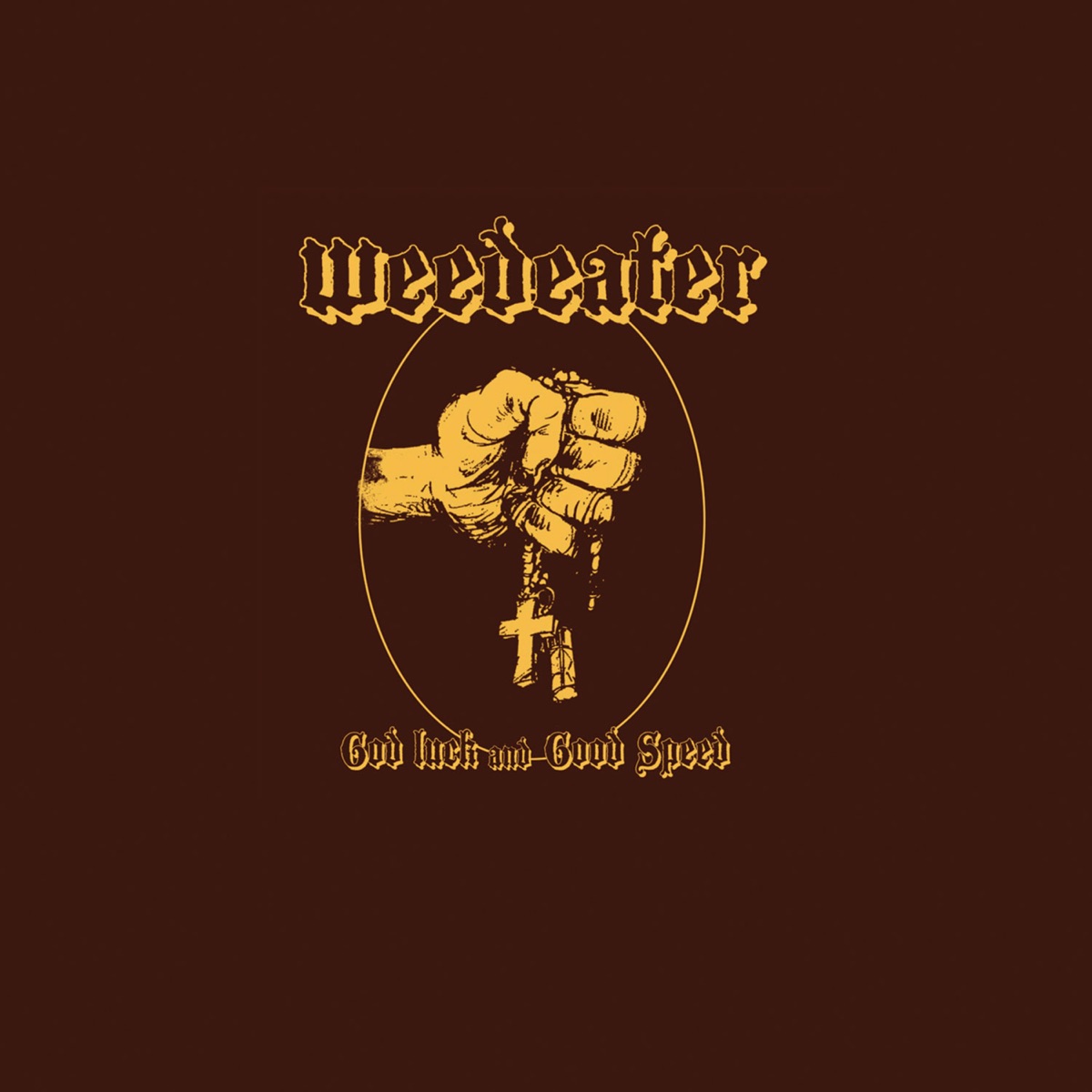
Seventh is the record of the North Carolina trio that grew out of a band whose shows were feared more than its studio work. Formed in Wilmington in 1998 by Dave "Dixie" Collins on bass and vocals, Dave "Shep" Shepherd on guitar and Keith "Keko" Kirkum on drums, Weedeater began as a side project while Collins was still in Buzzov*en, became his only band when Buzzov*en came apart, and made ...And Justice for Y'all in 2001 and Sixteen Tons in 2003 for Berserker Records before Southern Lord took it on and its third album was made with Steve Albini, the Chicago engineer who recorded the two albums after it as well.
Released on 31 July 2007, God Luck and Good Speed packs nine songs into under forty minutes, and we hold it the band's best record, the one that carried the bluesy, bass-heavy Southern sludge Metalbase heard in the earlier work into a room with Albini: "Wizard Fight" is over in two minutes and eighteen seconds, "Weed Monkey" is hauled along for seven and a half, and near the end the trio takes "Gimme Back My Bullets", the title song of Lynyrd Skynyrd's 1976 album, and sinks it to the waist in pitch. Critics file the band under stoner, doom and sludge at once. We rank the record seventh because it inherited a sound the Louisiana records built and did more with it than anyone expected of a side project.
Eighth is the album of the band Collins came from, made before he joined it, when the bass was still in the hands of LeDarrell. Produced at Brilliant Studios by Billy Anderson, two years before Through Silver in Blood, together with the guitarist and singer Kirk Fisher, and released by Roadrunner Records in 1994, Sore opens on its nine-minute title track and closes on the nineteen-minute "This Is Not...", seventy-three minutes that roll over the listener like a bulldozer clearing a lot at walking pace, never stopping to look at what gives way under the blade. It sits eighth because a third of it is endurance rather than song.
Ninth and tenth: Boston and Atlanta
Ninth is the Boston record that proved the crawl did not need a southern accent. Formed in 1991 by the guitarist Terry Savastano and the drummer Pete Donovan, with Jeff Hayward soon on vocals, Grief released Come to Grief through Century Media in 1994, a record on Chantler's list that Decibel inducted into its Hall of Fame in 2018, and on it, in Chantler's reading, every trace of lightness is stripped away, the riffs held so far past the point where a hardcore band would break into a fast part that the waiting itself becomes the song. Reviewing a show in December 2005, the Hartford Advocate heard Hayward's vocals as more hardcore than metal.
Tenth is the debut that showed where sludge could go once it learned to play. Released by Relapse on 28 May 2002 and produced by Matt Bayles, Remission turned the drumming of Brann Dailor and the guitars of Brent Hinds and Bill Kelliher loose inside the crawl on songs such as "March of the Fire Ants". Within four years Mastodon was filed under progressive metal. Remission is here because for one album the band stood in the pit with everyone else, and it is last because every record after it climbed further out.
What the pit gives back
Readers who want the mournful face of the same tempo will find the best doom metal albums in their own chapter, where the robes and the candles are, but sludge keeps different company. The tar pit does not mourn what it holds. It keeps it, stains it through and gives it back unbroken long after anyone remembers it going in, and that is what these ten records have done with every listener who walked onto their surface. Take as Needed for Pain is more than thirty years old. Nobody has climbed out of it yet.
