
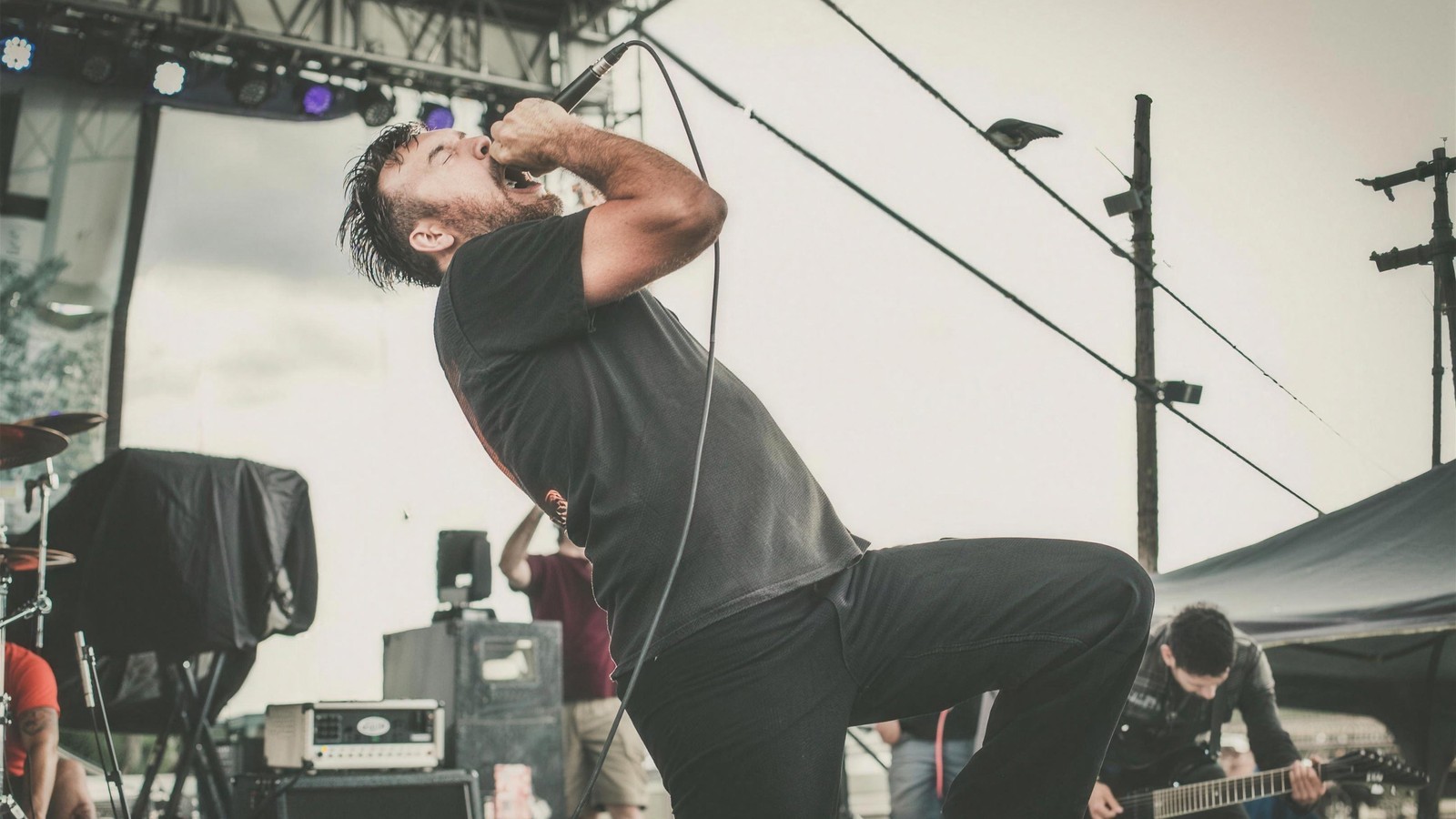
On 31 October 2005, in Riverside, California, a guitarist and a singer started a band. Nobody outside a few local rooms noticed.
Signed to Facedown Records in January 2007, launched that September with a debut called Nailed. Dead. Risen. that climbed to number 46 on the Billboard Heatseekers chart, and still led two decades later by the same two founders, Manny Contreras on guitar and Brook Reeves at the microphone, the Riverside band that welded gore and worship into a single word and then spent six albums proving the word could hold weight is Impending Doom, and it stands at the head of any honest list of Christian deathcore bands. Their breakdowns crush the back half of a song like a cinder block dropped on a guitar case, and their blast beats tear the flyers off the walls of whatever room they are played in.
That is the template, and the rest of the scene arranges itself around it. The labels that first carried this music were small, Christian and stubborn, the line between deathcore and its metalcore cousin runs straight through the middle of their rosters, and many of the names people type next to the word Christian belong on the far side of that line.
A blast beat does not ask what you believe. If the faith matters to you, the lyric sheets will give you plenty; if the low string and the drop are what you want, the riffs work exactly as hard on a listener who never opens the booklet, and the players in the bands that matter across the wider genre would recognise every trick in them.
Christian deathcore starts with gore and worship
Gorship is the band's own word for it, and Reeves has explained it plainly: worshipping God through music that sounds like gore. The sound came out of the same Inland Empire soil that grew Suicide Silence, with the members naming Despised Icon, Aborted, Nile and Korn among their influences, and the debut was tracked, mixed and mastered by Christopher Eck at his studio in Corona with a title taken straight from the crucifixion. The street team ran off the band's MySpace Top 8. That is how a Facedown band got heard in 2007.
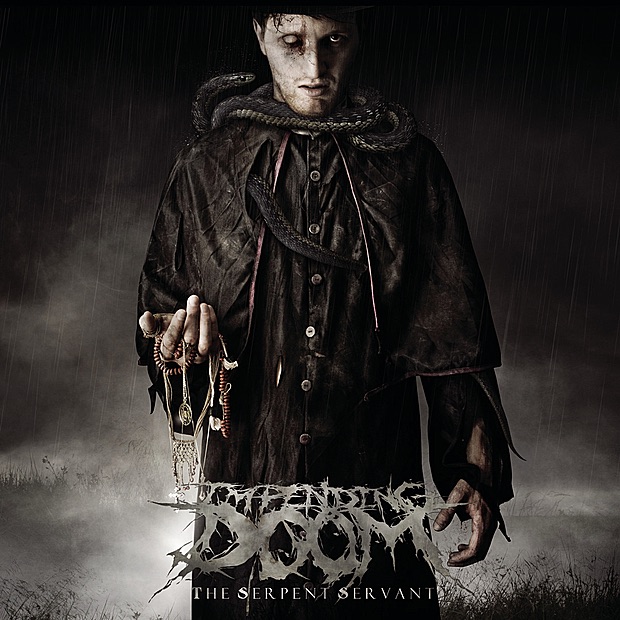
Released on 31 March 2009, debuting at number 144 on the Billboard 200 and number 3 on the Heatseekers chart with around 4,300 copies sold in its first week, and named by Alternative Press in 2021 among thirty deathcore albums from the 2000s that define the genre, The Serpent Servant is the record where the band stopped sounding like a promising Facedown signing and started sounding like a fixture. Its breakdowns land like a dumpster lid slammed shut behind a venue at closing time: the riff stops dead, steel hits steel, and everything travelling behind it in the song has to stop and start again on the echo, with Zeuss at the board for the mix and the master.
There Will Be Violence followed on 20 July 2010, with Brandon Trahan on drums after his years in the straight edge band xDEATHSTARx and with Vincent Bennett of The Acacia Strain guesting on "The Great Fear". The title track is the one that carries the record, Trahan's double bass at full gallop underneath it, and the album's breakdowns drag through the record like a pool table hauled across a club floor by four people who refuse to lift it, a quarter ton of slate shrieking over the tiles on every beat, and the drums keep counting behind it as if nothing had happened. If you want to measure that against the heaviest deathcore bands of any creed, that song is a fair test.
Then the band moved up a division. Baptized in Filth came out on eOne on 13 March 2012, produced by Andreas Magnusson and mixed by Machine, and that spring Impending Doom crossed North America on the Metal Alliance Tour beside DevilDriver, Dying Fetus, The Faceless and Job for a Cowboy, a bill on which nobody was checking anyone's creed at the load-in. Death Will Reign followed on 5 November 2013, and the song "Murderer" later turned up on the soundtrack of the video game Killing Floor 2. The lyrics never moved. Read the words under the screams on any of those records and the subject keeps returning to the one the debut named in its title: sin, judgement and the cross, shouted over music built to empty a room of its furniture.
A blast beat does not ask what you believe.
Facedown and Solid State, the two labels at the root of it
Founded in 1997 by Jason Dunn, the drummer of the hardcore band No Innocent Victim, and run out of Fallbrook in San Diego County, the label that put out Overcome, Born Blind and Dodgin' Bullets on seven inch singles before it could afford a full album deal is Facedown Records, and it is the closest thing this music ever had to a home address. Facedown signed hardcore first. Then the guitars got lower, and the roster followed them, with Sinai Beach as the spearhead: the Riverside band named after the mountain of the Ten Commandments, made When Breath Escapes for Facedown in 2003, and Reeves has named them among his influences. Two years later Impending Doom started in the same city.
Facedown also built the room. Facedown Fest has run in southern California since 2000, usually two days, a full muster of the Facedown roster plus the bands on Strike First, the imprint the label uses as a training ground for smaller acts, and in November 2005 the label added two extra days in Annapolis, Maryland, for the East Coast fans who could not get to California. Whole rosters, one bill, two days of sweat.
Solid State is the other half. The metal and hardcore imprint of Tooth & Nail, the Christian label Brandon Ebel founded in California in November 1993 and later moved to Seattle, Solid State built the Christian metal end of the business around Living Sacrifice, Zao and Demon Hunter, and it was never only a church label: bands with Christian members who did not call themselves Christian bands, such as The Famine and The Agony Scene, signed there too. Its deathcore record is short but early, and it starts in Texas.
Formed in Arlington in 1992 as a death metal band called Supplication, renamed after its first demo and signed to Solid State, the five from Arlington whose debut, Embrace the Eternal, is widely credited as one of the earliest deathcore records anywhere were Embodyment, and they got there in 1998, years before the genre had a crowd. The record sounds like a death metal demo left on the dashboard of a Texas pickup all summer until the hardcore melted into the tape: death metal riffs on one side, a screamed vocal and breakdowns that lean metalcore on the other. "20 Tongues" is the track to hear. Then the band walked away from extreme metal on the next album, The Narrow Scope of Things, and got lighter with every record after it. Their forebears, from the Supplication years, are the Christian death metal bands of the late eighties and early nineties.
Christian deathcore bands beyond Riverside
Started in Albany, Georgia, in February 2005, signed to the Virginia label Blood & Ink the following February and then to Victory Records in February 2007, the Georgia band that called its first album Golgotha and kept almost every song on it under three minutes is With Blood Comes Cleansing, and Christian deathcore is what it played. Horror followed on Victory in January 2008. In July 2008 the band stopped touring full time. It returned to activity in 2022.
In the Midst of Lions took its name from Psalm 57 and came out of St. Louis. Their debut, Out of Darkness, went out on Strike First; The Heart of Man moved them up to Facedown proper and reached number 30 on the Heatseekers chart, and Shadows, released on 22 November 2011, peaked at number 12 on the same chart. The band split in 2012. Three albums, all of them deathcore, all of them on the Facedown family of labels.
Then there is the family tree, which in this scene runs through vans more than through record contracts. xDEATHSTARx, straight edge Christian metalcore from Redlands on Facedown, fed most of its members into Sleeping Giant in 2006, and Cory Johnson out of Sleeping Giant and Brandon Trahan out of xDEATHSTARx both ended up in Impending Doom. Sleeping Giant itself is Christian metalcore, from Dread Champions of the Last Days on Facedown in 2007 to a final show on 17 February 2018. Close relatives. Not deathcore.
| Band | From | Label | Start with | Where it sits |
|---|---|---|---|---|
| Impending Doom | Riverside, California, 2005 | Facedown, then eOne | The Serpent Servant (2009) | Deathcore |
| With Blood Comes Cleansing | Albany, Georgia, 2005 | Blood & Ink, then Victory | Golgotha (2006) | Deathcore |
| In the Midst of Lions | St. Louis, Missouri | Strike First, then Facedown | Shadows (2011) | Deathcore |
| Embodyment | Arlington, Texas, 1992 | Solid State | Embrace the Eternal (1998) | An early deathcore record, then alternative rock |
| Fit for a King | Tyler, Texas, 2007 | Independent, then Solid State | Descendants (2011) | Metalcore |
| Becoming the Archetype | Atlanta, Georgia, 1999 | Solid State | Terminate Damnation (2005) | Progressive and melodic death metal with metalcore |
| Sleeping Giant | Redlands, California, 2006 | Facedown, Century Media | Dread Champions of the Last Days (2007) | Metalcore |
| Wolves at the Gate | Cedarville, Ohio, 2008 | Solid State | Captors (2012) | Metalcore |
On the line, and over it
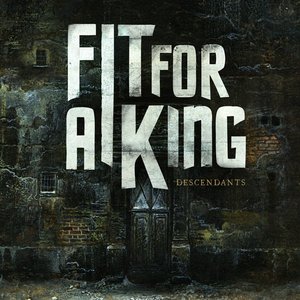
Formed in Tyler, Texas, in 2007, rebuilt around Ryan Kirby and Bobby Lynge from the Fort Worth band Bodies Awake from 2010, and self-releasing Descendants on 23 September 2011 with Cameron Mizell producing, the Texas band that marks the edge of the scene from the metalcore side of the line is Fit for a King. The band is filed as metalcore in most places, and after signing to Solid State in July 2012 it stayed there, from Creation/Destruction at number 175 on the Billboard 200 in March 2013 to Lonely God in 2025.
"Ancient Waters" is the song that put them on the map, an independent video from the Descendants era that found the band its first real following before any label did. Fit for a King kept a second voice in the room on Descendants, with Jared Easterling singing clean from behind the kit beside Ryan Kirby's scream; Impending Doom tears the hook out and leaves the floor bare. That one decision is the border between the two genres, and Fit for a King stands on the far side of it.
Becoming the Archetype is a different case. The Atlanta band, formed in 1999 and signed to Solid State in December 2004, took the title of its first nationwide album, Terminate Damnation, from a Mortification song, had Tue Madsen mix it, and later made Dichotomy in 2008 with Devin Townsend producing. It is progressive and melodic death metal crossed with metalcore, from a band counted in the new wave of American heavy metal rather than in the MySpace pit. Heavy, Christian, Solid State. Beside deathcore, not inside it.
Wolves at the Gate belongs further out still. Formed in Cedarville, Ohio, in 2008, signed to Solid State in 2011 and on its roster from Captors in 2012 onward, the band is Christian metalcore with post-hardcore in it, and its records sit a long way from Impending Doom. It turns up on Christian deathcore lists because it shares a Christian label and the faith with the bands that belong there. Shared labels are not a genre. The sound decides, and for the whole family tree, from Embodyment to the Facedown class of 2007, the history of the deathcore genre lays out where each strand came from.
Bands people take for Christian
Two of the genre's biggest names get asked about all the time, and neither belongs to this scene. Lorna Shore is not part of it: the New Jersey group has moved from Density Records to Outerloop to Century Media without touching a Christian label, and Metal Archives lists depression, nihilism and death as its themes, whatever a 2015 debut called Psalms may suggest. Chelsea Grin is not part of it either: the Salt Lake City band's name is slang for a facial wound.
So the real roster of Christian deathcore is shorter than the search results make it look, and that is fine. Impending Doom carries the name, With Blood Comes Cleansing and In the Midst of Lions carry the deathcore in it, Embodyment shows it was there in 1998, and Fit for a King marks the edge. Everything past that edge is Christian metal of another kind, which is its own conversation.
