
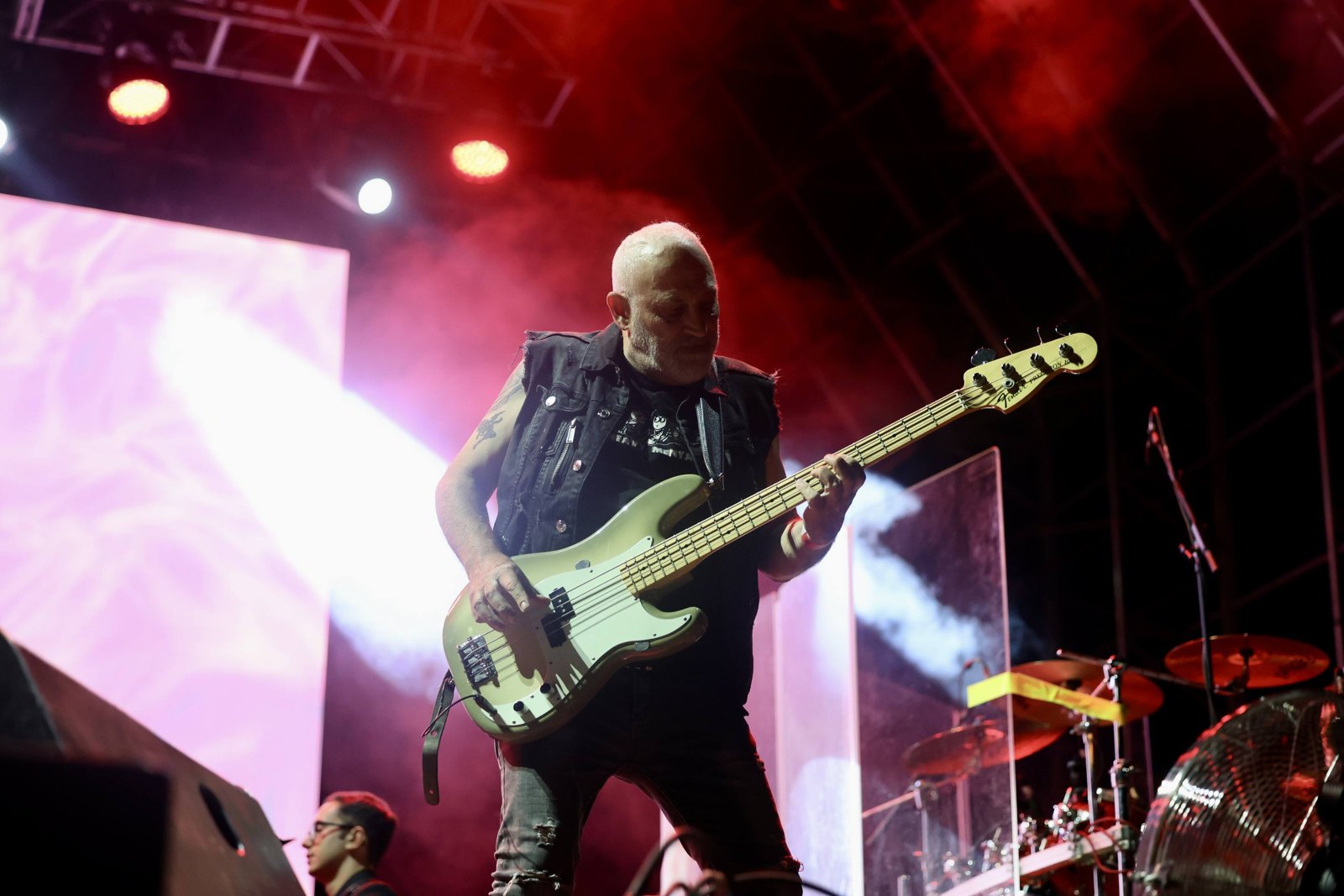
The heavy metal bands from the 80's were the first generation to play the whole planet at once, and the decade is best judged not by who sold the most but by who, by 1989, was beating the teachers on their own ground. Britain and America wrote the rules in 1980. Ten years later a Swiss band, a Spanish band, a Danish band, a Norwegian band and a Brazilian band were answering them move for move.
A grandmaster giving a simultaneous exhibition walks the inside of a ring of forty chessboards, pausing a few seconds at each, moving one piece and walking on, and for the first hour he sweeps pawns and bishops off board after board and drops them clattering into the box. By the last hour a handful of boards are still holding. At one of them, in the far corner, a clerk nobody had heard of has just knocked his king flat.
The masters in that ring were the Birmingham and London bands and their American pupils, and the boards were every country that bought their records, while the loudest of the masters, the East London quintet that carried its full stage show behind the Iron Curtain in 1984, was Iron Maiden. Which of the old names still stand at the head of the heavy metal bands is settled elsewhere. The corners of the room are more interesting.
The masters go on tour
Opening in Warsaw on 9 August 1984 and running through Poland, Hungary and Yugoslavia that month before crossing to America, the World Slavery Tour took the first full rock stage show into the Eastern Bloc, and over 331 days and 189 concerts it carried a sarcophagus, a mummified giant and Steve Harris's galloping bass to audiences who had waited years for a Western band to bring the whole show. The masters had come to the provinces. The provinces were ready.
Five months later, on 11 January 1985, the same band played the first Rock in Rio to a crowd estimated between 300,000 and 350,000, one of the largest of its career. The same festival ran ten days, from 11 to 20 January, and across that span its stages put Queen, AC/DC, Ozzy Osbourne, Scorpions and Whitesnake in front of Brazilian crowds too. No South American audience had seen so much of the music in one place. The provinces were buying tickets by the hundred thousand.
Heavy metal bands from the 80's that answered the masters
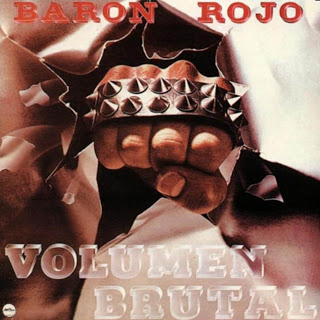
Recorded in November 1981 at Kingsway Studios in London, the room Ian Gillan of Deep Purple owned, and released by Chapa Discos on 22 February 1982, Volumen brutal went platinum in Spain and came out in an English version as well, with Bruce Dickinson credited for help with the translation, and the Madrid band behind it, built around the guitarist brothers Armando and Carlos de Castro, was Barón Rojo. Spain had its first heavy metal export. The British press noticed at once.
"Los rockeros van al infierno", still the band's best known song four decades on, runs on a riff that goes through the verse like a pickaxe through a frozen road, and it proved a Castilian chorus could sit on British steel without a single bar sounding borrowed. Madrid had made its case. It never had to make it twice.
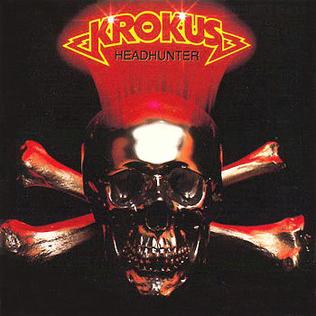
The Swiss quintet that took the Judas Priest producer, borrowed the Judas Priest singer for backing vocals on "Ready to Burn" and walked into the American market with both was Krokus. Headhunter, released by Arista on 25 April 1983 with Tom Allom at the desk, reached number 25 on the Billboard 200, the American album chart, and went gold in the United States and in Canada. A band from a country with no heavy metal industry at all had matched the masters at their own game.
"Screaming in the Night", the single, climbed to number 21 on the Billboard rock chart and went into MTV rotation with a video shot on Baker Beach in San Francisco. It is a power ballad, one that holds back the tempo through the verses and lets Marc Storace's voice climb to a scream by the chorus. The rest of the album runs faster.
The north and the south
Recorded between October 1986 and February 1987 at Bearsville in New York and Easy Sound in Copenhagen, and released by CBS on 20 April 1987, Future World is the record on which the Horsens band Pretty Maids fired its first producer. Eddie Kramer, by the guitarist Ken Hammer's account, fell asleep at the mixing desk, and the band still came out with a title track that barrels into the listener like a runaway tram off its rails. The engineer finished the job. It reached 165 on the Billboard 200 and had sold 300,000 copies worldwide by 1990.
Flemming Rasmussen, the engineer of Metallica's middle records, mixed it, and Graham Bonnet sang backing vocals. Ronnie Atkins barks the verses and sings the chorus. The mix of the two is the band's whole signature.
The Trondheim band that put an American singer, Tony Harnell, over the guitar of Ronni Le Tekrø and took Tell No Tales to number one in Norway in the spring of 1987 was TNT, and the album reached 100 on the Billboard 200, the band's best seller in America. Le Tekrø's guitar, fast and angular and full of odd bends, gave the vanguard of Scandinavian melodic metal a player nobody could mistake for an American.
The southern hemisphere answered last and hardest. The São Paulo band that had cut a raw debut in 1987 and then spent the next two years learning to write like a conservatory was Viper, and Theatre of Fate, released on 15 October 1989 through the German label Massacre, sets the young singer Andre Matos over riffs that borrow Beethoven's "Moonlight" Sonata without apology. By common consent it opened the road Brazilian power metal would take through the next decade. Matos left Viper the following year over exactly that pull toward classical structure, and in November 1991 he co-founded Angra. São Paulo did more than answer. It won.
By 1989 the British and the Americans were still the best in the room. They had stopped being the only ones.
Declan Rourke, KaosMetal
The home ground
The masters also had to hold their own ground, and some of the hardest fighting was done in the Pacific Northwest. The Seattle band that a Megadeth guitarist heard, liked and produced was Sanctuary, and its debut arrived just as the decade was running out of patience for anything that was not thrash or the Strip.
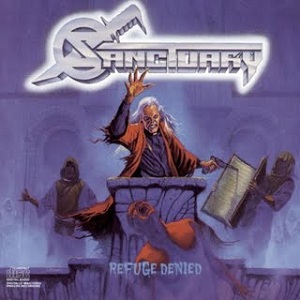
Released by Epic on 26 April 1988, with Dave Mustaine producing and Warrel Dane singing higher than almost anyone else in American metal that year, Refuge Denied set a speed metal attack under a heavy metal voice and carries a reading of Jefferson Airplane's "White Rabbit" that strips the psychedelia back to bare plaster. The German magazine Rock Hard gave it nine out of ten. Dane later carried the voice into Nevermore, and the album's opener, "Battle Angels", has since turned up in the video game Brütal Legend and, in 2016, in an episode of the Netflix series The OA. It was never a hit. It never stopped selling.
Further south, in Santa Rosa, the guitarist Geoff Thorpe had been leading Vicious Rumors through the same siege, and Digital Dictator, released by Shrapnel on 9 February 1988 with the new singer Carl Albert, laid a barrage of twin guitars under a voice pitched as high as Dane's. Neither band was ever given a budget worth the name. Both outlasted bands that were.
The Sunset Strip ran a separate decade on the same calendar, with its own economy and its own camera, and where this sits in the story is a separate quarrel. The bands above never needed the hairspray. They needed an airline ticket and a record company willing to buy it.
| Band | Country | Record | Year |
|---|---|---|---|
| Barón Rojo | Spain | Volumen brutal | 1982 |
| Krokus | Switzerland | Headhunter | 1983 |
| Pretty Maids | Denmark | Future World | 1987 |
| TNT | Norway | Tell No Tales | 1987 |
| Sanctuary | United States | Refuge Denied | 1988 |
| Viper | Brazil | Theatre of Fate | 1989 |
None of these records topped an American chart, and none needed to. Measured against the names that wrote the rules, the ones that shaped the whole family are ranked among the top heavy metal bands, and none of the six sits there. What they proved is narrower and it lasted: that by the end of the decade a band from Madrid, Horsens or São Paulo could make a heavy metal record the teachers would have been glad to sign.
