
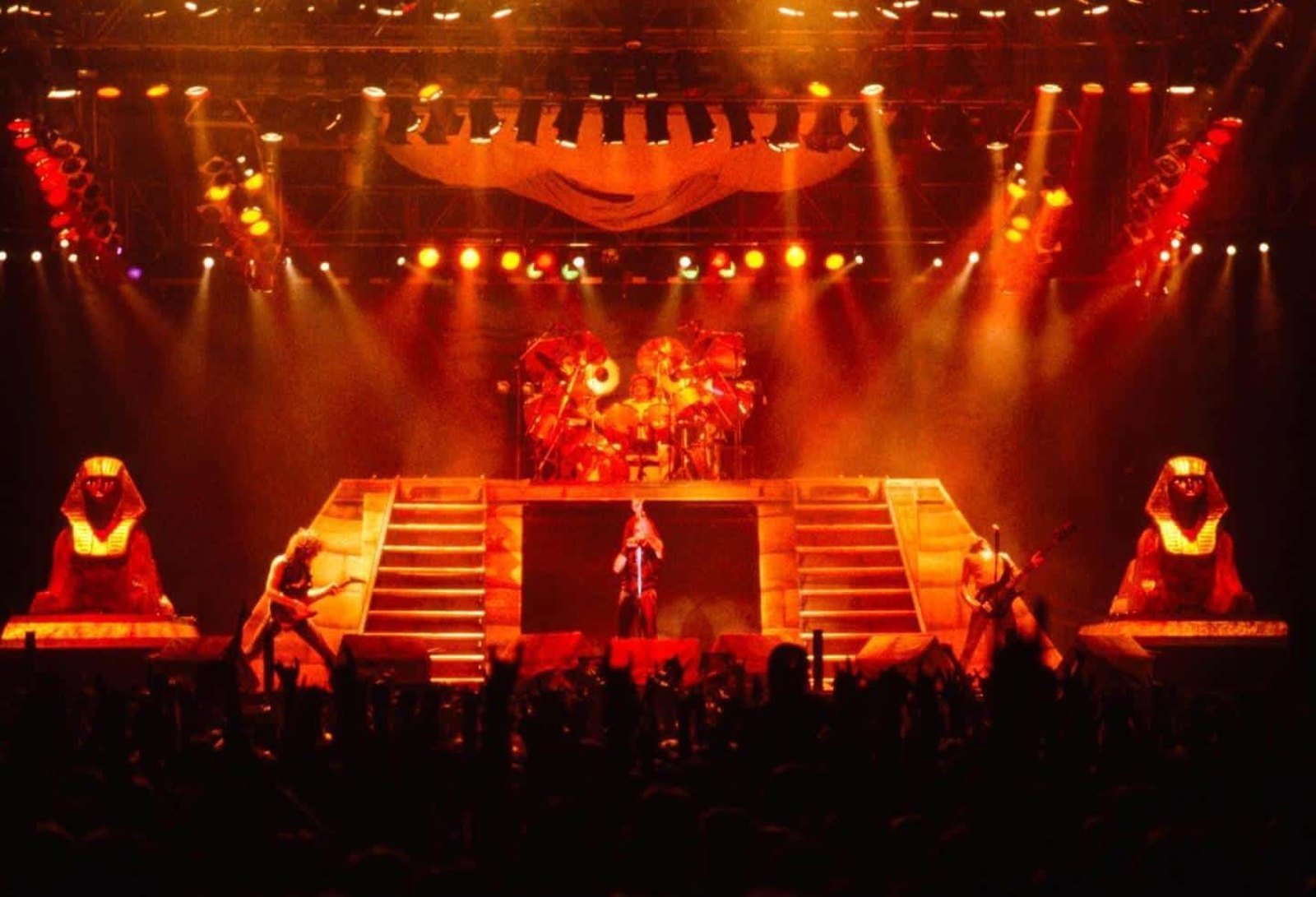
Black Sabbath is the top heavy metal band, and nobody else is close. The Aston quartet that tore the shuffle out of the blues in 1970, bolted a single riff into the place where a whole band used to stand and left every heavy record made since then resting its weight on that riff is Black Sabbath. The proof is what would come down without them.
Every ranking of the top heavy metal bands can be settled by the same brutal test. A tower crane's jib is a lattice of steel girders held together by pins, and the rigger who knocks the wrong pin out with a lump hammer watches half the arm buckle and drop into the yard, girder dragging girder down through the roofs of the site huts, while the rest of the structure hangs on untouched above him. Some bands are loose bolts. A few are the pin.
Fame decides a different order, and the long roll call of who played where, and when, belongs to the band list. The rank below is set by the wreckage alone: take a band out of the story, count the genres, habits and later records that fall with it, and let the size of the heap decide. Sales do not enter the sum. Nor does affection.
The top heavy metal bands, measured by what falls without them
10. Scorpions
The Hanover band that sang in its second language and still drove a heavy metal record deep into the American chart was Scorpions, and on Love at First Sting, released by Mercury in February 1984 with "Rock You Like a Hurricane" out front, the riffs of Rudolf Schenker and Matthias Jabs went through American arena radio like a forklift through a loading-dock shutter. The record reached number six on the Billboard 200. Take the band away and the gate stays locked. Every one of the German heavy metal bands that followed would have had to force it alone.
9. Def Leppard
The Sheffield five that started in the young British wave and ended up in every shopping centre in America were Def Leppard. Built by the producer Robert John "Mutt" Lange out of stacked guitars, layered choruses and drums trimmed to the click, Pyromania reached number two in the United States in 1983. The RIAA certified it Diamond in 2004, ten million copies sold there alone. Remove it and the Sunset Strip loses its blueprint, because the studio gloss that most of the heavy metal bands from the 80s chased all the way to platinum was cut from Lange's pattern.
8. Mercyful Fate
The Copenhagen five that sang about covens and meant every word were Mercyful Fate. Pull them out and two things fall at once: the long riff built of many sections, carried out of the British wave into rooms the British never entered, and the painted face King Diamond wore on stage in the early eighties, which reappeared on Norwegian stages a decade later. Metallica paid the debt in public in 1998, stitching five of the band's songs, "Satan's Fall", "Curse of the Pharaohs", "A Corpse Without Soul", "Into the Coven" and "Evil", into a single medley on Garage Inc.
7. Accept
The Solingen quintet that ran heavy metal at double pace while thrash was still a rumour on cassette was Accept, and behind it stands an entire German bastion. Helloween, Running Wild, Grave Digger and the speed and power bands of the north learned the drill from Udo Dirkschneider's rasp and Wolf Hoffmann's riffs. Pull the pin and the German wing comes down in one piece.
Six to four: the pins that take a whole floor
6. Dio
The band whose leader had already sung for Rainbow and Black Sabbath before he hung his own surname over the door was Dio, and it left the genre two permanent fixtures. The first is a hand: the raised index and little finger, a sign Ronnie James Dio said he took from his Italian grandmother's charm against the evil eye, and which every festival crowd on earth now throws without knowing where it came from. Bassist Geezer Butler has said the gesture existed in the band before Dio arrived. The second is a voice.
"Rainbow in the Dark", from Holy Diver in 1983, sets that voice over a keyboard riff bassist Jimmy Bain built on a Yamaha left standing in the studio, and the full chested tenor on it became the measure every power metal singer of the next forty years was held against. Dio himself judged the finished song too poppy for the record and wanted the master destroyed. His band talked him out of it. Remove the band and the wizards survive, because Rainbow had already let them in. The gesture falls. So does the yardstick.
5. Deep Purple
The quintet that put a Hammond organ through a Marshall stack and a classically drilled guitarist in front of it was Deep Purple, and it is the rare case whose absence would take out bands rather than genres. Ritchie Blackmore walked out in 1975 and formed Rainbow, David Coverdale left for Whitesnake, and Blackmore's scales, played twice as fast, became the neoclassical shred of Yngwie Malmsteen. Knock this pin out and Rainbow never forms, Dio never reaches the genre by that road, and the conservatory solo loses its first teacher.
4. Motörhead
The trio that swore to the end it played rock and roll, while every thrash band in America copied its tempo, was Motörhead, and nothing below the top three takes more with it when it goes. Out come thrash, which learned its speed from Phil Taylor's double bass drums; crossover, which learned from Lemmy that punks and metal fans could share one sweating room; and the first Newcastle black metal of Venom, which took the noise and the bullet belts.
"Ace of Spades", the title track of the 1980 album, peaked at number 15 on the UK Singles Chart and runs under three minutes and comes through the speakers like a lorry through a level crossing barrier, splinters and warning lights and all. Metallica played Lemmy's fiftieth birthday party at the Whisky a Go Go in West Hollywood on 14 December 1995, dressed as him under the name the Lemmys, working through a set of Motörhead songs. The debt was never hidden.
Three to one: the pins that take the building
3. Iron Maiden
The band that has kept the same bassist, the same mascot and the same lettering through more than four decades of records is Iron Maiden, and its removal would leave a crater across three genres. Power metal would lose the gallop that carries it, progressive metal would lose the thirteen minute song as a normal thing to attempt, and the whole economy of the painted sleeve and the tour shirt would lose its working model. Helloween, Blind Guardian and Dream Theater would each have had to find the door alone.
2. Judas Priest
The Birmingham quintet whose singer handed the movement its uniform and, with a 1980 song called "Metal Gods", its loftiest title, was Judas Priest. Take it out and the damage runs straight into the foundations: the twin lead guitar as the default setting of the whole style, the black leather and studs worn on both sides of the barrier, the speed that Painkiller handed the German power bands in 1990. Slayer covered "Dissident Aggressor" on South of Heaven in 1988. Even the fastest room in the house stands on this floor.
No other band in the ten takes the other nine with it.
1. Black Sabbath
Which leaves the first name. Remove Black Sabbath and doom, stoner and sludge vanish outright, thrash loses the riff it sped up, and heavy metal loses the first record anyone can point to. Several of the nine above are its direct progeny, Dio founded by the singer who left Sabbath's microphone to start it, and Motörhead by a bassist who pushed the same volume at twice the speed.
Knocked together in the studio in 1970 to fill out the album and taken to number four as a single in Britain, "Paranoid" runs under three minutes and drives one riff home like a platelayer's maul hammering a spike into an oak sleeper, stroke after stroke, until the iron sits flush and the whole line can carry trains. Sepultura, Megadeth and Type O Negative were among those who paid homage on the tribute album Nativity in Black, released on 4 October 1994. They were riding on that line.
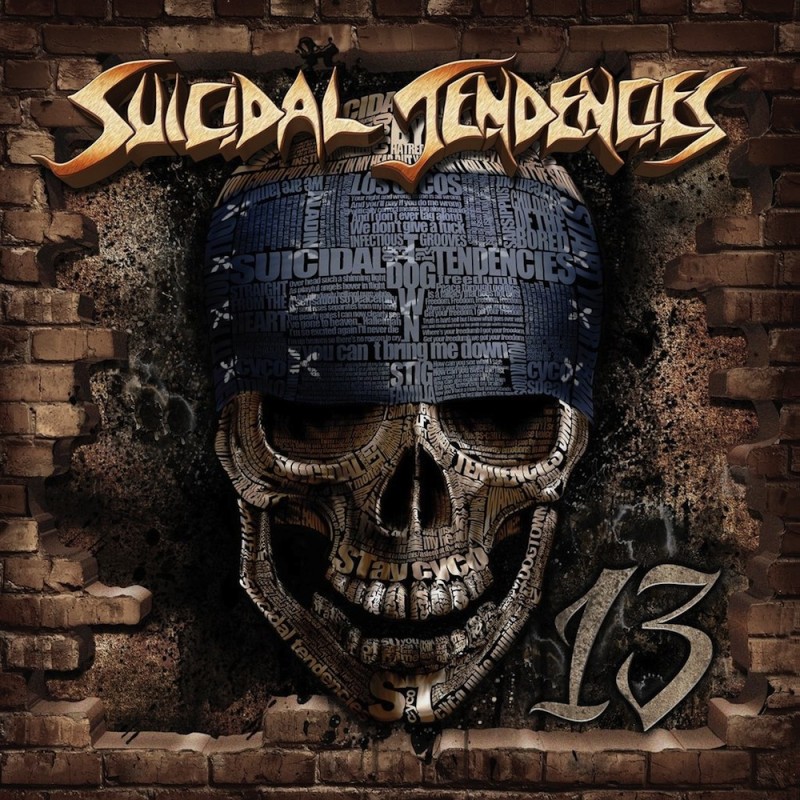
Released on 7 June 2013 with Rick Rubin producing, 13 went to number one in Britain and, for the first time in the band's life, in the United States as well. Forty three years after the debut, the foundation still carried the load.
The whole order in one table
| Rank | Band | What falls without it |
|---|---|---|
| 1 | Black Sabbath | Doom, stoner, sludge and the riff itself |
| 2 | Judas Priest | The twin lead, the leather, the German speed of the nineties |
| 3 | Iron Maiden | The gallop, the long song, the mascot economy |
| 4 | Motörhead | Thrash tempo, crossover, the first black metal noise |
| 5 | Deep Purple | Rainbow, Whitesnake and neoclassical shred |
| 6 | Dio | The horns and the power metal tenor |
| 7 | Accept | German speed and power metal |
| 8 | Mercyful Fate | The occult long riff and the painted face |
| 9 | Def Leppard | The studio gloss of the Sunset Strip |
| 10 | Scorpions | The first German passport to American arenas |
The top of that order has not moved in fifty years and will not move in the next fifty, because nobody can add a band to the foundations once the building is up. How the first stones were laid, in Birmingham at the end of the sixties, is told from where it all began. Everything since has been built on top of it. Nothing has ever been built underneath.
