
The heavy metal bands of the 70's did not invent the style. They cut its type, one piece at a time, and every band since has only been setting those pieces in a new order. The decade worked like the bench of an old punchcutter, a man who spends a week filing a single letter into the end of a steel bar and then hammers it into a copper blank, bruising the metal deep enough that printers who will never meet him can cast that letter by the thousand for a hundred years.
The founders of 1970 supplied the first few. The rest arrived between 1972 and 1979, and they came from bands that most lists file as hard rock, as art rock or as nothing much at all. The English quartet that supplied the first part nobody had yet thought of, two lead guitars playing one melody a third apart, answered to the name Wishbone Ash, and on Argus, released by MCA in April 1972, Andy Powell and Ted Turner laid their harmonised lines over songs about warriors and kings with a care the louder bands of the day never bothered with. It was not yet heavy. Others made it heavy.
How the blues was taken apart before any of them arrived is the wider story. The bands that matter for the rest of the decade came after that first shock and before the young British wave of 1979, in the years when the music was assembled piece by piece, mostly by people who never called it heavy metal at all.
The heavy metal bands of the 70's that cut the twin guitar
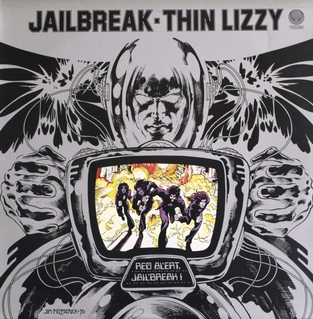
The Dublin quartet that carried the harmonised lead onto American radio was Thin Lizzy. Released by Vertigo in March 1976, Jailbreak put Brian Robertson and Scott Gorham on the same melody a third apart, like two bronze bells hung in one tower and swung together until the louvres rattle in their frames and the street below hums, and "The Boys Are Back in Town" took that sound to number twelve on the Billboard Hot 100. Phil Lynott wrote the songs. His guitarists turned them into anthems.
The London band that set a German lead guitarist loose over a string section, and never once let the violins soften a riff, was UFO. On Lights Out, released by Chrysalis in May 1977 with Ron Nevison producing, Michael Schenker's solos on "Love to Love" climb over an orchestral arrangement, while the title track does the rougher work, a riff that marches from the first bar to the last without a single step of swing. Every later band that put strings behind a guitar solo owes that record a debt.
The West Midlands five that turned the second guitar from an ornament into the frame of the song were Judas Priest, and on Sin After Sin, issued by CBS in April 1977, the session drummer Simon Phillips drove "Dissident Aggressor" on two bass drums hard enough to split the skins, a song Slayer would cover eleven years later on South of Heaven. Thrash was listening. It always was.
Voices, wizards and the neoclassical hand
The Hanover quintet that brought the classical scale into heavy rock lead guitar was Scorpions. Produced by Dieter Dierks and released by RCA in 1975, In Trance let Uli Jon Roth play as if Jimi Hendrix had been handed a violin score, bending, trilling and running minor scales in a style that owed as much to the conservatory as to the blues, while Klaus Meine held his notes at a height that made the title track sound like a chant. Critics have traced Yngwie Malmsteen's neoclassical style straight back to that record, though Malmsteen himself names Vivaldi and Paganini as his classical source and speaks of Roth only with respect, not debt.
The band that made myth a subject rather than a costume was Rainbow, and its best-known record has been praised often enough; the less obvious one is Long Live Rock 'n' Roll, released by Polydor in 1978, whose "Kill the King" ran at a tempo the speed metal bands of the next decade would claim as their own invention. Ronnie James Dio sang over it as if the kingdom were real. For three minutes it is.
The American hand on the fretboard
The Californian quartet that answered Led Zeppelin with shorter songs and a harder attack was Montrose. Produced by Ted Templeman and released by Warner Bros. in October 1973, its debut carried "Rock Candy" and "Bad Motor Scooter", Ronnie Montrose's riffs cut short and struck hard, with no jam left in them, and a young Sammy Hagar singing over the top. It sold slowly. It was copied quickly.
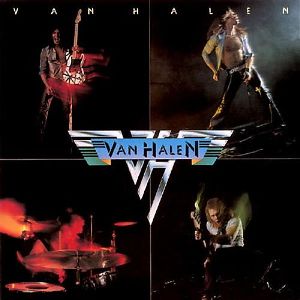
Five years later, for the same producer at the same label, the Pasadena quartet whose guitarist made his right hand as busy on the fretboard as his left went into the studio as Van Halen. Released in February 1978, the debut put "Eruption", about a minute and forty seconds of solo guitar, second in the running order, and it went through the guitar vocabulary of the day like a glazier's wheel across a sheet of plate glass, scoring one line and snapping the whole pane clean along it. After two-handed tapping, every lead guitarist on earth was either practising it or explaining why not.
Kiss sold the decade its stage, greasepaint and fire and a bass player spitting blood, and Blue Öyster Cult sold it irony, but neither changed the way a riff was written. The Americans who changed the riff were the ones with the least paint on. The difference still shows in the records.
The Americans who changed the riff were the ones with the least paint on.
Speed, dirt and the far provinces
The trio that pulled the tempo of the whole decade up by the collar, on a debut issued by the small London label Chiswick in 1977, was Motörhead, and the thrash bands learned more from its records than from anything on a major label. Speed was no longer a stunt. It was a method.
The New York band that wrote "Warrior" and put it on its debut, Rock City, released by the independent Fire Sign label in September 1977, was Riot, and the song's pace and its high, clean chorus sketched the outline of US power metal a full decade before anyone gave that music a name. It sold almost nothing. The outline held.
Further from the centre, the forebear of the Swedish heavy metal bands that came after it was Heavy Load, built by the brothers Ragne and Styrbjörn Wahlquist, whose Full Speed at High Level arrived on their own Heavy Sounds label in November 1978. In Sydney, Buffalo put out Volcanic Rock on Vertigo in 1973, riffs as heavy as anything from Aston and heard by almost nobody outside Australia. In Virginia, Pentagram cut a handful of singles across the decade and would not release an album until 1985. Accept had a debut out on Brain in 1979. The provinces were already arming.
| Band | Record | Year | What it supplied |
|---|---|---|---|
| Wishbone Ash | Argus | 1972 | Two lead guitars in harmony |
| Montrose | Montrose | 1973 | The short, hard American riff |
| Scorpions | In Trance | 1975 | Classical scales in the lead guitar |
| Thin Lizzy | Jailbreak | 1976 | Harmony leads on the radio |
| Judas Priest | Sin After Sin | 1977 | Twin guitars as the frame, double bass drums |
| UFO | Lights Out | 1977 | Strings behind the guitar solo |
| Motörhead | Motörhead | 1977 | Speed as a method |
| Riot | Rock City | 1977 | The outline of US power metal |
| Rainbow | Long Live Rock 'n' Roll | 1978 | Myth, and a tempo that ran ahead |
| Van Halen | Van Halen | 1978 | Two-handed tapping |
Which of the songs those records carried still stand up on their own, taken one at a time, is the business of the best heavy metal songs of the 70s. Read by band, the decade gives a plainer lesson: almost none of these groups set out to play heavy metal, and by common consent almost all of the music the next decade called heavy metal was built from what they left behind.
The young British wave took the harmony leads from Dublin and Birmingham, the speed from Motörhead and the myth from Rainbow, and the Americans of the next decade took the right hand of Van Halen and the riffs of Montrose. For the bands that carried all of it forward, the vanguard of the eighties and the heirs still playing it straight, the place to begin is who to listen to first. The seventies supplied the parts. Nobody has had to add many since.
