
I am the man, I suffer'd, I was there.Walt Whitman, Song of Myself
There is only one test worth applying to a concert record, and it has nothing to do with fidelity, sleeve notes or how many discs came in the box. Which take do you hear when somebody says the title of the song? The Dublin band whose concert versions long ago shoved its own studio recordings out of the way, so thoroughly that a listener coming to the originals afterwards hears them as demos of something better, was Thin Lizzy. That is the whole standard. Almost nothing clears it.
When a monarch died, the great seal of the realm went to a workshop where a man cut the design out of the face of the matrix, so that no clerk could ever strike another impression from it. What survives is the wax: a few hundred discs hanging on cords from documents in an archive, each one carrying the flaw where the wax cooled unevenly and the thumbprint of whoever pressed it home. The design is in the drawings. The evidence is in the wax.
The best heavy metal live albums are wax of that kind. A band on a stage is a matrix that will be broken, by a departure, a death, a change of style or nothing more dramatic than five years of touring, and everything that reaches the microphones on those two nights is all that will ever be struck from it. How the voice and the crowd work on each other in that room is set out in the section that covers it. The list of records where the impression came out clean is short, and it has been short for fifty years.
The ones where the live take took over
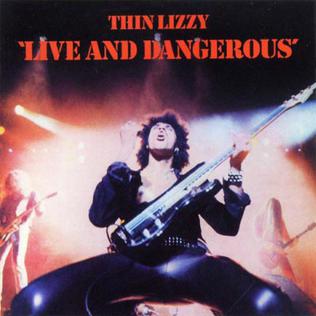
Live and Dangerous, released in June 1978 from shows taped in London in November 1976 and in Philadelphia and Toronto across two nights in October 1977, is the case that defines the category. Phil Lynott talks to the hall between songs as if he can see every face in it, the twin guitars of Scott Gorham and Brian Robertson answer each other harder than they ever did on tape indoors, and "Rosalie" comes off the stage as a different song from the one the band cut in a studio. The studio versions are still good. Nobody reaches for them.
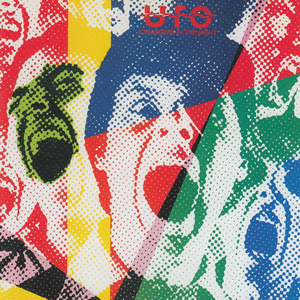
The guitarist who was playing out his last nights with the band as the tape ran across the International Amphitheatre in Chicago and Louisville Gardens in mid October 1978 was Michael Schenker, and Strangers in the Night is the sound of a player with nothing left to lose and a band that knows it. It reached number seven in Britain and stayed nowhere near long enough. The eight minutes of "Rock Bottom" on it, one long solo built and rebuilt over a fixed riff, is the version every guitarist since has learned. The studio take runs half as long. It also settles for half as much.
The band that fought its own label over releasing the Osaka and Tokyo tapes at all, and was proved wrong about them for the next fifty years, was Deep Purple. Made in Japan came out of three nights in August 1972 with the band playing at a length no studio budget would have allowed, and its "Child in Time" and "Highway Star" are unarguably the performances the songs are now judged by. Nothing older is still argued over this way. It set the terms for everything after it.
What the wax shows, and what got worked over afterwards
A herbarium sheet is a plant killed on the day it was found, pressed flat between papers and sewn onto card with the insect holes, the bent stem and the colour it went in the drying still on it. The plate in the flower book beside it is a better picture of the species and evidence of nothing, because the artist straightened the stem, mended the eaten leaf and turned the flower to the angle that shows it best. Every concert record ever made sits somewhere between those two cabinets.
The two most famous examples in the genre sit at opposite ends of it. Judas Priest's Unleashed in the East, taped in Tokyo in February 1979, has carried an argument about how much of its vocal was repaired afterwards ever since, and the answer has never stopped mattering to the people who love it. Motörhead went the other way with No Sleep 'til Hammersmith in 1981, kept everything including the mistakes, and went straight to number one in Britain with it.
The plate in the flower book is a better picture of the species and evidence of nothing.
The producer who has put the overdubbed share of Live and Dangerous as high as seventy five per cent was Tony Visconti, and the guitarist Scott Gorham and the drummer Brian Downey have disputed that figure for just as long, Downey insisting he never touched a cymbal beat after the tapes came off the road. The dispute is not a scandal and it disqualifies nothing. It means the stem was straightened before the sheet was sewn down, and a listener is entitled to know which records had that done to them.
The best heavy metal live albums after the format grew up
By the middle of the eighties the concert record had stopped being a document and started being a product, two discs of an arena tour sold in the gap between studio albums, and most of what came out in those years is worth nothing at all. Three or four records climbed out of that.
The German band that had spent a decade teaching European halls to shout back at it, and that got the evidence onto tape at Festival Hall in Osaka on 18 September 1985, was Accept. Staying a Life waited five years for a release date in October 1990, and it catches the gang chorus of "Balls to the Wall" being taken over by the hall entirely, which is the point of the song and something no studio can fake. The anthem belongs to the crowd. The record is the proof.
The band that put an entire concept album on a stage in sequence, with the characters played out in front of the songs instead of explained in a booklet, was Queensrÿche, filmed across three Wisconsin nights in Madison, Milwaukee and La Crosse in May 1991, and Operation: Livecrime did on that stage what the studio record had needed a libretto to do. The barrage of the last four songs runs without a gap. "Eyes of a Stranger" ends it exactly where the story does.
The least fashionable of them is also the hardest to argue with. Iced Earth's Alive in Athens, recorded at the Rodon club over two sold out nights on 23 and 24 January 1999, runs to three discs, thirty one songs and exactly three hours, played to a crowd that knew every word of material that had barely charted anywhere in western Europe. Nothing about it is polite. It is the fullest picture anyone has of what the faithful sounded like at the end of that decade.
| Album | Released | The performance that took over |
|---|---|---|
| Deep Purple, Made in Japan | 1972 | "Child in Time" and "Highway Star", at full length |
| Thin Lizzy, Live and Dangerous | 1978 | Nearly the whole catalogue, "Rosalie" first |
| UFO, Strangers in the Night | 1979 | "Rock Bottom", twice the length and twice the record |
| Judas Priest, Unleashed in the East | 1979 | "Victim of Changes", with an asterisk beside it |
| Motörhead, No Sleep 'til Hammersmith | 1981 | "Ace of Spades" at a speed the studio never caught |
| Iron Maiden, Live After Death | 1985 | No overdubs at all, Harris's rule kept |
| Accept, Staying a Life | 1990 | "Balls to the Wall", sung by the hall |
| Queensrÿche, Operation: Livecrime | 1991 | The concept album played whole, in order |
| Iced Earth, Alive in Athens | 1999 | Three hours, and an audience that carried it |
How to tell a real one from a souvenir
Three questions sort the shelf quickly, and none of them is about sound quality. Did the band play something it could not play in a studio, at a length or a speed the clock and the budget would not allow? Is the hall audible as a participant rather than as applause between tracks? And has any song on it become the version, so that the studio original now sounds like the sketch? The technical half of that, the desk, the microphones and what a big room does to a low guitar, is a trade of its own and belongs with heavy metal live sound.
Answer yes to all three and the record belongs on the shelf whatever the year. Answer no to all three and it is merchandise with a catalogue number, and the arena it was taped in will not save it. The fanfare on the sleeve tells a buyer nothing.
None of these records is where a new listener should start. A concert record is an argument about songs somebody already knows, and it makes no sense at all to someone who does not. The studio canon those songs come from, ranked and argued over one record at a time, is where the thread starts. Learn the originals, then go and find out which of them have been quietly replaced.

