
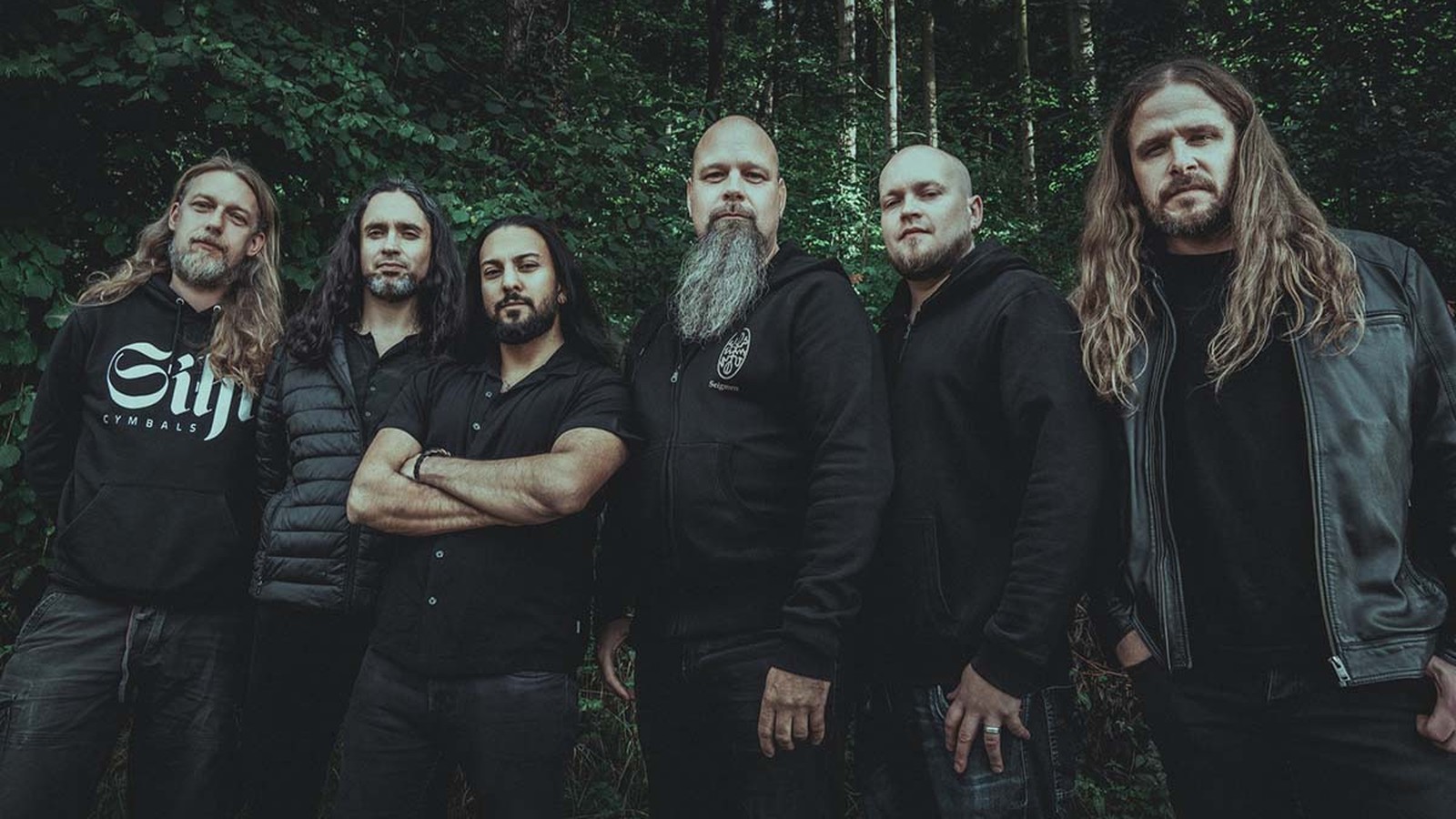
On 10 April 2012 a control room in Copenhagen, Winding Road Studios, held a producer whose name stands on three Metallica albums of the eighties, a bassist, a drummer and a schedule that kept the lightest instruments waiting at the door. Booked for the fourth album of the Copenhagen band that had by then spent twenty-one years refusing to hurry anything, Saturnus, a record Cyclone Empire would release as Saturn in Ascension on 30 November that year, Flemming Rasmussen began exactly as the band had announced on its own page the day before, with the bass of Brian Hansen and the drums of Henrik Glass. The guitar melodies, the part of this music a listener carries home, were not allowed into the room until the foundation under them had set.
We keep a different room in mind when we define the style. Picture a violin maker's workshop as we imagine it, split wedges of spruce stacked on racks under the ceiling, each wedge left to settle for as long as the maker's patience allows before it is planed into a top and asked to carry a note. In this imagined room, wood put under the strings green rings loudly for a season and then splits along the grain. Melodic doom is that seasoning. The melody is the note the wood is finally allowed to carry, and the years on the rack are the weight underneath it: slow, leaden, growled death doom, which has to set before any tune is laid across it.
That is our definition, and it is narrower than the tag as record shops use it. Melodic doom metal is death doom in which the lead guitar melody, rather than the riff or the growl, carries the song, at a tempo that never climbs out of the dirge. On our map of every branch of doom the name has no row of its own, and it does not need one, because by the test we apply there it changes nothing the music is made of. What it changes is which instrument the listener follows, and that change can be heard inside the first minute of a record.
We look before and after,
Percy Bysshe Shelley, To a Skylark
And pine for what is not:
Our sincerest laughter
With some pain is fraught;
Our sweetest songs are those that tell of saddest thought.
What the melody is doing
Three habits mark the style, and none of them needs a lyric sheet. The lead guitar plays a long, sustained line over the riff, in harmony or in counterpoint, instead of trading short solos with it. Keyboards, and on the oldest records a flute or a violin, double that line or hold a chord behind it. And the voice alternates, a growl for the weight and a whisper or a clean passage for the quiet, so that a song travels between the two rather than resting on either. The tempo moves not at all. It stays funereal, and every melody has to be written slowly enough to survive there.
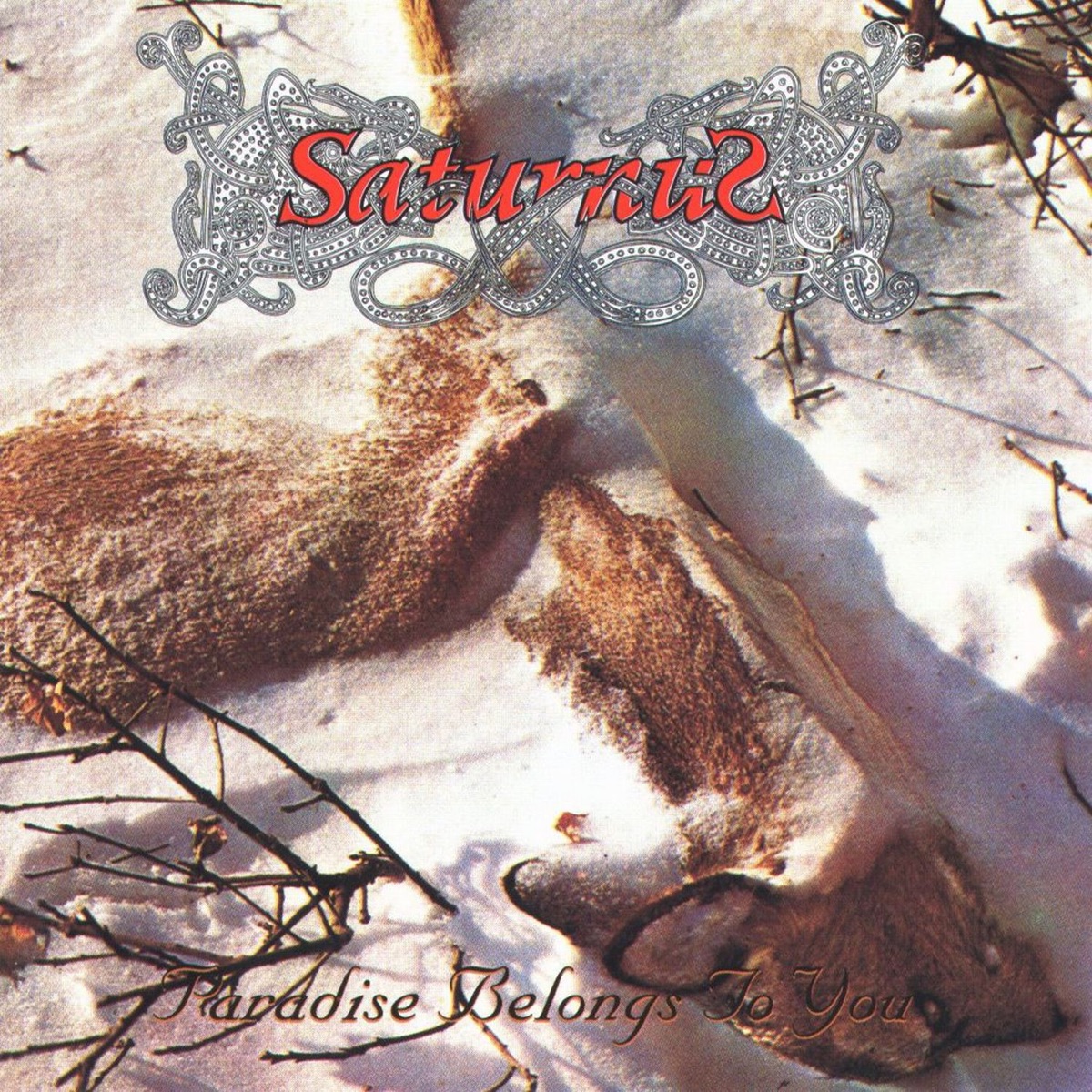
The first full statement came from Denmark. Formed in 1991 as a death metal band called Asesino by the singer Thomas A.G. Jensen and the bassist Brian Hansen, renamed Saturnus in 1993 when the drummer Jesper Saltoft and the keyboard player Anders Ro Nielsen came in, already slowing towards doom by 1994 and pushed the rest of the way after sharing a stage with My Dying Bride early in 1996, the Copenhagen quintet released Paradise Belongs to You through Euphonious Records in January 1997. Kim Larsen plays acoustic and electric guitars against Nielsen's keyboards across nine tracks, the title song running ten minutes and sixteen seconds and "Christ Goodbye" eight minutes and ten, while Troels L. adds flute to "The Fall of Nakkiel" and lines by William Blake are whispered through "The Underworld". The closing "Lament for this Treacherous World" falls silent for four interminable minutes before a hidden track of ten seconds. Even the silence is seasoned.
Where it parts from death doom and gothic doom
Death doom draws its line with the voice, and the melodic strain keeps that voice. What it moves is the centre of gravity. On the records Paradise Lost and My Dying Bride made for Peaceville at the start of the nineties, the riff is the load-bearing wall and the growl is bolted to it, and a melody, when one arrives, hangs on that wall like a picture. Melodic doom tears the picture down and hangs the whole song from its nail. The riff drops back into support, a leaden chord left tolling until it stops moving, and the guitar line above it becomes the thing the song is about, so that whoever hums the record afterwards hums the lead and not the riff.
Gothic doom answers a different question. There the change is the voice itself, the growl traded for a clean baritone or set against a soprano. Melodic doom needs no second singer. Its melody lives in the guitars, and a band can keep a growl from the first bar of an album to the last.
The Swedish band that had begun in black doom, Katatonia, recorded its second album, Brave Murder Day, at Unisound in July 1996 and produced it itself, with Dan Swanö engineering, six songs across forty-one minutes that open on "Brave", ten minutes and sixteen seconds long. Decibel, inducting the record into its Hall of Fame in 2007, heard a driving, bare beat under a wall of shoegaze guitars and desolate lead playing, and Peaceville, which reissued it, credits its primitive structures and melodies with a trance-like quality, an early Paradise Lost influence mixed with the Swedish rock group Kent and the English shoegaze band Slowdive. Jonas Renkse and the guitarist Fred Norrman had already formed October Tide in 1994 to go further down the same road, and its debut, Rain Without End, recorded in 1995, finally appeared through Vic Records in 1997.
The melody in that music is simple on purpose. Where the progressive strain asks a metre to hold the weight up, the question we took apart in progressive Doom Metal, the melodic strain hands the weight to a tune, and a tune can only survive at the pace of a dirge if it is plain enough to be sung back after one hearing. Ornament dies at that tempo. A long note does not.
A melody played at speed is green wood. It rings for a season and splits. Melodic doom keeps its tune on the rack until the weight beneath it has set.
Saturnus and the long seasoning
What makes the Danish band the clearest case is how little it has hurried since. A set in front of 3,000 people at the Roskilde Festival on 29 June 1997 was recorded by the Norwegian radio NRK and broadcast in Scandinavia the following spring. Martyre was recorded with Flemming Rasmussen at Sweet Silence in April and May 1999 and then postponed so often that it only reached the shops on 10 January 2000, by which time Larsen, Hansen and Saltoft had quit after the road dates of the second half of 1999 and Jensen was rebuilding the line-up. Six years passed before Veronika Decides to Die, released on 3 May 2006 by the Finnish label Firebox and titled after Paulo Coelho's novel, opened on "I Long", ten minutes and fifty-four seconds long, and the band carried it on the road into 2008 beside Agalloch, Novembers Doom and Mar de Grises.
Begun in that Copenhagen control room, Saturn in Ascension is the style drawn out to its full length: eight songs, four of them past ten minutes, from "Litany of Rain" at ten minutes and thirty-three seconds to "Between" at eleven minutes and one second. Then came more than ten years without an album. Two new guitarists, Indee Rehal-Sagoo and Julio Fernandez, joined in 2020, and The Storm Within, again with Rasmussen producing, came out through Prophecy Productions on 16 June 2023, a record its label describes as "ranging from moments of calm to brutal outbursts", with the seas, rain and stormy waters running through its songs. Few bands in metal have let the wood lie on the rack so long between notes.
Where it stops being doom
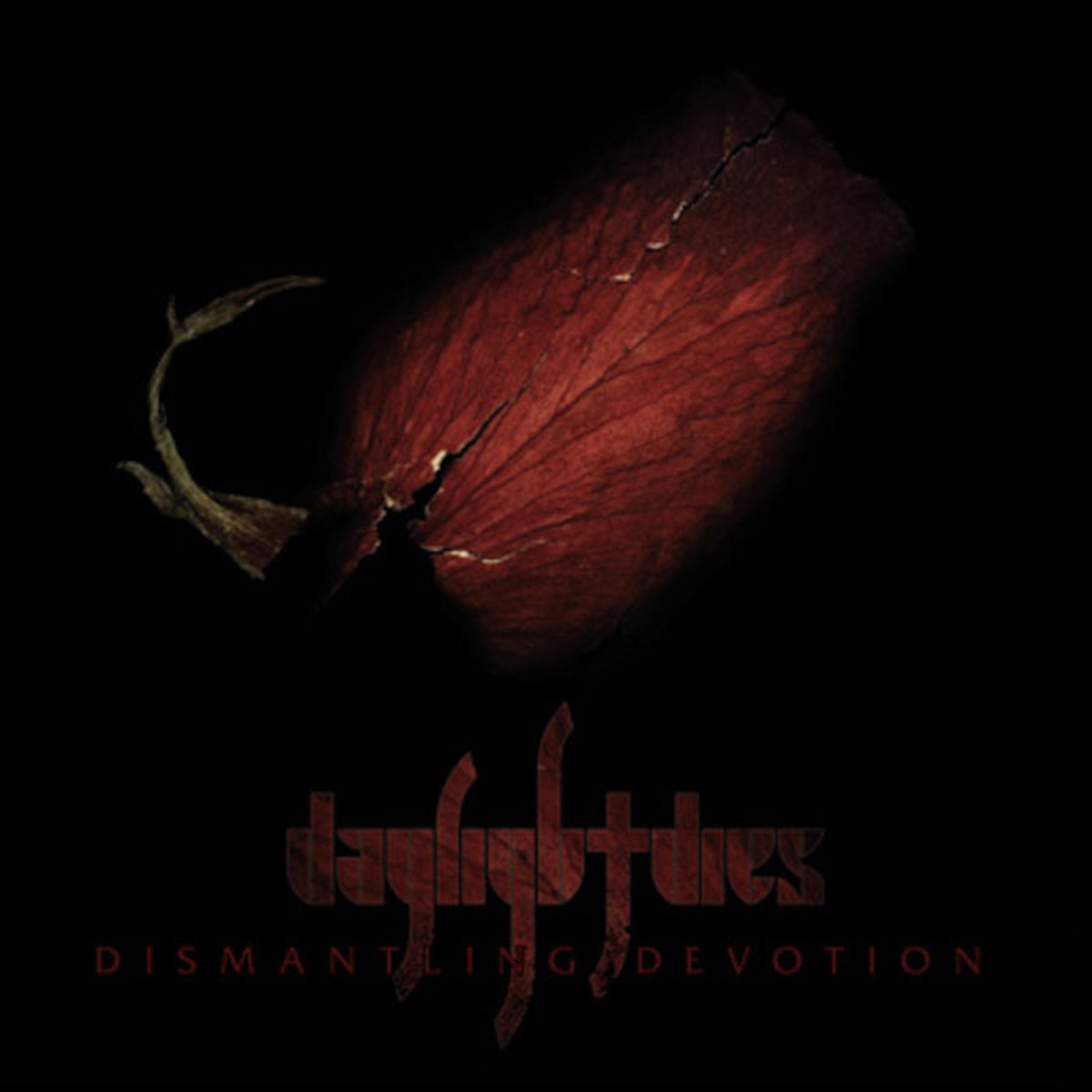
By the middle of the next decade the style had crossed the Atlantic. Formed in North Carolina in 1996 by the guitarist Barre Gambling and the drummer Jesse Haff, and settled by 2004 into a line-up in which Nathan Ellis growled and the bassist Egan O'Rourke sang clean, the American quintet Daylight Dies released Dismantling Devotion through Candlelight Records on 7 March 2006, produced by Jens Bogren with O'Rourke, eight songs across fifty-three minutes that open on "A Life Less Lived" at eight minutes and twenty-three seconds. In Finland, Swallow the Sun had recorded The Morning Never Came at Sam's Workshop in July and August 2003 for Firebox Records, a debut filed as readily under melodic death metal as under death doom.
That double filing is where the line falls. Melodic death metal, the harmonised Swedish style that At the Gates and Dark Tranquillity built in Gothenburg in the early nineties, uses the same twin guitar lines at two or three times the tempo, and the moment a melodic doom band lets the drummer quicken, the beat tears the melody loose from the weight and sends it running ahead. The quintet from Joensuu, Insomnium, formed in 1997 and signed to Candlelight for In the Halls of Awaiting in 2002, stands on the far side of that border, a melodic death metal band whose debut still closes on a title song eleven minutes long.
The other exit is quieter. Katatonia dropped screamed vocals altogether on Discouraged Ones in 1998 and walked towards rock, and once the growl leaves and the weight leaves with it, what remains is a melody with nothing seasoned beneath it. So the test comes down to the tempo and the load. Hold the tempo at the pace of a dirge, keep a weight under the tune and let the guitar carry the song, and the record is melodic doom. Quicken the drums and it is melodic death metal. Dissolve the guitar line into keyboards and open space, and the record has moved into atmospheric Doom Metal, another room in the same workshop.
