
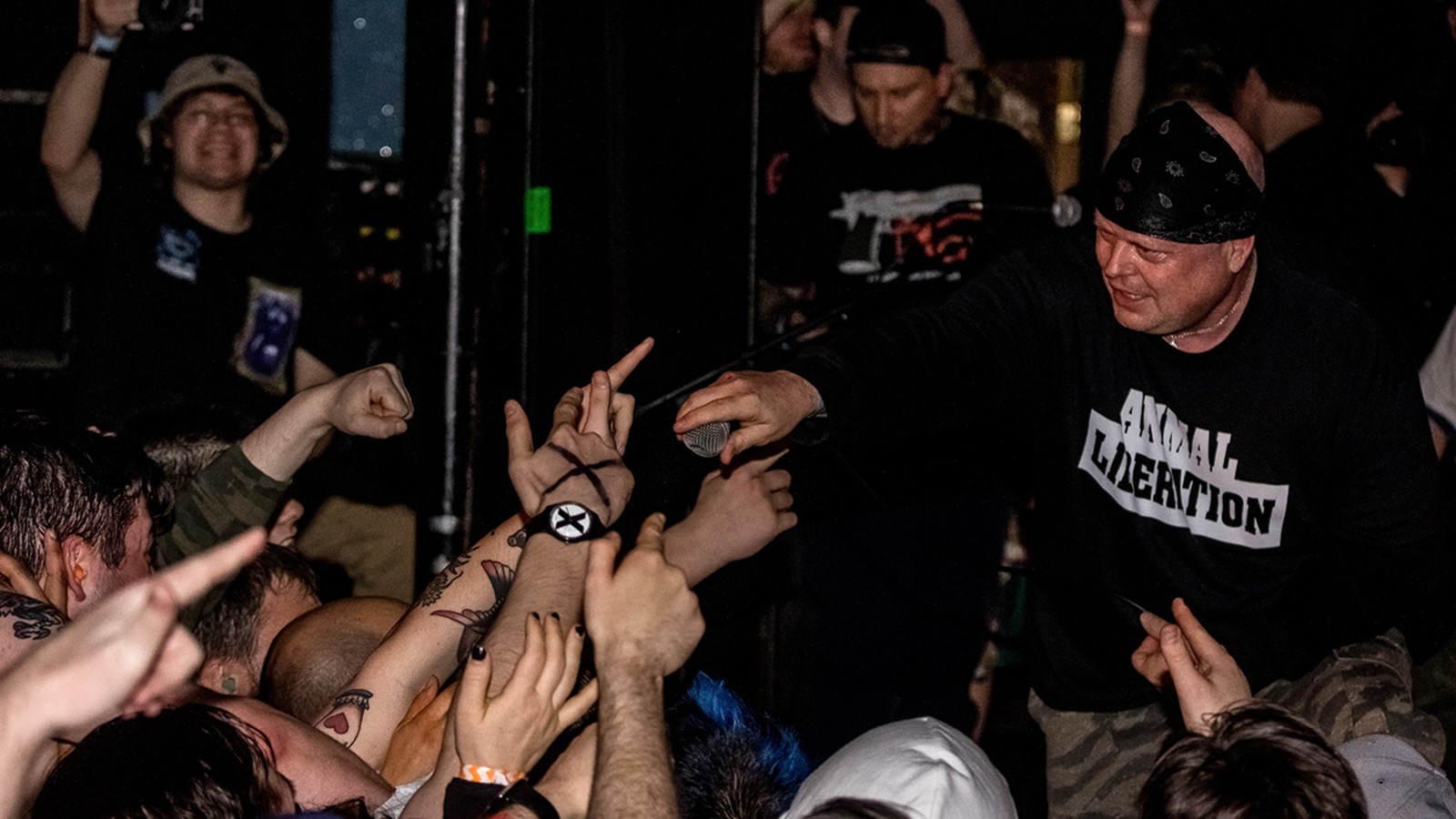
Karl Buechner told Fuse in April 2015 that his band had set out to sell straight edge as a lifetime commitment to never touch a drop of poison, and the vow was the part of the Earth Crisis sermon that deathcore left furthest behind. The chug, the stop, the floor, the label and the matinee all came across. The pledge mostly stayed behind.
Started in Chicago in 1989 by Tony Brummel, built through the nineties on the records of Integrity, Earth Crisis and Hatebreed, and still signing heavy bands long after its first roster had grown up, with Emmure and Carnifex in 2007, the label that walked the mosh part out of the straight edge matinee and onto the deathcore floor was Victory Records, and the breakdowns in its catalogue had been shaking the dust out of the rafters of all-ages halls and rented rooms for a decade before anybody filed one of them under deathcore.
The hardcore roots of deathcore run through that catalogue. Not all of them. Most.
Listen to the mosh part on any of those nineties records and you hear the rail yard behind an all-ages hall at shift change: a switch engine shoving a string of empty boxcars into a standing train, the slack running out car by car, every iron knuckle slamming shut down the line, one bang for every chug and every bang landing with the kick drum, loud enough to rattle the windows of the hall where the matinee is letting out. Deathcore bought the same yard ten years later. It loaded every car with scrap steel, shoved the train in again on the same count, and the knuckles came down twice as hard, and the windows went in.
Same yard. Same count. Different tonnage.
The death metal half of the family, the blast and the growl and the tremolo, sits in the wider story of how the two met. What crossed over from the hardcore side was narrower and more specific: one part of the song, a handful of labels, a way of running a show, and a vow about what goes into your body that mostly stayed behind. Hardcore's own history is much longer than that. Deathcore took what it could use.
The mosh part, before anyone wrote it in drop A
Start in New York in the middle of the eighties. Released in 1986 and packed with fast songs that slammed on the brakes halfway through and dropped into a slower, heavier riff built for the floor, The Age of Quarrel came from the Lower East Side crew whose shows already looked like a brawl with a soundtrack, and the crew was Cro-Mags. Two years earlier Agnostic Front had put out Victim in Pain. The slow sections on records like those were called mosh parts, and the name says exactly what they were for.
The mechanics are simple. The drummer drops out of the fast punk beat into half time. The guitars stop strumming and start chugging, palm muted, on the lowest open string or an open chord, and the gaps between the chugs are where the room moves. The mosh part was an instruction printed on the low E string. A second shape grew next to it, the two-step part, a mid-tempo bounce with the snare on the backbeat that sets a whole floor hopping from foot to foot. In the nineties the Brooklyn bands slowed it further still into what got called the beatdown, which belongs to hardcore and has its own shelf there.
Metal and hardcore were not friends in those years. The haircuts, the solos and the speed all kept the two crowds apart, and the long version of that standoff is heavy metal against hardcore. But metal kids kept turning up at hardcore shows, and hardcore guitarists kept buying thrash records, and by the end of the decade a few bands had stopped pretending they had not.
The mosh part was an instruction printed on the low E string. Deathcore never stopped obeying it.
Integrity, Earth Crisis and the metal inside the mosh part
Dreamed up first as a fake band, with a logo, a backstory and merchandise for an imaginary straight edge group so violent it attacked drinkers at its own shows, and made real in Cleveland in 1988 when Dwid Hellion and Aaron Melnick built it out of the wreckage of their youth crew band Die Hard, the band that existed as a T-shirt before it existed as a sound was Integrity. When the debut arrived in 1991, it began a career spent melting thrash metal into hardcore for good, and it taught a generation of hardcore guitarists that metal riffing was allowed in the room.
Integrity forced thrash riffs through the hardcore song the way a road crew shoves a thrash band's flight cases through a club's back door one size too small, splintering the frame, tearing the hinges out of the jamb and leaving the door hanging off one screw, because nobody in the van was willing to leave anything outside. The door never closed properly again. Neither did the scene.
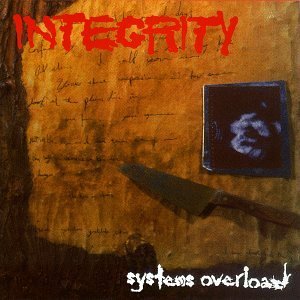
The comeback came in 1995. Systems Overload, recorded for Victory, put the band back in the shops after four years, and Victory released most of what Integrity made for the rest of the decade, Humanity Is the Devil in 1996 and Seasons in the Size of Days in 1997 among it. By 1995 the metal in hardcore had stopped being a provocation and become part of the furniture.
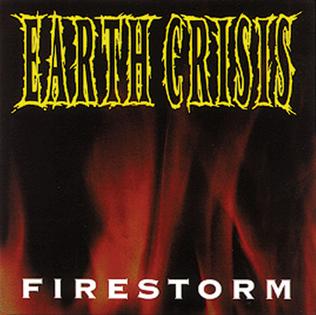
Recorded in the summer of 1993 at Bill Korecky's Mars Studios in Cleveland, at the start of a national tour, after Brummel had first passed on the demo and then changed his mind when he saw the band at a hardcore weekend in Dayton, Ohio, called More Than Music Fest, the EP that set palm muted, staccato riffs under a militant vegan straight edge sermon was Firestorm, and the Syracuse five who cut it were Earth Crisis.
There is no solo on it. The title track opens on open E chords and builds toward long mosh parts, and every later Earth Crisis record works from that shape. It is the closest thing the nineties have to a deathcore breakdown without the deathcore: the chug, the stop, the floor, the whole song bent toward one heavy passage, everything except the blast beat in front of it.
Then the metal world came looking. Destroy the Machines followed on Victory in 1995 and went on to become one of the best-selling albums the label ever released, Earth Crisis were invited onto the first Ozzfest in 1996, the touring festival Sharon Osbourne built around Black Sabbath's old singer, and by 1998 the band's records were coming out on the biggest metal label in the business.
Released by Roadrunner in 1998 as the band's only record for the label, produced by Andy Sneap, who had played guitar in the English thrash band Sabbat, and carrying Robb Flynn of Machine Head as a guest on "One Against All", Breed the Killers was a vegan straight edge hardcore record dressed in a metal production, and "End Begins" sits in the middle of it. Earth Crisis went back to Victory afterwards. The door between the two industries stayed open behind them.
Victory Records and the hardcore roots of deathcore
A label is a family tree with a barcode on every branch, and Victory's tree runs straight from the hardcore matinee into the deathcore era. In the nineties it sold Integrity, Earth Crisis and Hatebreed. In the 2000s it kept signing the bands that wrote songs around the mosh part, and the mosh part kept getting lower.
Approached by Victory in July 2003 and signed the following spring, then sent into Q-Division in Somerville, Massachusetts, with Matthew Ellard producing, the Boston band that made the breakdown its whole reason to exist was Bury Your Dead. Cover Your Tracks came out on 19 October 2004, the band played the second stage of Ozzfest in 2005, and the next album, in July 2006, was called Beauty and the Breakdown. Nobody needed the title explained.
Emmure arrived next. Filed under metalcore and deathcore by turns, and often under beatdown as well, the Connecticut band that built whole songs to reach one drop was signed to Victory for its debut, Goodbye to the Gallows, in March 2007. The Respect Issue followed on 13 May 2008, produced by Chris "Zeuss" Harris, and debuted at number 141 on the Billboard 200, the main American album chart. "Sound Wave Superior" is on that record, and Victory still hosts it.
Carnifex closed the circle. The San Diego band put out The Diseased and the Poisoned on Victory in June 2008, Hell Chose Me on the same label in 2010 and Until I Feel Nothing in 2011, which put a deathcore band's breakdowns into the same mail-order catalogue that had sold Firestorm fifteen years earlier. From 2006 Victory also handled distribution for Sumerian Records, the label that built its early roster on progressive deathcore.
Victory was not the only road. The Orange County scene ran a parallel one through Trustkill and Ferret, and it put sung choruses on top of the mosh part, which is the story of orange county and the metalcore boom. The Chicago route is the one that never bothered with the chorus.
What changed when the breakdown crossed over
The part survived the trip. Almost everything around it was rebuilt. Put a mid-nineties Victory record next to a deathcore record from 2008 and the breakdown is still doing the same job, stopping the song and handing it to the floor, but three things about it have changed.
| Part | 1990s metallic hardcore | Deathcore, from about 2005 |
|---|---|---|
| Where it comes from | A fast punk or thrash beat | A blast beat or a tremolo run |
| Voices | A shout, with gang vocals from the band and the front rows | A low growl or a scream, gang vocals mostly gone |
| Lyrics over it | Politics, the scene, the straight edge vow | Gore, misanthropy, personal violence |
The biggest change is the approach. In hardcore the mosh part arrives out of a fast punk beat, so the drop is a gear change. In deathcore it arrives out of a blast beat, and it lands the way a tour bus coming into a venue's back lot too fast dumps its air brakes, the long hiss and then forty feet of bus pitching onto its nose, every bunk curtain swinging out and every loose road case hurtling down the aisle into the driver's partition. The stop is the event. The faster the run-up, the harder the aisle fills with luggage.
The gang vocal, the moment the band steps back and the front rows grab the microphone, mostly did not make the crossing. Deathcore singers kept the microphone to themselves.
Some of the old shapes stayed whole. The two-step bounce survived the crossing intact, and a floor trained on it still knows what to do. Whether a band that keeps the two-step and drops the blast beat is still deathcore at all is a border question, and the borders with hardcore, metalcore and death metal are settled where the lines get drawn.
Straight edge in deathcore
Straight edge is older than any of these bands. Taken from a 1981 song by Minor Threat called "Straight Edge", the name stuck to a hardcore pledge against drink, drugs and tobacco, and through the late eighties the youth crew bands, Youth of Today at their head, turned it into a uniform and a covenant. The X on the back of the hand started as the mark a club drew on kids too young to be served. Then the kids drew it on themselves.
Earth Crisis made it militant. Rebuilt in 1991 around Karl Buechner and four members of the vegan straight edge band Framework, they wrote lyrics against drug gangs, animal abuse and anyone who broke the pledge, and carried that sermon all the way onto the first Ozzfest. In 1993 a broken pledge counted as apostasy, and the songs said so. Around them in the early nineties ran hardline, a stricter offshoot launched after Vegan Reich's Hardline EP of 1990. Earth Crisis was close to it without being part of it.
Deathcore inherited the room and not the creed. The all-ages matinee survived, because a show with no bar is a show sixteen-year-olds can get into, and sixteen-year-olds bought the shirts that kept the van rolling. The vow mostly did not. A few musicians in the scene kept the vow. But the lyric sheets of 2007 were about gore and grudges, not about poison. The X slid off the hands of the singers and stayed on the hands of some of the kids in front of them.
That is the shape of the inheritance. From hardcore, deathcore took the mosh part, the labels that sold it, the matinee, the merch table economy and the habit of writing a whole song toward one heavy passage. It left behind the gang vocal, the politics and, mostly, the pledge. The progeny kept the part of the parent that moves a floor and let go of the part that preaches to it, and on any honest reading that was the part the floor had been waiting for.

