
Nineteen bands. That is the number the Metal Archives lists under the exact title of a song from Paranoid, the second Black Sabbath album, released by Vertigo in 1970: eight bands called Paranoid, three called Electric Funeral, three called Rat Salad, two called Hand of Doom, and one each called War Pigs, Planet Caravan and Iron Man. Seven of the eight titles on the record have been taken. Only "Fairies Wear Boots" is still unclaimed, and all three Electric Funerals, formed in Spain and in the Philippines in 2003 and in Malaysia in 2010, play doom, sludge or stoner metal.
A genre that names itself this way keeps its books like a country parish, in a register at the back of the church where the same few surnames come round again for three hundred years, each generation entered by a new curate in a new hand while the names themselves refuse to change. The first pages of doom's register were copied out of the songbook of the four men from Aston. The Los Angeles quartet that had played as Tyrant tore the title off "St. Vitus Dance" in 1980 and entered itself as Saint Vitus. A Dorset trio cut "Electric Funeral" and "The Wizard" in half in 1993 and nailed the pieces together as Electric Wizard, and Dylan Carlson founded a band in 1989 under Earth, the name Black Sabbath had discarded twenty years earlier. The spelling barely moves. The hand is new every time.
A name is chosen long before anyone draws it, which is why a history of names belongs next to the Doom Metal Logo, and the entries turn out stranger than the Sabbath pages suggest: a monster from a role-playing rulebook, a haunting on a Tennessee farm, a teenager out of a 1984 murder case, and a title that is really two musicians standing side by side. Few of these names were invented. Most were inherited.
Few of these names were invented. Most were inherited.
Songs copied from one register into the next
The song entries did not stop at Sabbath, because every band that took a title went on to write songs of its own for the next generation to take. Formed in 1983 in Montesano, Washington, by three pupils of the same high school, Buzz Osborne, Matt Lukin and Mike Dillard, and named after a supervisor at the Thriftway supermarket where Osborne worked as a clerk, a man unpopular with the staff, the Melvins became a source in their turn in 1991. "Boris" opened Bullhead and dragged its leaden riff across eight and a half minutes so slowly that a Tokyo band formed the following year picked the song up and walked off with its title. In New York the death doom band Winter took its name from an Amebix song in 1988, Lee Dorrian's Rise Above Records took its own from a Black Flag song, and in 2012 the Trouble singer Eric Wagner formed The Skull, named after his old band's album of 1985.
Films, books and a monster from a rulebook
The second shelf in the vestry holds films and books. Black Sabbath itself, having found in August 1969 that another English band was already called Earth, renamed itself after the 1963 Italian horror film released in English as Black Sabbath, with Boris Karloff. Witchfinder General took Michael Reeves's film of 1968, the German funeral doom band Ahab took the captain of Herman Melville's Moby-Dick in 2004, Cirith Ungol took the mountain pass into Mordor from Tolkien's The Lord of the Rings, and the Orange County band Morgion, founded in 1990, took the god of plague from the Dragonlance novels. None of those bands pretended to have invented anything. They signed the register under a name already in print.
The oddest entry came out of a game. Formed in Palm Desert, California, in 1987 as Katzenjammer by John Garcia, Josh Homme, Nick Oliveri, Chris Cockrell and Brant Bjork, the desert band that became Kyuss took its next name at the prompting of its drummer, Bjork, from the Sons of Kyuss, undead creatures out of the monster books of the Advanced Dungeons & Dragons role-playing game. It recorded one EP under that long form in 1989, put it out itself in 1990, then brought Oliveri back on bass in place of Cockrell and cut the name down to a single word. Then the entry was copied again. Kyuss put "Green Machine" on Blues for the Red Sun in 1992, and a Japanese trio took that title as Greenmachine and sent D.A.M.N. out on Man's Ruin Records in 1997: a monster copied from a rulebook into a band, from the band into a song and from the song into another band, three hands on one page inside ten years.
A crime, a haunting and a hill of skulls
Some names were taken from darker places. Formed in San Francisco in 1993 by the singer and guitarist Lori S., with Peter Lucas on bass and Joey Osbourne on drums, the trio became Acid King after Ricky Kasso, a seventeen-year-old in Northport, New York, known to his peers as the Acid King, who killed his friend Gary Lauwers on 19 June 1984 and died by suicide in his cell on 7 July. Lori S. told Michael Wright of Zero Magazine in 2005 that her reading had struck a chord with her and that she decided she "must name this band after Ricky", and that a schoolmate of the murdered boy later reprimanded her for glorifying a murder. The band's first EP carried a photograph of Kasso on its cover, and Zoroaster, its first full-length, followed on Sympathy for the Record Industry in 1995.
Formed in Seattle in 2010 by the bassist and singer Dylan Desmond and the drummer Adrian Guerra, the two-piece Bell Witch went back two centuries, to the haunting said to have fallen on the farmer John Bell and his family near Adams, Tennessee, from 1817 to 1821. Desmond told Michael Pementel of New Noise in October 2017 that the haunting "seemed like a perfect name", and he tied the name to the way the band writes. A Bell Witch song is a funeral cortege that reaches the cemetery gate, turns round and walks slowly back up to the house. Victor Griffin's Knoxville trio went further back still in 2000 and named itself Place of Skulls, after Golgotha. On the shelf, a name like that is read together with a band's sleeves, logos and tunings, and it is usually read first.
All of our songs, in one way or another, have been intended as ghost stories from the perspective of a ghost trapped somewhere between life and death.
Dylan Desmond of Bell Witch, New Noise, 26 October 2017
Lord Vicar: a name made of two musicians
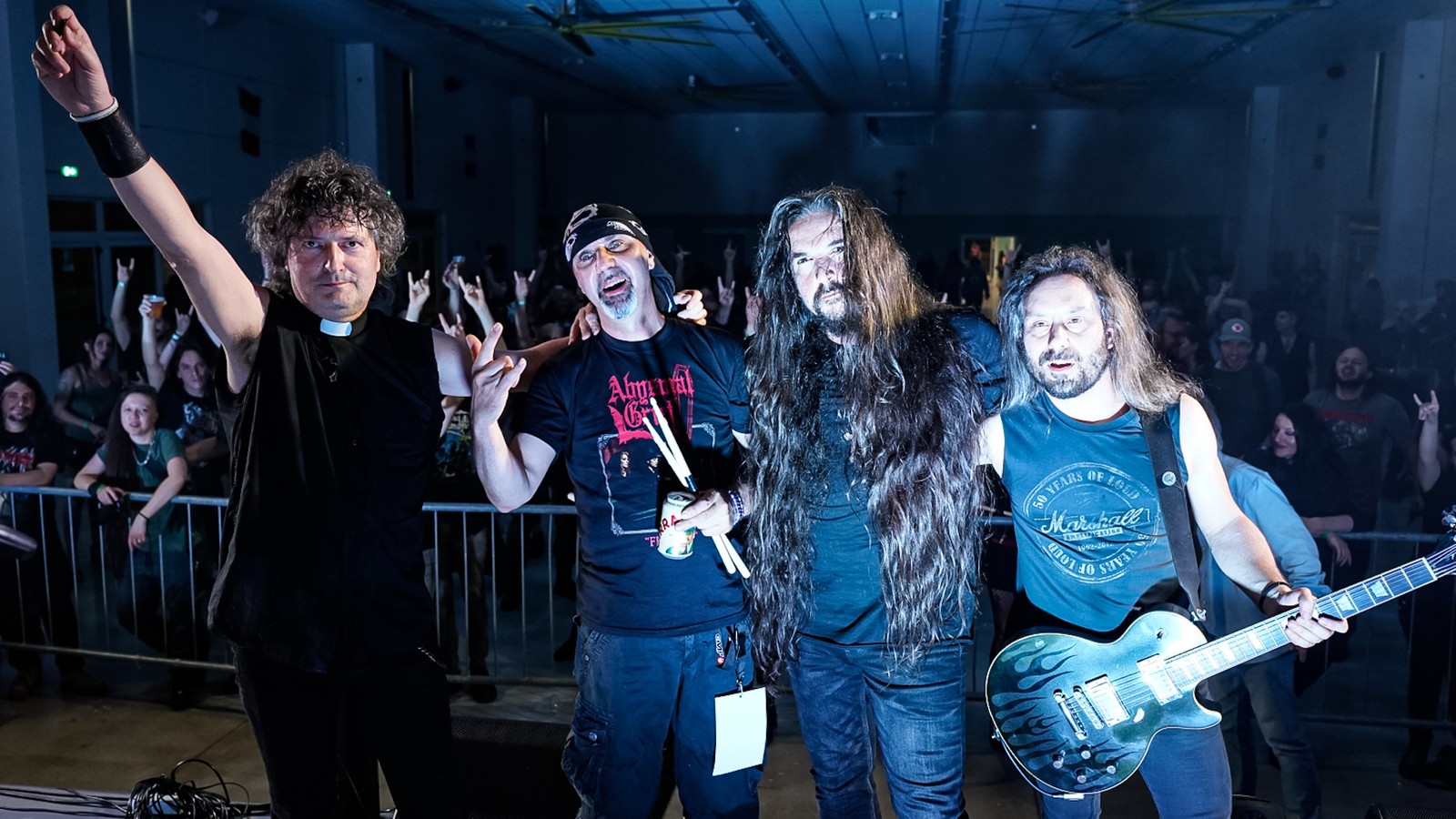
Formed in Turku in 2007, out of what remained when Reverend Bizarre, a trio whose members played under the titles Albert Witchfinder, Peter Vicar and Earl of Void, closed its account with III: So Long Suckers, the quartet the guitarist Kimi Kärki assembled holds the plainest entry in the register. Its name is its line-up. Kärki built it around a Swedish singer credited as Chritus, Christian Linderson, the first voice of Count Raven and the man who sang on the Saint Vitus album C.O.D. in 1992, and he told K. Shevil of A Blog in the Northern Sky in May 2012 that Lord Vicar refers to "Lord Chritus and Peter Vicar", his singer and his own stage title, and also to the tradition that the first pope was crucified upside down. Kärki said he had begun planning the band in 2006 and that Chritus "was indeed the first one I had in mind".
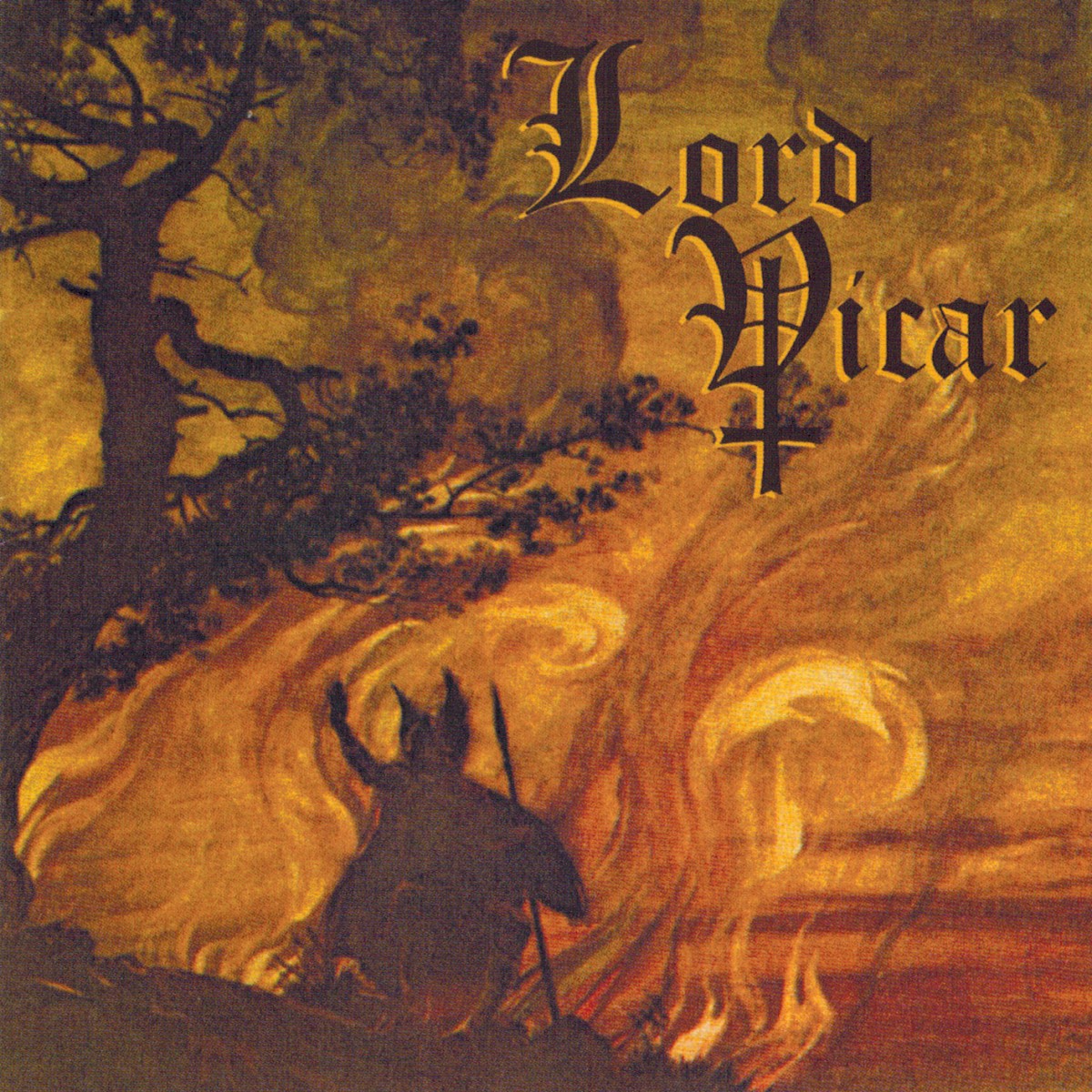
The Church Within Records released Fear No Pain on 6 November 2008, with Gareth Millsted on drums: seven songs and sixty-four minutes, from "Down the Nails" through "Born of a Jackal" and "The Last of the Templars" to "The Funeral Pyre", a closing dirge of more than fourteen minutes set down over the record like a slab over a tomb. Signs of Osiris followed in 2011, Gates of Flesh in 2016 and The Black Powder in 2019, all on the same label. On 27 May 2023 the band played the Forged in Doom festival, at the Palaspirà hall in Spirano, near Bergamo, and opened and closed its set with the first and last songs of that first album, fifteen years after the record came out.
What the register never corrects
A register copies faithfully and corrects nothing, and that is where the trouble with doom names starts for anyone hunting the records rather than only hearing them. Eight bands called Paranoid, three called Electric Funeral and three called Rat Salad sit in the same database under the same letters, and a good part of the Doom Metal Records Collectors Chase is spent telling one of them from another before a pressing or a price comes into it at all. Names are not trademarks here. They are surnames.
The parish clerk does not ask whether a surname has been used before, and he does not ask the family why they chose it. He writes it down in his own hand, and the next clerk writes it again. From the day in 1969 when four men from Aston took their name off a Boris Karloff film to the day in May 2023 when the band named after two of its own members walked on at Spirano, doom has kept its register exactly that way, and the tolling of the same few names down the pages is the nearest thing the genre has to a family history.
