
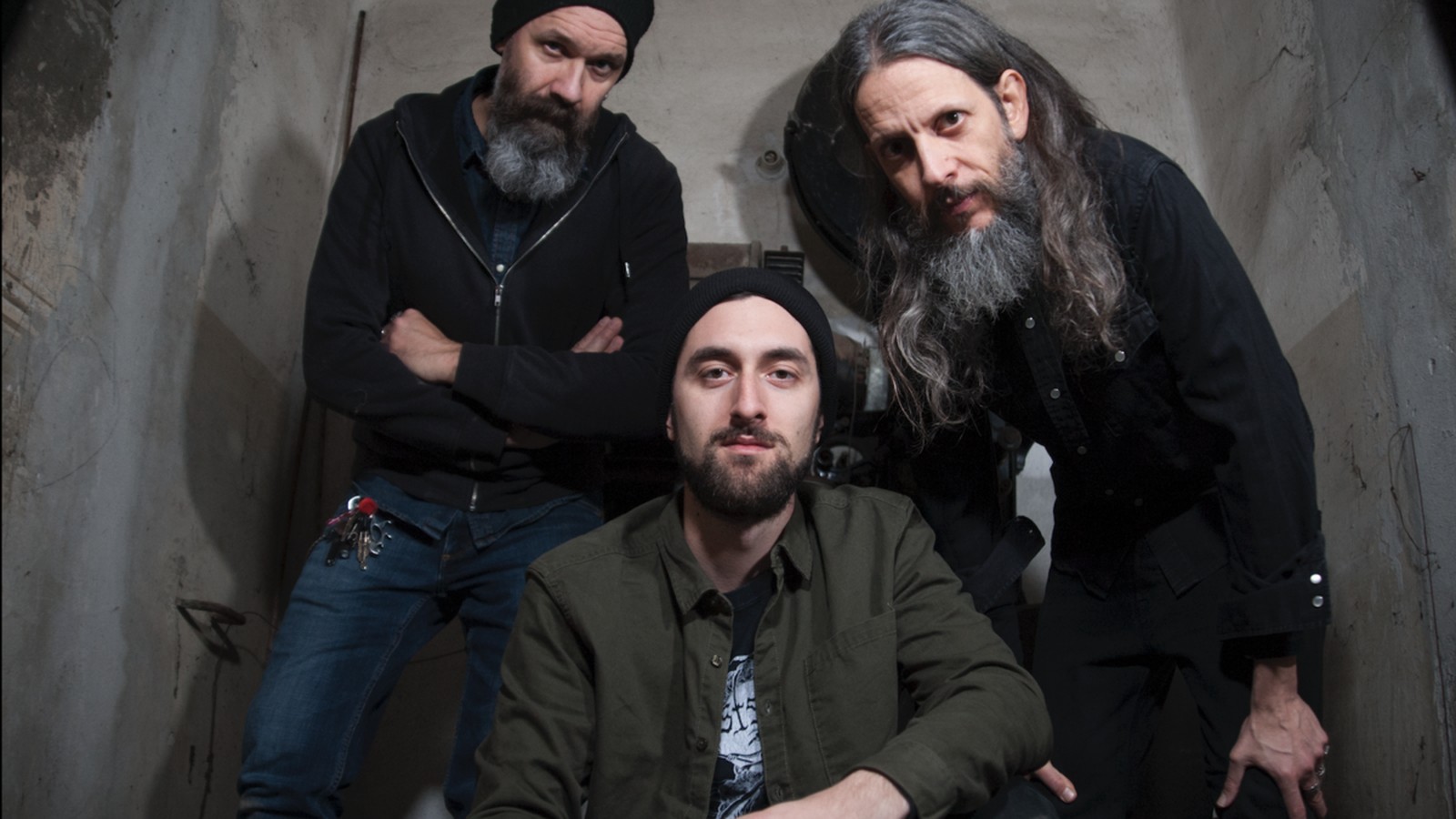
On Saturday 16 April 2011, in the Midi Theatre in Tilburg, a room of the Dutch festival Roadburn, three musicians from Tortona in Piedmont played the whole of their album Eve, a record that Roadburn's own visitors had voted album of the year in a festival poll. Swans were on the bill the same night. The multitrack recording of the set stayed on the shelf for ten years, until Burning World Records released it as Eve Live at Roadburn 2011 on 4 March 2021, mastered by James Plotkin.
The trio on that stage was Ufomammut, formed in Tortona in 1999 by the guitarist Poia, the bassist and singer Urlo and the drummer Vita, and the evening in the Midi is the rare moment when an Italian doom band stood in the middle of the room rather than at its edge, in front of people who had come for it by name. We begin there because most of the history behind it happened where almost nobody was listening.
Italian doom never had one city, one label or one sound to hand a newcomer, and our roll of who to listen to first across the whole genre finds room for a single Italian name, the youngest. The older names were there all along. They had simply been painted over, by pressings too small to travel and by bands that split before a second record, and they have come back into view slowly, one reissue at a time.
Pesaro and the masks
Formed in Pesaro in 1977 by the singer Stefano Silvestri, who worked as Steve Sylvester, and the guitarist and organist Paolo Catena, who worked as Paul Chain, the band that put a vampire, a mummy, a zombie, a werewolf, a necromancer and Death itself on stage, one musician inside each character, Death SS exhumed the whole cast of the horror film and marched it, masked, onto Italian stages. The songs came out of that cast: "Zombie", "Black Mummy", "Terror", "I Love the Dead". Sylvester left in 1982 and Sanctis Ghoram took the microphone, the Evil Metal EP with "Chains of Death", "Inquisitor" and "Schizophrenic" appeared on Metal Eye in November 1983 and was pulled from distribution when every copy pressed turned out to carry a playback fault, and in 1984 the band came apart.
| Band | Formed | First full length | Year |
|---|---|---|---|
| Death SS | Pesaro, 1977 | ...in Death of Steve Sylvester | 1988 |
| Black Hole | Verona, 1981 | Land of Mystery | 1985 |
| Paul Chain Violet Theatre | 1984 | In the Darkness | 1986 |
| Abysmal Grief | Genoa, 1996 | Abysmal Grief | 2007 |
| Ufomammut | Tortona, 1999 | Godlike Snake | 2000 |
| Doomraiser | Rome, 2003 | Lords of Mercy | 2006 |
| Messa | Cittadella, 2014 | Belfry | 2016 |
Out of the wreck Catena built the band Italian doom still measures itself against. Paul Chain Violet Theatre gave its first concert in Falconara Marittima in September 1984, at the Rock A event, in front of the cameras of the state broadcaster's Rai 3, released the Detaching From Satan EP on Minotauro Records that month, and followed it with the album In the Darkness on Minotauro in 1986 and Opera 4th in 1987. Catena sang in a language he had invented, syllables with no dictionary behind them, dragged over organ and guitar at the pace of a dirge: a funeral conducted in a tongue no mourner could follow. Under his own name he went further out, to the double album Violet Art of Improvisation in 1989 and to Alkahest in 1995, on which Lee Dorrian of Cathedral sang lead on four of the nine songs, from "Voyage to Hell" to "Sepulchral Life", before retiring the name Paul Chain in 2003 and carrying on as Paolo Catena.

Sylvester rebuilt Death SS in Florence with new musicians at the end of the decade, and the first full album the band ever released, ...in Death of Steve Sylvester, issued by Metalmaster in 1988, finally recorded the songs of 1977 to 1984, "Vampire", "Werewolf" and "Black Mummy" among them. Black Mass followed on Metalmaster in 1989 and Heavy Demons on Contempo in 1991. Through 1992 and 1993 the band traded as Sylvester's Death, and Sylvester has maintained that the double S stands for his own initials and that Death SS has nothing to do with politics or with Nazism. The Entity, the eleventh studio album, came out on Sylvester's own label, Lucifer Rising, on 30 April 2025.
Verona, Genoa and Rome
Formed in Verona in 1981 around the singer, bassist and keyboard player Roberto Morbioli, who worked as Robert Measles, the progressive doom band Black Hole poured synthesiser over the Sabbath riff like wax run down a gravestone and released a single album in its first life, Land of Mystery, on City Records in 1985, seven songs from "Demoniac City" to "Obscurity in the Ethereal House" with "Bells of Death" tolling in the middle, before splitting in 1990. Living Mask followed on Andromeda Relix in 2000, and Evil in the Dark on the same label in 2017. Two of its founding members, Nicola Murari and the drummer Mauro Tollini, formed Epitaph in Verona in 1987, a band whose first album, Crawling Out of the Crypt, arrived only in 2014.
Genoa gave the music its most funereal voice. Founded there in the autumn of 1996 by the multi-instrumentalist Regen Graves and later fronted by Labes C. Necrothytus on voice and keyboards, the band Abysmal Grief carried the liturgical organ and the harpsichord out of the sacristy and turned them against the rite they were built to serve, beside synthesisers learned from horror soundtracks, and waited eleven years for a first album, Abysmal Grief, released in 2007 by Black Widow Records, the Genoese label, which also issued Misfortune in 2009. Feretri came in 2013, Blasphema Secta in January 2018 and Funeral Cult of Personality on the Romanian label Sun & Moon on 2 November 2021. The band moved to Avantgarde Music in 2023, and the label released Taetra Philosophia on Christmas Day 2025.
The older names were there all along. They had simply been painted over.
Rome answered with weight rather than ritual. Active since 2003, the five-piece Doomraiser released the EP Heavy Drunken Doom in 2004 and a first album, Lords of Mercy, in 2006, and issued Mountains of Madness through BloodRock Records on 13 May 2011. The Dark Side of Old Europa, the fifth album, came from Time to Kill Records on 24 January 2020 with "Chimera" and "Tauroctony (The Secret Cult of Mithras)" on it, and Cold Grave Marble followed on the same label on 2 October 2024. Two decades, six albums. No shortcuts.
The band that carried Italian doom to Metal Blade came from the Veneto. Formed in Cittadella in 2014, Messa moved from Aural Music through Svart to Metal Blade, which released The Spin on 11 April 2025, and the voice of Sara Bianchin, which carries most of the band's reputation, is heard at length among the Doom Metal Bands With Female Singers.
Ufomammut, from Tortona to Neurot
The Tortona trio kept its own house from the start, a band that makes its own posters, its own stage projections and its own label, so that nothing between the amplifier and the sleeve passes through a stranger's hands. Poia and Urlo are two of the three members of Malleus Rock Art Lab, the poster collective whose label, Supernatural Cat, released Lucifer Songs in 2005 and Idolum in 2008, after Godlike Snake on Beard of Stars in 2000 and Snailking on The Music Cartel in 2004. Neurot Recordings released the two halves of Oro, Opus Primum and Opus Alter, in April and September 2012, and Urlo told The Obelisk that summer that the label had shown a lot of interest and never any interference.
We don't like to repeat things; to act the same. We like to change to renovate ourselves.
Urlo of Ufomammut, interviewed by JJ Koczan, The Obelisk, 28 August 2012
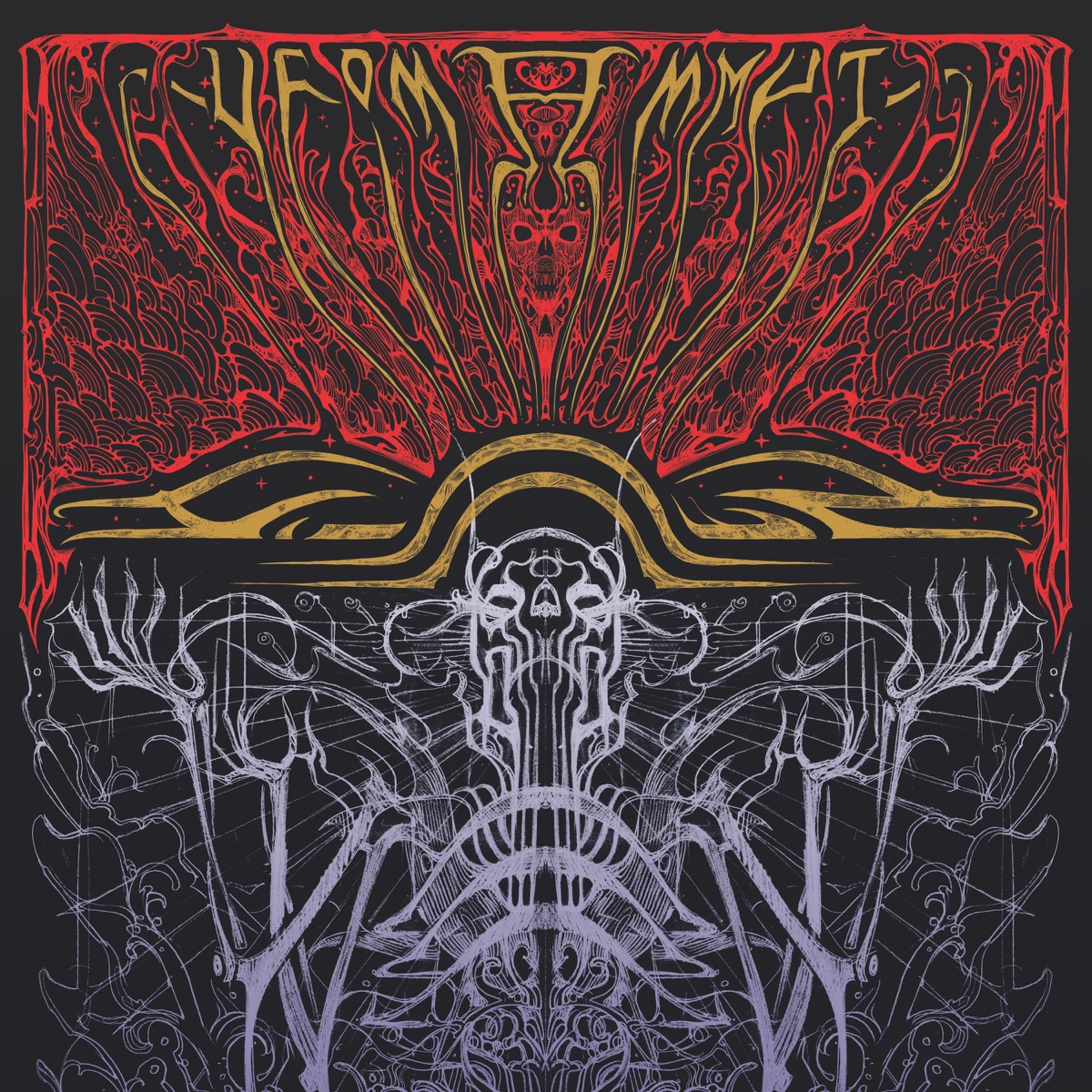
Ecate followed on Neurot in 2015 and 8 in 2017, and in January 2020, twenty years in, Vita left and the band stopped for what it called an indefinite period. It came back in April 2021 with Levre, who had already worked for it on the road as sound engineer and stage technician, behind the kit, the way a mason answers a cracked lintel by cutting a new stone to the old measure and setting it in the same place. Fenice, released by Neurot on 6 May 2022, is one piece in six movements from "Duat" to "Empyros"; Hidden, released by Neurot on 17 May 2024 and mixed and mastered by Lorenzo Stecconi, opens on the ten and a half minutes of "Crookhead" and reaches "Mausoleum" as its fourth track. Twenty-five years, one change of drummer.
Under the whitewash
When restorers find a fresco under the whitewash of a parish church, they do not strip the wall. They lift the lime a hand's width at a time, and for years the wall shows a saint's hand in one place and a strip of gold sky in another, until enough of the painting has come up through the sediment of lime to be read as one picture. Italian doom has surfaced the same way, one small patch at a time: Shadow Kingdom Records reissued Land of Mystery on 6 December 2011, Svart Records put ...in Death of Steve Sylvester back into print on 31 March 2013, Minotauro pressed In the Darkness again in 2013, and Burning World released the tape from the Midi Theatre a decade after the night. Each record uncovered one more hand's width of the wall.
What has come up so far is not a single school: a horror theatre in Pesaro, a synthesiser crypt in Verona, an organ turned against its church in Genoa, a Roman band twenty years into the long haul and a trio from Piedmont played whole on a Dutch stage. Enough of the wall is clear to be read. The next scene on our map, korean Doom Metal, is younger and far smaller.
