
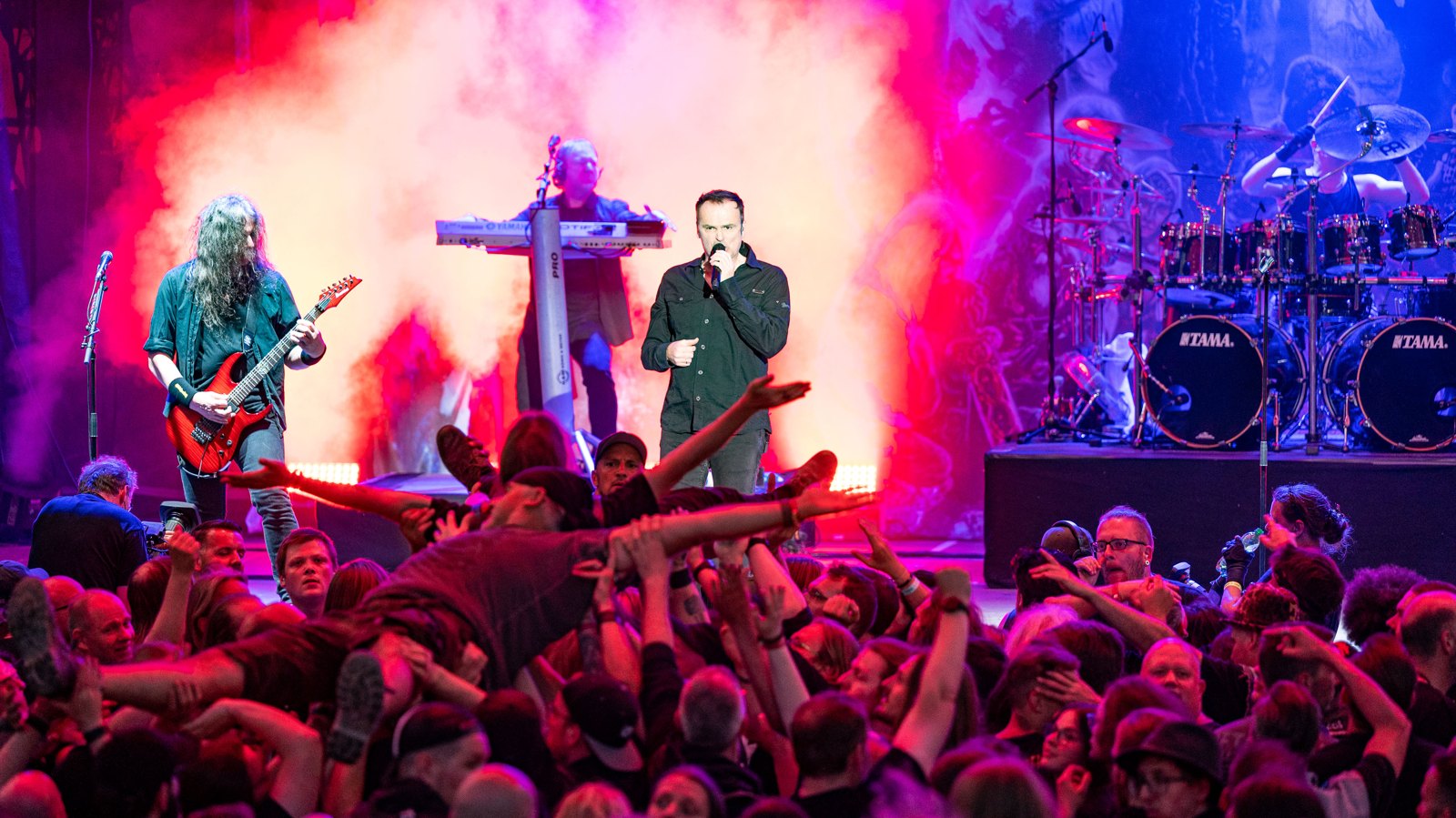
Fifteen in Japan. Forty in Germany.
The German quartet that booked Karo Studios and the producer Kalle Trapp for its fourth album was Blind Guardian, and those two numbers are the chart peaks of Somewhere Far Beyond, which Virgin put out on 29 June 1992 to a warmer reception half a world from the mixing desk than in the country paying for it.
That gap is the shape of the power metal grunge years entire. Open the ledger rather than the legend and the six years between 1991 and 1996 come back as six years of uninterrupted manufacture, a handful of German labels and a licensing office on the far side of the world keeping the presses turning while the rest of the shelf looked elsewhere.
Consort music went the same way once the violin took the trade. In cold galleries five players worked through part books whose fantazias were harder than anything written while the instrument was in fashion, while down the street the same workshop that would build no more viols knocked the neck out of a bass viol's mortise with a mallet, wedged in a steeper one, cut the gut frets away and sold the thing on as a cello, because a cello was what the catalogue could move. Both happened in one decade. Power metal managed both in six years.
The usual account leaves the span as a blank page between the Keeper records and the decades it came back. The ledger says otherwise.
What the power metal grunge years actually pressed
Between January 1991 and December 1996 the bands that carried the genre never once went quiet. Running Wild put out four albums, Blazon Stone in 1991, Pile of Skulls in 1992, Black Hand Inn in 1994 and Masquerade in 1995. Rage matched the pace and then some, with six, three of them for Noise and three for GUN Records after moving across in 1994. Gamma Ray managed three. The exponent least willing to stop was Grave Digger, reformed in 1991 and three albums to the good before the span closed.

Pile of Skulls arrived on 21 October 1992 through EMI's Electrola, produced by Rolf Kasparek with the Noise founder Karl-Ulrich Walterbach credited as executive producer, and it closes on an eleven minute song about pirates. That is not the behaviour of a style waiting to be rescued. The records kept being finished.
"Lead or Gold" went out as the single on 7 September 1992, six weeks ahead of the album that carries it, and the subject is still piracy, which in 1992 took a certain nerve.
The labels that held
Founded in Berlin in 1983 by Karl-Ulrich Walterbach as an arm of his Modern Music company, the firm that carried Helloween, Running Wild, Rage and Gamma Ray was Noise Records, and in 1990 it signed a European deal with EMI covering four of its bands, Helloween, Running Wild, Celtic Frost and V2. The schism came at once. Helloween's management tore the arrangement up unilaterally, and sixteen lawsuits followed.
The label that outlived the quarrel then built a room for this music, T&T Records, an imprint for melodic metal whose roster set Virgin Steele beside Stratovarius. The Witten label that opened its doors in 1992 under Bogdan Kopec and Wolfgang Funk, with BMG behind it, was GUN Records, short for Great Unlimited Noises, and it took Grave Digger's The Reaper on 2 November 1993 and Rage's Black in Mind on 22 May 1995.
A record went out in every year the fashion went down.
A Berlin independent and a Witten label with BMG money behind it were paying for the records, and the bands repaid them with new records every year. "Firestorm" opens Rage's The Missing Link, out on Noise on 1 August 1993, made by a trio whose guitarist Manni Schmidt walked out soon afterwards, after which Peavy Wagner refilled the line-up with Sven Fischer and Spiros Efthimiadis and went back into a studio the same year.
The charts that counted were on the other side of the world
A bell in a parish tower is inaudible in its own churchyard when the wind sits wrong and perfectly clear four parishes downwind, and anybody judging the ring from the gate below will swear the bronze is cracked. The numbers from 1993 say precisely that. Chameleon, released by EMI in May 1993 and the last Helloween record for the label, reached 35 in Germany and 8 in Japan.
That ordering repeats until it stops looking like an accident. The gate below swore the bronze was cracked again at 23 for Master of the Rings the next year, and at 21 in Finland for Stratovarius' Episode in 1996, while four parishes downwind the same two records rang at 6 and at 20 in Japan.
| Album | Year | Home chart peak | Japan peak |
|---|---|---|---|
| Blind Guardian, Somewhere Far Beyond | 1992 | 40 (Germany) | 15 |
| Helloween, Chameleon | 1993 | 35 (Germany) | 8 |
| Helloween, Master of the Rings | 1994 | 23 (Germany) | 6 |
| Stratovarius, Episode | 1996 | 21 (Finland) | 20 |
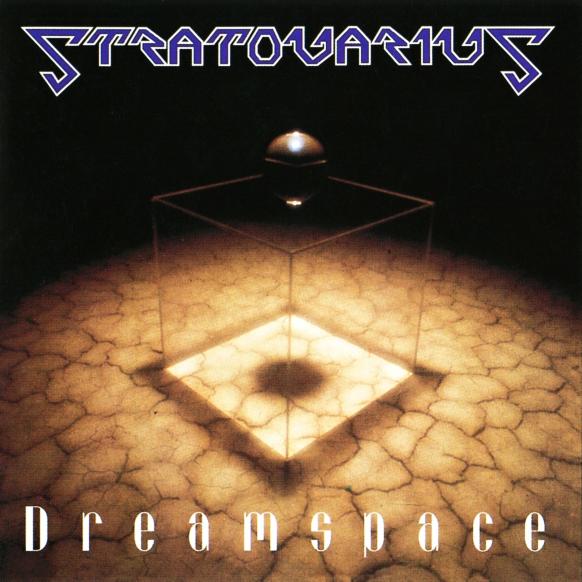
Dreamspace came out on 9 February 1994 through T&T, in the trough of the span, and Timo Kotipelto arrived at the microphone that same year, which is what a band does when it is hiring rather than packing up.
The clinching case is a Brazilian one. Angra recorded Angels Cry in Kai Hansen's studio in Hamburg in the summer of 1993, with Charlie Bauerfeind and Sascha Paeth producing, and the finished record went out on 3 November 1993 with Victor putting it on the shelves of Tokyo. A band from the other hemisphere flew to Germany to be recorded in the Gamma Ray room, then sold the result in Japan. That is not exile. That is a supply chain.
What the touring looked like
On the ground the business ran on clubs, a few package tours and one gravel pit in the north German countryside nobody had heard of in 1990. That pit was Wacken Open Air, which Thomas Jensen and Holger Hübner opened on 24 and 25 August 1990 to barely 800 people, and which took Blind Guardian and Saxon as its first international names in 1992, the year Somewhere Far Beyond came out. By 1994 the gate was 4,500, and by 1996 somewhere between 8,000 and 10,000, depending on who is counting, in the year the Böhse Onkelz agreed to play and rescued a ticket sale that had been crawling.
A gate that grew at least tenfold in six years is not the attendance of a genre in retreat, though the 1996 crowd owed a good deal to a German rock band. The same circuit shifted players about like a hire market. After Fourth Dimension in 1995, Stratovarius took on Jörg Michael, a founder of Rage, on drums and Jens Johansson, out of Yngwie Malmsteen's band, on keyboards, which is how a Finnish group acquired a German drummer's discipline and a Swedish neoclassical pedigree in one season.
Gamma Ray filled the room instead. The singers who guested on Land of the Free, out on Noise on 29 May 1995, were Michael Kiske and Hansi Kürsch, and the record put "Man on a Mission" second on the running order while Kai Hansen, with Ralf Scheepers gone, held the lead vocals himself.
Where the six years left the genre
Much of what broke the surface afterwards was already in a rehearsal room inside the span. Edguy was founded in Fulda in 1992 and released Savage Poetry on its own account in 1995; the Italian band that took the name Rhapsody that year and cut its Eternal Glory demo became Rhapsody of Fire; HammerFall had formed in Gothenburg in 1993; and Piet Sielck and Kai Hansen founded Iron Savior in Hamburg in 1996.
On any honest reading, then, nothing had stopped that needed restarting. The practitioners never stopped writing, the German labels never stopped pressing, the Japanese licences never stopped clearing and the field in the north kept filling up. What arrived with Glory to the Brave and the 1997 revival was an audience, not a resurrection, and the distinction decides who gets the credit for everything after it.
Records pouring out of a Berlin independent and a Witten label, a Japanese chart column that ranked them above the home lists and a gate that climbed from 800 to around 8,000: that is a working industry, operating quietly, through the years everyone agrees it was dead. Anyone wanting the long view of how it got there can start from the beginning.
