
On 24 September 1991 DGC Records released Nevermind by Nirvana, and on 11 January 1992 it pushed Michael Jackson's Dangerous off the top of the Billboard 200, the American album chart.
Evicted from the American record shop inside a single season, the music of the long guitar solo, the clean high tenor and the chorus in a major key, which the German press had spent five years calling power metal, went into the 90s as a lodger in its own house. The trio in flannel that served the eviction notice, ripping the cadenza out of the rock guitar part, tearing the tenor line off the score and setting fire to the page, was Nirvana, and it needed only one record to do it.
It is a familiar story, and half of it is wrong. The power metal 90s were a decade of exile in one market and of quiet construction in three others, and by the time the decade closed the style had more bands, more labels and more countries than it had in 1989. What it had lost was the American charts and the benefit of the doubt. Everything after that, down to the German number ones of the 2010s and the arena tours of the present, grew out of the ten years the fashionable version of the story leaves blank.
The power metal 90s, under the flannel
The American side took the heaviest blow. By 1990 the heavier American strain had already lost most of its labels, and by 1992 the bands that had cut records for Metal Blade, Combat and Enigma in the middle of the eighties were back in day jobs or reshaped into something darker, slower and more marketable. The major labels were signing anything with a Pacific Northwest postmark. Nobody at those labels was listening for a falsetto.
Germany, the genre's other capital, spent the same years fighting itself. The Hamburg quintet that had written the rulebook in 1987 walked away from Noise Records after a contract dispute, signed to EMI and followed Pink Bubbles Go Ape in 1991 with Chameleon in 1993, a record of horns, ballads and pop songs that the faithful received as an act of desertion, and the band that did it was Helloween. Michael Kiske was out before the year ended. It looked like the end of something.

It was not. Master of the Rings, released on 30 August 1994 on Castle's Raw Power imprint with Andi Deris singing, put the double kick drum and the harmonised leads back where they belonged, and the same Hamburg lineage kept producing records nobody in America was buying. Gamma Ray, the band Kai Hansen formed after leaving Helloween in 1989, had opened the decade with Heading for Tomorrow on Noise in 1990. Blind Guardian released Tales from the Twilight World the same year and Somewhere Far Beyond in 1992, each record denser with choral overdubs than the last, a progression that led straight to Imaginations from the Other Side in 1995 and to Nightfall in Middle-Earth, the Tolkien record, in 1998.
Across the other ocean, the market that kept the whole enterprise solvent was Japan. Burrn!, the Japanese metal monthly founded in 1984, put European melodic bands on its covers at a time when the American magazines had turned their backs, and the Japanese labels paid advances, licensed bonus tracks and toured bands that played club shows at home. A Japanese edition with an extra song became the normal way for a European power metal record to pay for its own studio time. That arrangement was never glamorous. It was the rent.
What it had lost was the American charts and the benefit of the doubt.
A Swedish debut breaks open the bricked-up loft
By the middle of the decade the genre had the sound of a great cathedral organ whose loft had been bricked up for renovation: the pipes were all still there behind the wall, every rank of them in tune, but the congregation below heard only a muffled drone and had started to believe the instrument was gone. What was needed was not a new organ. It was someone to drive a pickaxe through the brickwork and let the full organ speak, every stop pulled at once, from the lowest pedal pipe to the top of the mixture.
Released by Nuclear Blast on 27 June 1997, Glory to the Brave by HammerFall, a Swedish band assembled around the guitarist Oscar Dronjak with Joacim Cans at the microphone, entered the German album chart at number 38 in its first week, a position no debut record in the style had ever reached there, and it did so with a sound that had not been in fashion for eight years. The chroniclers date the revival from that week. The date holds.
The record's argument was simplicity. Mid-tempo anthems, a gallop borrowed openly from Judas Priest and Accept, a tenor with no irony in it and a knight in armour on the sleeve: nothing on the album had not been done in 1985, and that was the point. It told a generation of teenage guitarists, who had grown up while the style was supposedly dead, that the old vocabulary could still be spoken in public.
The same year filled up quickly. Primal Fear, founded in Germany that October by the former Gamma Ray singer Ralf Scheepers with Mat Sinner on bass, had its self-titled debut in the shops on Nuclear Blast by the following February. Stratovarius released Visions that spring. And in the autumn the Italians of Rhapsody of Fire, then called simply Rhapsody, released Legendary Tales, an album that sounded as though a Vivaldi violin part had been handed to an electric guitar and taken at a tempo that would have torn the gut strings off any period instrument. By the end of 1997 the lodger had taken back the house.
The Nordic and Italian wave
The Finnish quintet that proved the style could grow outside Germany was Stratovarius, which by the middle of the decade had the guitarist Timo Tolkki writing, Timo Kotipelto singing from 1994 and the Swedish keyboard player Jens Johansson trading solos with Tolkki from 1995. The records Episode in 1996 and Visions in 1997 set a template the whole Nordic school followed: fast double kick, neoclassical guitar and keyboard duels, and a melancholy in the minor passages that the German records rarely allowed themselves.
The band's biggest domestic hit came at the turn of the century. Hunting High and Low, the single from the 2000 album Infinite, reached number four on the Finnish singles chart, and its chorus sits so high and so cleanly that it works less like a rock refrain than like a descant floated over a church choir at Easter. Finland took notice. A country of five million people was about to become the second capital of the genre.
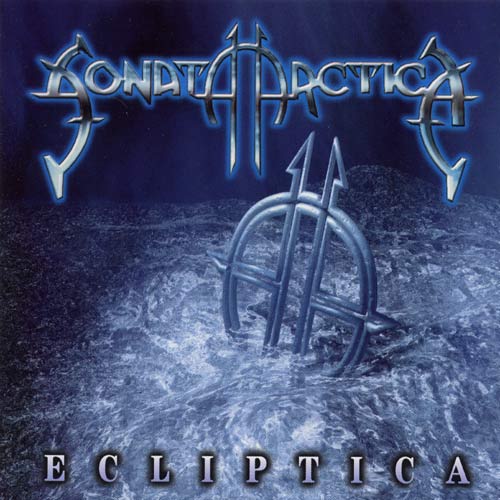
Released by Spinefarm in 1999, Ecliptica by Sonata Arctica ran at tempos written like a sight-reading exam set by a sadist, sixteenth notes packed so tightly on the stave that the note-heads burst through the paper, and Tony Kakko's voice and keyboards made the band the most direct descendant Stratovarius had. Nightwish came out of the same country and the same years with an operatic soprano on top of power metal riffs, a branch that belongs to symphonic metal more than to power metal. Italy followed its own path through Rhapsody, Labyrinth, whose Return to Heaven Denied appeared on Metal Blade in 1998, and a flock of bands with Latin titles and baroque keyboard parts. Brazil had Angra, whose Angels Cry dates from 1993. Germany produced Edguy, and its singer Tobias Sammet launched the guest-singer project Avantasia with The Metal Opera in 2001.
Each of those countries grew a school with a sound of its own, and the regional differences, the Finnish melancholy, the Italian ornament, the Swedish plainness, run deeper than any summary of them. What matters to the chronology is the scale: a style that had two serious centres in 1990 had at least six by 2001.
Labels, guitar solos and a video game
None of it would have happened without a handful of independent labels willing to press records the majors had written off. Founded in 1987 in the small Swabian town of Donzdorf by Markus Staiger, who had started by selling records through the post, Nuclear Blast signed HammerFall, Primal Fear and later a large share of the genre's biggest names, and by the 2010s it was the label whose logo sat on the spines of almost every chart-topping power metal record in Germany. Napalm Records in Austria, founded in 1992, AFM, Limb Music, Spinefarm in Finland and Century Media filled most of the rest. The story of that business, who signed whom and for how much, is a history of its own.
The labels were selling something the rest of rock had thrown away. Through the 90s the extended guitar solo became close to unmarketable in American rock, a thing to be mocked in interviews, and power metal kept it in the repertoire the way a stubborn orchestra keeps a violin concerto's written cadenza when every other ensemble has cut it for time. Tolkki, the Blind Guardian guitarist André Olbrich and a whole Finnish generation grew up on that inheritance. By the 2000s the genre was one of the few places a teenager could still hear a sweep-picked arpeggio on a new record.
The moment America noticed again came from an unlikely direction. DragonForce, a British band with two lead guitarists playing at extraordinary speed, released Inhuman Rampage on Roadrunner in January 2006, and its opening track Through the Fire and Flames became a bonus song in the video game Guitar Hero III: Legends of Rock, released in October 2007. Millions of American players who had never heard the words power metal spent weeks failing to finish it on the plastic controller. The album went gold in the United States. How much that did for the genre in America, and how little, is an argument in itself.
The German number ones
The real change in the genre's fortunes came in the country that had given it a name. Formed in the Saarland in 2003 around the brothers Charles and Matthew Greywolf and the singer Attila Dorn, the quintet that dresses its songs in cassocks and church organ is Powerwolf, and in August 2013 its fifth album Preachers of the Night, released by Napalm Records, entered the German album chart at number one. It was the first time a record in the style had topped that chart. It would not be the last.

The single from that record, Amen & Attack, shows why. The song is built like a processional hymn marched straight out through the west door, the door torn off its hinges on the way and the choir still singing on the festival field outside: a verse short enough to learn by the second hearing, an organ figure that could come from any parish church, and a chorus pitched for a hall of thousands to shout in unison. Powerwolf had found the formula that the next decade would refine.
| Year | Band | Album | Label |
|---|---|---|---|
| 2013 | Powerwolf | Preachers of the Night | Napalm |
| 2018 | Powerwolf | The Sacrament of Sin | Napalm |
| 2021 | Helloween | Helloween | Nuclear Blast |
| 2022 | Sabaton | The War to End All Wars | Nuclear Blast |
| 2024 | Powerwolf | Wake Up the Wicked | Napalm |
Sabaton turned the same possibility into a continental business. The Swedish band's The War to End All Wars, released on Nuclear Blast on 4 March 2022, went to number one in Germany, Austria, Sweden, Poland, Hungary and Finland. Powerwolf's Wake Up the Wicked in July 2024 was that band's fourth. A style declared dead in 1992 had become, by common consent, one of the best-selling forms of metal in central Europe.
The most symbolic of those number ones belonged to the band that had started it. In June 2021 Helloween, reunited with Michael Kiske and Kai Hansen alongside Andi Deris for the Pumpkins United line-up, reached number one in Germany with a self-titled album on Nuclear Blast, the first chart-topper of the band's career, thirty-four years after the first Keeper of the Seven Keys. Its lead single Skyfall, released that April, runs past twelve minutes on the album and passes the verses between three singers like a motet handed from one choir gallery to the next, Kiske, Deris and Hansen each taking a line and none of them yielding the top note. The singer dismissed in 1993 and the guitarist who had walked out in 1989 were both on its first number one.
A style declared dead in 1992 had become, by common consent, one of the best-selling forms of metal in central Europe.
Arena choruses and the synthesizer's return
Success changed the music. The records that reached number one in the 2010s were built for arenas rather than clubs, and the craft that went into them was the craft of a hymnal cut down to its refrains, the long verses and the thirteen-minute epics torn out and thrown on the fire so that only the part everyone could sing remained. Songs shortened to four minutes. Choruses moved closer to the start. Tempos dropped from the Finnish sprint to a march a whole hall can keep with its feet, and the keyboard part moved from counterpoint to atmosphere, a pad of organ or choir underneath a riff that did the real work.
The keyboard itself came back in a new costume. The Finnish band that put the synthesizers of 80s Italo disco and 90s Eurodance underneath power metal choruses without apology is Beast in Black, formed in 2015 by the guitarist Anton Kabanen after he left Battle Beast, and its debut Berserker appeared on Nuclear Blast on 3 November 2017.
Blind and Frozen, the first video from that album, released in September 2017, sounds like a conservatory practice-room upright with a nightclub light rig bolted to its lid and the hammers replaced by a sequencer: the arpeggios pulse at dance-floor tempo, Yannis Papadopoulos sings the chorus in a tenor that climbs where Kiske once climbed, and the guitars sit back behind the keyboards. The purists hated it. The audience grew anyway.
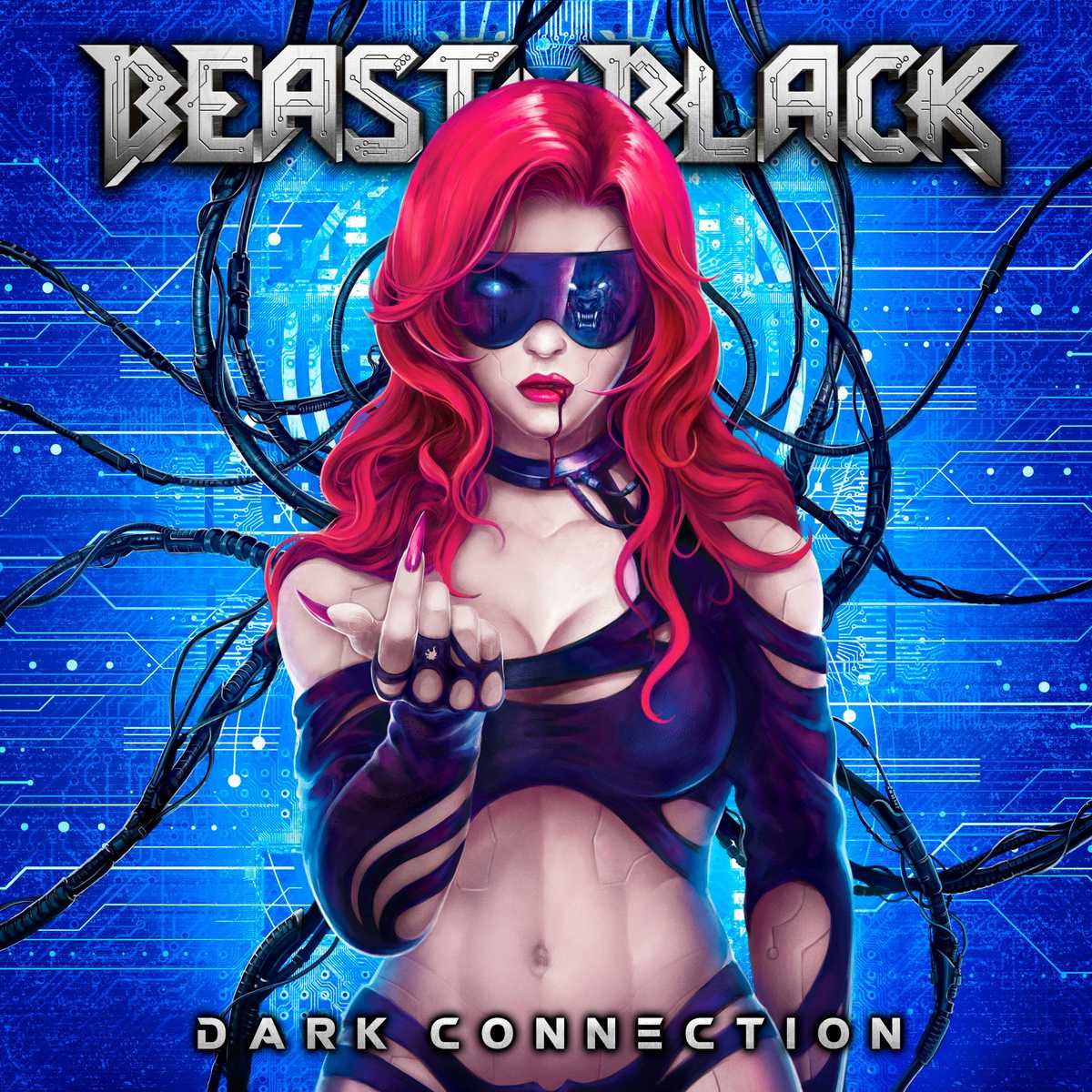
Dark Connection, released in 2021, pushed further into synthwave and science fiction, and by then the idea was no longer a novelty. Gloryhammer had built a comic space opera out of the style's most earnest habits since Tales from the Kingdom of Fife in 2013, and Battle Beast had its own run of 80s keyboard pop under a metal shout. The genre that began as the most serious music on the rack was now laughing at itself and selling more records than ever, a benediction nobody in 1993 would have predicted.
Power metal now
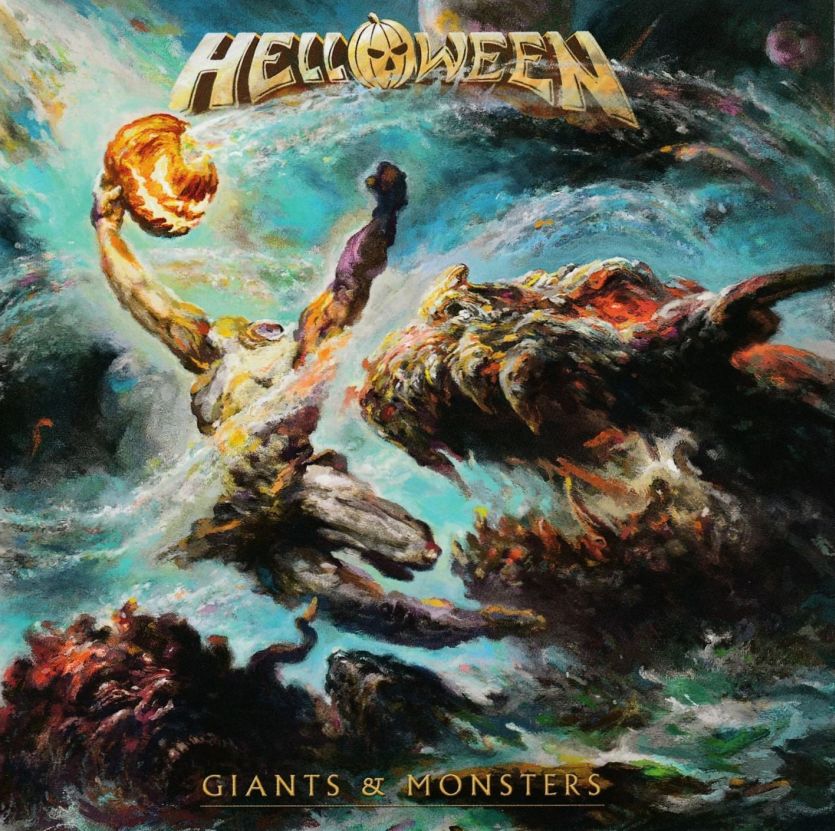
The present tense of the genre is crowded. The oldest names are still recording: Helloween released Giants & Monsters on 29 August 2025, its first album on Reigning Phoenix Music, Blind Guardian released The God Machine in 2022 and Stratovarius Survive the same year. Sabaton released Legends, its eleventh studio album, on 17 October 2025 through Better Noise Music, after more than a decade on Nuclear Blast. Power metal in 2026 is a genre with a canon and a working first team at the same time.
The scale of that first team would have been unthinkable in 1992. Sabaton opened a YouTube channel on 7 February 2019 devoted to the history behind its songs, presented by the historian Indy Neidell, and its Tour to End All Tours filled Europe's biggest arenas across 2022 and 2023. Powerwolf plays halls of the same size in Germany. The music that lodged in its own house now owns the building.
Underneath them sits a generation that grew up after the revival, and it is the most international yet: Frozen Crown and Wind Rose from Italy, Unleash the Archers from Canada, Seven Kingdoms from the United States, Twilight Force and Majestica from Sweden, and dozens of smaller bands releasing directly to streaming services. Several of them have women at the microphone, which the genre of 1990 hardly allowed. Several have never known a year in which power metal was out of fashion.
The question of whether power metal is dead gets asked every few years, usually by someone who has confused the American rock charts with the whole world. The honest answer is in the table above. In 1992 the style had lost its American labels and its place in the rock press. In 2024 it had four German number ones in eleven years from a single band. It has never needed the flannel generation's permission to exist.
The route from a lodger in 1991 to arena headliner in the 2020s is the second half of the power metal story, the half the history books of the grunge era could not see coming. It was built by labels in small towns, by a Japanese market that paid the rent, by one Swedish debut in 1997 and by a German band in cassocks in 2013, and each step was taken by musicians who refused to accept a verdict handed down by a chart in another country.
Those countries are where the next part of the story lives. Finland, Sweden, Italy, Brazil, Japan and Spain each grew a school with its own habits, its own labels and its own idea of what a chorus is for, and the differences between them are sharper than the international success suggests. The map of power metal scenes begins at the borders of those countries.
