
The border between deathcore and nu metal runs through the drum stool, not through the guitar rack. Both musics tune the lowest string down until it barely holds a pitch, both write the riff as a rhythm first and a tune a distant second, and both were made to move bodies rather than to be admired from the back wall, so what really splits deathcore vs nu metal is whether each bar of the song is left with holes in it or packed solid, and everything else follows from that.
Nu metal leaves the holes open. Deathcore fills them.
Formed in Jacksonville, Florida, in 1994, joined by DJ Lethal after House of Pain broke apart in 1996, and fronted by a singer who rapped his verses across guitars tuned down far enough to scrape the stage, the band that bolted a pair of turntables onto the riser beside the guitar rig was Limp Bizkit. DJ Lethal told DJ Times in January 2000 that he wanted to be another instrument in the band, like another guitar player. A turntable needs gaps to work in. Nu metal wrote them in on purpose.
Set those two decks in their flight case on a riser at stage left of an all-ages room and run a nu metal song through the PA, and the stylus rides: the drummer leaves half the subdivisions of every bar empty, and the scratch drops into each one like a hand into a pocket. Count in a deathcore blast on the same riser and the plywood starts to shudder at its bolts, the tonearms skate sideways across the grooves and gouge a white scar from the label to the rim, and when the breakdown lands the lid of the flight case slams down on both platters and snaps the cartridges off at the headshell. The music did not hate the turntable. It left it nowhere to stand.
Deathcore vs nu metal, settled at the drum kit
Nu metal's drummers learned from hip-hop records and its bass players from funk, which is why the genre's groove is heavily syncopated, with the kick drum off the beat and long stretches of the bar handed over to the bass, the scratch and the voice. Blast beats and double bass drumming, the daily work of death metal, are uncommon in nu metal, and the drummers usually named as the exceptions are Joey Jordison of Slipknot and Matt McDonough of Mudvayne. Two names, out of a generation.
Deathcore turns that arrangement inside out. The blast is the fast ground of the song, snare and kick firing on every subdivision the tempo allows, and when the onslaught drops to half time for the breakdown the double pedal does not fall silent but locks the kick to the guitar's palm-muted chug, hit for hit, so the low end of the bar is solid in both tempos. There is no gap for anything else to sit in. The drummer has already taken the job.
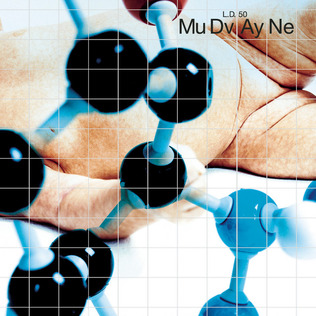
Formed in Peoria, Illinois, in 1996, signed to Epic and sent out on 22 August 2000 with a debut produced by Garth Richardson, the quartet in horror-film face paint that named Obituary and Emperor among its influences and hammered the double pedal through songs cut for rock radio was Mudvayne, and the record was L.D. 50, number 85 on the Billboard 200 and number one on the Heatseekers chart. The death metal in it is real. It sits in the drums.
"Dig", the debut single, went out on 6 March 2000 and opens on Ryan Martinie slapping and popping the bass like a funk player before the band crashes in behind him. In 2017 Annie Zaleski of Spin heard "jackhammering drums" in it. Yet nobody files it as deathcore, and the reason is audible: the drums batter, but the song keeps swinging back to its hook, the bass keeps a funk voice of its own above the guitar instead of doubling it, and nothing in the song is built as the place everything before it was heading.
Slipknot ran the same experiment harder. Released by Roadrunner on 28 August 2001 and produced by the band with Ross Robinson, Iowa carries songs such as "People = Shit" and "Disasterpiece" that lean openly on death metal, with Jordison blasting under them, while Sid Wilson stayed on turntables and a sampler player stayed on the stage the whole time. Nine members, a DJ and a blast beat. Still filed as nu metal.
Rap carries the words, the guttural keeps the beat
Nu metal's voice is built to be understood. Singing, rapping and screaming share the same song, and the rap is phrased on the sixteenth notes the way a hip-hop MC phrases a verse, every consonant landing on a subdivision and every word meant to reach the back of the room intact. Released by Warner Bros. on 24 October 2000, with Mike Shinoda rapping, Chester Bennington singing and screaming and Joe Hahn on turntables, the record that carried that division of labour all the way to a diamond certification was Hybrid Theory by Linkin Park.
Deathcore's voice is built to be felt. The guttural shoves the words down beneath the guitars until the lyric sheet is the only place left to read them, the high scream rips across the top over the fast sections, and the two trade lines on the hits of the chug rather than on the sixteenths of a rap. The rhythm of speech survives. The speech mostly does not.
Nu metal's voice is built to be understood. Deathcore's voice is built to be felt.
Think of the speaker post at a highway drive-through, a band's van pulling up to it after a show. A rapper's verse is the order called into it clean, every item reaching the window. A deathcore singer's line is the same order after the van has reversed into the post and crushed the grille back into the cone, the words mashed out of it and only the pulse of the voice still coming through, loud, on time and unreadable.
Deathcore singers do rap, and Emmure, formed in 2003, has worked rapped lines into its songs for years, but where a deathcore singer raps a verse it arrives as a run-up to the drop rather than as a story to be followed. On the count of the genre's parts set out in the account that frames it, six issued by metal and four by hardcore, rap is not one of the ten.
A chorus to come back to, a drop to arrive at
The shape of the song settles what the drums and the voice leave open. Nu metal mostly borrowed the verse, chorus and bridge of the pop single, and a nu metal song is a circuit: it leaves the chorus, goes somewhere loud and comes home to it. A deathcore song is a route with one destination. Blast, tremolo and chromatic crawl are stacked in blocks that wind the room tighter, and the breakdown is where the road ends, often without a chorus anywhere on the way.
Neither music has much use for the guitar solo, which is why the solo, so decisive at other borders, decides nothing at this one. Why nu metal dropped it, and what the older music kept that the newer one threw away, is argued in nu metal measured against heavy metal. Between deathcore and nu metal the solo is missing on both sides of the line.
The low string is the other thing the two share. Nu metal put seven-string guitars tuned down onto the radio in the 1990s, and deathcore took that string into its own bloodline and kept it. A shared tool is not a shared genre, and the same narrow rule settles deathcore vs djent, where a palm-muted technique crosses the border and leaves the genres on either side exactly where they stood.
| Part | Nu metal | Deathcore |
|---|---|---|
| Drums | Hip-hop and funk grooves, syncopated kick, blast beats rare | Blast beats, double bass, half-time breakdowns |
| Kick against guitar | Leaves gaps for the bass, the voice and the scratch | Doubles the palm-muted chug, hit for hit |
| Voice | Singing, rapping and screaming, sometimes growling | Low guttural and high scream, rap on some records |
| Extra member | Turntablist or sampler on many line-ups | Rare |
| Song shape | Verse, chorus and bridge | Blocks built toward the breakdown |
| Guitar solo | Rare | Rare |
| Low string | Seven strings, tuned down | Seven and eight strings, tuned to A and lower |
Where nu metal and deathcore overlap now
The overlap of the 2020s is coming from the nu metal side as often as from deathcore's. Formed in Pennsylvania in 2017 around Max Portnoy, then on drums, with Derrick Schneider on lead guitar, signed to Earache in April 2019 and joined by a DJ in 2020, the six-piece that carried a turntable and a deathcore breakdown into the same songs and called the result nu-core is Tallah, the spearhead of the crossing.
"The Silo" was the first single, out on 5 June 2020 with a video on Earache's channel, and it opened an album that put a turntable, a rapped line and a deathcore-sized breakdown into the same record, with Justin Bonitz, a singer reviewers heard going from melody to a full scream, out front.
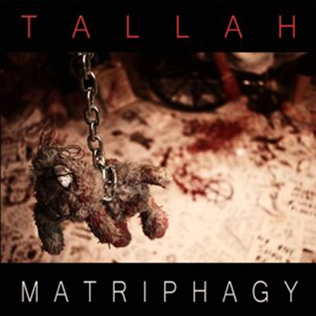
Released on 2 October 2020 and produced by Josh Schroeder, Matriphagy is a concept album about a son raised in an underground bunker who kills and eats his mother, and it is filed mostly as nu metal, with metalcore, rap metal and, in some outlets' hands, deathcore beside it. Graham Ray of Distorted Sound wrote on 29 September 2020 that it takes nu metal to gruesome new heights with "crushing breakdowns". That is the overlap, on any honest reading. The breakdown crossed over; the chorus stayed home.
The borrowing went a step further on 17 August 2021, when "Vanilla Paste" came out with three guests: AJ Channer of Fire From the Gods, the singer of Guerilla Warfare and Tom Barber of Chelsea Grin. A nu metal band reached for a deathcore singer, and the voice of Chelsea Grin came. The trade runs both ways. Deathcore takes the swing and the rap; nu metal takes the drop and the throat.
The overlap is crowded now, and the line through it still holds. A nu metal band can borrow a blast, a breakdown or a deathcore guest and stay nu metal, because its songs keep circling back to a chorus and keep their bars open for the bass, the voice and the extra member. A deathcore band can borrow a rap verse and a swung groove and stay deathcore, because its bars stay full and its songs still end at the drop. Listen to where the song is going. Then listen to what the drummer does with the space.
