

Barked once from the bottom of the throat, a single ragged syllable spat into the hole a band tears open at the end of a riff, the vocal ad-lib that metalcore and deathcore fans spell out as b-l-e-g-h means nothing, names nothing and promises one thing with total reliability, which is that the breakdown is a beat away and the floor of the song is about to be ripped out from under you. That is the whole blegh meaning. No dictionary, one job.
Picture a fist slammed down on a merch table hard enough to throw every folded shirt an inch into the air. The blegh is the fist. The breakdown is the shirts coming back down, and the half second in between, with everything hanging in the air and nobody breathing, is where the entire trick lives. Nobody in the room needs it explained. Bodies move before the drop lands.
The British singer whose name the scene stamped on the syllable, after more than a decade of hearing him bark it into the silence before his band's heaviest bars and then hearing him disown it in public, is Sam Carter of Architects, and the story of the noise runs straight through his throat. It also runs a long way past him. He did not invent grunting.
The blegh meaning, sound by sound
Strip the joke off it and the blegh is a short, harsh, exhaled bark, usually one syllable and sometimes dragged into two, pitched low, wet at the back of the throat, and delivered on its own in the space where the guitars have just stopped or are about to change gear. The spelling drifts, blegh, bleh, bleigh, with no authority anywhere to settle it. The shape never does.
It is not a lyric. It sits outside the words the way a drummer's count sits outside the song, and it carries no more meaning than a count does, which is exactly why it works in a genre where the words are mostly unintelligible anyway. What it carries is timing. A scream can arrive anywhere in a bar. A blegh arrives at the edge of one, and the ear learns within two or three songs that the edge is where the weight is coming from.
Its relatives live all over heavy music. Deathcore singers announce the same moment with a pig squeal, the high sucked-in shriek that stands apart from the low growl and the high scream, and hardcore singers have spent the last decade landing on a wordless grunt that does similar work for a two step. The blegh is the exhaled, slightly comic member of that family, harsher than a grunt, shorter than a scream, and the comedy is a large part of why it travelled as far as it did.
A Swiss grunt, a British signature
Gregory Adams, writing in his newsletter Gut Feeling on 19 July 2023, traced the wordless grunt of modern hardcore back to Tom G. Warrior of the Swiss band Celtic Frost and the grunts he punched through The Usurper, the second track on To Mega Therion in 1985, and he argued that Knocked Loose and their 2016 single Counting Worms hurled a noise from the same family back to the front of the pit three decades later. That is the bloodline. The blegh is a cousin of it.
The syllable itself, spelled that way and parked at the mouth of a breakdown, belongs to the metalcore boom of the 2000s and to the deathcore records cut in its slipstream, and fan threads have argued over which song carried the first one without settling anything at all. Nobody owns a noise. What the arguments do agree on is the band that turned it into a trademark.
Formed in 2004 and eleven studio albums deep by the end of February 2025, the band that made the blegh a house signature is Architects, whose singer barked it into so many songs across the 2010s that the syllable and the man became a single search term, and by early 2020 a YouTuber named Nick Trunov could cut eighteen of them out of the catalogue and run them back to back in a video lasting just over a minute.
The meme, the retirement and the comeback
The meme came first. Late in January 2020 a blegh joke went up on the Twitter account of Impericon, a clothing retailer that lives off the metal scene, Carter answered that he hated it and wanted people to stop posting it on everything, and then he went further and said he wished he had never made the noise at all. On 4 February 2020 a fan asked whether that was the official end of the blegh, and he answered with one figure, a hundred per cent. The French site Louder Now and the American site Note to Scene both carried the exchange within days.
It made no difference to the joke. Straight after the first reply, Jordan Fish of Bring Me the Horizon dropped a Gordon Ramsay GIF into the thread in which the chef says he actually quite likes it, and a noise its owner wanted dead was being defended by a keyboard player from another band. The joke had outgrown the singer it was about. That is how a noise becomes folklore.
It's a really fun bit, isn't it.
Sam Carter, Wall of Sound, 19 October 2022
The retirement lasted nearly three years. Speaking to the Australian site Wall of Sound two days before The Classic Symptoms of a Broken Spirit came out on 21 October 2022, Carter confirmed the bark was back on the record, on Spit the Bone, and explained what he had built it for: a moment where the listener hears the band swerve and wonders what on earth they are doing, followed by the heavy part hitting hard enough to end the argument. He said he had not realised how much the noise meant to people.
Then came Seeing Red, dropped without warning on 4 December 2023 as the lead single of what became The Sky, the Earth & All Between, released on Epitaph on 28 February 2025 with Jordan Fish producing, a song aimed squarely at every listener who had spent the previous years complaining that the band had gone soft. The blegh lands just over ten seconds in. It is a salvo fired straight at the comment section. Point made.
The blegh is the fist. The breakdown is the shirts coming back down.
What the blegh does inside a breakdown
Every breakdown needs a door, and the blegh is one of the commonest doors metalcore and deathcore ever hung. The riff runs at speed, the band stops dead or lets one chord ring, and into that hole, usually on the last beat before the drop or right on its downbeat, the singer throws the bark. The hole matters as much as the noise. A breakdown that arrives with no gap in front of it is just the next section, while one that arrives after a gap feels like a step that was not there.
That silence is the concussive part. It works like a breaker kicked off in a VFW hall in the middle of a set, every fluorescent tube dying at once, a whole room of bodies frozen in the dark for one half second, and then the power slamming back on with the guitars already detuned to the floor and the kick drum hammering at half time. The blegh is the clack of the breaker thrown back. Without it the dark has no edge, and you never know exactly when the lights are coming back.
For a two step or a crowd waiting to open a pit, that certainty is the whole value. The noise tells two hundred people the same thing at the same instant, which is why they can throw themselves bodily at each other on the drop without anyone mistiming it, and why it belongs to the anatomy of the sound as surely as the low tuning and the half time feel do. It is choreography written for a voice.
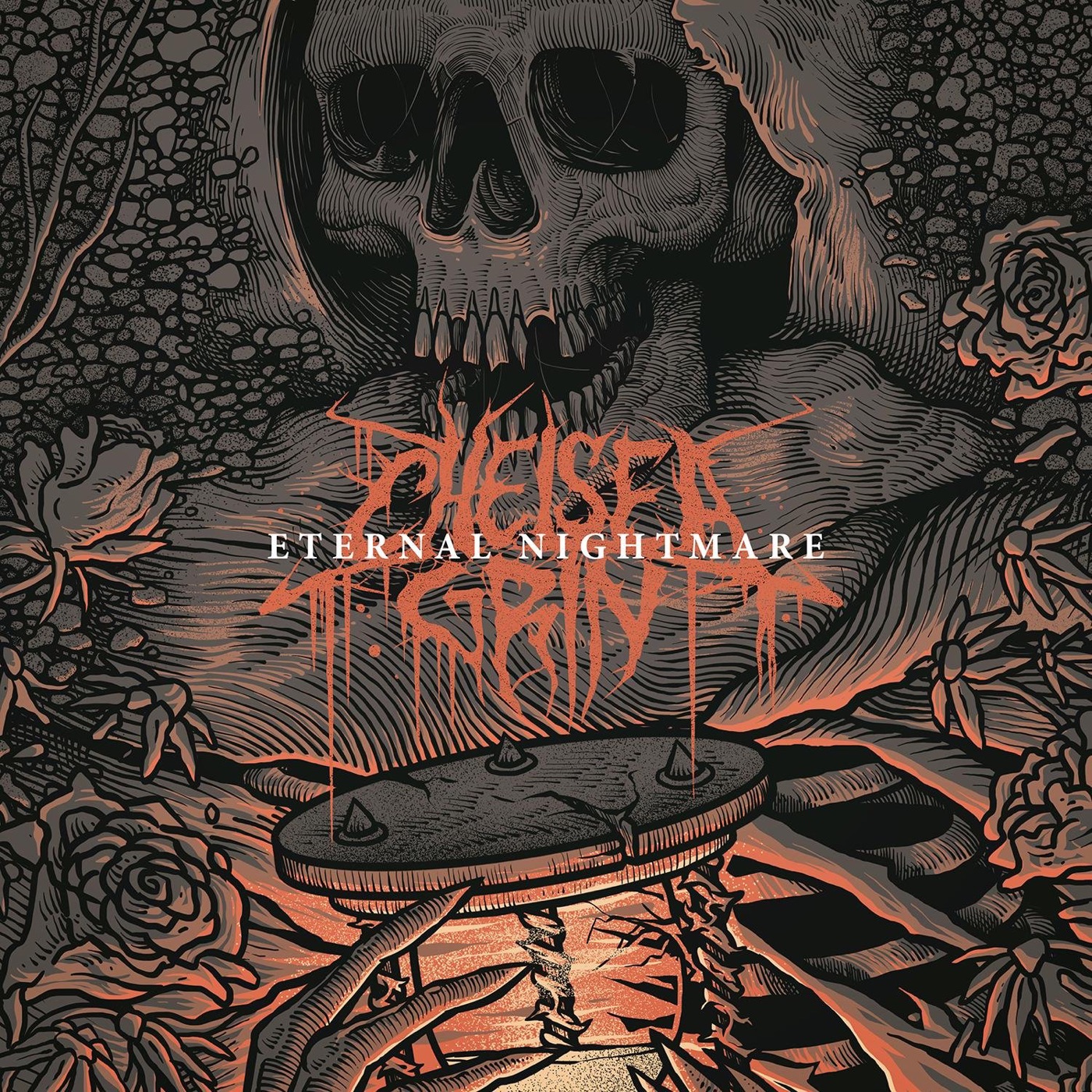
Deathcore uses it with less irony than metalcore and more weight. Released through Rise on 13 July 2018 with Drew Fulk producing, the first album the band made without its founding singer is Eternal Nightmare by Chelsea Grin, and it put Tom Barber on vocals after his years in Lorna Shore and opened with Dead Rose, where a writer counting down favourite bleghs for the NC State student station WKNC heard a growl followed by a blegh that kicks the whole song into motion. The record reached number 171 on the Billboard 200, and the bark did more than the chart position. Barber, with Lorna Shore and Chelsea Grin behind him, is a name that comes up wherever the great deathcore vocalists are counted.

After the Burial show the other way to use it. Lost in the Static, the first single from Dig Deep, the Sumerian album of 19 February 2016 produced by Will Putney, spends its whole length building toward a breakdown, and the same WKNC countdown hears it arrive on a nasty blegh. The song rips loose like gaffer tape pulled off a stage wedge in one long tearing pull, so the drop lands on a noise you could hear coming from the back of the room. The bark is the last warning before the floor goes.
Why the noise outlived the joke
The list of bands that picked it up kept growing while Carter was trying to put it down. Louder Now named Wage War, Black Tongue and In Hearts Wake among them in 2020, and that student radio countdown, posted in July 2019, had already ranked bleghs by Parkway Drive, Traitors, Wage War, After the Burial and Chelsea Grin as favourites the summer before. None of those bands needed permission. The noise was public property the moment the first crowd learned to wait for it.
Deathcore kept it for a plain reason: the genre is built around the breakdown, and anything that makes the breakdown land harder stays. Anyone tracing the genre from the beginning of it all in the early 2000s to the orchestral records of the 2020s will find the cue sitting in the same place it always sat, at the edge of the heaviest bar, even as the songs around it grew choirs and keyboards.
The rest is fandom. Novelty prints, fan compilations, crowds shouting the word between songs and singers being asked about it in interviews are part of the culture around the music, and they are affectionate, not mocking. The audience is laughing with a noise it loves. The mechanics stay simple. A blegh is a cue, the drop follows it, and a singer who tried to retire it in 2020 found out that the people waiting for the drop had already decided it was staying.
