
Birmingham is the only city that has invented heavy music twice, and the second invention was aimed straight at the first. Around 1970 the city gave the world the slow, dark riff; in the late eighties it gave the world the music built to tear that riff apart, and no other city of its size has a list of Birmingham heavy metal bands, and of their unruly progeny, that runs so long or turns so sharply.
The Aston quartet whose debut Vertigo released on 13 February 1970 was Black Sabbath, and the first invention is theirs. The second belongs to a gang of teenagers from Meriden, a village on the city's eastern edge, and to a Birmingham duo with a drum machine, who between 1987 and 1989 threw out the guitar solo, cut the song down to seconds and finally tore the drum stool out of the rehearsal room altogether. Same streets. Opposite intentions.
In a ropewalk, a shed long enough to lay a ship's cable in one piece, the yarns are twisted one way into strands and the strands laid the opposite way into rope, and that quarrel between the twists, each layer turned hard against the one inside it, is the only thing that stops a hawser unwinding when a ship leans its whole weight on it at the quay. The city's bands were laid the same way. Every generation twisted against the last, and the line has never come apart.
The clubs that booked the first of those bands, Henry's Blueshouse at the Crown and Mothers in Erdington among them, open the world tour of the genre. What came out of those rooms, one generation after another, reads like an argument conducted across fifty years.
Birmingham heavy metal bands of the first generation
How four Aston musicians slowed the electric blues until it stopped swinging has been told often, and that part of the story needs no retelling. What matters for the city is the sound they left behind: a riff thickened until it could carry a whole song, a voice that brooded rather than soared, and a darkness that the next Birmingham band promptly set out to brighten.
The original four played together for the last time at Villa Park, the Aston Villa ground, on 5 July 2025, at the close of a charity concert called Back to the Beginning. Ozzy Osbourne died on 22 July 2025, aged 76. His funeral procession passed along Broad Street in the city centre on 30 July 2025, pausing at the Black Sabbath bench.
The five from the same city who threw out what blues was left and put a screaming tenor over two guitars trading leads were Judas Priest, and by Sad Wings of Destiny in 1976 the answer was complete. Sabbath had made the music heavy. Priest made it sharp.
Formed in Birmingham in 1972 around the guitarist and songwriter Tony Clarkin and the singer Bob Catley, and signed to Jet for a debut, Kingdom of Madness, that finally appeared in 1978, the band that answered all that weight with keyboards, pomp and long narrative songs called itself Magnum. On a Storyteller's Night, in 1985, is the record where the approach paid off, reaching number 24 on the UK album chart. Tony Clarkin died in January 2024, and the band ended with him.
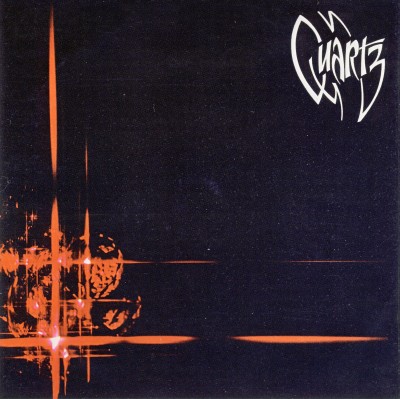
Between the first wave and the young British bands of 1979 stood a Birmingham band that belonged to both. The quartet that recorded its 1977 debut with Tony Iommi producing, and then held its ground into the new decade with Stand Up and Fight in 1980, was Quartz, a precursor of that later wave nobody outside the Midlands remembers. Its riffs were Sabbath's, played faster. That was the whole bridge.
The Black Country answers from the west
A few miles west of the city, in the towns of the Black Country, the answer came at speed. Stourbridge gave the world Diamond Head, whose self-financed Lightning to the Nations of 1980 carried riffs that a young Metallica would learn and record. Brian Tatler wrote them with a stop and start violence, whole bars of silence slammed shut on a chord, and Metallica learned three of those songs note for note before recording their own. The same town produced a band that did the opposite of everything its neighbours were doing.
The Stourbridge four who slowed the new wave back down to Sabbath's crawl, and put Death Penalty out through Heavy Metal Records in 1982, answered to the name Witchfinder General, and the doom revival of the following decade claimed them as a missing link. Wolverhampton, meanwhile, had Cloven Hoof, occult and theatrical and loud.
| Band | From | Formed | Start with | What it did to the sound |
|---|---|---|---|---|
| Black Sabbath | Aston, Birmingham | 1968 | Paranoid (1970) | Made the riff the song |
| Judas Priest | Birmingham | 1969 | Sad Wings of Destiny (1976) | Took out the blues, sharpened the guitars |
| Magnum | Birmingham | 1972 | On a Storyteller's Night (1985) | Keyboards and narrative |
| Quartz | Birmingham | 1974 | Stand Up and Fight (1980) | Sabbath riffs at new wave speed |
| Witchfinder General | Stourbridge | 1979 | Death Penalty (1982) | Slowed the new wave back down |
| Napalm Death | Meriden | 1981 | Scum (1987) | Cut songs to seconds |
| Godflesh | Birmingham | 1988 | Streetcleaner (1989) | Replaced the drummer with a machine |
| Benediction | Birmingham | 1989 | Subconscious Terror (1990) | Old-school death metal |
| Esoteric | Birmingham | 1992 | Epistemological Despondency (1994) | Funeral doom at its slowest |
| Anaal Nathrakh | Birmingham | 1999 | The Codex Necro (2001) | Black metal fused with grind |
The second invention, 1987 to 1989
The Meriden teenagers who took the speed of hardcore punk and the weight of the Birmingham riff and pushed both past the point where a song could survive were Napalm Death, and Scum, released by Earache in 1987, sheared whole songs down to the length of a sneeze while Mick Harris's drumming, the same style the scene would soon call the blast beat, turned the beat into a blur. Birmingham had given the world the slowest riff in rock. Seventeen years later it gave the world the fastest.
Birmingham had given the world the slowest riff in rock. Seventeen years later it gave the world the fastest.
Justin Broadrick, the guitarist on the first side of that record, went his own way within a year, and the duo he formed in 1988 with the bassist G.C. Green, programming a drum machine where a drummer would have sat, was Godflesh. Nothing in the city's lineage had sounded so mechanical, or so cold.

Streetcleaner, released by Earache on 13 November 1989, sounds like the municipal machine it is named after working a city centre at four in the morning, steel bristles grinding along the edge of the pavement, dragging broken bottles and chip papers into the gutter and crushing the glass to grit under its rollers, and "Christbait Rising" never once lets the beat vary. Industrial metal owes it a great deal. The city owes it its second face.
Barney Greenway sang on the 1990 debut of Benediction, Subconscious Terror, released by Nuclear Blast, before leaving that same year to sing for Napalm Death, and the death metal band he left carried on without him for three more decades. Between them, those three bands had made the city an anathema to anyone who still wanted choruses.
They were not alone. Sacrilege, with Tam Simpson singing, had already joined crust punk to thrash on Behind the Realms of Madness in 1985, and Cerebral Fix took Birmingham thrash toward death metal on Roadrunner with Tower of Spite and Bastards at the start of the nineties. The city was producing extreme bands faster than London could sign them.
The slowest and the most savage
The next generation pushed both extremes further. Formed in 1992, Esoteric stretched doom to a funeral pace on the double album Epistemological Despondency in 1994, songs running past fifteen minutes in which a single chord can take longer to decay than a Napalm Death song takes to finish. Greg Chandler, the band's singer and guitarist, sings so deep in the mix that his voice sounds dug up rather than sung.
The duo that took its name from the charm of making Merlin speaks in John Boorman's 1981 film Excalibur, and fused black metal's shriek with grindcore's speed on The Codex Necro in 2001, was Anaal Nathrakh, the savage end of a line that began with four men playing the blues too slowly. Every one of these bands turned against the one before, and Alunah, formed in 2006, has since carried the slow Birmingham riff back to its first home in stoner and doom. That is how the genre grew in one city, and how the genre grew everywhere else follows the same pattern of answer and counter-answer.
Birmingham made the noise and let London print the money, and the city never became a bastion of the business side of the music. Los Angeles ran the opposite model a decade later, with clubs, labels and scouts packed into a single mile, and the Sunset Strip scene is the measure of what that model bought and what it cost. Birmingham kept the bands. They are still loud.
