
Grindcore
Grindcore was welded out of hardcore punk and the fastest drumming of the late 1980s, fired from Los Angeles to Sweden and Singapore in bursts that seldom reach two minutes, every song torn down to the blast, the roar and the slogan. Nothing is wasted.
The angle grinder
An angle grinder on the skull of hardcore punk, grindcore throws its sparks in bursts that rarely pass two minutes and often stop short of thirty seconds, before the next song comes screaming in behind. The drummer switches between a punk beat and the blast beat at full velocity while the guitars saw through distorted chords and death metal tremolo, and the bass, where there is one, buries the floor in fuzz. Two voices often split the work between a low roar and a high shriek. The songs do not develop. They detonate.
Raised on the do it yourself circuit of hardcore, with its seven inch splits, benefit shows and photocopied zines, and given its name by Napalm Death drummer Mick Harris, who is credited with coining the word, the genre never shed its conscience. War, capital, animal rights and the police run through the lyric sheets of grindcore bands such as Napalm Death, Brutal Truth and Nasum at least as often as anything grisly. Some songs are barely songs. You Suffer, written at the March 1986 demo sessions, sits in the Guinness records at 1.316 seconds.
The budget was part of the sound. Terrorizer cut World Downfall at Morrisound in Tampa in May 1989 in roughly eight hours, with Scott Burns engineering, and the raw edge of that session became a template rather than a flaw. Later bands sharpened the blade without dulling the attack. Pig Destroyer recorded Prowler in the Yard on eight tracks in a basement, with no bass player at all, and still levelled the room.
The grindcore blast radius
The map radiates out of Birmingham, Los Angeles and New York in the late 1980s and then scatters across the globe like shrapnel from a single charge. Sweden's Nasum dragged a flagging genre back to its feet with Inhale/Exhale in 1998, and its guitarist Mieszko Talarczyk went on to produce the records of Finland's Rotten Sound. Singapore answered with Wormrot. Japan answered with Butcher ABC. The blast beat needs no passport.
Its offshoots each take one element and push it further. Goregrind trades slogans for pathology textbooks, pitch-shifted vocals and horror film samples. Powerviolence speeds up and slams to a halt inside a single minute. Deathgrind, from Terrorizer to Misery Index and Cattle Decapitation, bolts death metal riffs onto the grind attack, while crust bands such as Extreme Noise Terror keep one boot planted in punk. The family argues constantly.
Grindcore and death metal grew up in the same studios and on the same Earache roster, and the line between them blurs. Napalm Death flew to Morrisound for Harmony Corruption in 1990, and Carcass crossed over in stages. The difference is structure. Death metal builds its riffs into architecture, while grind demolishes the building before the scaffolding is down, and the roots in hardcore punk explain the rest.
Where to start
Seven grindcore albums, from the Earache classics of the late 1980s to a Singapore band that joined the same label two decades later.
- Napalm Death From Enslavement to Obliteration Earache, 1988
Lee Dorrian, Bill Steer, Shane Embury and Mick Harris sharpening the attack of Scum into something closer to a weapon.
- Terrorizer World Downfall Earache, 1989
Pete Sandoval, Jesse Pintado and David Vincent in eight hours at Morrisound, and the blueprint deathgrind has been copying ever since.
- Brutal Truth Extreme Conditions Demand Extreme Responses Earache, 1992
The New York debut under Colin Richardson's production, named the number one American grindcore release by Terrorizer magazine in 2009.
- Nasum Inhale/Exhale Relapse, 1998
The Swedish debut credited with reviving grindcore after its mid 1990s slump, crusty riffs and blast beats at full compression.
- Pig Destroyer Prowler in the Yard Relapse, 2001
A trio with no bass player scything through 22 tracks in about 36 minutes, and a sound far fuller than the line-up has any right to make.
- Rotten Sound Exit Spinefarm, 2005
The Finnish band at maximum pressure, produced by Nasum's Mieszko Talarczyk in Örebro, and a number 22 entry on the national album chart.
- Wormrot Abuse Earache, 2010
First issued by a small label in 2009, then sent around the world by Earache with a second disc of bonus tracks, old school grind reborn in Singapore.
Grindcore News
All 30 stories →Grindcore Reviews
All 6 reviews → 7.0
7.0
Napalm Death
Words from the Exit Wound
Three rooms worth saving in a house the band was already leaving.
 Gareth Llewellyn
Oct 26, 2026
Gareth Llewellyn
Oct 26, 2026
 6.5
6.5
Napalm Death
Leaders Not Followers
Six borrowed songs, and half of them come back sharper.
Gareth Llewellyn
Oct 25, 2026
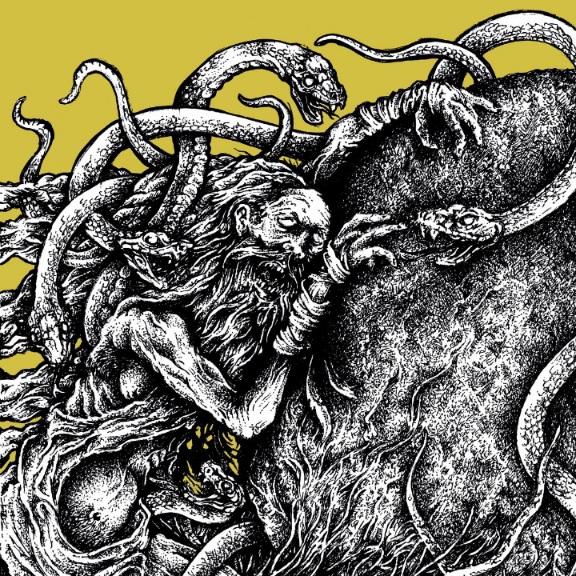 8.0
8.0
Suffering Quota
Sisyphean Life
Eighteen minutes of shift work, and two melodies clocked off early
Gareth Llewellyn
Sep 20, 2026
 9.0
9.0
Carcass
Heartwork
Goregrind's pathologists turned surgeons, and every incision still holds thirty years on
 Andrzej Sawicki
Aug 21, 2026
Andrzej Sawicki
Aug 21, 2026
Guides & Essentials
All 19 → Label Histories
The Death Metal Labels That Built the Genre
Six companies decided which death metal records existed, and only one of them was founded to release death metal. Roadrunner, Relapse, Nuclear Blast, Century Media,...
 Essential Albums
The Best Death Metal Songs
Ten songs judged at the scale they actually work at: the moment, the ten seconds, the exact place in the running time where the thing you came for happens.
 Genre Histories
Maryland Deathfest
Thirty bands in a Baltimore club in May 2003, and two decades later the only place in North America that can put a band from forty countries on a stage. The venues,...