

Progressive Metal
Progressive metal, the heaviest music ever to bring a slide rule to rehearsal, was built in the eighties by bands that wanted a riff to carry a story, snapping the bar into odd meters and welding the pieces into long songs. Precision is the weapon.
Metal by blueprint
The drafting room of heavy music, progressive metal, was forged where the loud aggression of heavy metal crashed into the long, cerebral compositions of seventies progressive rock, and it breaks the bar into odd meters, shifts time signature inside a single verse, piles syncopation on syncopation and hands the keyboard player a real seat at the table. Then it keeps going. The guitars often grow extra strings to reach lower, and the albums make room for ballads and acoustic passages between the storms.
A progressive metal riff is built like the movement of a tower clock, gears of different sizes turning at different speeds, and when they finally lock on the downbeat the whole mechanism comes down on the listener like a drop forge on red steel. That lock is the reward. Polyrhythm, unorthodox harmony and meter changes are the gears. The lyrics reach for fantasy, literature and outer space, the old reading list of seventies progressive rock.
The idea that separates it from its neighbours is structure over speed. Technical metal argues about how much fits into one bar, progressive metal argues about how much a whole song or a whole album can hold, and most bands do both at once, which is why the two words get swapped so often. The border on the other side leads to avant-garde metal, which puts the experiment ahead of technique. The progressive band wants the part played right. The avant-garde band wants it played differently.
Progressive metal cuts new roads
Two older bands laid the bridge: Rush, widely credited with joining hard rock, English progressive rock and pure heavy metal, and King Crimson, who hardened progressive rock long before metal borrowed it. The eighties sent out progressive metal bands of their own: Queensrÿche, Fates Warning, the Texas math metal pioneers Watchtower and the Quebec four of Voivod. Then the institution arrived. Dream Theater turned the style into a school with its own canon, and Symphony X followed in the middle of the nineties.
The extreme branches grew fast. Death metal met progressive ambition on Atheist's Unquestionable Presence in 1991, on the debut of Cynic and on the Swedish records of Edge of Sanity and Opeth, while Meshuggah set off djent, a riff of palm muted, syncopated attacks on extended range guitars. Metalcore took its turn through Between the Buried and Me, whose The Silent Circus of 2003 became a landmark. Sludge crossed over too. Mastodon reached for progressive rock on Crack the Skye, and a newer wave led by Haken and Caligula's Horse keeps the long form alive.
Eight records first
A listening order of progressive metal albums through the concept album, the math, the death metal branch and the long form of the present century.
- Queensrÿche Operation: Mindcrime EMI Manhattan, 1988
A rock opera about Nikki, a heroin addict turned into an assassin by Dr. X, that became the band's breakthrough and later went platinum.
- Watchtower Control and Resistance Noise, 1989
The first record with Alan Tecchio and Ron Jarzombek, jazz fusion wired into technical thrash, and a root of technical death metal.
- Voivod Nothingface MCA, 1989
The Quebec four took thrash into dissonant space, covered Pink Floyd's "Astronomy Domine" and reached the Billboard 200 for the only time.
- Dream Theater Images and Words Atco, 1992
James LaBrie's first album with the band, "Pull Me Under" in the mainstream rock top ten, and the only Dream Theater record certified gold.
- Cynic Focus Roadrunner, 1993
Death metal crossed with jazz fusion, fretless bass and vocoder vocals, called by Decibel the most significant progressive death metal record of all time.
- Opeth Blackwater Park Music for Nations, 2001
Produced by Steven Wilson in Gothenburg, death metal weight and acoustic passages locked into one design, the album AllMusic called the band's coming of age.
- Between the Buried and Me Colors Victory, 2007
Eight tracks run as one piece of over an hour, carnival passages, jazz guitar and country detours inside the metalcore.
- Mastodon Crack the Skye Reprise, 2009
An astral travel story through Tsarist Russia, a tribute to Brann Dailor's late sister, and a number 11 entry on the Billboard 200.
Progressive Metal News
All 120 stories →
Progressive Metal Reviews
All 10 reviews → 8.0
8.0
Blut aus Nord
MoRT
Black metal on an iron lung, breathing on schedule, never once alive.
 Eirik Solvang
Oct 23, 2026
Eirik Solvang
Oct 23, 2026
 8.0
8.0
Devin Townsend
Order of Magnitude: Empath Live Volume 1
Ten players, no click track, and a dense arrangement that survives daylight.
 Julien Vasseur
Oct 23, 2026
Julien Vasseur
Oct 23, 2026
 8.0
8.0
Dream Theater
A View from the Top of the World
Magnificent at altitude, and wedged exactly where the last climb stopped.
Julien Vasseur
Oct 22, 2026
 8.5
8.5
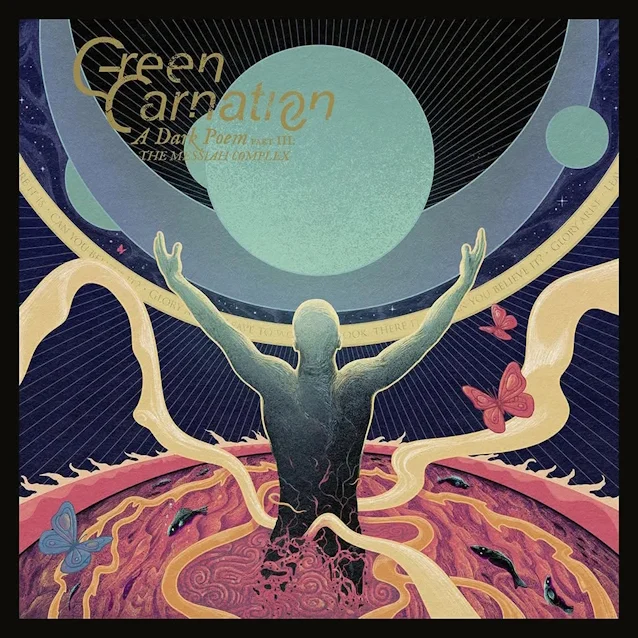
Green Carnation
A Dark Poem, Part III: The Messiah Complex
A final cadence worth the year of waiting, if you waited.
Julien Vasseur
Sep 12, 2026
Guides & Essentials
All 6 → Genre Histories
The Progressive Rock DNA in Heavy Metal
Heavy metal took from progressive rock the way a caddis larva builds its case from borrowed parts: King Crimson's riff, Uriah Heep's sixteen-minute side and Hammond,...
 Explainers
The Metal Subgenres Tier List
Beaufort graded the wind by what it tore off the roofs. The metal subgenres tier list graded the same way: by the tool each style left in the music after it, thrash,...
 Explainers
Technical vs Progressive Death Metal
Two words measured on two different clocks. Running times, the shuffle test, what each wing asks of a singer and a drummer, and the four records that refuse to sit o...