Heroism at full gallop
Chivalry bolted to a double bass pedal, power metal, runs its guitars in rapid streams of notes over chords that change once a bar or slower, stacks twin melodies on top and hands the microphone to a clean, high tenor schooled on Ronnie James Dio and Bruce Dickinson. Nothing gets growled. Underneath, the drummer lays down an unbroken stream of sixteenth notes on two kick drums, flattening every gap under the riff like a steamroller crushing gravel into a new road, while the bass mostly holds the root and stays out of the way.
Keyboards sit high in the mix, pushed forward by Jens Johansson's playing in Stratovarius, and some bands have replaced them with a full orchestra, which opens the door to symphonic metal. The harmony leans on major chords and circle progressions. That is the whole secret. Where thrash and death metal grind a crowd into the floor, power metal hauls it up by the collar, raising each chorus like a siege tower against a castle wall so that an entire festival field can climb it and pour over the top.
The lyrics march in the same direction. Fantasy and mythology came first, then war and death, comradeship, hope and history, with the Falun battalion of Sabaton building whole albums out of real battles and the men who fought them. The speed still gives away the family tree. Strip off the choirs and the keyboards, and what remains is the riffing of speed metal with its eyes turned toward the sky.
Power metal, one sword
Split by the Atlantic like a shield cloven with a single axe stroke, the map holds two traditions that share a name and little else: an American school born in the early eighties, riff first and sparing with keyboards, and a European school that took shape in Germany late in that decade, lighter, brighter and far more melodic. The American side sounds forged. Manilla Road, Jag Panzer and Vicious Rumors kept the guitars heavy and the fantasy dark, while Germany answered with Helloween, Gamma Ray, Blind Guardian and Grave Digger.
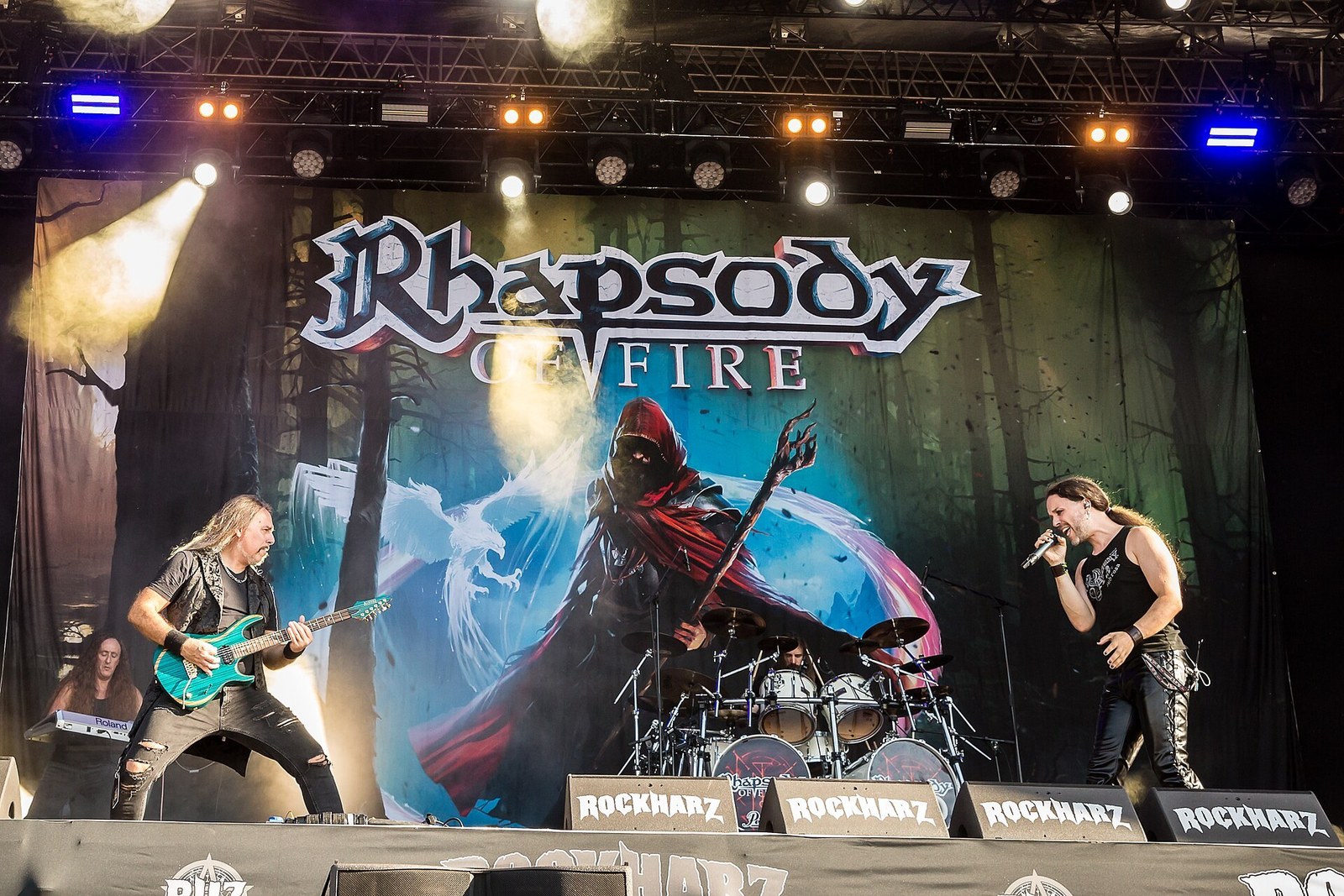
From there power metal bands sprang up across the continent and beyond it. Finland built a second capital around Stratovarius and Sonata Arctica, Brazil answered with Angra, Sweden produced Falconer and later Sabaton, and the Italians of Rhapsody of Fire took a baroque approach from Vivaldi and Paganini, then piled full orchestras and choirs on top until the songs rode as low in the water as a galleon loaded to the gunwales with cannon. Nobody asked them to stop.
The borders get crossed in both directions. Kamelot and Evergrey pulled the style toward progressive metal and long concept records, Running Wild and later Alestorm dressed it as pirates and drifted toward folk, and the Espoo quintet Children of Bodom borrowed the speed and the keyboard duels and built melodic death metal out of them. Nightwish began in the same camp. The orchestra swallowed them later.
Seven records to raise
Seven power metal albums from both sides of the ocean, from a Kansas studio in 1983 to a Swedish empire in 2012. Turn it up.
- Manilla Road Crystal Logic Roadster, 1983
The American school at the root: Mark Shelton's riffing and soloing, "Necropolis", and a title track past six minutes, cut in a Kansas studio.
- Helloween Keeper of the Seven Keys Part I Noise, 1987
Michael Kiske's first album with the band, "Future World" as the single and "Halloween" running past thirteen minutes, widely credited with creating European power metal.
- Blind Guardian Imaginations from the Other Side Virgin, 1995
Flemming Rasmussen produced it in Copenhagen, the reading list runs from Tolkien to King Arthur, and speed metal riffs meet choruses built for a whole hall.
- Gamma Ray Land of the Free Noise, 1995
Kai Hansen back on lead vocals for a concept record of rebellion, Michael Kiske and Hansi Kürsch as guests, and "Afterlife" written for Ingo Schwichtenberg.
- Kamelot The Black Halo Steamhammer, 2005
The second half of a story drawn from Goethe's Faust, Roy Khan in front, Shagrath as Mephisto and Simone Simons as Marguerite.
- DragonForce Inhuman Rampage Roadrunner, 2006
Tempos pushed until the fretboards smoke, "Through the Fire and Flames" inside Guitar Hero III, and gold certification in the United States, silver in Britain.
- Sabaton Carolus Rex Nuclear Blast, 2012
The rise and fall of the Swedish Empire sung in English and in Swedish, and 326 weeks on the Swedish hard rock list on the way to quadruple platinum.

 What Power Metal Is, and Where It Came From
 Hamburg, 1985: How Europe Built Its Own Power Metal
 American Steel: US Power Metal, the Heavier Branch
 From the Grunge Years to the Charts: Power Metal Since 1990