
"Mix power metal with black metal, duh!" That was the whole of the theory a Metal Archives reviewer writing as EspadaNegra needed in March 2013, and the name he reached for at the end of it, for the record in front of him, was blackened power metal. The shrug is wrong in one word. Nothing on that record is mixed.
The Denver band that had spent the 2000s grinding out album after album of black and death metal and then, at the end of that decade, took back the tenor who had sung its debut in 1986 was Satan's Host, and the tenor was Harry Conklin, the voice that had already carried Jag Panzer through Ample Destruction. Released by Moribund Records on 3 May 2011, the album of the reunion keeps the blast beats and the tremolo riffs of the black metal years in the drums and guitars and sets that clean, gruff American tenor on top, smashing a melody straight through blast beats that had spent a decade battering melodies flat.
Two genres, two layers. Neither one gives.
Two clarinets in Stravinsky's score for Petrushka in 1911 play their arpeggios at the same moment, one on C major and one on F sharp major, two triads a tritone apart that share not a single note, and nothing in the orchestra reconciles them: no third key is cooked out of the collision, each clarinet drives its own chord through the other's, the bar grinds instead of blending, and the ear hears both triads whole and both of them wrong, exactly as the composer wrote them. That is blackened power metal on the records that carry the name furthest. It is not a third genre distilled out of two. It is one genre's voice laid over the other genre's band and left to grind.
Of all the branches the power metal family has put out, traced in the history it belongs to, this is the thinnest, and the only honest way to measure it is to count the bands that actually live on it and to listen to which half of each one came from where.
What blackened power metal keeps from each side
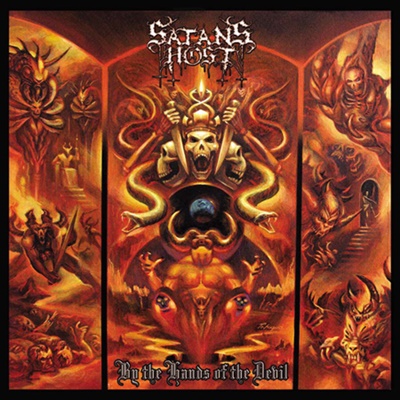
Credited to four men and no one else, with no keyboard and no choir anywhere in the credits on Metal Archives, By the Hands of the Devil runs ten tracks and almost an hour, closes on a bonus cover of the Beatles' "Norwegian Wood", and was produced, mixed and mastered by Dave Otero, with Joe Petagno's painting on the front. Its seven reviews on Metal Archives average ninety per cent, and they agree about the build more than they agree about the score.
The reading that recurs is a black metal engine with a power metal throat. FullMetalAttorney, reviewing it in September 2011, hears tremolo riffing worked into a thrash-built American attack, drums blasting and vocals soaring. Jophelerx, coming back to it in 2024, hears the tremolo riff appear again and again, blast beats laid even under passages that move in a heavy and power vein, and a singer who keeps to his gruff tenor and spends his growls and shrieks as accents. EspadaNegra's account of 2013 is the same in fewer words: the black metal blast one minute, mid-paced lead guitar the next, and a high scream over both.
The title song is where the two layers are easiest to hear apart. Autothrall, reviewing the record on its day of release, named it and "Black Hilted Knife" as the places where the occasional melodic black metal outburst breaks through the traditional heavy and power writing, with Conklin holding the same range and pitch he had used in Jag Panzer across the previous decade.
The drum chair shows the seam from the other side. Anthony Lopez, on drums since 2008, came up almost entirely through black and death metal, and Jophelerx hears him reach for the blast whenever the tempo climbs, even where the riff above him is a heavy metal riff asking for something else. The rhythm section belongs to one shelf and the singer to the other, and the record does not pretend otherwise.
The craft on each side belongs to its own genre. The tremolo picking and the shriek are black metal's tools, worked out in Norway and Sweden in the early nineties, and nothing about how they are played changes on a record like this one; what changes is what sits on top of them. From power metal, Satan's Host takes the singer above all: no keyboard, no guest choir, no orchestra, only one man with a seasoned high voice standing in front of a band that spent a decade learning to bury voices like his.
Not a third genre distilled out of two: one genre's voice laid over the other genre's band, and left to grind.
The New Zealand band that kept only the shriek
The New Zealand band that began in corpse paint and anti-Christian imagery in 1993 and finished six years later in London with a record that had almost nothing black left in it was Demoniac. Founded by Lindsay Dawson on vocals and bass, Sam Totman on guitar and Steve Francis on drums, the band had Mark Hamill behind the kit by the time it cut Prepare for War in 1994 and Stormblade in 1996 as black metal, the second only a shade more melodic.
Recorded in January 1999 with Mags, the producer who had worked with Cradle of Filth, and released on Osmose Productions, The Fire and the Wind runs eight tracks in under forty three minutes, opens on "The Eagle Spreads Its Wings", and was made after Herman Li joined on guitar in July 1998, at a speed and in a melodic cut that later listeners keep comparing to the band two of its members went on to form. Its Wikipedia entry says the black metal sound of the first two albums is almost completely gone, with only the shrieking vocals left to point back at it. On Metal Archives, Diamhea in 2014 hears the instrumental side falling in line with early DragonForce, Duke Clovis in 2023 finds the vocals the only visible trait of black metal, and a 2025 review calls it purely power metal with harsh vocals.
So the other record that carries the name is the first one turned inside out. Satan's Host kept a black metal band and borrowed a power metal singer. Demoniac kept a black metal singer and let the band become a power metal band underneath him, lacerating every major-key lead line with a shriek that had been trained for a different music, until the voice was the last black thing on the record.
Nobody thanked them for it. The seven reviews of The Fire and the Wind on Metal Archives average nineteen per cent, and one 2015 reviewer filed it as flower metal with black metal vocals and a production of trebly hiss that he called black metal to the bone. The chorus of "Myths of Metal" also used Nazi slogans, and Totman's explanation to an interviewer in 2014 was that the band had been completely unserious about anything it ever said.
The split came at the end of 1999. Totman and Li formed the band first called DragonHeart and then DragonForce, and the shriek was the one Demoniac ingredient that did not make the move: the new band put a clean singer at the front, and the black throat came back only as a guest, when Dawson's harsh voice turned up as an extra on Inhuman Rampage in 2006.
Seventy four bands and the eight that use the word
The genre field on Metal Archives is where the count can be taken, and the count is small. Searched in 2026, the strings that put the word blackened beside power belong to eight bands, six of them American, one from Wellington and one from Malaysia, and Satan's Host is the oldest of them by almost a quarter of a century. Widen the search to every string that carries black and power together in any order and 85 entries come back, eleven of which turn out to be noise acts filed under power electronics, which leaves 74 metal bands.
| Band | Country | Formed | Genre as filed |
|---|---|---|---|
| Satan's Host | United States | 1977 | Heavy (early); black/death (mid); blackened heavy/power (later) |
| Dark Energy | United States | 2001 | Blackened power/progressive |
| Shadowheart | United States | 2004 | Blackened power |
| Bulletbelt | New Zealand | 2009 | Black/thrash (early); blackened heavy/power (later) |
| Elder | United States | 2011 | Blackened power |
| Planetary | United States | 2012 | Blackened power |
| Shamash | Malaysia | 2020 | Melodic/blackened death/power |
| Angels on Fire | United States | 2023 | Blackened heavy/power |
Seventy four is a rounding error beside the 8,617 entries on the same site whose genre string carries the word power at all. The rest of the people mixing the two are filed under other names, melodic black, symphonic black and power, melodic death with black and power, which makes the term a key like C sharp major: seven sharps hammered onto the head of every stave, printed in every table of keys and set by Bach in both books of the Well-Tempered Clavier, and still almost empty, because the same sounds are written far more easily as D flat and nearly everybody spells them that way. The music exists. It is simply filed next door.
Several of the 74 add folk to the string, Valgard from Belgium as black, power and folk, Web of Wyrd from Sweden as symphonic black, folk and power, and those lean towards the busier branch beside this one, folk power metal, where the fiddle rather than the shriek is what gets laid over the gallop.
The strings also record movement, and most of it is a band climbing out of the cold towards the tune. Twenty one of the 74 carry an early and a later phase, and the traffic runs two to one in a single direction: fourteen moved towards power, among them Into Desolation from Sweden, Umbra Mortis and Nocturnal Heresy from Indonesia and Demoniac itself, while seven moved away from it, Daegonian from Italy going from symphonic power to symphonic black and death. Of the 72 formed since 1990, seventeen date from the nineties, thirty two from the 2000s, fourteen in the 2010s and nine since 2020.
New Zealand twice, and the same drummer
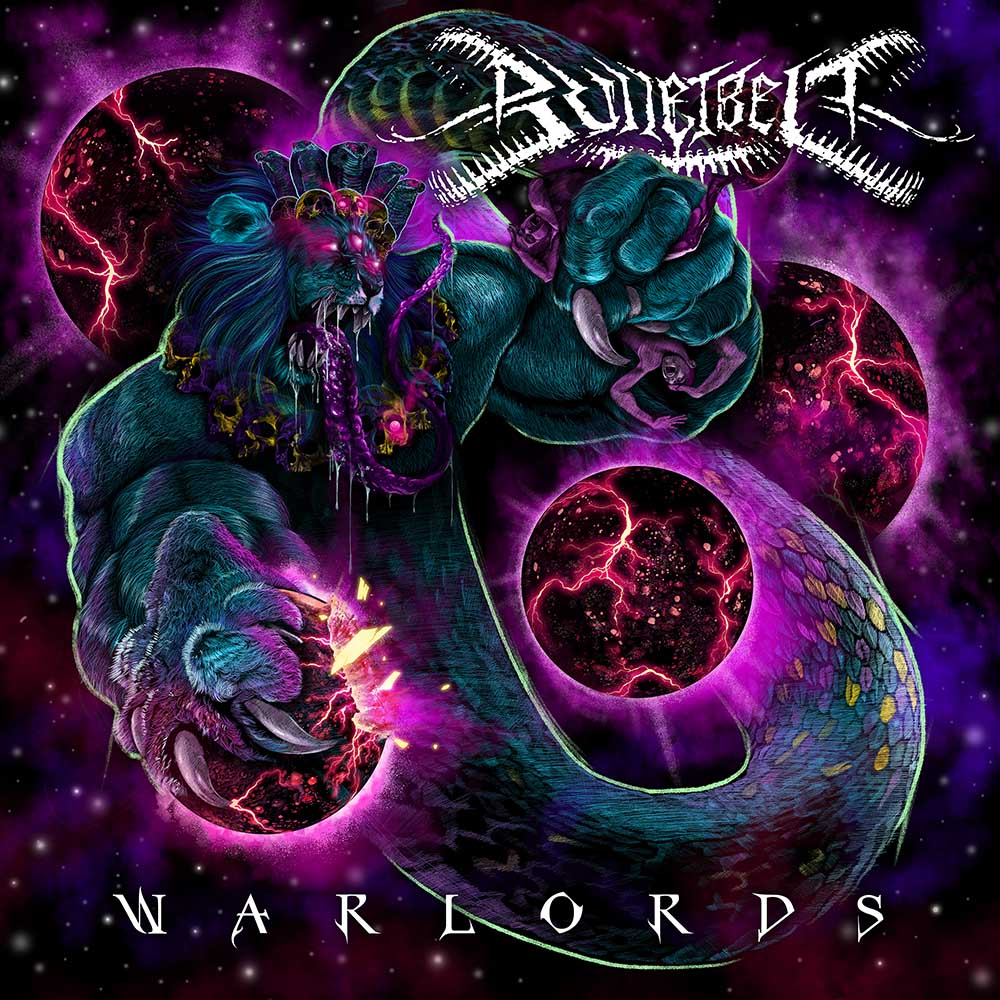
The Wellington four-piece that started out in 2009 as black and thrash and is filed now as blackened heavy and power metal is Bulletbelt, and the man behind its drum kit on every release since 2010 is Steve Francis, who had been Demoniac's first drummer in 1993. The same Steve Francis is credited with backing vocals on DragonForce's Extreme Power Metal in 2019, which puts one pair of hands at all three corners of the term's New Zealand story.
Warlords, the band's fourth album and the first with Paul Roberts singing after two records fronted by Jolene Tempest, opens its first full song on a tremolo-picked black metal riff and, in the reading of one of its two Metal Archives reviews, mixes black metal bitterness with thrash riffing and heavy metal melody. "Punishment of God", third on the record at three minutes sixteen, is the song the band chose for its official video.
That is a different build again from Satan's Host and from Demoniac, and it shows how loosely the word is held: the tag sits on Bulletbelt's later work for the heavy metal melody hacked into the guitar lines between the frostbitten riffs, not for a seasoned tenor at the front, which is the half that made the name stick to Satan's Host.
Where the branch stops
The border on the black side is usually the singer. Symphonic black metal of the Dimmu Borgir kind carries orchestras, keyboards and melodies that a power metal band would recognise, and none of it is filed under this name, because nobody at the front sings a clean line for a crowd to take back. The other border is melodic death metal, the shelf where Children of Bodom came to rest, a band that a 2025 Metal Archives review of Demoniac still names as the comparison and which nobody files under blackened power.
Inside those borders the term names a combination that a handful of bands chose deliberately and a larger number passed through on the way somewhere else. The unholy part is never the subject matter alone, Satan's Host had its name and its Satanic lyrics in 1986 when it was still a heavy metal band, and never the production alone either. It is a black metal rhythm section under a power metal singer, or the reverse, on one record, with reviewers able to say which half came from where.
The iconoclasm usually runs one way. The black metal band lets a tune in, or the power metal band keeps a shriek it learned in a colder music, and fourteen times out of twenty one in the strings the next record is closer to power metal than the last. Satan's Host is the rare case that took the clean voice back without giving up the black metal band behind it, and its 2011 record is still the one that reviewers, writing a decade apart, keep naming when they need to say what the term means.
The name is a description, not a scene. There is no blackened power metal festival, no label built around it and no city that grew one; there is a short list of records with both halves on the tape, an ashen shriek over a running major-key lead or a seasoned tenor over a blasting kit, and a longer list of bands who sounded like that for one album on the way to sounding like something else.
