
Brutal Death Metal
Brutal death metal, the hydraulic press beneath the parent genre, was bolted together on Long Island and flattened again in California, Madrid and Moscow, keeping the blast beat running, dropping the voice past language and grinding every melody into one slab. Density is the law.
The press beneath death metal
The deepest pit under the parent genre, brutal death metal takes the speed and weight of death metal and feeds both into a hydraulic press until nothing is left that could be hummed, whistled or mistaken for a chorus. Guitars tuned to B or lower crush every riff into a palm-muted slab, the kick drums roll without pause, and the blast beat stops being an event and becomes the floor the song stands on. Melody is not refused. It is flattened. The voice sinks below the growl into a guttural roar with every consonant ground off.
Hardened on Long Island at the start of the 1990s, where crews such as Pyrexia and Internal Bleeding hammered slow grooves between the blasts, and carried west to California, where the men of Deeds of Flesh founded Unique Leader Records in 1997 to press the records nobody else would touch, the style built its name on density rather than on speed alone. A song can change riff every few bars. The drummer is expected to survive all of them.
The lyrics inherited the horror film gore of the parent genre and keep it as a convention, like the tuning, a stock of splatter titles and anatomy terms that almost nobody hears through the roar. Some bands swapped the morgue for other material. Dying Fetus turned to politics with Destroy the Opposition in 2000, and the Madrid band Wormed fed cosmology and particle physics into the grinder. The words matter less than the weight.
Brutal death metal, walled in
Above it sits death metal, which still lets a riff breathe, a lead guitar sing and a song take a direction. Brutal death metal bricks up all three exits. Its map runs through labels more than through cities, Unique Leader, Willowtip and Relapse among them, and by the 2000s the press had gone global, with Germany's Defeated Sanity, Spain's Wormed and Russia's Katalepsy stamping the same weight through different moulds. The accent changes. The tonnage does not.
Below it lies slam, the wing that keeps the tuning and the gurgle and throws out nearly everything but the groove, dropping the tempo into a lurching riff built to set a floor of bodies moving. The two share bands, labels and bills. They argue about proportion. Brutal death metal keeps its blasts running and its riffs crowded, while slam clears the room and swings one heavy figure through it, again and again.
Technical death metal shares the speed and the density and still stands apart, because bands such as Origin and Cryptopsy prize the fretboard as much as the impact. Deathcore borrows the low vocals and the breakdown and builds its songs on metalcore frames. Grindcore shares the blast and cuts the song short. And death 'n' roll took the opposite exit from the same building, slowing the parent genre into a swagger that brutal death metal would sooner demolish than dance to.
Where to start
Eight brutal death metal albums, from the Long Island grooves of the early 1990s to the Madrid laboratory and the German density of the 2010s, each one pressing the same weight through a different die.
- Pyrexia Sermon of Mockery Drowned Productions, 1993
An early Long Island document of the style, half time grooves hammered between the blasts on the band's debut.
- Suffocation Pierced from Within Roadrunner, 1995
The New York band's third album, Mike Smith's last session behind the kit before Doug Bohn took over, riffs wrenching direction under Frank Mullen's roar.
- Deeds of Flesh Trading Pieces Repulse, 1996
The California debut, dense and relentless from the first bar, recorded before the band built Unique Leader Records to house the crews that followed it.
- Dying Fetus Destroy the Opposition Relapse, 2000
Maryland grooves bolted onto blast beats and politics swapped in for gore, a record Albert Mudrian named among the most important of its year in Choosing Death.
- Origin Informis Infinitas Inhumanitas Relapse, 2002
The Kansas band dragging brutality to the edge of the technical wing, blast beats and shredding guitar welded into one grinding surface.
- Disgorge Consume the Forsaken Unique Leader, 2002
The San Diego band's third album and its only one with vocalist A.J. Magana, a textbook of guttural roar over a snare that cracks like a rifle.
- Wormed Planisphærium Macabre Mementos, 2003
The Madrid debut, recorded in the city at the end of 2002, particle physics and deep space crushed into the densest shapes the style had heard.
- Defeated Sanity Passages into Deformity Willowtip, 2013
The German band led by drummer Lille Gruber, rhythms twisting inside every riff until brutality starts to sound like a puzzle with teeth.
Brutal Death Metal News
All 40 stories →Brutal Death Metal Reviews
All 2 reviews →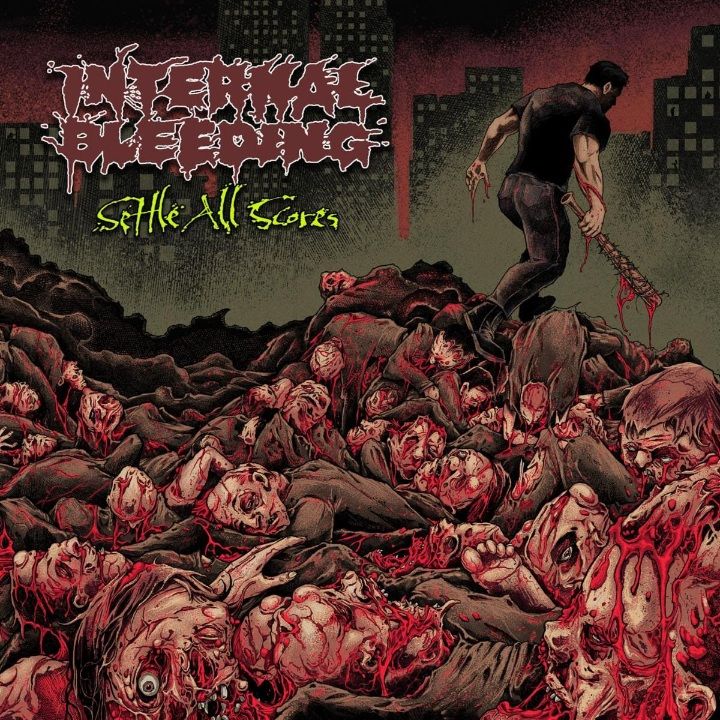

Guides & Essentials
All 21 → Explainers
Is Cannibal Corpse Death Metal, or Something Else by Now?
Sixteen albums, two million copies, two national bans and a Jim Carrey film. Run the four mechanical tests and the answer is yes, four times out of four. What change...
 Explainers
The Death Metal Logo: Why You Cannot Read Any of Them
The death metal logo is not a name, it is a lock, and the illegibility is the design brief rather than a failure of draughtsmanship. Why the letters are drawn as tis...
 Essential Albums
The Heaviest Death Metal Bands
Heaviness is not distortion and it is not speed. It is contrast, low frequency energy, space and refusal, and eight bands produce it by four completely different mec...