
Post-Metal
Post-metal, the heavy music that treats volume as a flood held behind a dam, was raised from the wreck of sludge in 1992 and stretched over songs that refuse a chorus, stacking crescendo on crescendo until the concrete finally gives way. Then comes the silence.
Weight held back
The heavy music that gutted its own chorus, post-metal, was pulled out of the sludge pit by bands that stopped asking how hard a riff could hit and started asking how long it could be made to wait, and it spreads its weight across crescendos and repeating themes, with guitars drowned in effects and drums carrying the story. The hook never arrives. The voice, screamed or growled when it appears at all, sits in the mix as one more instrument, and plenty of bands work without one.
A post-metal song behaves like a glacier calving into the sea: minutes of creaking, groaning ice, a slow crack travelling through the mass, and then a wall the height of a cathedral breaking away and smashing into the water. That fall is the payoff. Around the ice sits whatever the band can carry in, ambient drones, noise, psychedelia, classical strings, the haze of shoegaze. Aaron Turner of Isis put the reason plainly: the verse and chorus format had been done and redone.
The split from its parent comes down to where the weight goes. Sludge metal keeps the listener locked in the room with the damage, while post-metal builds towards release, a crescendo that blows the ceiling open instead of lowering it. Post-rock builds the same way. The difference is tonnage, the hardcore roar and the low tuning that post-rock never needed.
Post-metal from 1992 outwards
Two records released a month apart in 1992 planted the roots. Pure, the second album by the Birmingham duo Godflesh, arrived on Earache in April with programmed drums and grinding, discordant guitars, while the Oakland band Neurosis released Souls at Zero on Alternative Tentacles in May and forced strings, woodwind, keyboards and samples into hardcore riffs. One root is a machine. The other is a tribe.
The second generation grew around one man and his label. Founded in 1993 by Aaron Turner, Hydra Head gave the style a home, and his Boston band Isis, formed in 1997, released Oceanic on Ipecac in 2002, a record the San Francisco Bay Guardian credited with setting off a wave of bands built on the Neurosis blueprint. In 1999 Neurosis founded Neurot Recordings, later the home of the Flemish collective Amenra, which has numbered its albums as masses since 2003. Out of a hardcore band called Eclipse came Cult of Luna, formed in Umeå in 1998. Turner now plays guitar in Neurosis.
The borders run in three directions. Atmospheric sludge is the part of the post-metal family that never lets go of the ground, and the argument over where it ends never stops. Blackgaze runs the long build through black metal and shoegaze, as Lantlôs did once Neige of Alcest joined, and the Icelanders of Sólstafir walked from black metal into the same open space. On the instrumental side, bands such as Russian Circles and Pelican sit so close to post-rock that only the tonnage tells them apart.
Six records first
A post-metal listening order, starting at the two roots and following the long build outwards.
- Neurosis Souls at Zero Alternative Tentacles, 1992
Hardcore turned inside out, so far from the band's past that the label's owner, Jello Biafra, stepped in to finish the mix.
- Godflesh Pure Earache, 1992
Drum machine repetition and harsh guitars, Robert Hampson of Loop on half the tracks, and a closing "Pure II" twenty minutes long.
- Neurosis Times of Grace Relapse, 1999
The first session with Steve Albini, long tracks whose heaviest passages come down beam by beam, built to play alongside the ambient companion disc Grace.
- Lantlôs .neon Lupus Lounge, 2010
The German band's first record with Neige of Alcest on vocals, black metal and shoegaze dissolved into the haze of post-rock.
- Tombs Path of Totality Relapse, 2011
The Brooklyn band's second album, recorded by John Congleton, bolts black metal onto the long build, and Decibel named it record of the year.
- Amenra Mass V Neurot Recordings, 2012
The Kortrijk collective's move to the Neurosis label, produced by Billy Anderson, another mass carved out of one stretch of its members' lives.
Post-Metal News
All 16 stories →Post-Metal Reviews
All 1 review →

Guides & Essentials
All 12 → Explainers
Instrumental Doom Metal
Instrumental doom metal keeps the riff and the drummer and removes the singer, and that one removal changes the riff, the arrangement and the length of everything le...
 Essential Albums
The Sludge Metal Albums That Made the Style
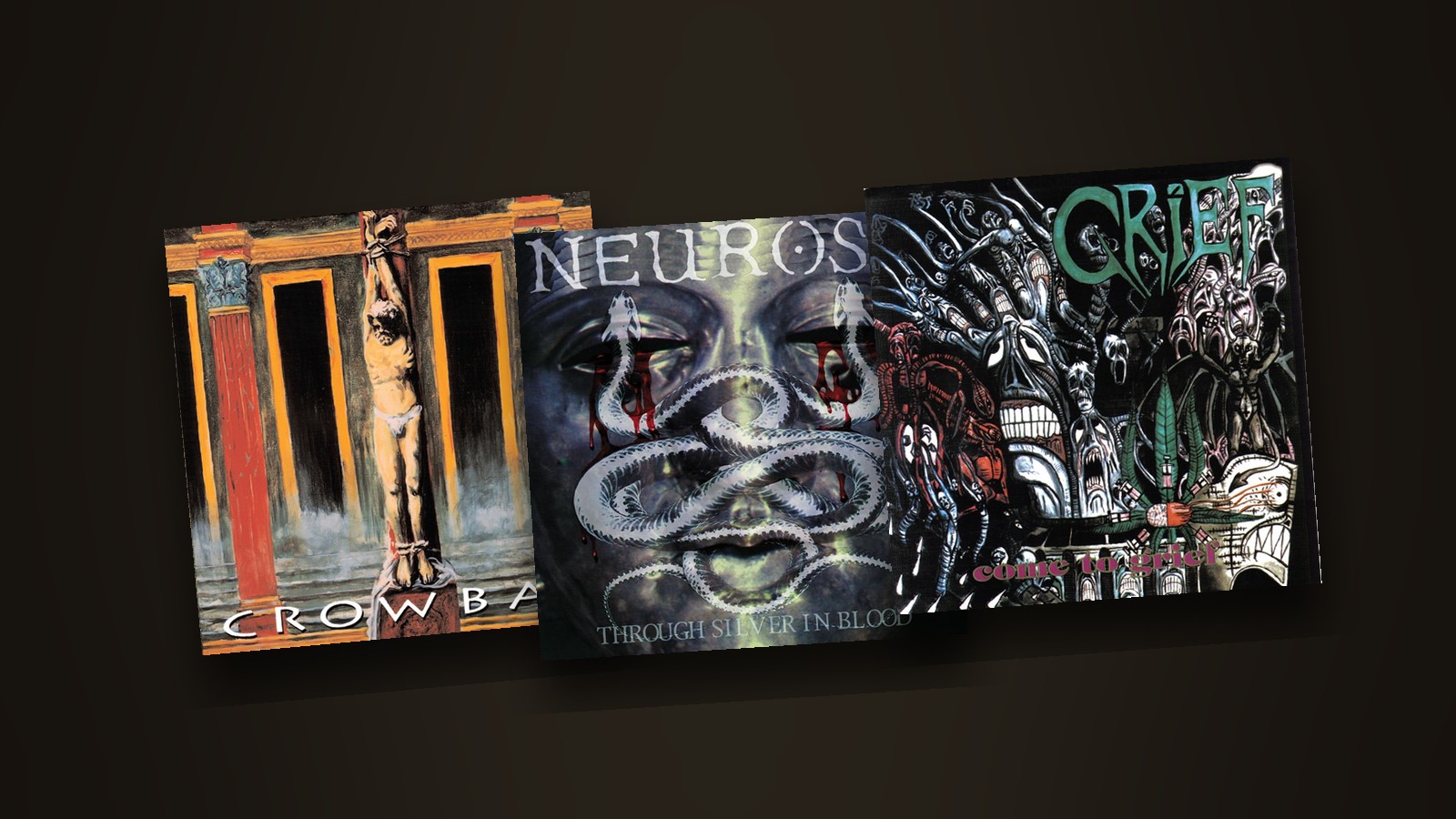
Sixteen records in order of release, from the slow second side of My War in 1984 to Primitive Man's Caustic in 2017, each one the moment sludge metal gained a part i...
 Essential Albums
The New Sludge Metal Bands
Fresh asphalt takes a bootprint for about an hour, and the new sludge metal bands are that hour. Eye Flys, Sugar Horse, Chat Pile, Tuskar, Ten Ton Slug and Borer, wi...