
Australian heavy metal bands spent their first decade riding behind one band, the way a road race splits on a crosswind stage: one rider at the front takes the gale full on the chest, the rest tuck into a diagonal line behind his shoulder, and anyone who drifts a yard out of that shelter is blown into the gutter and dropped, legs still turning, while the group pulls away. The rider at the front of the Australian field from 1975 onward was the band two Glasgow-born brothers had put together in Sydney in 1973, AC/DC. The ones worth hearing are the ones who pulled out and rode alone.
Volume sorts nothing here, because the whole country had volume to spare. Rhythm sorts everything. A shuffle with the swing left in the drummer's right hand is rock and roll at any wattage, however hard the guitars are pushed, and a straight eighth note riff with a gallop under it, two guitars in harmony and a singer climbing over the top is the other thing. Buffalo in Sydney got to the weight early, in 1973. The rest of the argument is about who chose the gallop.
The Sydney five who sat closest to the throne, signed to the same Albert Productions stable and recorded by the same production team of Harry Vanda and George Young, went by the name Rose Tattoo, and their 1978 debut marks the border of the whole subject. Pete Wells's slide guitar cracked across the beer barns of the pub circuit like a stockwhip across a cattle yard, the tip outrunning its own noise a foot above the heads it was meant to turn, and Guns N' Roses put "Nice Boys" on an EP in 1986. It is a great hard rock record. The shuffle never leaves it.
The first bands to straighten the beat
The Adelaide band that came east, shed the name Fat Lip and signed to Deluxe, the new label of Michael Browning, who had managed AC/DC through the seventies, reappeared in 1980 as Heaven. The Scottish-born singer who had auditioned for the vacant microphone in AC/DC that same year was Allan Fryer. The band he went back to did the one thing the pub circuit never asked of it. It tore the swing out of the snare.
Recorded in 1983 with Mick Cocks, formerly of Rose Tattoo, on guitar, and with Ronnie James Dio, Lita Ford and Glenn Hughes passing through the sessions, Where Angels Fear to Tread sent "Rock School" into rotation on MTV. Heaven followed the video across America on bills with Judas Priest, Mötley Crüe, Black Sabbath and Kiss, having first opened for Iron Maiden at home. A guitarist from the border band had crossed over and found the rhythm different on the far side. The records have aged. The direction has not.
Melbourne answered with a school band. Formed by the classmates David Zerafa, Emilio Sarpa and Frank Degennaro under the name Storm, and renamed in August 1981 in the middle of recording its first EP when the old name turned out to belong to somebody else, the quartet that took the new wave of British heavy metal to the far side of the world was Taipan. Britain heard it in 1984, when Bullet Records reissued the seven inch as the twelve inch Breakout. Twin guitars, a high voice, riffs cut square: the whole Sheffield and Newcastle kit, assembled from imports. The band was gone by 1987.
No label on this side of the equator
What the heavy metal bands of the early eighties lacked was never nerve. It was an industry. The pub circuit paid a band to keep several hundred drinkers on their feet until closing time, commercial radio played what the publicans' crowds already knew, and the nearest labels that pressed heavy metal for a living sat on the far side of the equator, in London and West Germany. Taipan reached Europe as a reissue, Heaven by packing up and leaving. The bands that stayed home ran out of money. The ones that left ran out of time.
The same British records sent other young bands faster. Mortal Sin in Sydney pressed Mayhemic Destruction on its own label in 1986 before Phonogram took it worldwide, and Hobbs' Angel of Death and later Deströyer 666 carried the line into thrash and black metal, whose histories they belong to.
The power metal decade, sold abroad
The second wave came with a paradox bolted to it. Between 1998 and 2005 the country turned out a salvo of melodic and power metal records good enough for German and Japanese labels and all but invisible on its own radio. The Melbourne band that the guitarist Johnny Stoj founded late in 1993 and Nuclear Blast signed in 1998 was Pegazus, and Breaking the Chains, out across Europe in November 1999, is a Judas Priest manual with the gallop bolted to the front. It sold where the gallop was already a religion.
Further inland, the band Lord Tim, born Tim Grose, founded in the outback mining town of Broken Hill in 1989 and drove as singer, guitarist, keyboard player and producer until it broke up in 2005, straight after an international tour with Megadeth, was Dungeon. A Rise to Power, on Metal Warriors in August 2002, is a bastion built in a mining town, and a small one.
Recorded at Palm Studios in Melbourne and released by the German label Limb Music on 29 September 2003, Sands of Time introduced the band that sounded most like a European power metal act without ever leaving Victoria, Black Majesty. The title track of Silent Company, two years later, drives the double kick drums flat into the floor while the chorus climbs over them. It is fast, bright and unashamed. Nobody at home was listening.
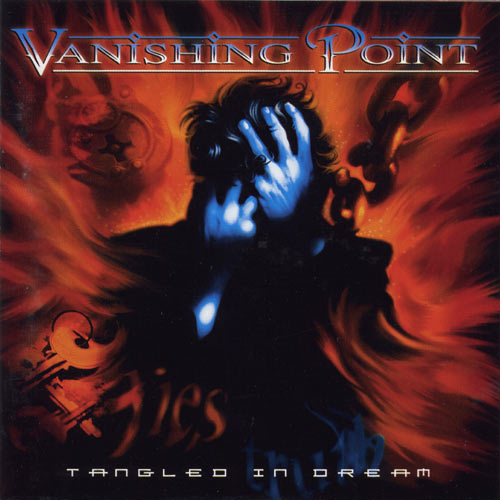
The Melbourne band that gave up the name Eye in 1995 and put Silvio Massaro at the microphone was Vanishing Point, and Tangled in Dream, in 2000, bent the power metal frame towards progressive metal, longer songs and keyboards laid over the twin guitars. By the middle of the decade the vanguard was signed, touring Europe and still playing to half empty rooms in its own capital cities.
A bastion built in a mining town, and a small one.
Australian heavy metal bands since 2000, and the hard rock border
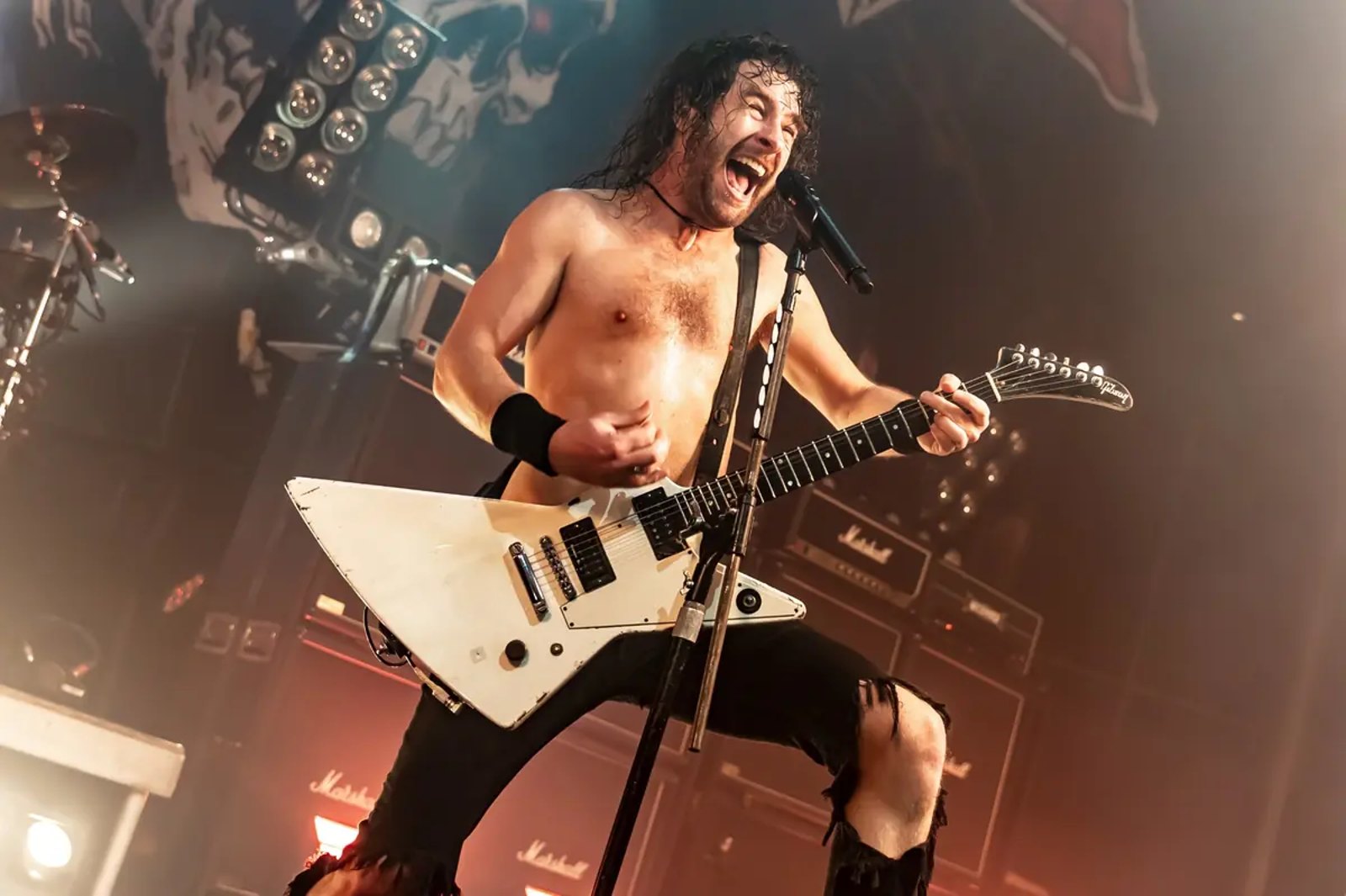
The border crossed back in 2007. Formed late in 2001 in Warrnambool, on the coast road west of Melbourne, by the singer and guitarist Joel O'Keeffe and his brother Ryan on drums, the band that sold a new generation the old AC/DC rhythm, the shuffle included and without any apology, was Airbourne, and Runnin' Wild, released that June, went to number 21 on the ARIA album chart. It is hard rock by its own account. The border holds.
On the metal side of the line, the four school friends who formed a band in Melbourne in 2003, took the name of a horror film series and called their 2011 debut on the German label Massacre Barbed Wire Metal are Elm Street. The title song hammers a Judas Priest riff flat and sets a screamer loose above it, and Knock 'Em Out... With a Metal Fist in 2016 and The Great Tribulation in 2023 kept the lineage unbroken. No wink, no irony, on a North American tour with Night Demon and Skull Fist.
How the British wave, the Americans and the Germans built the style these bands chose is set out in the chapter that covers it. What the Australians added was a decision, taken again in every generation, to leave the easy rhythm to the band that owned it and go the long way round.
Count the records that pass the rhythm test and the shelf is short but solid: Heaven's second album, the Taipan EP, Breaking the Chains, Sands of Time, Tangled in Dream and Barbed Wire Metal. The same argument about a small country and a big shadow runs very differently in the Finnish heavy metal bands, who had no single giant ahead of them and made several of their own.
