
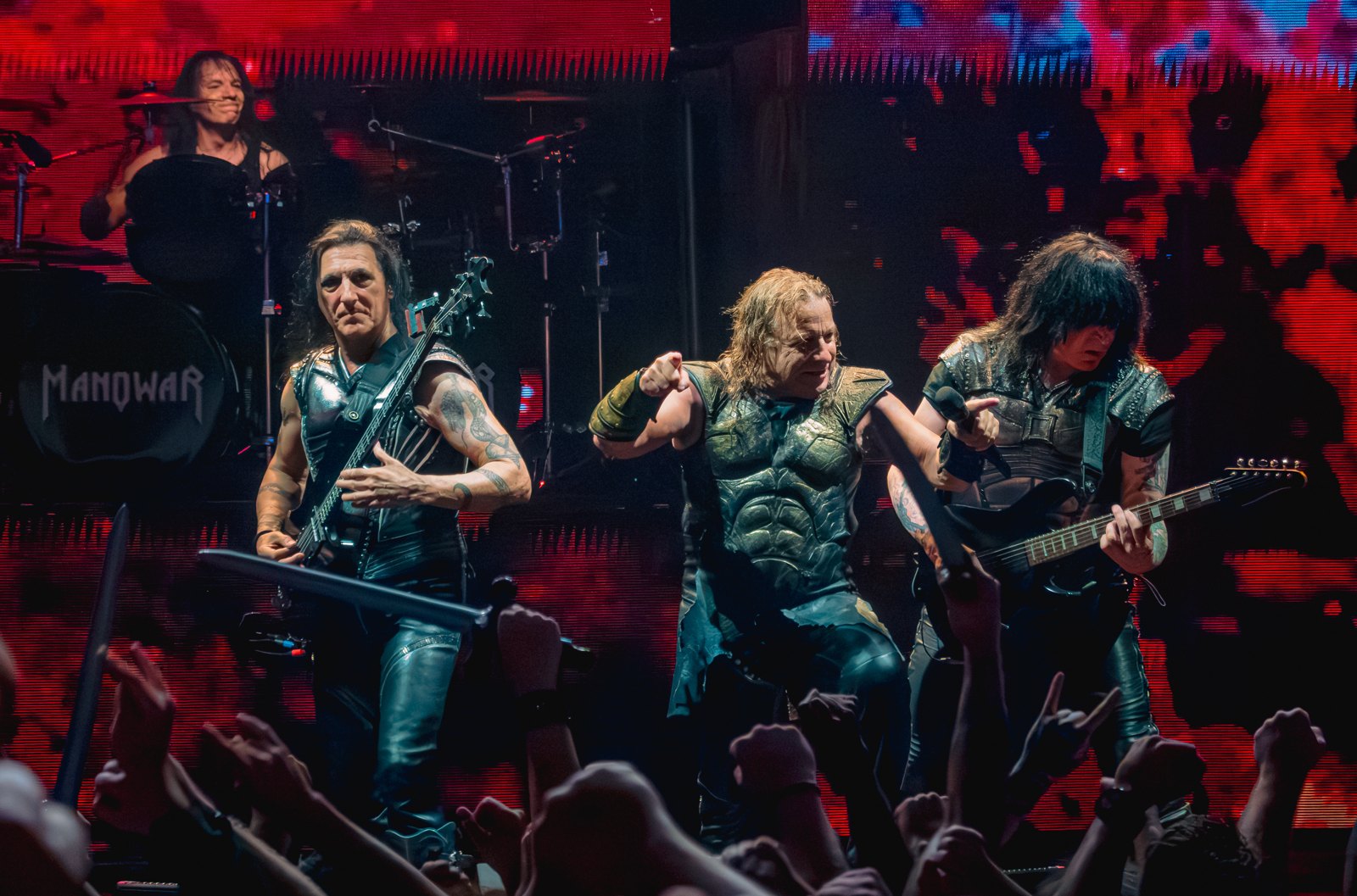
The bassist who told Sounds in 1982 that American audiences did not know "what true heavy metal is" was Joey DeMaio of Manowar, defending Battle Hymns, the debut released by Liberty Records in June of that year, which had just ripped the finale of Rossini's William Tell Overture off the orchestra, rearranged it for one bass guitar and dropped it into a heavy metal record as a show of speed. Hamburg would not fix the sound of power metal for another five years.
So is Manowar power metal? No, not by the grammar the genre settled on after 1987. Manowar is heavy metal of the epic school, one of the oldest roots under the power metal tree rather than a branch on it, and the music says so in four places: the tempo, the bass that leads, the voice and the shape of the songs.
The filing is not unanimous, and it was never going to be. Metal Archives lists the band as heavy and power metal, the encyclopaedias carry both words in the same box, and the list of later bands that name Manowar as an influence, power metal bands prominent among them, runs long. The kinship is real, and so is the shared creed. It is a kinship of subject and of oath, swords and steel and loyalty to the music itself, and very little of it is a kinship of arrangement.
Epic heavy metal is the better name for the school Manowar belongs to, slower and darker than the European style it fed.
The tempo: a march where the genre gallops
Recorded at Universal Recording in Chicago and released by Atlantic on 18 November 1988, the record that carries the band's best-known songs is Kings of Metal, and it puts its weight on songs that walk. "Hail and Kill" runs almost six minutes and "Blood of the Kings" seven and a half, and the first of them moves in the slow motion that an AllMusic review of the album heard in it.
Power metal, in the shape Helloween gave it the year before, is a gallop. The double kick runs underneath at full speed, the guitars run with it, and the chorus is the moment the whole machine lifts off the ground.
Manowar can run. "Wheels of Fire", which opens the same album, and "Kill with Power" from Hail to England in 1984 both move at a speed the genre would later recognise as its own. They are the exceptions on their records. The songs the band chose to stand on, the ones that fill its concerts, move at a pace a hall full of people can stamp to, and a stamp is a different contract with the audience from a gallop. The gallop asks a crowd to hold on. The stamp asks it to join in.
That is the first count against the filing, and it is the weakest. Tempo alone settles nothing, as the Swedish mid tempo school proves every summer, and the question of what genre is Sabaton has the same mid tempo in it and comes out the other way, because everything stacked above that tempo is power metal and here almost nothing is.
The bass that walked to the front
Credited on the sleeve to Rimsky-Korsakov and adapted by DeMaio, "Sting of the Bumblebee" is two minutes and forty nine seconds of a bass guitar playing the tune, following "William's Tale" on the debut and "Black Arrows" on Hail to England. DeMaio plays mostly in piccolo tuning, the four bass strings set an octave above their usual pitch, on custom Rickenbacker basses strung with the spacing of a guitar.
The nearest thing to it in the conservatory is Giovanni Bottesini, who around 1845 hauled the three-string double bass built by Carlo Antonio Testore out of the back row of the orchestra, wrenched its pegs until the gut sat a whole tone above the pitch the players around him had tuned to, and stood at the front of the platform driving out a fantasia on the arias of Bellini's La sonnambula. The instrument that holds up the bottom of every chord in the orchestra was forced to sing the top line instead, and the orchestra behind him had to find its bottom somewhere else.
It is the same exchange inside Manowar. Once the bass is singing, someone has to hold up the chord, and in this band that someone is the single guitar.
Writing for PopMatters in 2007, Adrien Begrand heard the "matching staccato picking" of guitarist and bassist on Hail to England, the two instruments locked in one rhythm rather than one supporting the other. That is the arrangement of the band at its most typical, guitar and bass driving the same figure, the bass breaking loose for a solo, and no second guitar on the record waiting to answer in thirds.
The second guitar is much of the architecture of power metal. Hansen and Weikath trading and harmonising on Keeper of the Seven Keys Part I, the twin leads that every European band after them copied, the keyboard that later took the third voice when the guitars were busy: the genre is music of two melodic lines above a bass that keeps its place. Manowar is music of one line with a bass that walks out of its place for the solo. A band built that way cannot be filed with a genre built the other way without the filing tearing somewhere.
Once the bass is singing, someone has to hold up the chord, and in this band that someone is the single guitar.
The voice, and what the genre took from it
Eric Adams is the strongest case for the other side. He sings high, he holds the long notes at the top, and he screams on demand, the howling Begrand heard on Hail to England, and every one of those habits turned up a few years later in the throats of the German and Finnish tenors who made power metal what it is.
The voice is a forebear, not a member. The tenor who in Paris in 1837 sang the high C of Rossini's Arnold from the full chest instead of floating it in the head was Gilbert Duprez, and Rossini, the story goes, likened the sound to the squawk of a capon having its throat cut, a verdict the public overruled at once, while the lighter manner of the tenors before him gave ground to his darker one. The note outlived the quarrel. The tenors after him inherited it, and none of them is filed as a copy of Duprez.
Adams stands in that position toward power metal. The high, held, howled note on a heroic text was there on Manowar records from 1982, and the genre that grew up in the following decade took it whole, as progeny takes a family feature. What the genre did with that note is where the two part.
In power metal the voice carries a melody that the guitars and keyboards are already shadowing, so the chorus arrives harmonised and climbing. Over Manowar's single guitar the voice usually has nothing above it and nothing beside it, and it sits on top of the riff like a man shouting the oath while the hall repeats it. The note is the same. The building under it is not.
The AllMusic biography by James Christopher Monger describes the band's music as "urgent melodic riffs" with "classical touches", which is close to exact: the melody lives in the riff and the classics arrive as touches, a Rossini finale here, a Rimsky-Korsakov piece there, Puccini's "Nessun dorma" sung outright on Warriors of the World in 2002. In power metal the classical inheritance is the harmony itself.
Song form: the oath, the narration and the stamped chorus
"Warriors of the World United" shows the form at its plainest: an anthem, in the word of a review that greeted the 2002 album, with a chorus pitched for a crowd to roar back. It is a song built to be sung by the people in front of the stage, and the band plays it as if it already belonged to them. Some of these choruses rise as high as any the genre owns. What differs is what they are for.
The longer pieces are not long in the way power metal's suites are long. The piece on the debut that ran past six minutes, needed a spoken introduction and pulled the voice of Orson Welles onto a heavy metal record to supply it was "Dark Avenger", and the nine minute close of Hail to England two years later is "Bridge of Death". The title song of the same record brings in the St. Mary's Cathedral Choir, and Kings of Metal credits the Canoldir Male Choir.
A choir on a Manowar record is the hall made audible, a crowd of trained voices added to the oath. A choir on a power metal record is a section of the arrangement, voiced and layered so the chorus can climb. The forces are similar. The jobs are opposite.
The longest piece the band ever cut, a 28 minute suite built from a prelude and eight numbered parts that follow the story of the Iliad, a telling in chapters rather than a returning chorus that rises a step higher every time it comes back, was "Achilles, Agony and Ecstasy in Eight Parts", on The Triumph of Steel in 1992. Power metal's long songs are long choruses. Manowar's long songs are long tellings.
The power metal ballad climbs to a key change. The Manowar song swears an oath and repeats it until the room swears too. That difference governs everything from the length of the verses to the size of the gaps left for the audience, and it is the clearest single sign that the two musics were written for different purposes.
Is Manowar power metal, or the root it grew from?
Put the four counts together and the tensile strength of the old filing gives out. Mid tempo as the rule and speed as the exception; one guitar, a lead bass and no harmony line; a high, full voice with nothing shadowing it; choruses built as rallies for the hall rather than as harmonised climbs over a second melodic line. Each one alone could be argued. Together they describe a heavy metal band that power metal borrowed from, and not a power metal band.
The family tree draws the same line. The loudest of the American bands that sired epic heavy metal, older than the Hamburg records and slower than them and the one whose subjects travelled furthest, was Manowar, and the fuller history of it follows how the branches grew from there. A root feeds a tree. It is not one of the leaves.

What the descendants did with the inheritance makes the point from the other side. Released in Finland in April 2011 and climbing to number seven on the Finnish album chart, Steel was written from first track to last by Anton Kabanen, the guitarist of Battle Beast, who years later named Manowar among his five favourite bands to Distorted Sound, and its titles, "Enter the Metal World" and "Justice and Metal" among them, could have been lifted from a Manowar sleeve.
The record still credits Janne Björkroth on keyboards and Nitte Valo on lead vocals, and the keyboard is exactly the voice Manowar never needed. The vow came across intact. The arrangement was rebuilt in the European manner, a second melodic line laid over the band, and that rebuilding is the difference between a vow inherited and a genre joined.
So the answer lies in the order of events. The subjects, the high voice and the oath came first, on American records made before anyone had a name for the genre; the gallop, the twin guitars and the harmonised chorus came afterwards, in Europe, and Manowar never made them its rule. A forebear shares the family face. It does not share the family's grammar, and grammar is where a genre lives.
