
The best deathcore album of the 2000s was cut in the snow, in January and February 2007, in a mining town in the far northwest of Quebec, about as far from the Riverside club circuit as a record in this music has ever been made.
Booked into Projecson Recording Studio in Rouyn-Noranda, produced by their own former guitarist Yannick St-Amand and sent to Andy Sneap's Backstage Studios in Derbyshire for the mix before Century Media put it out on 22 May 2007, the Montreal six whose two singers had been carving every verse in half between them since 2004 were Despised Icon, and The Ills of Modern Man still flattens everything else the decade produced. Nothing else comes close.
Picture the roof rack a guitarist welds onto a fifteen-passenger van in his parents' back yard the week before a first tour. Where he laid a proper bead, the steel is still holding twenty years and a few hundred thousand miles later; where he only tacked the joints, the first stretch of washboard dirt road cracks them open, tears the rack off the roof and hurls two speaker cabinets across three lanes of interstate, where a semi grinds them into the asphalt. First albums are built the same way. The ones that last were made solid at every point where one part hands over to the next, and the ones that were tacked together sounded fine in the first week and were scattered across the road by the tenth play.
That is the test for the best deathcore albums of the 2000s, a field crowded with debuts, and it clears a lot of famous names off the board before it starts. Leave aside the three starting points every newcomer is handed, Doom, The Cleansing and This Is Exile, which already have their place among the records and the songs of a first month. Nine other records from the decade pass the test, and the order they pass it in is the ranking.
| Rank | Record | Released | Label |
|---|---|---|---|
| 1 | Despised Icon, The Ills of Modern Man | 22 May 2007 | Century Media |
| 2 | All Shall Perish, The Price of Existence | 8 August 2006 | Nuclear Blast |
| 3 | Whitechapel, The Somatic Defilement | 31 July 2007 | Siege of Amida (Europe), Candlelight (North America) |
| 4 | Veil of Maya, The Common Man's Collapse | 1 April 2008 | Sumerian |
| 5 | Through the Eyes of the Dead, Bloodlust | 25 October 2005 | Prosthetic |
| 6 | Carnifex, Dead in My Arms | July 2007 | This City Is Burning |
| 7 | Animosity, Animal | 2 October 2007 | Black Market Activities, Metal Blade |
| 8 | Oceano, Depths | 7 April 2009 | Earache |
| 9 | Job for a Cowboy, Genesis | 15 May 2007 | Metal Blade |
The best deathcore albums of the 2000s start in Quebec
Ten songs in just under 40 minutes, a sleeve painted by Felix Rancourt and lyrics that Alex Erian told Exclaim! were about regrets, fears, inhibitions and living with disappointment: on paper The Ills of Modern Man is a modest record. On the speakers it is a demolition. Erian and Steve Marois hurl each line at one another like two roadies throwing an eight-by-ten bass cabinet back and forth across a load-in ramp, every catch knocking the catcher back a step and the casters gouging a rut into the boards, and the record never once lets the weight hit the ground. That handover is the thing the decade's other bands copied. Nobody copied it better.
AllMusic's Alex Henderson heard technical death metal and technical metalcore meeting on it, with a balance of accessibility and angularity, and the record bears him out song by song, from "Furtive Monologue" in the second slot to "Fainted Blue Ornaments", the five-minute closer. It is the most complete exponent of the two-singer attack on record. Twenty years on, it has not dated by a week.
Second place goes to the Bay Area. Tracked between March and May 2006 at Castle Ultimate Studios in Emeryville with Zack Ohren at the desk, released by Nuclear Blast on 8 August 2006 and fronted for the first time by Eddie Hermida, with Chris Storey newly arrived on lead guitar, the Oakland five who kept the guitar solo alive inside the template while most of their peers were cutting it out were All Shall Perish, and The Price of Existence is the record that proves the solo and the drop could share a song without either one giving ground. Alternative Press heard death metal given the core touch, breakdowns, gang vocals and no let-up in the aggression. Blabbermouth gave it 8.5 out of 10.
The details are what keep it fresh. Its fourth track takes its title from the environmentalist David Brower, "There Is No Business to Be Done on a Dead Planet", and lists Mike "Gunface" McKenzie of The Red Chord as a guest; its seventh, "Greyson", is an instrumental; and it closes on "The Last Relapse", six minutes and 41 seconds long, the longest song on a record that runs 43 minutes and 20 seconds. A debut-era deathcore album with a song about corporate greed, a guest from the Massachusetts underground and an instrumental in the middle of it has no business holding together. It holds.
The ones that last were made solid at every point where one part hands over to the next.
Third is the record whose subject matter is the hardest to sit through and whose playing is the easiest to defend. Recorded in 2007 at The Sound Lair in Knoxville, produced by the band with Miah Lajeunesse, finished in under 32 minutes and released on 31 July 2007 by Siege of Amida in Europe and Candlelight in North America, the Tennessee sextet that already had three guitarists on its very first album was Whitechapel, and The Somatic Defilement is that line-up's only record. Most of it is a concept album about Jack the Ripper, told in the first person, with "Festering Fiesta" about Jeffrey Dahmer and "Alone in the Morgue" about a coroner as the exceptions.
Brandon Cagle, the third guitarist on the album, was out of the band by November 2007. He said a motorcycle accident on 28 April that year had left him with a nerve injury in his right arm and that he could not play. Zach Householder replaced him.
The record itself has aged well. Phil Bozeman's low voice is already fully formed, Rock Hard gave the album 8 out of 10, and when Metal Blade reissued it on 16 April 2013 it handed the tapes to Mark Lewis for a new mix rather than leave the original sound to stand alone. A band does not remix a debut it is ashamed of. It remixes one it expects people to keep playing.
Sumerian, Prosthetic and a San Diego debut: the middle of the nine
Fourth is the record that the reviews of its own day got wrong. Lambgoat gave The Common Man's Collapse 4 out of 10 when it came out, and it is now one of the progressive branch's foundation stones. Recorded at Keene Machine Studios in North Hollywood with Michael Keene of The Faceless producing, released by Sumerian on 1 April 2008 and over in just over 33 minutes, the Chicago quartet that chopped the deathcore riff into lengths no pit could predict was Veil of Maya, with Brandon Butler singing for the first time and Kris Higler playing bass for the last. "It's Not Safe to Swim Today", 2 minutes and 43 seconds long, is the way in. "Pillars", an instrumental, sits in the middle like a held breath.
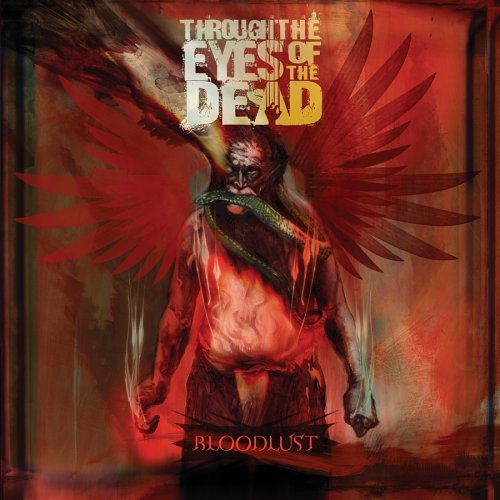
Fifth is the oldest record here. Produced by Jamie King, packaged in a Paul Romano painting and released by Prosthetic on 25 October 2005, the debut that Lambgoat's Ash Levitt filed as metalcore leaning on the metal side came from Through the Eyes of the Dead, and two decades of hindsight have moved it squarely into deathcore. Levitt gave it 7 out of 10 and singled out "When Everything Becomes Nothing" as the track where the band's promise paid off, and that choice still stands. The record took the band onto the Sounds of the Underground tour in the summer of 2006, on a bill with In Flames and Trivium, which says how melodic its leads already sounded to the people booking it.
Sixth is a blunt instrument, and blunt instruments wear well. Released in July 2007 by This City Is Burning, mixed and mastered by Dave Swanson, the San Diego band that put out its first album that summer was Carnifex, and Dead in My Arms is the only record the band made with Steve McMahon on bass. The breakdowns on it are not clever. They land where a floor expects them, every time, which is the reason the record still gets played.
Deathgrind, downtempo and the band that walked off: the bottom of the nine
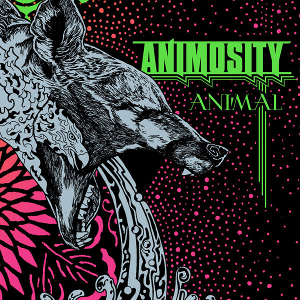
Seventh is the record most best-of lists forget. Produced by Kurt Ballou of Converge and released on 2 October 2007 through Black Market Activities with Metal Blade, the San Francisco five who had cut their first album at sixteen and seventeen and finished on a deathgrind sortie of eleven tracks were Animosity, and Animal was their last record. Most of its songs are under three minutes and one of them, "Evangelicult", lasts four seconds. They come out like empty beer cans stomped flat one after another on a green room floor at the end of the night, each one crushed with a single heel strike and kicked into the corner before the next hits the concrete. Lambgoat gave it 9 out of 10. The band split in October 2009.
Eighth is the decade's last word and the slow end's first. Released by Earache on 7 April 2009, thirteen tracks and 44 minutes and 20 seconds with Adam Warren on vocals, the Chicago band that dragged the genre's tempo down toward a crawl and made the crawl the point was Oceano, and Depths is the only album it made with Jeremy Carroll and Andrew Mikhail on guitars. "A Mandatory Sacrifice", one of the two songs Earache sent out with a video, is the record in miniature, the drop arriving late and staying long. AllMusic's Eduardo Rivadavia praised its churning down-tuned riffs and odd time signatures, and "District of Misery" got the other video. The downtempo bands of the next decade start here.
Ninth, and last, is the record that was already leaving. Recorded at Blue Light Audio Media in Phoenix with Cory Spotts producing, the same room and the same man as the EP that made the band's name, and released by Metal Blade on 15 May 2007, the Glendale five who turned the VeriChip, a microchip implant for people, into a concept album about technology, the Book of Revelation and the end of civilisation were Job for a Cowboy, and Genesis is the last record with founding guitarist Ravi Bhadriraju and the last with drummer Elliott Sellers, who had played on the EP too. "Embedded" got the video. Genesis sits at the bottom of the nine rather than off it for a plain reason: it is a death metal record made by a deathcore band in the act of becoming something else, and the riffs hold up even where the genre tag does not.
The records just outside the nine all have a case. Emmure's Goodbye to the Gallows on Victory in 2007 stripped the music down to the bounce; Annotations of an Autopsy, from Lowestoft, put out Before the Throne of Infection through Siege of Amida on 14 April 2008, with Ferret listed beside it, and Blabbermouth scored it 5.5 out of 10; Waking the Cadaver released Perverse Recollections of a Necromangler on Necroharmonic on 21 November 2007 to a 1.5 out of 10 from Chronicles of Chaos, and the band was still releasing albums in 2021. Rose Funeral and Arsonists Get All the Girls made records that a fan of either could argue onto the list. None of them beats the nine on the test.
What the nine hand to the next decade
Look at the nine together and a pattern comes out of the dates. Six of them came out inside a single year, from Job for a Cowboy in May 2007 to Veil of Maya in April 2008, and most of the nine were first albums. They came from bands with a profile page full of strangers waiting and no reason to sit on a record for another year. What separates the nine from the hundred others released in the same stretch is not budget or label. Siege of Amida and This City Is Burning were small; Century Media and Nuclear Blast were not. It is that the songs were built to be played again.
By common consent the decade ends in confusion, with Despised Icon breaking up in 2010, Job for a Cowboy gone to death metal and the rout of the MySpace audience already under way. The music did not end with it. The bands that came next took the progressive riff of Veil of Maya, the slow drop of Oceano and the lead guitar of All Shall Perish and pulled them in separate directions, and that splintering is where the best deathcore albums of the 2010s come from.
The Ills of Modern Man first, The Price of Existence second, The Somatic Defilement third, and six more behind them that a listener can still put on today and hear the riff land the way it landed the week it was cut.
