
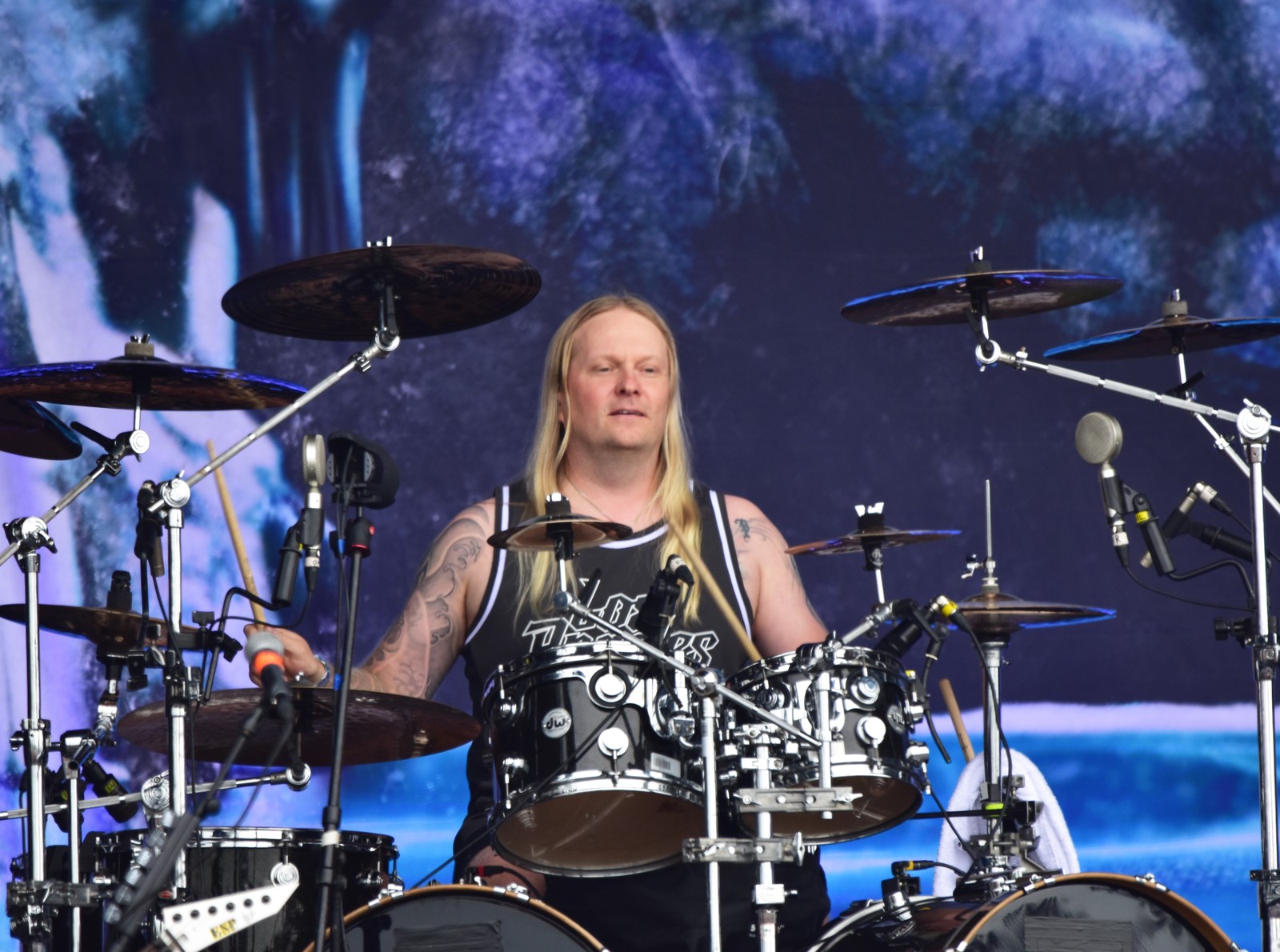
Two hundred beats a minute is a published figure and not a measured one, and it is the only number in general circulation about the fastest power metal songs. The six-piece whose 2006 single is credited with that figure is DragonForce, and "Through the Fire and Flames", seven minutes twenty two of C minor in four four, is set down at two hundred with the first half of the guitar solo said to slow to a hundred and seventy, so the genre's one piece of evidence has two tempos in it before anybody counts anything.
Before a clockwork could be bought for the purpose, a tempo was written down as a length. A weight on a cord, the cord measured off in inches, the figure inked at the head of the part, and a player two countries away hanging a weight on a thread cut to that number. The instruction is exact and settles nothing, because a swing takes two counts. Call the pass across one beat and the figure stands; call the pass and the return together one beat and every bar takes twice as long. Two players obeying the same number to the letter will differ by exactly two to one, with the thread in both their hands as proof. Nothing in the weight helps. Its rate belongs to the length of the cord, so launching it harder only drives the arc wider and buys no beats at all, since across the small arcs a thread allows the swing keeps one time whatever the weight or the push, and knotting the cord short to buy some batters the weight into the desk edge at a rate no hand in the room can read.
A tempo figure reports what its author counted. It is not a property of the music. Harmony, instruments and the voice are laid out in the anatomy of the sound, while speed is the one property this genre states as a bare number, and the number arrives with no unit on it. Put a dozen of them in order and what has been ranked is a dozen acts of counting.
Two players obeying the same number to the letter will differ by exactly two to one, with the thread in both their hands as proof.
What a figure for the fastest power metal songs is counting
Five things in one of these songs will take a count, and no two answer alike. The pulse is the quarter note, the thing a foot taps. The snare on two and four is half of it. The double kick, two ankles hammering the same skin, runs eighths or sixteenths, twice or four times the pulse, and it is the concussive layer a listener reads as effort. The riff has a subdivision of its own, usually the sixteenth. The sung line of a held refrain moves slowest of all, often twice to the bar, so every percussive count in the song but the snare is faster than the tune on top of it.
| What is counted | Events in a minute | Events in a second |
|---|---|---|
| The snare on two and four | 100 | 1.7 |
| A chorus moving twice to the bar | 100 | 1.7 |
| The pulse, the quarter note | 200 | 3.3 |
| A double kick in eighths | 400 | 6.7 |
| A double kick in sixteenths, or a riff picked in sixteenths | 800 | 13.3 |
Order a set of records by the kick and the result is a ranking of drummers. Order them by the sung line and the quick ones lose most of their lead: a chorus moving twice to the bar gives seventy notes a minute over a pulse of a hundred and forty and a hundred over a pulse of two hundred, while the kicks under them, eighths against sixteenths, stand at two hundred and eighty strokes a minute and eight hundred. A drummer and a singer can both answer honestly and disagree.
The Finnish band that cut ten songs at Tico Tico in 1999 with, by a later bandmate's account, nothing in the headphones to play against was Sonata Arctica, and Ecliptica therefore has no tempo in the sense a printed figure implies. "8th Commandment", third in the running order and a shade under four minutes, moves across its own length the way five players move, so a number taken off it is the number at the bar where the counting happened. Any figure for that song is a sample.
What a stroke costs, and what an ankle will sustain
Two sticks on one head move the arithmetic again. A stick dropped on a tight skin comes back up on its own and can be put down a second time for almost nothing, so a hand that moves once has played twice. Press the stick into the head instead of letting it come back and the second stroke of every pair has to be hauled up out of the skin by the arm, the same figure at the same speed now costing double, the pairs going ragged inside a minute with the second of each arriving flat and late and taking the inside out of the figure. Strokes are not all priced alike. A count of events measures neither movements nor work.
The one place the unit has ever been nailed down is a competition. Measured on a Drumometer, a pad that counts strokes and registers nothing else about them, the contest's hand record stood at one thousand two hundred and eight single strokes in sixty seconds, set by Tom Grosset in 2013, twenty a second across two hands, though Guinness's own list has since moved on to one thousand three hundred and thirty four. The feet come in lower, at a little over a thousand singles in the same minute, one foot answering the other. A song published at two hundred with the kick in sixteenths asks for eight hundred strokes a minute, thirteen a second, three quarters of the best officially counted minute of single strokes any pair of feet has produced, with nothing else to do.
A minute and five minutes are different questions. The drummer who ran a kick pattern for a double pedal demonstration in 2016 was Kevin Paradis of Mithridatic and Melechesh, who reported one thousand and thirty seven strokes at two hundred and sixty inside a minute, then four thousand seven hundred and ninety seven at two hundred and forty across five, an average of nine hundred and fifty nine a minute. Decibel carried it in May 2016 as an unofficial record, short of the procedures an official one needs, and he added that he had looked for double triggering in the recordings and found none. A song is the second feat, never the first.
Where the voice runs out and the title takes over
An ankle can be helped. A kick line can be split between two feet, written in eighths instead of sixteenths, or laid down sterile in a sequencer, and the figure on the page survives all three. A melody gets none of that help. Split each note of a tune in two and what comes out is a stutter, not that tune faster. Halve the note values and what comes out is the tune at twice the speed, and a voice that speaks at between five and eight syllables a second has no way to sing the thirteen that a kick in sixteenths manages at two hundred. The two ceilings are not the same ceiling.
The band that gave a three minute song the plainest title in the genre and printed no figure beside it was Stratovarius, and "Speed of Light", just over three minutes long and fifth of twelve on Episode (Noise, April 1996, cut at Finnvox with Timo Tolkki producing), carries all it says about speed in a three word title. Where that record stands in the canon is argued in the longer account. The title is the thing worth pressing on, because it makes a claim and declines to say in what.
What bands do at the ceiling, and a record that never settles
Four manoeuvres, all audible the moment the units are kept apart. The snare drops to half time under a kick that goes on running, which leaves the floor exactly where it was and halves the pulse the ear counts above it. The fast line is handed to the guitars, which pay for it in the forearm rather than anywhere a chorus can be heard. The vocal is cut into shorter phrases with the long notes saved for the refrain. And the kick is automated, programmed in a sequencer and not played, which holds the figure to the bar line and takes the body out of the count.
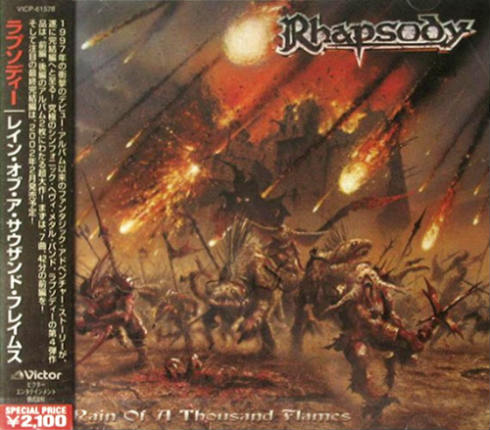
The Italians who filled a stop-gap record in 2001 and hung a thirteen minute piece off the front half of it were Rhapsody Of Fire, and Rain of a Thousand Flames, cut at Gate and Pathway Studios with Sascha Paeth and Miro producing, sets its title track at just under three minutes and three quarters, two tracks away from "Queen of the Dark Horizons" at nearly thirteen minutes and three quarters. The sleeve carries the shorter name the band used then. The opener is a barnstormer, and the long piece after it moves between slower passages and faster ones, so no single figure fits the whole.
The claim printed on the sleeve

Eighteen years after the figure of two hundred went into circulation, the band it belongs to put the claim on a sleeve instead. Warp Speed Warriors, out on 15 March 2024 through Napalm, nine tracks and a shade over forty six minutes produced by Damien Rainaud with the band's two guitarists, says fast in its title and names no unit, no instrument and no quantity.
"Doomsday Party", a little over five minutes long, went out as the first single on 14 September 2023, six months ahead of the album, with an announcement that carries no tempo. The one number anybody can quote about this band belongs to a song from 2006, and somebody wrote it down rather than measured it.
What moves the count, and who counted it
One more thing moves the count, in a direction everybody knows and nobody allows for. A road-hardened band on a stage tends to play faster than the same band in a studio, so a tempo taken off a record is the conservative reading, and the evidence sits in the best power metal live albums, where the same material arrives ahead of where it was written.
So the question has an honest form and a dishonest one. Fastest at what, over how long, and counted by whom: answer those three and a number turns into evidence somebody else can check. Leave them out and what is left is a boast with digits in it. Everything in circulation is a count waiting for somebody to say what was counted.
