
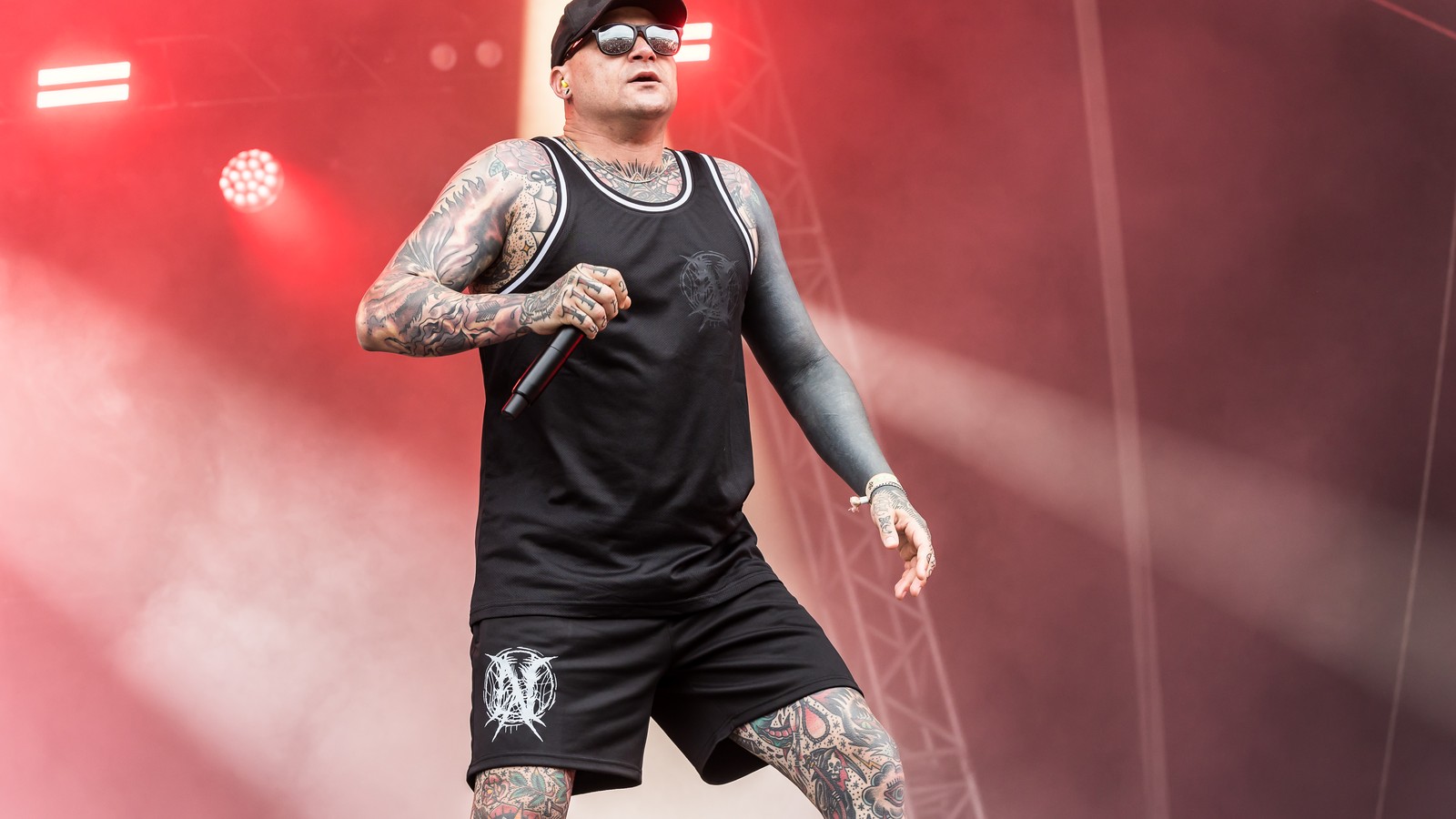
Berlin, 30 December 2013: the last date of a farewell tour, a home town room, and a camera filming the whole set so it could go online afterwards. Started late in 2005 as a side project, issuing its first songs on fifty cassettes for a Berlin tape label and splitting a record with the Las Vegas deathcore band Molotov Solution in 2006 and driving its breakdowns through the plywood of club stages on a 2007 European bill with Dying Fetus, the quintet that walked off that stage for the last time was War from a Harlots Mouth. Among the support bands on the tour was Science of Sleep from Braunschweig. Its debut album had been produced six months earlier by the headliner's guitarist, Simon Hawemann.
One band ending, the next one already carrying its producer's fingerprints. The German deathcore bands that count came up between two machines the country had built for other music. On one side stood the hardcore and metalcore circuit: the Leipzig merch company Impericon with its tours, its festival and for a while its own record label, the core labels Lifeforce, Redfield and Bastardized Recordings, the clubs that booked Never Say Die!. On the other stood the death metal side: Summer Breeze in Dinkelsbühl, Wacken, and labels such as Massacre, Reaper Entertainment and Century Media. Deathcore belonged to both. Both claimed it.
Picture the gravel slope between the tent stage and the main stage of a German summer festival at changeover, the ground running downhill from the hardcore tent toward the big stage, and a rolling drum riser parked on it with the next band's kit still bolted down: somebody kicks the brake lever off, the riser ignores the stagehand pushing it uphill, and it runs the other way under the weight of the bass drums and the cymbal rack, gathering speed past the merch stalls until it slams into the steel of the main stage barricade, cymbal stands snapping, the front head of the kick drum bursting open. Nobody steered it. The weight did.
The blast beat and the double bass came into deathcore from death metal, and in Germany they kept pulling the bands back toward death metal's stages. The early bands from the core side mostly changed genre or stopped. Necrotted, Call of Charon and Acranius, the three bands with albums out in 2025 or 2026, all made their names on the metal side. Germany's place on the map of the scenes, from Riverside to Krasnoyarsk, is usually explained by its companies. The roll call is the bands.
Berlin first: War from a Harlots Mouth and the butter duo
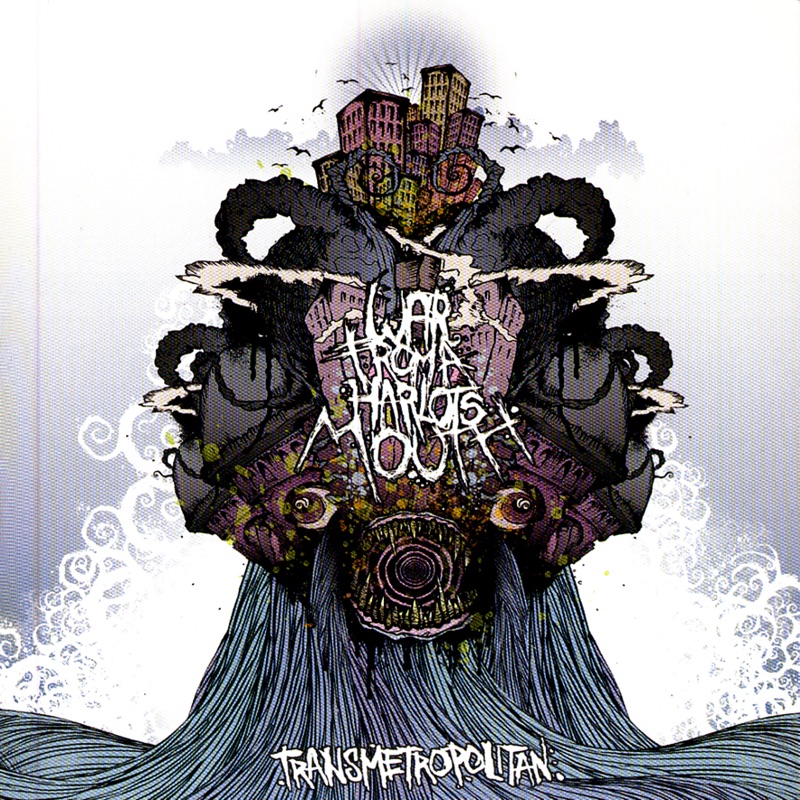
Released by Lifeforce Records in September 2007, eleven tracks long and sung by Steffen Winopal, who left the band shortly after it came out, the record that put a Berlin band on the same shelf as the American first wave was Transmetropolitan. It is the one to start with, because it is the only album the band made inside the genre. The record shows a German vanguard working the same rooms as the Americans in the same year, not following them a decade later.
Nico Webers, who had sung in The Ocean, took the microphone after Winopal. With him the band moved on: In Shoals, in April 2009, left the deathcore sound for mathcore, with Converge among the reference points German reviewers reached for, and two more albums followed, MMX in 2010 and Voyeur in 2012. One record, then the exit.
The other Berlin name took a different exit. Begun in 2007 as a duo of Marcel Neumann, who had played guitar for the pop singer Martin Kesici, and the singer Tobias Schultka, sent across Germany on the Infiziert tour of 2008 beside the metalcore band Callejon, and back on 14 May 2010 with a second album, Der Tag an dem die Welt unterging, issued the same day in Europe, the United States and Japan, the duo that ripped German nursery songs apart on its debut and then built its own songs out of German lyrics, electronics and breakdowns was We Butter the Bread with Butter. Schultka left in 2010 and came back in 2019. In between, with Paul Bartzsch singing, the band paid for its Projekt Herz EP by collecting four hundred pre-orders through PledgeMusic, and released it in December 2012. Neumann calls the style modern metalcore. The pull went toward the core side, and the band went with it.
In Germany the drums kept pulling the bands back toward death metal's stages.
Bastardized, Impericon and the German deathcore bands of the 2010s
Würzburg supplied the fastest rise and the fastest fall. Formed in August 2007 with two singers, Tobias Jaschinsky and Adrian Schler, and three guitarists, opening for Callejon and War from a Harlots Mouth on a German winter tour that December, then winning the Summer Breeze newcomer contest in 2008 and with it the opening slot on the festival's main stage the next day, the sextet that tore through that whole climb before it had pressed a single album was Fuck Your Shadow from Behind. Bastardized Recordings, a label run out of Selters in the Westerwald by Marco Andree, signed it in July 2009 and released Freigeist on 26 February 2010. On 4 September 2010 the band announced it was finished.
Its players did not leave music. Nikita Kamprad and Jaschinsky went on to found the black metal band Der Weg einer Freiheit, and Kamprad, working in Würzburg, went on to produce three albums for Necrotted.
Formed in Braunschweig in 2010, signed by Bastardized in January 2012 on the strength of its Affliction EP and handed a producer from the Berlin band it would later support on that band's farewell tour, the quintet whose debut Exhaust came out on 14 June 2013 was Science of Sleep, and the label put out the video for the title track. In April 2014 it played the Impericon Festival in Leipzig, and that August it was booked for Summer Breeze: both camps inside one year. A second album, Hellmouth, followed on 25 November 2016. On 24 January 2017 the band announced its split.
Leipzig is the merch company's home, and it produced the band most tightly bound to it. Formed there late in 2009, self-releasing the Welcome to Corpse Wonderland EP in 2012, putting out its debut Aeshma in 2014 through Impericon's own record label and joining the Impericon Festival tour of 2015 beside Whitechapel and The Ghost Inside, the band that carried the company's home town onto the company's own stages was Walking Dead on Broadway. German webzines heard breakdowns and fast riffs without frills on the debut, and by the second album one of them was writing of a band penned inside a narrow deathcore corset. Think of the glass bottle bank behind a youth centre at closing time, the empties fed in one after another, every bottle smashing onto the same heap with the same crash, night after night, the steel walls ringing.
Slaves came out in 2016 on Arising Empire, the Nuclear Blast imprint, and Dead Era in 2018 through Long Branch Records, with atmospheric and melodic touches that metal.de reviewers noticed. The band announced its end in November 2020. The core side had made it, booked it and outlived it.
| Band | From, formed | Record to start with | Where it went |
|---|---|---|---|
| War from a Harlots Mouth | Berlin, 2005 | Transmetropolitan (Lifeforce, 2007) | Mathcore from 2009; last show 30 December 2013 |
| We Butter the Bread with Butter | Berlin, 2007 | Der Tag an dem die Welt unterging (Redfield, 2010) | Electronic metalcore; Das Album in 2021 |
| Fuck Your Shadow from Behind | Würzburg, 2007 | Freigeist (Bastardized, 2010) | Split September 2010 |
| Walking Dead on Broadway | Leipzig, 2009 | Aeshma (2014) | Split November 2020 |
| Science of Sleep | Braunschweig, 2010 | Exhaust (Bastardized, 2013) | Split January 2017 |
| Necrotted | Abtsgmünd, 2008 | We Are the Gods That Tear Ourselves Apart (Reaper, 2026) | Summer Breeze, Wacken |
| Call of Charon | Duisburg, 2006 | Plaguebearer (Massacre, 2019) | Wacken 2025 |
| Mental Cruelty | Karlsruhe, 2014 | Purgatorium (Rising Nemesis, 2018) | Century Media, symphonic blackened deathcore |
| Acranius | Rostock, 2009 | Mercy Denied (Rising Nemesis, 2022) | Slam and death metal tour bills |
Abtsgmünd and Duisburg, on the death metal stages
Formed early in 2008 in Abtsgmünd, a small municipality in the Ostalb district of Baden-Württemberg, sharing stages with Vader, Krisiun and Benighted, recording three albums in Würzburg with Kamprad and climbing from Supreme Chaos Records to Rising Nemesis to Reaper Entertainment, the Swabian band that hauled the breakdown out of the core clubs and threw it onto the Summer Breeze stage in 2015 and Wacken in 2024 is Necrotted. The press files it both ways: death metal on the genre tag, and in a review of its 2026 album a band moving further and further toward deathcore.
"Fat God", released in 2025 with Alan of the Dutch band Distant sharing the vocals, opened the run to the sixth album, We Are the Gods That Tear Ourselves Apart, out on Reaper in April 2026 with guest spots from Sven de Caluwé of Aborted and Maty of Gutalax. From late November 2025 the band toured Europe on the Slamageddon run that brought All Shall Perish back to the continent for the first time in twelve years, with Peeling Flesh and Vulvodynia. A Californian first-wave band, a Durban slam band and a Swabian band on one poster: the death metal side had become the best booking a German deathcore band could get.
Duisburg took the long road. Formed there in 2006, living for more than a decade on a self-released EP, two split releases and a compilation on small labels, and only signing to the German metal label Massacre Records for its debut album, Plaguebearer, on 1 November 2019, with "Illusive Savior" among its videos, the band that had worn out roughly two hundred stages by the time its second album arrived is Call of Charon. Tales of Tragedy followed on Massacre in August 2025, with Dane Evans of To the Grave and Damien Moyal of As Friends Rust as guests, and that summer the band played Wacken. Twelve years from the first EP to the first album. In a scene of fast starts, attrition was the method.
Karlsruhe and Rostock, the slam end

Released by Rising Nemesis Records in January 2018, Purgatorium is the first Mental Cruelty album and the one that shows where the band started. German reviewers heard classic deathcore on it, breakdowns and double bass, and slam on the early records generally: a stack of returnable beer crates piled to the ceiling of a rehearsal cellar, the double bass rattling every empty in its slot, until the breakdown kicks out the bottom crate and the whole tower comes down on the concrete. From there the band climbed label by label, to Unique Leader for Inferis in 2019 and to Century Media in March 2022, and in June 2023 it put a German word on the front of an album for the first time with Zwielicht, sung by Lukas Nicolai, who had come over from Sun Eater that February. A band born on the slam end now records for one of the two German labels that carried the American bands into Europe. It kept the breakdown and changed stage.
Rostock, on the Baltic coast, holds the far end. Formed there in 2009, with a first full-length, When Mutation Becomes Homicidal, in 2013, then Mercy Denied on Rising Nemesis in February 2022, and back with Whiteout on 6 March 2026, the unsparing slam crew whose touring partners say exactly where it stands is Acranius. In April 2025 it toured with Chemnitz's Cytotoxin, Gutalax, Necrotted and Osiah, and on some dates of the All Shall Perish run that autumn it was on the bill too. Death metal bills, slam bills, grind bills. Not a metalcore band on either bill.
Two circuits, one country
Germany never produced the single band that defines a national scene, the way Blacktown or Yekaterinburg did. It produced a country where deathcore had two kinds of room to play in, and where the bands were sorted by which room booked them twice. The core clubs, the merch company and the core labels gave the genre its first German records and lost most of those bands within about a decade, to mathcore, to electronics, to black metal or to nothing. The metal festivals, the metal labels and the slam tours kept the rest, and their progeny is still putting out albums. The next scene along the map was sorted by a third machine altogether: the Japanese deathcore bands came up through management companies, idol agencies and major labels, the pop business rather than either circuit.

